Best Noise Cancelling Headphones: Top Picks & Buying Guide

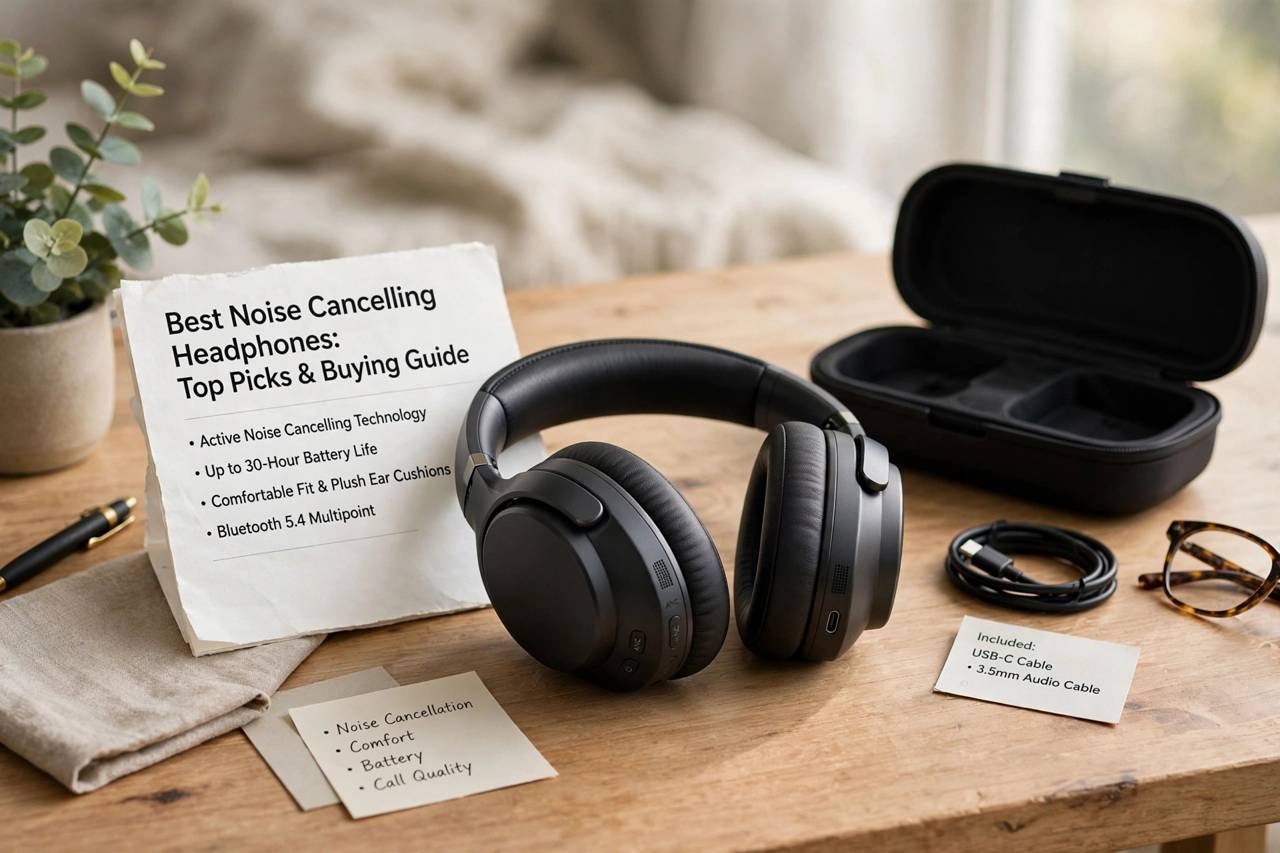
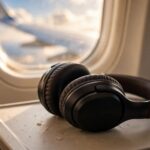
There’s a moment every frequent flyer knows: the cabin door closes, the engines spool up to that endless roar, and you press the button on your headphones — and the roar just… vanishes. That silence is why people become evangelical about the best noise cancelling headphones. But with flagship models from Sony, Bose, Apple, and a dozen challengers all claiming to be the best, how do you actually choose?
I’ve tested noise cancelling headphones across years of flights, open offices, and city commutes, and here’s what I’ve learned: the “best” pair depends entirely on what you need them for. The frequent traveler, the office worker, the audiophile, and the budget buyer all have different right answers. This guide breaks down how noise cancelling works, what actually matters when choosing, and which models lead the pack right now — so you can buy once and buy right.
Best Noise Cancelling Headphones: How the Tech Works
Understanding the tech takes thirty seconds and makes every buying decision easier. Active noise cancelling (ANC) works like this: tiny microphones on the headphones listen to the ambient noise around you — engine drone, air conditioner hum, office chatter. The headphone’s processor then generates an “anti-noise” sound wave that’s the exact inverse of what the mics heard. When the real noise and the anti-noise meet at your ear, they cancel each other out. Physics doing you a favor.
This works brilliantly on constant, low-frequency sounds — airplane engines, train rumble, HVAC systems — because those are predictable enough for the processor to invert in real time. It’s less effective on sudden, irregular sounds like a dog barking or someone dropping a book, though modern flagship models handle those better than ever with faster processors and more microphones.
There’s also passive noise isolation — the physical seal of the earcups blocking sound, like earplugs. Good ANC headphones combine both: the seal blocks highs, the electronics erase lows. That’s why fit matters so much, and why over-ear designs generally cancel more noise than earbuds.
What Actually Matters When Choosing
Marketing will try to sell you on specs. Here’s what to actually evaluate:
Noise cancelling strength
The headline feature. Flagship models from the top brands are all excellent now — the differences between the best are smaller than the marketing suggests. What matters more: how the ANC handles your environment. Frequent flyers should prioritize low-frequency cancellation (engine drone). Office workers should care about voice-frequency reduction. If possible, test in a store with the ANC on and no music playing.
Comfort for long sessions
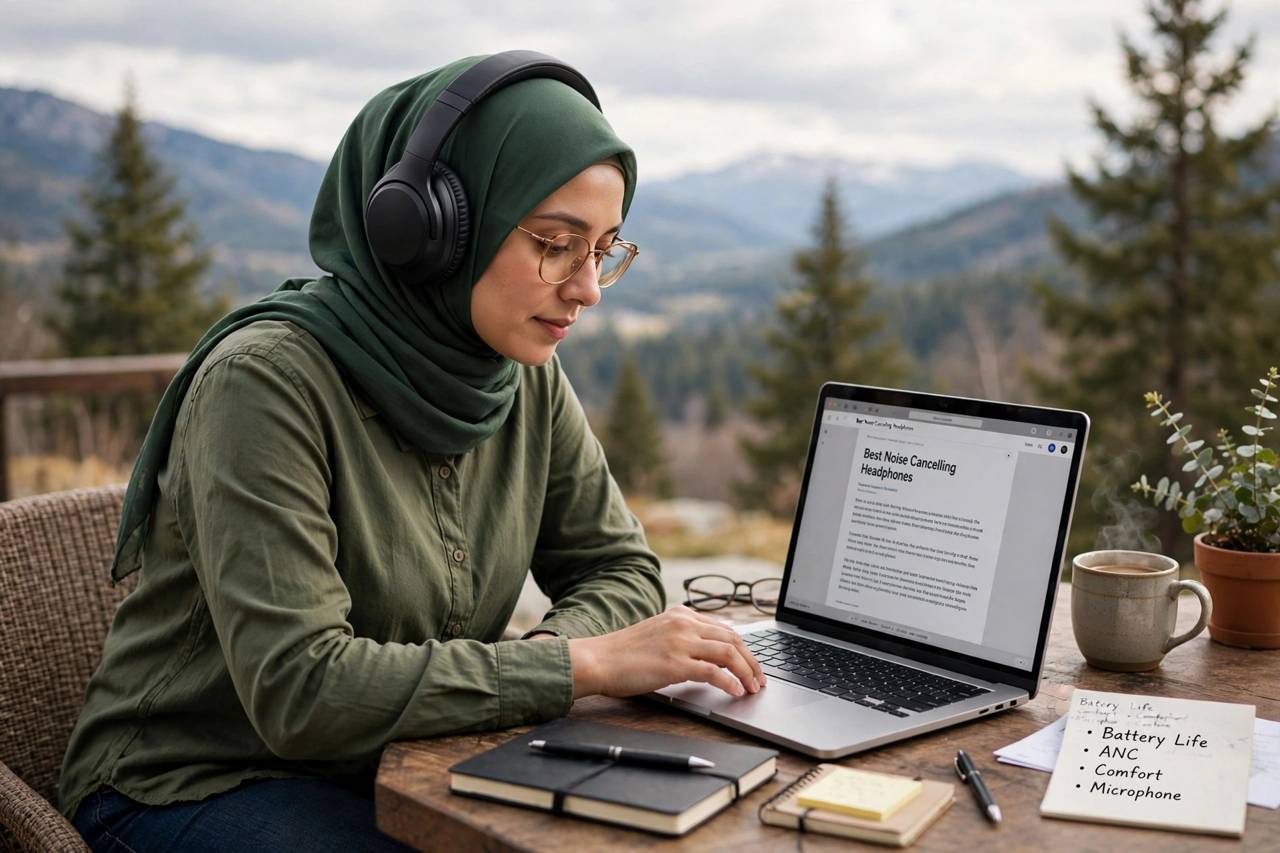
The best noise cancelling in the world is useless if the headphones hurt after an hour. Weight, clamping force, earcup depth, and headband padding all matter. Lighter is generally better for travel; deeper earcups prevent your ears touching the drivers. If you wear glasses, pay special attention — some clamping designs press the arms into your temples painfully. Always prioritize comfort over marginal ANC differences.
Sound quality
Here’s an open secret: most flagship ANC headphones sound good but not extraordinary. The processing required for noise cancelling, plus the Bluetooth compression, puts a ceiling on fidelity. If pure sound quality is your top priority, wired audiophile headphones beat every ANC model — but they don’t cancel noise. Among ANC flagships, sound signatures differ: some are bass-heavy and fun, others more balanced. EQ customization in the companion app can fix a lot.
Call quality
If you take calls on your headphones, this matters enormously and varies wildly. The number and placement of microphones, plus the voice-processing algorithms, determine whether you sound clear or like you’re in a wind tunnel. Some flagships that excel at cancelling noise for you are mediocre at isolating your voice for callers. Check reviews specifically for call tests.
Battery life and features
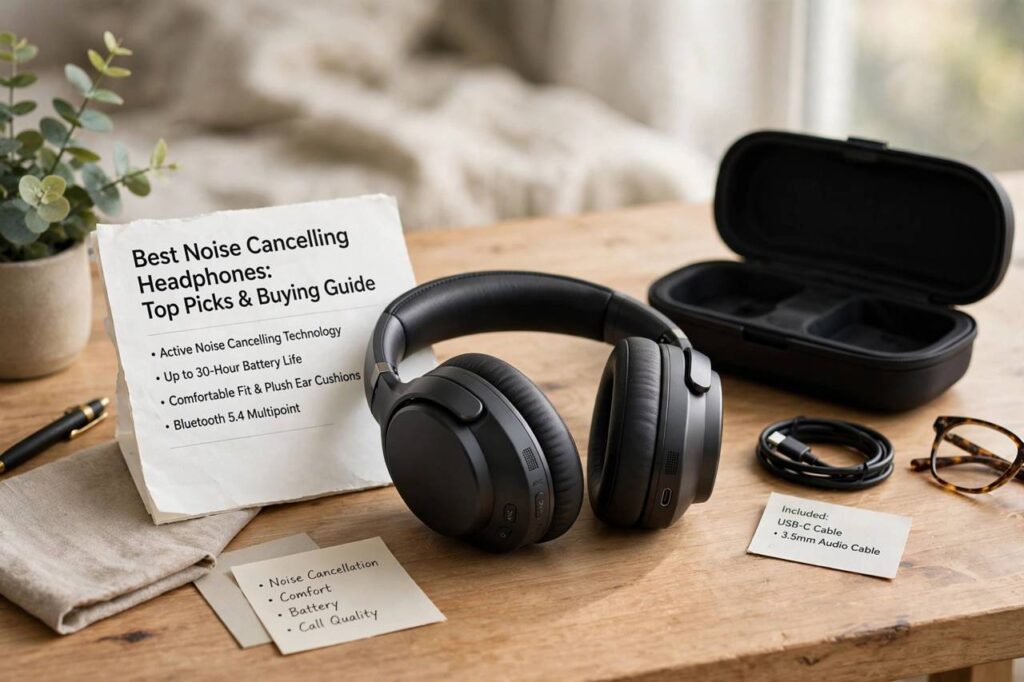
Flagship ANC headphones now routinely offer 30–40 hours with ANC on — enough for even the longest travel days. Multipoint connectivity (connected to your phone and laptop simultaneously) is genuinely useful and worth prioritizing. Other features — wear detection (pauses when you remove them), transparency mode (lets outside sound in when you need awareness), spatial audio — range from essential to gimmick depending on your use.
The Top Picks Right Now
The ANC headphone market has a clear top tier. Here’s how the leaders stack up:
Best overall: Sony WH-1000XM5
Sony’s flagship remains the reference point: superb noise cancelling, excellent comfort, strong sound quality with deep customization in the app, great call quality, and 30-hour battery life. It doesn’t win every single category, but it has no meaningful weaknesses. For most buyers, this is the safe recommendation — the one that’s hardest to regret.
Best comfort: Bose QuietComfort Ultra Headphones
Bose practically invented consumer noise cancelling, and their comfort is still unmatched — lighter clamping, plush earcups, the pair you forget you’re wearing. The ANC is top-tier, particularly for voices and midrange noise. Sound quality is pleasant though less customizable than Sony’s. If you wear headphones for eight-hour workdays, start here.
Best for Apple users: AirPods Max
Superb build quality, excellent ANC, seamless Apple ecosystem integration, and genuinely impressive sound. The downsides are real though: heavy (noticeably so on long sessions), premium pricing, no power button, and the infamous case that barely qualifies as one. If you’re deep in the Apple ecosystem and the weight doesn’t bother you, they’re wonderful. Otherwise, the Sony or Bose options give you 95% of the experience for less.
Best value flagship: Sony WH-1000XM4
The previous generation, still widely available at a significant discount. The ANC and sound are a small step behind the XM5, but the value proposition is outstanding — near-flagship performance for mid-range money. This is the smart buy for anyone who wants premium noise cancelling without the premium price.
Best budget pick: Soundcore Space Q45 / JBL Live 660NC
You don’t need to spend flagship money for good noise cancelling anymore. Models in the budget tier from Anker’s Soundcore and JBL deliver genuinely effective ANC, decent sound, and 40–50 hour battery life at a fraction of flagship prices. The build feels cheaper and the call quality is weaker, but for music and travel, the gap has narrowed dramatically.
Over-Ear vs. Earbuds: Which Form Factor?
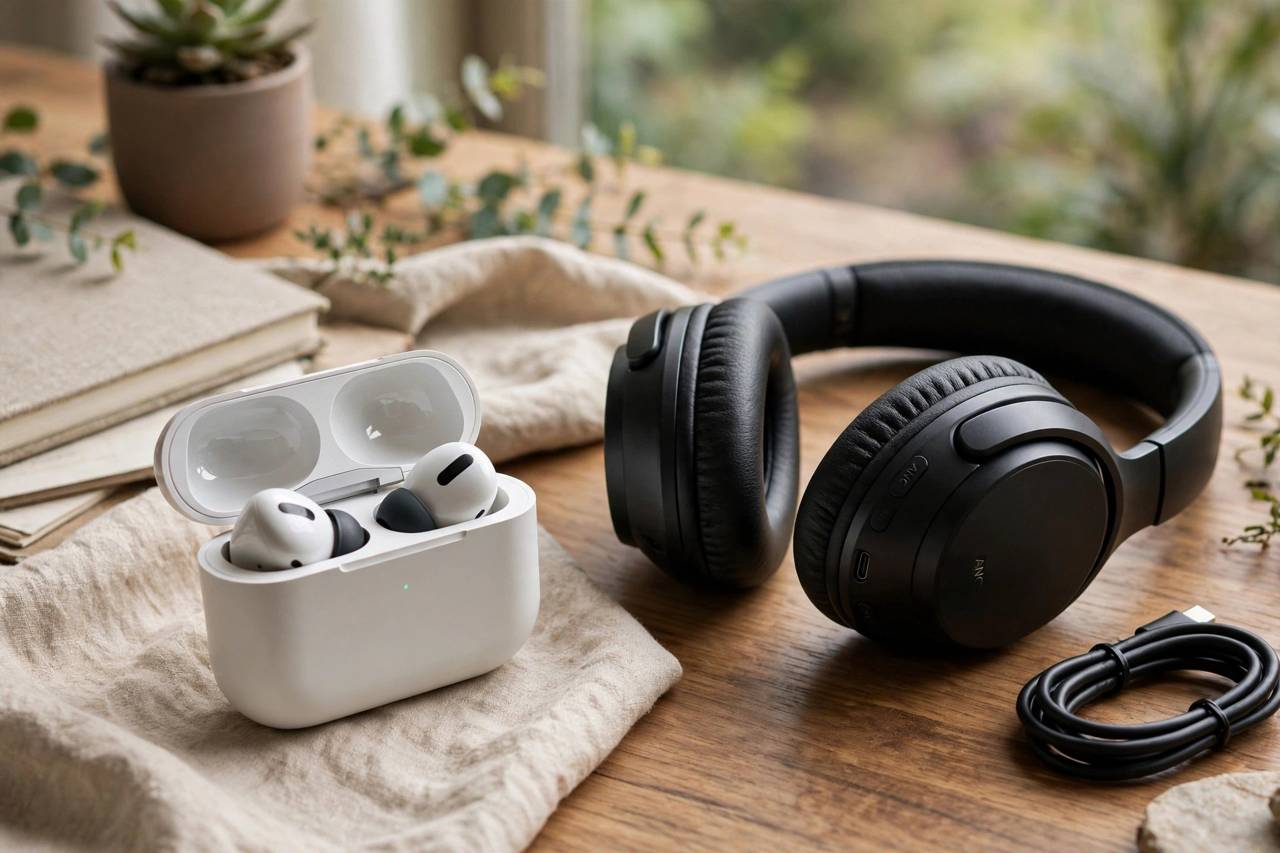
This comes up constantly, so let’s settle it. Over-ear ANC headphones cancel more noise (bigger drivers, better seal, more microphones, more processing power), sound better, and are more comfortable for long sessions. Earbuds win on portability — they fit in a pocket — and they’re better for exercise and sleeping on planes.
The honest answer for frequent travelers: own both eventually, but buy the over-ears first if noise cancelling is the priority. No earbud matches a flagship over-ear for silencing an airplane cabin. Our explainer on how noise cancelling headphones work goes deeper into the technology, and if you’re considering the portable route, how wireless earbuds work covers what the smaller form factor can and can’t do.
Tips for Getting the Most From Your Headphones
Update the firmware. Manufacturers regularly improve ANC algorithms and fix bugs via updates. Check the companion app when you first set up.
Learn the controls. Most flagships have customizable buttons and touch gestures — set up what you’ll actually use (ANC toggle, transparency mode, voice assistant) and ignore the rest.
Use transparency mode in the street. Walking or cycling with full ANC is genuinely dangerous. Transparency mode pipes outside sound through — use it whenever situational awareness matters.
Store them properly. Hard cases exist for a reason. Headband and earcup padding wear out; keeping headphones cased extends their life significantly. Replaceable earpads (available for most flagships) can add years.
Try the EQ. The default sound signature is tuned for the average listener. Spend ten minutes with the app’s equalizer adjusting to your taste — it makes a bigger difference than upgrading to a pricier model.
When Should You Replace Your Headphones?
Good ANC headphones last years, but they don’t last forever. The usual failure points: earpad cushioning flattens and cracks (replaceable on most flagships — a $20 pad swap can add two years), battery capacity fades to the point where “30 hours” becomes “6 hours,” Bluetooth standards move on, and headband padding wears through.
The practical rule: replace earpads first — it’s cheap and transformative. Replace the headphones when the battery no longer survives your longest use case, or when a new generation offers a genuinely meaningful upgrade (significantly better ANC or call quality, not just a new color). Don’t upgrade annually; the year-over-year improvements in mature ANC models are incremental. A three-to-five-year cycle is the sweet spot for most buyers.
And when you do retire a pair, don’t bin them — electronics recyclers take headphones, and working-but-tired pairs make great donations. One person’s backup pair is another person’s first good headphones.
Frequently Asked Questions
What are the best noise cancelling headphones overall?
The Sony WH-1000XM5 is the best all-around choice for most people — excellent noise cancelling, comfort, sound quality, and features with no major weaknesses. The Bose QuietComfort Ultra is the comfort champion, and the previous-gen Sony XM4 offers the best value.
Do noise cancelling headphones damage your hearing?
Noise cancelling itself doesn’t damage hearing — it reduces the ambient noise reaching your ears. In fact, ANC can protect hearing indirectly by letting you listen at lower volumes in noisy environments. As with any headphones, the risk comes from listening too loud for too long.
Are expensive noise cancelling headphones worth it?
It depends on your use. For frequent flyers and daily commuters, flagship ANC is genuinely transformative and worth the investment. For occasional use, budget options now deliver surprisingly good noise cancelling at a fraction of the price — the gap between budget and flagship has narrowed significantly.
Can you sleep with noise cancelling headphones on?
Over-ears are uncomfortable for side sleepers, but many people sleep fine in them on planes while sitting upright. For sleeping, dedicated sleep earbuds or simple foam earplugs are usually more practical. Never use full ANC while sleeping somewhere you need to hear alarms or announcements.
What’s the difference between noise cancelling and noise isolating?
Noise cancelling (ANC) uses electronics to actively erase ambient sound — best for constant low-frequency noise like engines. Noise isolation is passive physical blocking from the earcup seal — like earplugs. The best headphones combine both for maximum quiet.