Best Paint Colors for Small Bedrooms (Designer Picks)

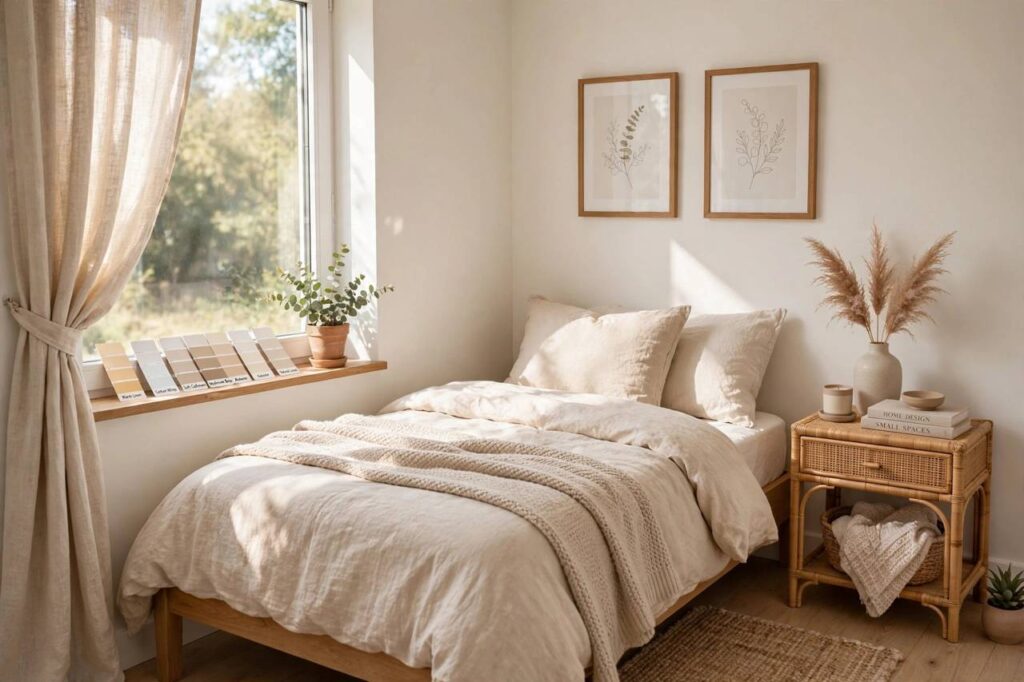
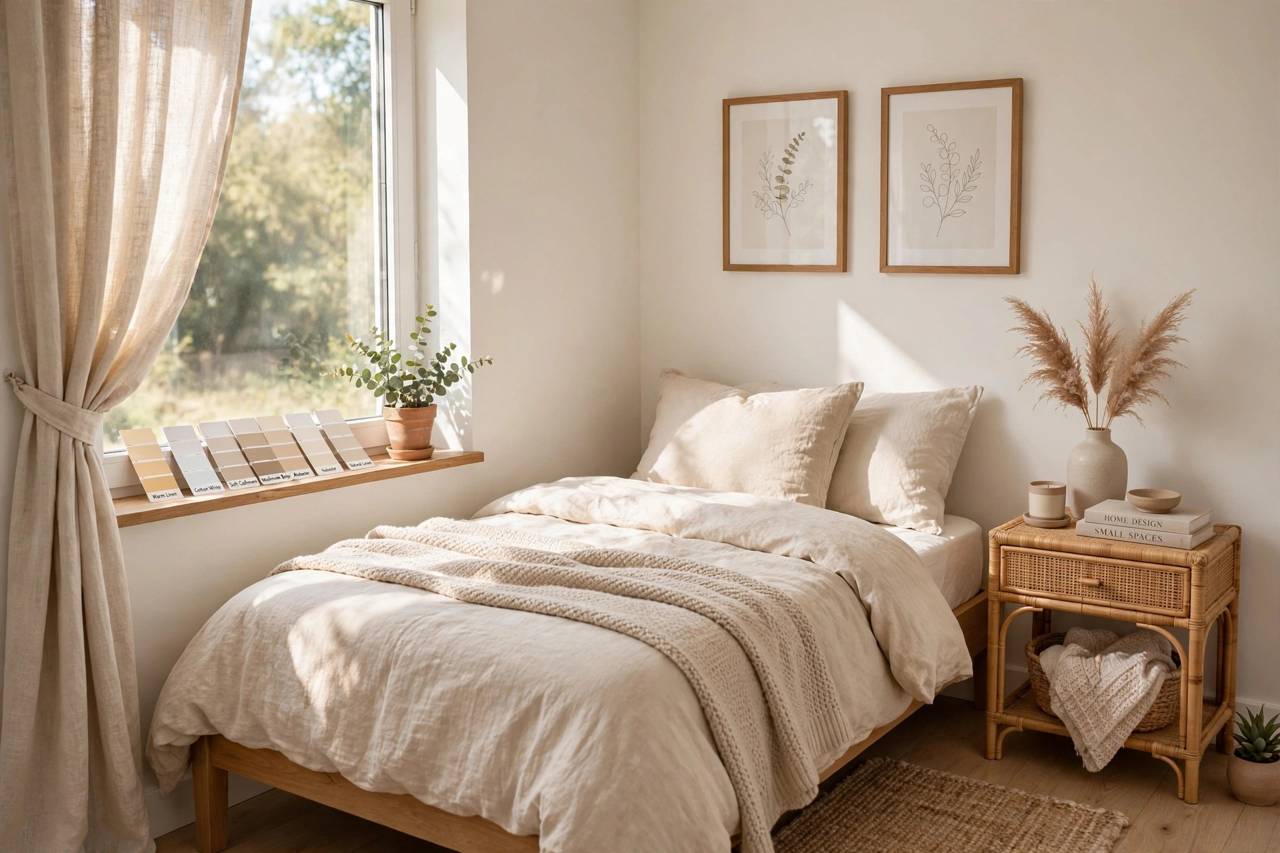
Paint is the cheapest square-footage you’ll ever buy. A $60 gallon can make a cramped bedroom feel twice as big — or, applied without thought, make it feel like a shoebox with a window. After painting more bedrooms than I can count, I’ve learned that the best paint colors for small bedrooms aren’t just “light colors.” They’re the right light colors, in the right finish, with the right supporting decisions. Here’s the full breakdown.
First, the principle that governs everything: small rooms feel bigger when boundaries blur. Sharp contrasts — dark walls against a white ceiling, bold accent walls chopped against pale neighbors — visually carve the room into smaller pieces. Colors that flow, reflect light, and keep the eye moving make walls recede. Every recommendation below serves that principle.
Best Paint Colors for Small Bedrooms: The Light Neutrals That Work
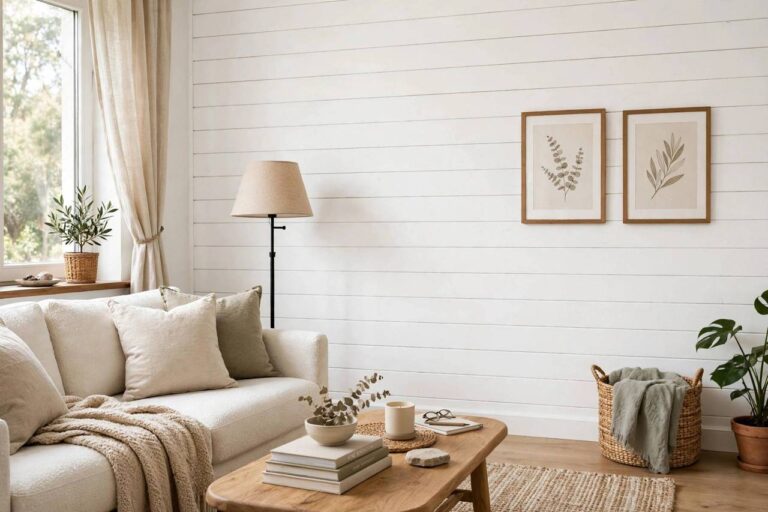
Let’s start with the reliable winners. Warm whites are the undefeated champions of small bedrooms — but not all whites are equal. Stark, blue-white can feel clinical and actually emphasize shadows in corners. Look for whites with warm undertones: think Swiss Coffee, White Dove, or Alabaster-type shades. They bounce light around without the sterile glare, and they make wood tones and textiles look richer.
Soft greiges (that grey-beige middle ground) are the workhorse neutral for a reason. They’re light enough to keep things airy but have enough depth to feel intentional rather than default. In a north-facing room that gets cool light, a warm greige counteracts the chill; in a bright south-facing room, it keeps things calm instead of washed out.
Pale warm greys work when you want a touch more sophistication than white but the same spacious effect. The key word is warm — cool greys in a small bedroom can feel like a concrete box. Test with a sample board and look at it in morning and evening light before committing; grey is the most undertone-sensitive color there is.
Color With Character: Soft Greens, Blues, and Blush
Neutrals aren’t mandatory. Some of the best small bedrooms I’ve seen use color — just the right kind. Sage green and soft eucalyptus tones are having a well-deserved moment: they’re restful, they flatter skin tones in morning light, and they pair beautifully with both white bedding and natural wood. A muted green reads as a neutral with personality.
Powdery blues and soft dusty blues visually recede, which is exactly what you want walls to do. They have a calming effect that suits a bedroom’s job description, and they make white trim pop crisply. Just avoid anything too saturated or too icy — you’re going for “morning sky,” not “swimming pool.”
Warm blush and pale terracotta are the wildcard picks that work surprisingly well. A soft peachy-pink adds warmth and glow, especially in rooms with limited natural light — it essentially fakes sunlight. Keep it desaturated and warm; the goal is candlelight, not bubblegum.
The common thread: muted, slightly warm, mid-to-light in value. If you hold the swatch at arm’s length and it shouts, it’s too much for a small room. If it whispers, you’re in the right territory.
The Dark Horse: Going Dark in a Small Bedroom
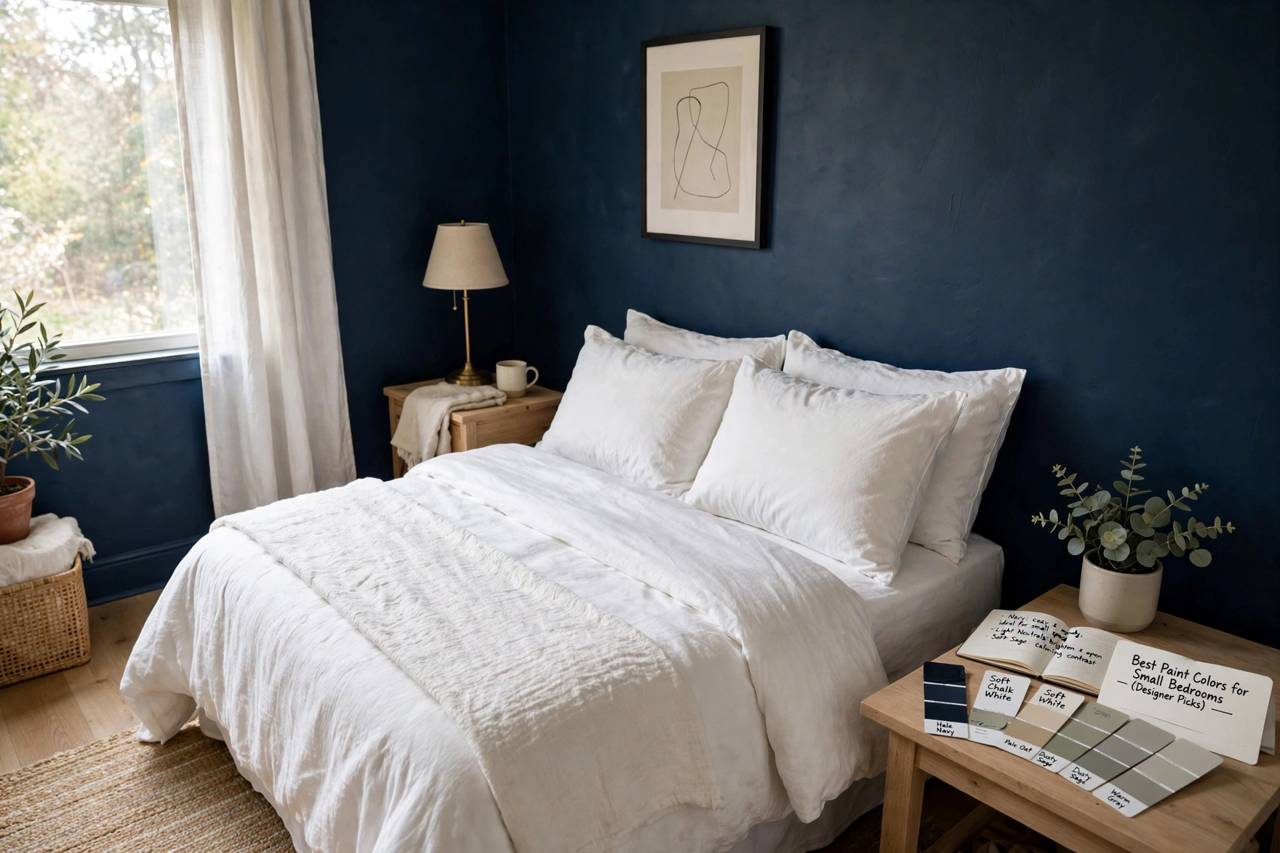
Here’s the counterintuitive advice: dark colors can work beautifully in small bedrooms — sometimes better than light ones. A deep navy, charcoal, or forest green wraps the room in coziness and actually blurs the corners, making the walls’ exact position harder to read. Small rooms painted dark feel intimate and cocoon-like rather than cramped, especially bedrooms, where cozy is the entire point.
The trick is commitment and contrast management. If you go dark, go dark everywhere — walls, and ideally the ceiling in the same or a slightly lighter shade. A single dark accent wall in a small room just chops the space up (remember the boundary principle). All-over dark with light bedding, a light rug, and good lighting creates depth instead of division.
Dark rooms live or die by lighting, though. You’ll need more of it than you think: layered sources at different heights, warm bulbs, and mirrors to bounce light around. A dark small bedroom with one sad overhead light is a cave; the same room with lamps, sconces, and a mirror is a jewel box. If your bedroom gets minimal natural light, dark colors are a bigger gamble — they need the artificial lighting to do heavy lifting.
Finishes, Ceilings, and Trim: The Details That Decide
Color gets the glory, but finish does quiet work. In small bedrooms, eggshell or satin on walls is the sweet spot — flat enough to hide imperfections, with just enough sheen to reflect light around the room. Matte/flat finishes absorb light and can make walls feel closer; save flat for ceilings. Semi-gloss is for trim only — on walls it highlights every flaw and creates glare spots.
The ceiling deserves a decision, not an afterthought. Painting it the same color as the walls (or a shade lighter) erases the line where wall meets ceiling, which makes the room feel taller. The old rule of “ceilings must be white” is just a habit; in a small bedroom, a tinted ceiling is often the better move.
Trim strategy matters too. Crisp white trim against colored walls creates definition — nice in larger rooms, but in small ones it outlines exactly how small the room is. Consider painting trim the same color as the walls in a satin finish: you keep the durability and subtle sheen difference, but the boundaries dissolve. It’s a designer trick that costs nothing extra.
And sample properly. Paint a 2-foot square on the wall — or better, on a movable board you can carry around the room — and live with it for two days. Colors shift dramatically between morning, afternoon, and lamplight. The $10 sample quart is the cheapest insurance in all of home improvement. If you’re also refreshing the feel of the space, these ideas to make your bedroom cozy pair perfectly with a new paint job, and small apartment decorating ideas can help the rest of a compact home keep pace.
Mistakes That Shrink a Room
A few common errors undo good color choices. Too many colors: every additional color is another visual boundary. In a small bedroom, one wall color plus trim plus bedding is plenty. Ignoring undertones: that “perfect beige” with pink undertones will clash with your orange-wood floors in a way that’s obvious once the whole wall is done. Skipping primer on dramatic color changes: going from dark to light without primer means three or four coats instead of two — false economy.
Forgetting the fifth wall: the ceiling, as covered above. Choosing color in the store: fluorescent store lighting lies. Always evaluate at home. And painting around furniture instead of moving it: you’ll miss spots, get paint on things, and do a worse job in less time than moving the bed would have taken. Clear the room. Future you says thanks. One last one: rushing the second coat. Paint that looks dry often isn’t cured — recoating too soon pulls the first coat and leaves texture you’ll stare at for years. Patience between coats is the cheapest upgrade in the entire project, and the one most DIY painters skip.
Painting It Yourself: Tips From the Trenches
A small bedroom is the perfect DIY paint job — one weekend, minimal materials, maximum impact. But the difference between a professional-looking result and a “you can tell they did it themselves” one comes down to prep, and prep is deeply unglamorous. Do it anyway.
Start with the room empty or as close to it as you can get. Move furniture to the center and cover it; take down curtains, outlet covers, and anything mounted on the walls. Clean the walls — a quick wipe with a damp cloth removes the dust and oils that cause paint to peel later. Fill nail holes and cracks with spackle, let it dry, sand it smooth. Caulk the gaps where trim meets wall for those crisp lines that make paint jobs look expensive.
Tape deliberately but not obsessively. Quality painter’s tape on trim, windows, and the ceiling line; press the edges down firmly with a putty knife to prevent bleed. Then the technique that matters most: cut in the edges with a brush first, then roll the walls while the cut-in paint is still wet — this “wet edge” blending is what prevents visible lap marks.
Roll in a W pattern, working in three-foot sections, and don’t over-roll — three or four passes per section, then move on. Two thin coats beat one thick coat every time; thick coats drip, sag, and take forever to dry. Between coats, wait the full recoat time on the can, not the “feels dry” time. And buy better-than-builder-grade paint: the coverage difference means fewer coats, which means the “expensive” paint is often cheaper per finished wall.
Frequently Asked Questions
What is the best paint color to make a small bedroom look bigger?
Warm whites and light warm neutrals (greige, pale warm grey) are the most reliable — they reflect light and blur boundaries. Soft sage greens and powdery blues also work well. Avoid stark cool whites, which can feel clinical.
Can I use dark colors in a small bedroom?
Yes — deep navy, charcoal, or forest green on all walls (plus ceiling) can make a small bedroom feel cozy and intimate rather than cramped, by blurring corners. It requires good layered lighting to work; don’t attempt it with a single overhead light.
Should the ceiling be white in a small bedroom?
Not necessarily. Painting the ceiling the same color as the walls erases the wall-ceiling boundary and makes the room feel taller. White ceilings are a habit, not a rule.
What paint finish is best for bedroom walls?
Eggshell or satin — they hide imperfections while reflecting enough light to keep the room feeling open. Use flat on ceilings and semi-gloss on trim only.
How do I test paint colors before committing?
Paint a large sample (2-foot square) on a movable board, place it on different walls, and observe it in morning, afternoon, and evening light for at least two days. Never choose based on the store swatch alone.