What Is a Restraining Order? The Basics, Plainly Explained


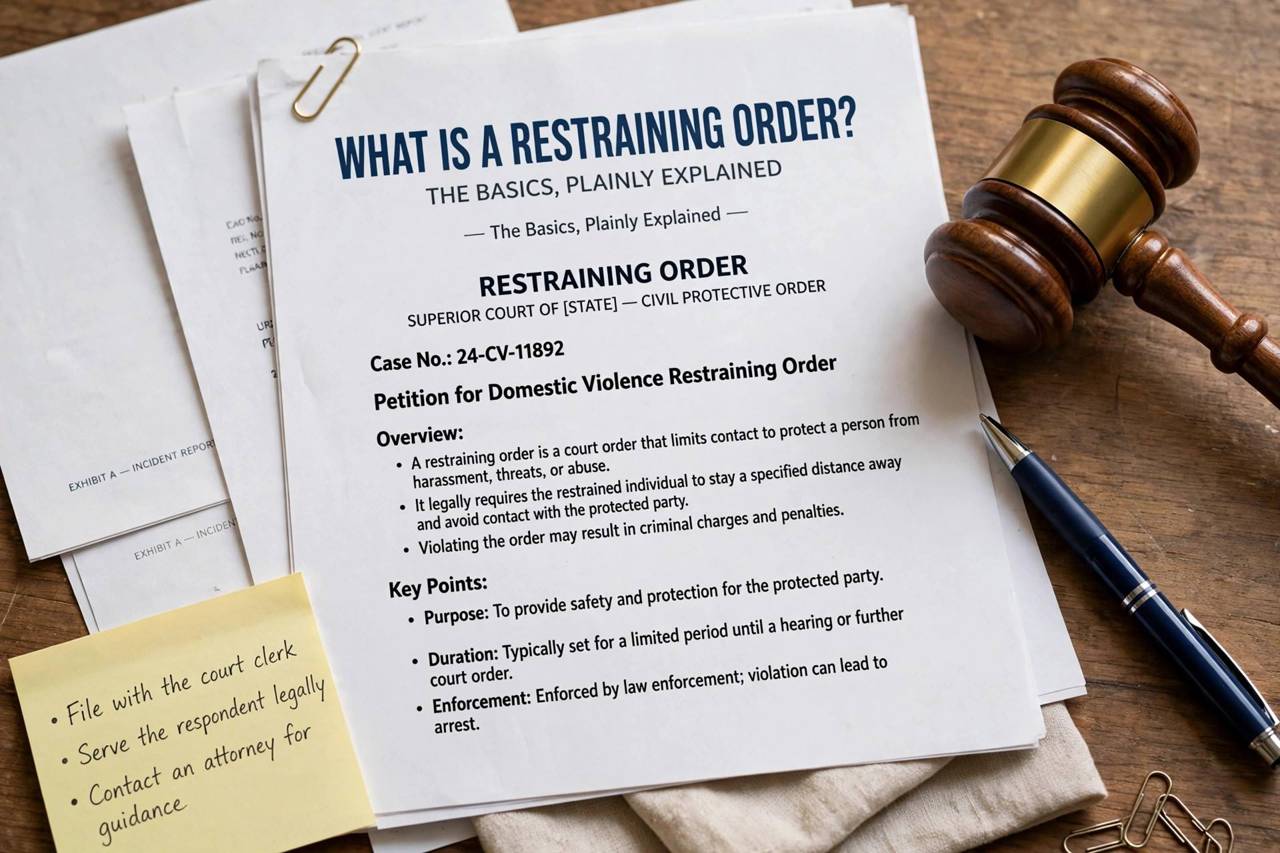
When people ask what is a restraining order, they’re usually asking in a moment of stress — which is exactly why the answer should be plain and calm. A restraining order (also called a protective order in many places) is a court order that legally requires one person to stay away from another person, or to stop certain behaviors like contacting, harassing, or threatening them. Violating it can lead to arrest. This article explains what these orders are, the main types, how the process generally works, and what they can and can’t do. One important note up front: this is general information, not legal advice. Laws vary significantly by state and country, and if you’re dealing with a real situation, a local attorney or legal aid office can give guidance for your specific circumstances.
Think of a restraining order as the legal system drawing a formal boundary. Before the order, “stay away from me” is a request. After a judge signs the order, it’s a command backed by the court’s enforcement power. That shift — from personal boundary to legal obligation — is the whole point.
What Is a Restraining Order, in Practical Terms?
A restraining order is a judge’s written command that restricts what a specific person (the “restrained person”) may do in relation to another person (the “protected person”). Common restrictions include: no contact of any kind (in person, by phone, text, email, social media, or through third parties), staying a specified distance away from the person’s home, workplace, or school, and sometimes temporary orders about shared property, pets, or child custody arrangements.
Orders are tailored. A judge doesn’t issue a one-size-fits-all document; the order lists specific prohibitions based on what was requested and what the evidence supported. That’s why two restraining orders can look quite different — one might focus on no-contact, another on stay-away distances, another on temporary custody terms while a larger case proceeds.
The Main Types of Protective Orders
Terminology varies by jurisdiction, but most systems have versions of these. Emergency or ex parte orders: granted quickly, sometimes the same day, based on one person’s account when there’s an urgent safety concern. These are temporary by design — typically lasting days to a few weeks until a full hearing can be held where both sides may present their case.
Temporary restraining orders (TROs): short-term orders that hold things in place until a hearing. In some contexts (like business disputes), TROs preserve the status quo while the court sorts things out. Permanent or long-term orders: issued after a hearing where both parties had a chance to be heard; despite the name, “permanent” often means one to five years, renewable if the court finds continued need.
There are also specialized categories. Domestic violence protective orders address abuse within intimate or family relationships and often come with additional provisions (temporary support, custody). Civil harassment orders cover stalking or harassment outside domestic relationships. Workplace violence orders can be sought by employers on behalf of employees. The names and exact rules differ by state, but the structure — urgent temporary order, then a hearing, then a longer order — is widespread.
How the Process Generally Works
While details vary, the typical sequence looks like this. First, the person seeking protection files a request (often called a petition) with the court, describing what happened and what protection they’re asking for. Many courts provide fill-in forms and self-help centers for this step. Filing fees are often waived for protective orders.
Second, a judge reviews the request — sometimes the same day — and may issue a temporary order if the situation appears urgent. Third, a hearing is scheduled, usually within a few weeks. Both parties are notified and may attend, bring evidence, and in most cases have attorneys. Fourth, at the hearing, the judge decides whether to issue a longer-term order, and if so, what it covers and how long it lasts.
A few practical realities worth knowing: you generally need to show the judge specific facts — dates, incidents, messages — not just general fear. Documentation matters enormously: saved messages, photos, witness names, police reports. And the restrained person must be formally notified (“served”) for most orders to take full effect — the court will explain how service works in your area.
What a Restraining Order Can and Can’t Do
What it can do: create a clear, enforceable legal boundary; give police a straightforward basis to act if the boundary is crossed; and provide documented evidence of the situation, which matters in any related legal proceedings (divorce, custody, criminal cases). For many people, the order itself changes behavior — most restrained persons comply once a judge has spoken.
What it can’t do: physically prevent someone determined to violate it. An order is a legal tool, not a force field. That’s not an argument against getting one — it’s an argument for pairing it with a safety plan: telling trusted people about the situation, varying routines, securing your home, and knowing how to contact local support resources quickly. Victim advocacy organizations in most areas help build these plans for free.
If You’ve Been Served With One
Being on the receiving end is serious, and the worst response is ignoring it. Read the order carefully — every prohibition listed applies to you whether you think it’s fair or not. Do not contact the protected person to “talk it out”; any contact can be a violation, even well-intentioned contact. Attend the hearing; it’s your opportunity to present your side, and skipping it means the judge decides without your input. Consider consulting an attorney, because violations can carry criminal penalties and the order can affect employment, housing, and custody matters.
Common accidental violations to avoid: asking a mutual friend to pass along a message (third-party contact counts), showing up at shared locations, and “liking” or viewing the person’s social media in ways the order prohibits. When in doubt about whether something is allowed, assume it isn’t until a lawyer tells you otherwise.

Costs, Duration, and Records
Getting a protective order is usually low-cost or free — many jurisdictions waive filing fees for domestic violence and harassment protective orders, and legal aid organizations help with the process at no charge. Duration varies: emergency orders last days to weeks, orders after a hearing typically last one to five years, and many can be renewed or, in some cases, made longer if circumstances warrant. Either party can generally ask the court to modify or dismiss the order if situations change.
As for records: protective orders are court records, and their visibility varies. Some appear in background checks; others are sealed or have limited disclosure depending on the type and jurisdiction. If record visibility matters to you — for employment or housing reasons — that’s a specific question for a local attorney, because the rules genuinely differ place to place.
Violations and Enforcement
When a restraining order is violated, the protected person should contact law enforcement — in many jurisdictions, officers can arrest on the spot if they have probable cause to believe a violation occurred. Document everything: dates, times, what happened, screenshots of messages, names of witnesses. This documentation matters both for the immediate response and for any future court proceedings, including renewal hearings where a pattern of violations strongly supports extending the order.
Penalties for violation vary but are real: they can include fines, jail time, or both, and repeat violations typically bring harsher consequences. Some jurisdictions treat a first violation as a misdemeanor and subsequent ones as felonies. The order may also affect the restrained person’s life beyond the criminal penalties — violations can show up in custody disputes, employment background checks, and housing applications. This is one more reason to take the order seriously from day one, whether you’re protected by it or restrained by it.
Finding Help and Resources
If you’re considering seeking a protective order, you don’t have to navigate it alone. In the U.S., the National Domestic Violence Hotline operates 24/7 and can connect you with local resources; similar helplines exist in most countries. Local legal aid offices provide free help with the paperwork and the hearing, and many courthouses have self-help centers with step-by-step guides for filing.
Victim advocacy organizations do more than paperwork — they help with safety planning, emergency housing, and the practical logistics of separating from an abusive situation. If cost is a concern, know that filing fees for protective orders are frequently waived and that many attorneys take these cases pro bono or on sliding scales. The system is designed to be accessible precisely because the people who need it most are often the ones least able to pay for help.
Frequently Asked Questions
What is a restraining order in simple terms?
It’s a court order requiring one person to stay away from another person or stop certain behaviors like contacting or harassing them. Violating it can lead to arrest. It’s also called a protective order in many jurisdictions.
How long does a restraining order last?
It depends on the type: emergency orders typically last days to a few weeks until a hearing, while orders issued after a hearing commonly last one to five years and can often be renewed. The order itself states its expiration date.
Do I need a lawyer to get a restraining order?
Not necessarily — courts provide forms and many have self-help centers, and legal aid organizations assist for free. But consulting an attorney is wise if the situation is complex or involves custody, shared property, or related criminal proceedings.
What happens if someone violates a restraining order?
Violations can lead to arrest and criminal charges, including fines or jail time depending on the jurisdiction and circumstances. If someone violates an order against you, contact law enforcement and document what happened.
Can a restraining order be dropped or dismissed?
Generally, yes — either party can ask the court to modify or dismiss it, but the judge decides. A protected person can’t simply “cancel” it on their own say-so in most jurisdictions; court approval is required.
Does a restraining order show up on background checks?
Sometimes. Visibility varies by order type and jurisdiction — some appear in background checks, others have limited disclosure or can be sealed. If this matters for employment or housing, ask a local attorney about the rules where you live.