How to File a Small Claims Court Case: Step-by-Step



Someone owes you money and won’t pay. The security deposit that never came back. The contractor who vanished halfway through the job. The fender-bender the other driver swears wasn’t their fault. For disputes like these, there’s a court designed specifically for ordinary people — no lawyers required, no legal jargon gauntlet. Here’s how to file a small claims court case, explained in plain language from start to finish.
One important note before we begin: I’m explaining the general process, not giving legal advice. Small claims rules vary by state and county — dollar limits, forms, and procedures all differ. Treat this as your map of the territory, then confirm the specifics with your local court’s website or clerk’s office. With that said, the overall shape of the process is remarkably consistent everywhere.
How to File a Small Claims Court Case: First, Check You Qualify
Small claims court handles civil disputes involving relatively modest amounts of money. The dollar limit varies significantly by state — commonly anywhere from a few thousand dollars up to $10,000 or more — so your first step is checking your state’s current limit. If your claim exceeds it, you generally have two choices: reduce your claim to fit (waiving the excess) or file in a higher court, which usually means involving an attorney.
Not every dispute belongs in small claims. The court handles money disputes: unpaid debts, property damage, breach of contract, security deposit returns, faulty goods or services. It generally doesn’t handle family law matters, restraining orders, or cases seeking non-monetary outcomes (like forcing someone to do something rather than pay). Some states also restrict certain case types, so verify yours qualifies.
Timing matters too. Every claim has a statute of limitations — a deadline after which you lose the right to sue. These range from one to several years depending on the claim type and state. If your dispute is old, check the deadline first; there’s no point preparing a case that’s already time-barred.
Finally, consider whether the defendant can actually pay. A judgment against someone with no money or assets is a piece of paper, not a payment. If the person or business you’re suing is insolvent or unreachable, even a winning case may not put money in your pocket. This practical check saves a lot of people a lot of effort.
Gather Your Evidence Before You File
Small claims cases are won on documentation, not eloquence. Before touching a form, assemble everything that supports your side: contracts or written agreements, receipts and invoices, photos of damage or defective work, text messages and emails about the dispute, and a clear timeline of what happened when.
Organize it chronologically and make copies — you’ll typically need the original for yourself plus copies for the judge and the defendant. Judges in small claims court see dozens of cases per session; the litigant with a neat, labeled folder of evidence stands out immediately. A one-page summary timeline (“March 3: paid $1,200 deposit; April 15: contractor stopped responding”) helps the judge grasp your case in seconds.
Witnesses can help but aren’t always necessary. If someone saw the damage happen or was present for a verbal agreement, their testimony matters — but bring them in person rather than relying on written statements, which many courts give less weight. And be realistic about what your evidence actually proves. “They were rude” isn’t a claim; “they kept my $800 deposit in violation of our written lease” is.
Filing: Forms, Fees, and Getting It Right
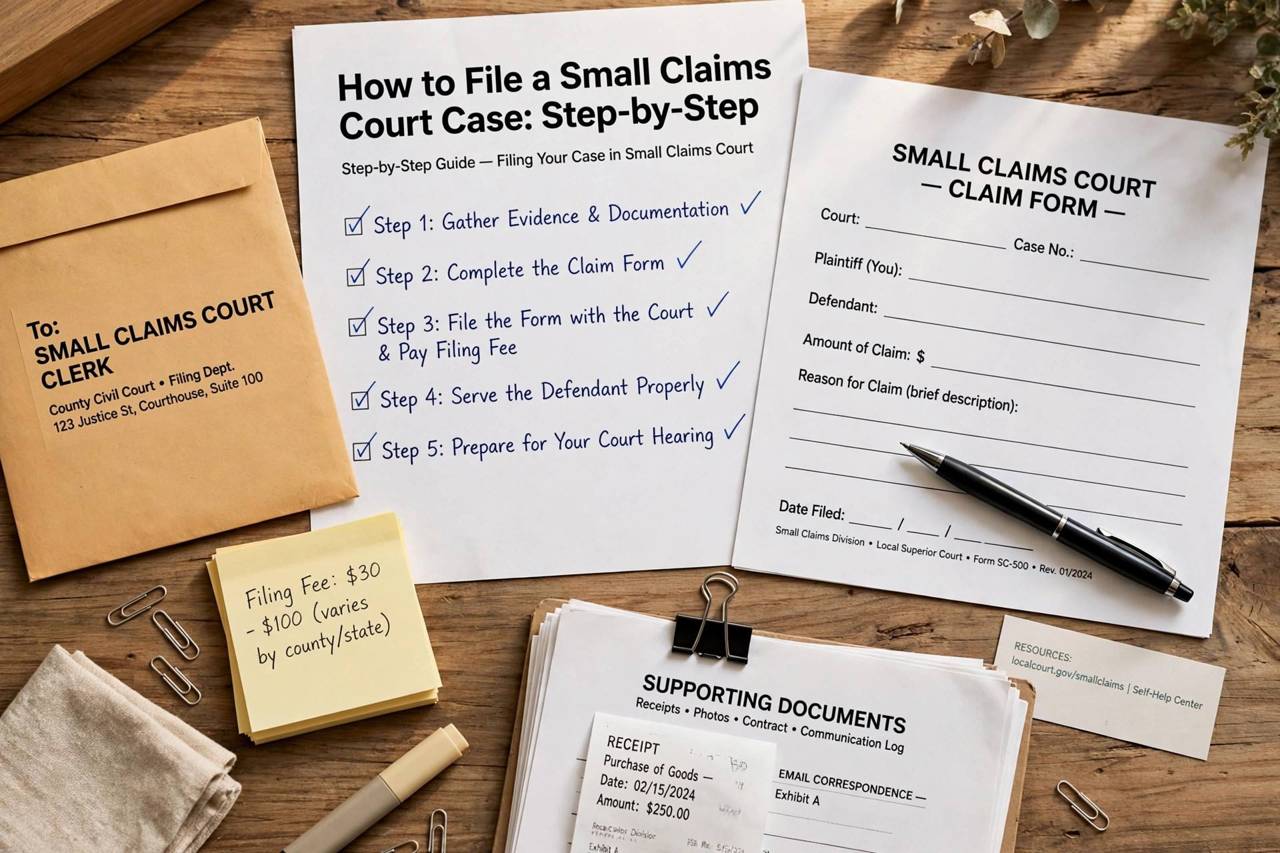
Filing starts at your local courthouse — usually the county court in the county where the defendant lives or does business, or where the dispute occurred. Most courts now offer their small claims forms online, and many allow e-filing. The core document is typically called a Plaintiff’s Claim or Statement of Claim, and it asks for straightforward information: who you’re suing (exact legal name — this matters enormously), what happened, and how much you’re claiming.
Getting the defendant’s name right is the single most common filing error. Sue “Mike’s Plumbing” and you’ll have problems if the legal entity is “Michael Torres Plumbing LLC.” For businesses, check your state’s business registry. For individuals, use their full legal name. An error here can get your case dismissed or make your judgment unenforceable.
Filing fees are modest by legal standards — typically in the range of $30 to $100 depending on your state and claim amount — with fee waivers available for those who qualify financially. You’ll pay when you submit the forms, and you’ll receive a case number and a hearing date, usually several weeks to a few months out.
After filing, the defendant must be formally notified — this is called service of process, and doing it correctly is non-negotiable. Rules vary, but common methods include certified mail, personal delivery by a process server or sheriff, or in some jurisdictions, service by the court clerk. Keep proof of service; without it, your hearing can’t proceed. Start this promptly — there are deadlines, and defendants who claim they “never got notice” can derail everything.
Preparing for Your Hearing
Your hearing will likely last 15 to 30 minutes, which means preparation beats improvisation. Write out your story as a tight, chronological narrative — two minutes, tops. Judges appreciate litigants who get to the point: what was agreed, what went wrong, what you’re owed, and what proves it.
Prepare for the defendant’s side, too. Think honestly about their best argument and have your response ready. “They’ll say the work was completed; here’s the photo of the unfinished bathroom and the text where they admitted they couldn’t finish.” Anticipating the counterargument is what separates prepared litigants from surprised ones.
On the day: dress respectfully (business casual is fine), arrive early, bring your organized evidence folder with copies, and address the judge as “Your Honor.” Turn your phone off. Don’t interrupt — not the judge, not the defendant. Small claims judges have wide latitude in how they run their courtrooms, and courtesy toward the process genuinely matters.
Present your case calmly and factually. Stick to what happened and what you can prove. Emotional appeals about how stressful this has been are understandable but unhelpful — the judge is deciding a money dispute based on evidence, and the litigant who stays composed and organized is the litigant who gets taken seriously.
After the Hearing: Judgment and Collection
The judge may rule immediately or take the case under advisement and mail the decision. If you win, you’ll receive a judgment — a court order stating the defendant owes you a specific amount. Here’s the part that surprises people: the court doesn’t collect for you. Enforcing the judgment is your job.
Many defendants pay once a judgment exists — the formality concentrates the mind. If yours doesn’t, enforcement options typically include wage garnishment, bank account levies, or property liens, depending on your state. Each involves additional forms and small fees, and the court clerk can explain the available procedures. It’s an extra step, but it’s a well-trodden path.
If you lose, most states allow a limited appeal or a motion for reconsideration, but the window is short — often 30 days or less. And regardless of outcome, there’s a practical lesson worth taking: the entire small claims process rewards the person who documented everything from the start. Contracts in writing, receipts kept, communications saved — these habits make any future dispute dramatically easier.
Before You File: Alternatives Worth Trying
Filing should be your last resort, not your first move — and not just because it’s effort. Courts look favorably on plaintiffs who tried to resolve things first, and many disputes settle the moment they get serious. Work through these steps before you file.
Start with a demand letter: a clear, dated, written request stating what you’re owed, why, and a deadline (typically 10–30 days). Send it in a way you can prove — certified mail or email with read confirmation. A surprising number of disputes end here, because the letter signals you’re organized and serious. Keep the tone firm but professional; threats and insults weaken your position if things do reach a judge.
Next, consider mediation. Many counties offer low-cost or free mediation programs where a neutral third party helps both sides reach an agreement. It’s faster than court, less adversarial, and the agreement can be made legally binding. Some courts actually require attempting mediation before they’ll hear your case, so check your local rules — you may need to do this step regardless.
For disputes with businesses, consumer protection agencies and the Better Business Bureau can apply pressure that individuals can’t. Filing a complaint with your state attorney general’s consumer division costs nothing and sometimes produces results, especially against businesses with a pattern of complaints. And if the amount is small enough that even small claims feels like overkill, small claims is the overkill option — which is precisely why the demand letter often works.
Document every step of these attempts. If you do end up filing, showing the judge your dated demand letter and mediation attempt demonstrates reasonableness — and reasonableness wins cases.
Frequently Asked Questions
How much does it cost to file a small claims court case?
Filing fees are typically modest — often $30 to $100 depending on your state and claim amount — with fee waivers available for those who qualify financially. Service of process and enforcement steps may involve small additional fees.
Do I need a lawyer for small claims court?
Generally no — small claims court is designed for people to represent themselves, and some states don’t allow attorneys at the hearing at all. For complex situations or claims near the dollar limit, consulting an attorney beforehand can still be worthwhile.
What is the maximum amount I can sue for in small claims court?
It varies significantly by state, commonly ranging from a few thousand dollars up to $10,000 or more. Check your specific state’s current limit before filing, since these limits change periodically.
How long does a small claims case take?
From filing to hearing is typically several weeks to a few months. The hearing itself usually lasts 15 to 30 minutes. Collection after a favorable judgment can add additional time if the defendant doesn’t pay voluntarily.
What happens if the defendant doesn’t show up?
If the defendant was properly served and fails to appear, the judge can issue a default judgment in your favor — but you still need to present your basic case and evidence. Proper service of process is essential for this to work.
This article provides general information about the small claims process and is not legal advice. Court rules vary by state and county — confirm specifics with your local court.