How to Register a Trademark: A Step-by-Step Guide

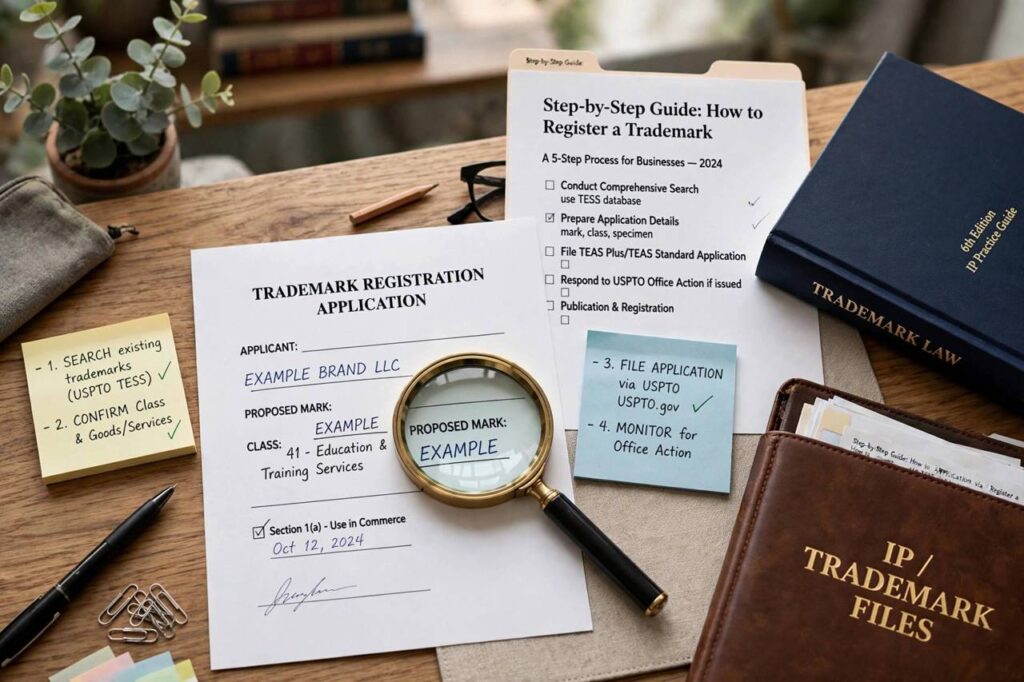
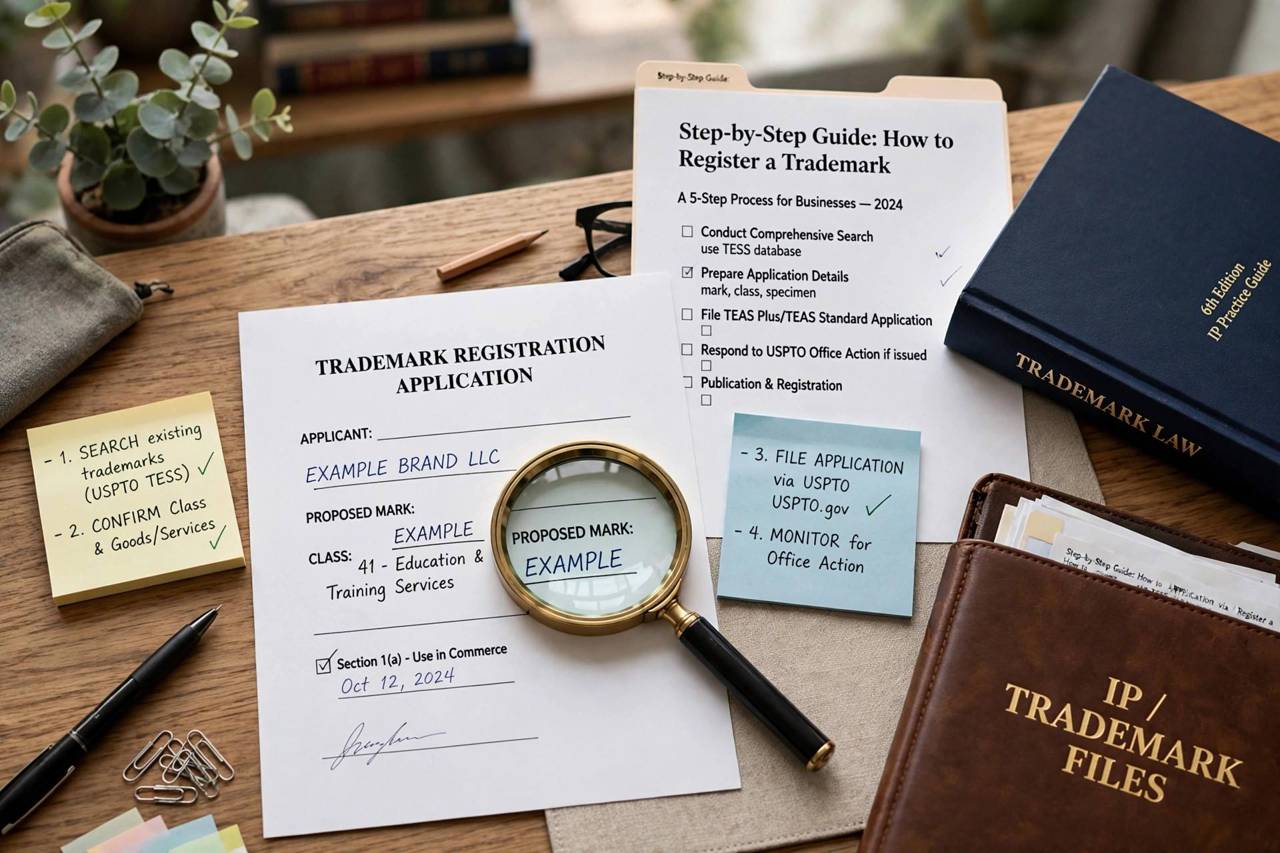
Knowing how to register a trademark is one of the most practical legal skills a business owner can have. A trademark protects your brand: your business name, your logo, your slogan, the things customers use to recognize you. Registration gives you the exclusive right to use that mark for your goods or services across the country, and it gives you real tools to stop copycats. This guide walks through the process in plain English, step by step. One important note up front: this is general information about how the process works, not legal advice for your specific situation. Trademark law has edge cases, and a trademark attorney is worth the consultation for anything valuable.
Before the steps, understand what a trademark actually is. It is not the same as a business registration, a domain name, or a copyright. Registering your LLC with the state does not protect your brand name. Owning the .com does not either. And copyright protects creative works, not brand identifiers, though the two sometimes overlap. If you want the story on the creative side, our explainer on AI art copyright rules shows how differently copyright treats ownership questions. A trademark is specifically about preventing customer confusion: stopping someone else from using a name or logo similar enough to yours that buyers get misled.
Step 1: Make Sure Your Mark Can Be Protected
Not every name qualifies. Trademark law sorts marks by strength. Fanciful marks, invented words like Kodak or Xerox, are strongest. Arbitrary marks, real words used unrelatedly like Apple for computers, are strong too. Suggestive marks hint at the product without describing it. Descriptive marks, which merely describe what you sell, are weak and usually cannot be protected unless they have built up recognition over years. Generic terms, calling your flour brand Flour, can never be trademarks.
The practical takeaway: pick a distinctive name from the start. A clever, unique brand name sails through registration; a descriptive one fights for every inch. Founders who name their company something like Best Plumbing Services often learn this the expensive way.
Step 2: Search Before You File
This is the step people skip, and skipping it is how you lose your filing fee. Before spending a dollar, search the USPTO’s Trademark Electronic Search System for identical or similar marks in your industry. Similar matters as much as identical: the test is likelihood of confusion, so a name that sounds alike, looks alike, or means the same thing in the same business category can block you.
Search beyond the federal database too. Check state trademark registries, business name databases, domain registrations, and plain web searches. An unregistered but actively used mark can still have common-law rights in its area. A thorough search takes an afternoon; a refused application costs months. Many attorneys offer a professional clearance search, which is worth considering for a brand you plan to build a business on.

Step 3: Identify Your Goods and Services
Trademarks are not blanket ownership of a word; they protect the mark in connection with specific goods or services, organized into numbered classes. Clothing is one class, restaurant services another, software another. You must list exactly what you sell or plan to sell. List too narrowly and competitors slip into adjacent categories; list too broadly and the application gets challenged or refused.
Think about where the business is going, not just where it is. If you sell t-shirts now but plan a clothing line later, the classification strategy differs. This is one of the places where an hour with a trademark attorney pays for itself many times over.
Step 4: File the Application
Applications are filed online with the USPTO through the Trademark Electronic Application System. You will provide the mark itself, or an image of the logo, the owner (you personally or your company), the filing basis, and the classes of goods and services. The filing basis matters: use in commerce means you are already using the mark in business, while intent to use means you plan to, with proof of use required later before registration issues.
Filing fees are charged per class, so multi-class applications add up. Double-check everything before submitting; errors in the mark itself or the owner name are difficult and sometimes impossible to fix after filing. Then the waiting begins: the USPTO assigns an examining attorney, and the queue typically runs several months.
Step 5: Survive Examination
The examining attorney reviews your application for problems: conflicts with existing marks, descriptiveness, improper classification, and technical defects. If issues arise, you receive an Office Action explaining them, and you have a deadline, usually several months, to respond. Many Office Actions are fixable: narrowing the goods description, disclaiming an unprotectable word within the mark, or arguing that no confusion exists.
Do not ignore an Office Action. Miss the deadline and the application goes abandoned, fee gone. If the refusal is substantive, like a likelihood-of-confusion finding against a big existing mark, that is the moment to get professional help rather than guessing at a response.
Step 6: Publication and Opposition
If the application passes examination, the mark is published for opposition. For 30 days, anyone who believes your registration would harm them can file an opposition. Most marks sail through this quietly; oppositions are relatively rare and usually come from larger companies policing their brands. If one arrives, it starts a proceeding similar to a mini-trial, and you will want counsel.
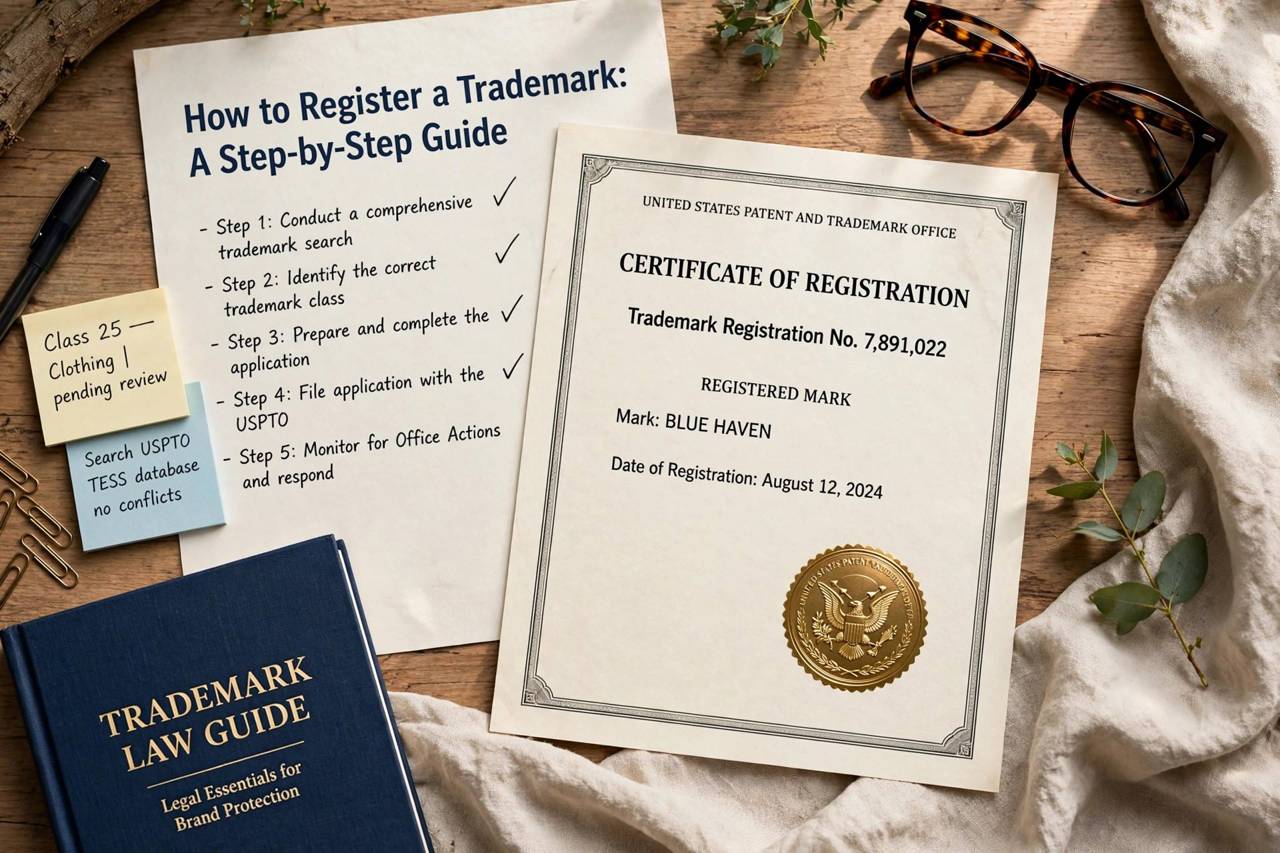
After the opposition period closes with no challenge, or any challenge is resolved, the USPTO issues the registration certificate for use-based applications. Intent-to-use applicants first receive a notice of allowance, then must prove actual use before the certificate issues.
Step 7: Maintain and Enforce It
Registration is not the finish line. Between the fifth and sixth year, you must file a declaration that the mark is still in use. At the ten-year mark, you renew, and every ten years after that. Miss these deadlines and the registration cancels. Use the mark consistently, exactly as registered, in real commerce; a registered mark you stop using can be challenged and lost.
Enforcement is your job, not the government’s. The USPTO will not police the market for you. Watch for infringers, send cease-and-desist letters when warranted, and act consistently; selective enforcement weakens your rights. The registration gives you powerful tools, nationwide presumption of ownership, the ability to sue in federal court, and potential triple damages, but tools only work if you pick them up.
Common Mistakes to Avoid
Filing before searching is the classic blunder. Choosing a descriptive name and expecting strong protection is the second. Filing in the wrong class, or only one class when the business spans three, is the third. Many founders also register the business name with the state and assume they are protected; they are not, not beyond their state and not against federal marks. And the quiet killer: filing and then forgetting the maintenance deadlines, letting a valuable registration die of neglect.
Timeline and Costs in Detail
Here is what to actually expect. Months 1 to 2: search and preparation, including deciding on the mark, checking availability, and choosing classes. Month 2: filing, with fees per class paid up front. Months 3 to 8: waiting for an examining attorney to pick up the application; this queue is the longest dead stretch. Months 8 to 10: examination, possible Office Actions, and responses. Month 10 to 12: publication for opposition, then registration if all goes well. Total out-of-pocket for a single-class DIY filing is a few hundred dollars; add professional help and multi-class filings and a serious brand can run into the low thousands. Budget the money and the patience together.
Trademarks for Online Businesses and Domain Names
Online businesses face a wrinkle: your brand lives as a domain name, social handles, and app listings, but trademark rights come from the registration, not the domain. Owning the .com gives you no trademark rights, and someone with a federal registration can challenge your use of a confusingly similar domain through dispute proceedings. The practical move is to secure the trademark and the digital assets together: file the application, register the domains, and claim the social handles in the same week. A brand is only as protected as its weakest point, and for online businesses the domain is often where disputes start.
How to Register a Trademark Without Overpaying
Trademark costs are controllable if you are strategic. File in only the classes you actually use now; you can add classes later as the business grows, and each class you skip saves a filing fee. Do the initial clearance search yourself with the free USPTO database before paying anyone, so you only hire help for marks that survive your own screening. Respond to simple Office Actions yourself when they are purely technical, like fixing a goods description, and save attorney fees for substantive refusals. And calendar the maintenance deadlines the day your registration issues; a lapsed registration means paying to start over. Smart filing is mostly about not paying twice for the same thing.
Frequently Asked Questions
How long does it take to register a trademark?
Typically 8 to 12 months if everything goes smoothly, longer if the examining attorney issues refusals or someone opposes. Plan for a year and be pleasantly surprised if it moves faster.
How much does it cost to register a trademark?
USPTO filing fees are charged per class of goods or services and run a few hundred dollars each. Attorney fees for search and filing add more. Budget for the filing plus professional help on anything that matters to the business.
Do I need a lawyer to register a trademark?
Not legally; you can file yourself. But the search, classification, and Office Action responses are where applications live or die, and those are exactly where professional experience matters most. For a serious brand, a consultation is cheap insurance.
What is the difference between a trademark and a copyright?
A trademark protects brand identifiers like names, logos, and slogans from customer confusion. A copyright protects original creative works like books, songs, and artwork from copying. A logo can involve both: trademark for its role as a brand identifier, copyright for its artistic expression.
Can I trademark a name someone else is already using?
Generally no, if their use gives them priority rights in the relevant market. Federal registration goes to the first to file in most cases, but an earlier user can oppose or petition to cancel. This is exactly why the pre-filing search matters.