What Does Power of Attorney Mean? A Clear, Simple Guide


Legal documents have a way of making simple ideas sound intimidating, and “power of attorney” is a perfect example. The name sounds grand and a little ominous. The reality is practical and, frankly, something every adult should understand. If you have ever asked yourself, what does power of attorney mean, you are in the right place. In plain English: a power of attorney is a legal document that lets you appoint someone you trust to handle important matters on your behalf. This guide explains what power of attorney means, the different types, and how it works, without the legalese. (As always, this is general information, not legal advice for your specific situation.)
What Does Power of Attorney Mean in Plain English?
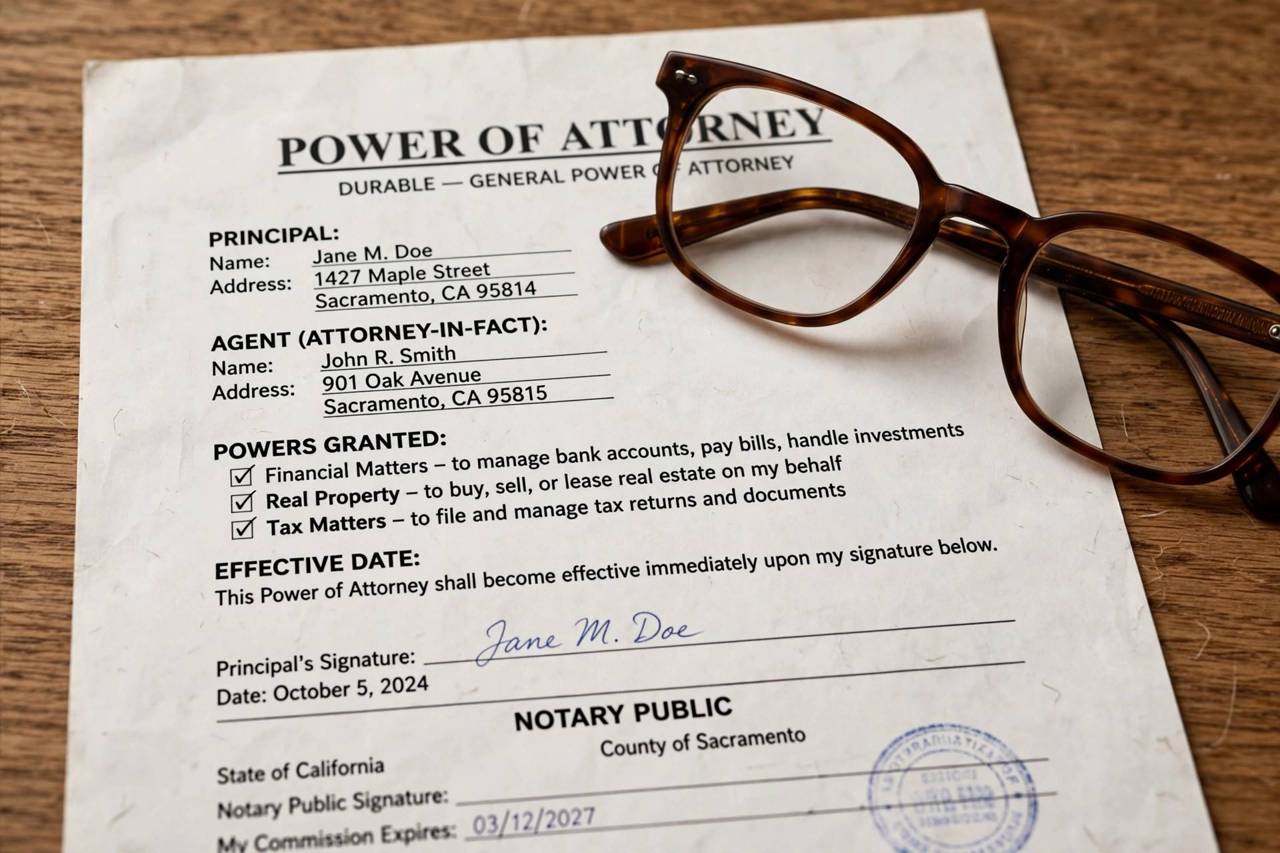
A power of attorney (POA) is a written authorization. You, the principal, give another person, the agent (sometimes called attorney-in-fact), the legal authority to act for you in specified matters. Despite the name, the agent does not need to be a lawyer. It is usually a spouse, adult child, sibling, or trusted friend.
Think of it like handing someone a spare key to your life’s paperwork. With a POA, your agent can do things like pay your bills, manage bank accounts, file taxes, handle insurance claims, or sell property, depending on what powers you grant. The document defines the boundaries: you decide exactly how much authority to give.
Crucially, a POA is about your affairs while you are alive. It is different from a will, which takes effect after death, and different from guardianship, which a court imposes. A POA is voluntary: you choose it, you define it, and in most cases, you can revoke it.

The Main Types of Power of Attorney
Not all POAs are the same. The type determines when it takes effect and how long it lasts:
General power of attorney. Broad authority over financial and legal matters: banking, real estate, taxes, business dealings. It typically ends if you become incapacitated, which surprises many people.
Durable power of attorney. The most important type for planning purposes. “Durable” means it remains valid if you become incapacitated. This is the document that lets a trusted person manage your affairs if illness or injury leaves you unable to. Without it, your family may need a court guardianship, which is slower, public, and expensive.
Springing power of attorney. “Springs” into effect only when a specific event occurs, usually your incapacity as certified by physicians. Some people prefer this because the agent has no power until it is truly needed.
Limited (special) power of attorney. Restricted to a specific task or time period, like selling a car while you are abroad or closing on a house you cannot attend. Narrow, practical, and common.
Medical power of attorney (healthcare proxy). Authorizes someone to make medical decisions for you if you cannot. This is separate from financial POAs in most states, and pairing a durable financial POA with a healthcare proxy covers both halves of life’s emergencies.
What an Agent Can and Cannot Do
An agent’s powers come entirely from the document, and the document can be as broad or narrow as you wish. Commonly granted powers include managing bank accounts and investments, paying bills and taxes, buying or selling real estate, operating a business, handling insurance and retirement benefits, and hiring professionals like accountants on your behalf.
But there are firm limits. An agent generally cannot make or change your will, vote in elections for you, or act beyond the powers the document grants. And the single most important rule: the agent must act in your best interests, not their own. This is a fiduciary duty, a legal obligation of loyalty. An agent who uses your money for themselves is not just unethical; it is illegal, and courts take it very seriously.
Powers end when the document says they end, when you revoke the POA, or, for non-durable POAs, if you become incapacitated. All POAs end at the principal’s death, at which point the will or estate process takes over.
Why Every Adult Should Consider One
People associate POAs with the elderly, but incapacity does not check ID. A car accident, a sudden illness, a complicated surgery, any of these can temporarily leave a capable adult unable to manage their affairs. Without a durable POA, even a spouse can face hurdles: banks may freeze individual accounts, bills go unpaid, and simple tasks require court intervention.
Consider a few scenarios. You are deployed overseas and a property closing needs your signature: a limited POA solves it. You are under anesthesia for a week and the mortgage is due: a durable POA lets your agent pay it. Your aging parent is showing early signs of cognitive decline: a durable POA signed now, while they have capacity, prevents a future guardianship battle.
The key word is while they have capacity. A POA must be signed when the principal understands what they are signing. Waiting until someone is incapacitated means the option is gone, and the family is headed to court. This is the conversation to have early, calmly, and well before it is urgent.
How to Set Up a Power of Attorney
Step 1: Choose your agent carefully. This is the whole decision. Pick someone trustworthy, responsible with money, organized, and willing to serve. Name a backup agent too. Have an honest conversation with them before any paperwork.
Step 2: Decide the scope. General or limited? Durable? Effective now or springing? Most estate planners recommend a durable POA effective immediately for maximum usefulness, but your situation may differ.
Step 3: Get the right document. Requirements vary by state: some need specific language, witnesses, or notarization. State-specific statutory forms exist in many places and are often free. For complex estates or business interests, an attorney’s help is worth the cost.
Step 4: Sign properly. Follow your state’s formalities exactly: signatures, witnesses, notarization as required. A technically flawed POA can be rejected by banks when it matters most.
Step 5: Store and share copies. Give copies to your agent, your backup, and keep the original somewhere safe but accessible. Tell your bank a POA exists; some institutions have their own acceptance procedures worth completing in advance.
If you are getting your legal paperwork in order more broadly, business owners may also want to look at foundational documents like an LLC operating agreement template to keep business affairs equally well organized.
Common Mistakes to Avoid
Choosing the wrong agent. Proximity is not qualification. The nearby relative who is terrible with money is a worse choice than the responsible friend across the country. Choose competence and character.
Using a generic online form for a complex situation. Simple situations suit statutory forms fine. Blended families, business ownership, or significant assets deserve professional drafting.
Never telling the bank. Banks can be cautious about POAs, especially older ones. Introducing the document to your financial institutions ahead of time prevents rejection during a crisis.
Forgetting to update it. Review your POA after major life events: marriage, divorce, a falling-out with your agent, moving states. An outdated POA naming an ex-spouse is a disaster waiting to happen.
Assuming one document covers everything. A financial POA does not authorize medical decisions in most states. Pair it with a healthcare proxy and, ideally, a will, for complete coverage.

Power of Attorney vs. Similar Documents
Quick distinctions that clear up constant confusion. POA vs. will: a POA works during your life; a will works after death. POA vs. guardianship: a POA is your voluntary choice; guardianship is court-imposed when no POA exists. POA vs. joint account: adding someone to a bank account gives them ownership rights; a POA gives them authority without ownership. Financial POA vs. healthcare proxy: money matters versus medical decisions, usually separate documents.
Understanding these boundaries helps you build a complete plan rather than assuming one document does it all.
Real-World Scenarios: POA in Action
Abstract definitions stick better with stories, so here are three situations where a POA does its quiet, essential work.
Scenario one: the overseas assignment. Daniel accepts a two-year work posting abroad. Before leaving, he signs a limited POA authorizing his sister to manage his rental property: collecting rent, paying the mortgage, handling repairs. The document expires when he returns. Without it, every signature would require international coordination or an expensive trip home.
Scenario two: the sudden emergency. Maria, 52 and healthy, suffers a severe stroke. She had signed a durable POA years earlier naming her husband as agent, plus a healthcare proxy naming her daughter. Her husband keeps the household running, pays medical bills, and manages investments while she recovers. Her daughter makes medical decisions with the doctors. Because the paperwork existed, the family faced a medical crisis, not a legal one.
Scenario three: the aging parent. Robert notices his 78-year-old father struggling with bills and paperwork. They visit an attorney together while his father is fully capable, and his father signs a durable POA naming Robert as agent, effective immediately but used only as needed. Two years later, when his father’s cognition declines, Robert steps in seamlessly. No court, no guardianship, no family conflict, because the decision was made early with everyone at the table.
Three different lives, one common thread: the POA was created before it was needed. That is the entire lesson. These documents are at their most powerful when they feel unnecessary.
Key Takeaways
A power of attorney is a legal document authorizing someone you trust to act on your behalf. The durable POA, which survives incapacity, is the most important type for planning. Choose your agent for trustworthiness and competence, define the scope clearly, follow your state’s signing formalities, and share copies with your agent and bank. Pair it with a healthcare proxy for complete coverage, review it after major life changes, and create it while you have capacity, because waiting until you need it is waiting too long. This is general information; consult an attorney for advice about your situation.
FAQ
What does power of attorney mean in simple terms?
It means you legally authorize someone you trust (your agent) to handle specified matters on your behalf, such as finances, property, or legal affairs. You define exactly what powers they have.
Does power of attorney survive if someone becomes incapacitated?
Only a durable power of attorney does. A standard general POA ends upon incapacity, which is why estate planners overwhelmingly recommend the durable version.
Can a power of attorney be revoked?
Yes, as long as the principal has mental capacity. Revocation should be in writing, with copies sent to the agent and any institutions that received the original.
Does the agent have to be a lawyer?
No. Despite the name, the agent (attorney-in-fact) is usually a trusted family member or friend. Choose someone responsible and trustworthy.
What is the difference between power of attorney and a will?
A power of attorney operates during your lifetime and ends at death. A will takes effect after death to distribute your assets. They serve completely different purposes.