How Does the Appeals Process Work? A Plain-English Guide


Losing a court case feels final, but in most legal systems it is not necessarily the end. If you are wondering how does the appeals process work, the short version is this: an appeal asks a higher court to review what happened in the lower court — not to rehear the whole case from scratch, but to check whether significant legal errors affected the outcome. This guide walks through the process in plain English: who can appeal, the strict deadlines, what happens at each stage, what the higher court can actually do, and what it realistically costs. Note this is general information about how appeals function, not legal advice for any specific case.

What an Appeal Is — and Is Not
An appeal is a request for a higher court to review a lower court’s decision for legal error. That distinction matters enormously. Appellate courts generally do not hear new witnesses, accept new evidence, or decide who was telling the truth — the trial court already did that. Instead, they examine the record: transcripts, exhibits, and the judge’s rulings, asking whether the law was applied correctly and whether procedures were fair. Common grounds include a judge misinterpreting a statute, admitting evidence that should have been excluded, giving the jury wrong instructions, or a decision no reasonable view of the evidence could support. “I disagree with the verdict” alone is not enough; you need an arguable legal mistake.
Who Can Appeal, and When
Generally, the party that lost — or won only partially — can appeal, though the specifics depend on the type of case and jurisdiction. In criminal cases, a convicted defendant can usually appeal the conviction or sentence; the prosecution’s right to appeal is much more limited. In civil cases, either side can typically appeal an adverse final judgment. Timing is brutal: appeal deadlines are short, often 30 days from the judgment, and missing the deadline usually kills the appeal outright. The first step is filing a notice of appeal, a short document that simply preserves your right while the detailed arguments are prepared. If a deadline might be near, speak to a lawyer immediately — this is the one step where delay is fatal.
Building the Record and Writing the Briefs
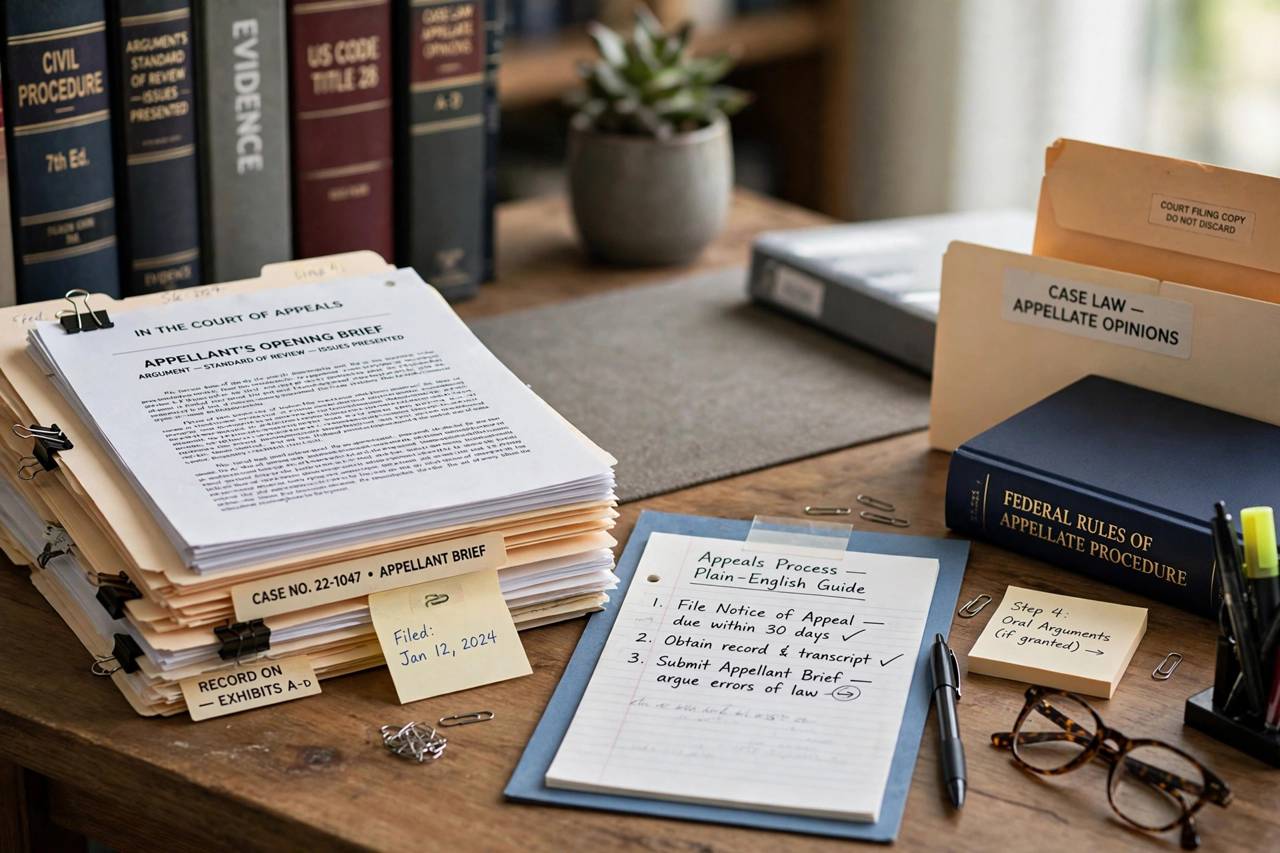
Once the notice is filed, the trial court record is assembled and sent up: every transcript, exhibit, and filing. Then comes the written heart of the appeal — the briefs. The appellant’s brief lays out the claimed errors, cites the relevant law, and explains why the errors mattered to the outcome. The other side files a response brief defending the judgment. The appellant may file a short reply. Briefs are formal, heavily cited documents governed by strict formatting and page rules, and they do most of the persuasive work — many appeals are decided on the briefs alone. This stage typically takes several months, and quality here decides cases far more often than courtroom drama does.
Oral Argument: The Hearing
In many appeals, the court schedules oral argument: a structured session where each side’s lawyer answers the judges’ questions, usually with 15 to 30 minutes per side. It is nothing like a trial — no witnesses, no theatrics. The judges have read the briefs and use the time to probe weak points, test hypotheticals, and explore the consequences of each possible ruling. Good appellate lawyers prepare by anticipating the hardest questions, not by rehearsing speeches. Some appeals are decided without any oral argument at all, on the papers. After argument, the case is submitted and the waiting begins — decisions commonly take weeks to many months.
What the Appeals Court Can Do
The court has a menu of outcomes. It can affirm the judgment, leaving everything as it was. It can reverse, wiping out the lower court’s decision — sometimes entering judgment for the other side, sometimes sending the case back. It can vacate part of a ruling while leaving the rest intact. Or it can remand, sending the case back to the trial court with instructions, for example to hold a new trial or recalculate damages. A remand is not necessarily a victory lap; it means the fight continues under corrected rules. The court can also dismiss the appeal on procedural grounds, such as a missed deadline or a non-appealable order, without reaching the merits at all.
Further Appeals and the End of the Road
Losing an intermediate appeal is not always the end either. Most systems allow a further appeal to the highest court, but these are usually discretionary — the top court chooses which cases to hear, often selecting those with broad legal significance rather than individual hardship. Acceptance rates are low, typically a small single-digit percentage. Beyond that, options narrow to rare remedies like rehearing petitions. Each level adds months or years and significant cost, which is why experienced lawyers assess appeal prospects coldly at the start: the strength of the legal error, the standard of review, and what a win would practically achieve. Some battles are worth fighting; some judgments are better accepted.

Costs, Timelines, and Practical Realities
Appeals are slow and expensive. Transcripts alone can cost thousands; full legal fees for briefing and argument run far higher, and the process commonly takes a year or more. Filing fees, bond requirements (sometimes needed to pause enforcement of the judgment during appeal), and the other side’s potential cost claims all add up. Legal aid or pro bono help exists in some categories, particularly criminal appeals, but civil appellants usually pay their own way. One more practical point: appealing does not automatically pause the judgment — the winner can often still enforce it unless the court grants a stay. Anyone considering an appeal should get a candid case assessment from a qualified lawyer before committing money and months.
Common Misconceptions
Several myths deserve clearing up. An appeal is not a retrial — you cannot present your case again with better witnesses. New evidence is generally inadmissible; narrow exceptions exist for evidence that could not possibly have been found earlier. The appeals court does not reweigh credibility — it defers to the trial judge or jury on who to believe. Winning an appeal does not always mean winning the case — a remand for a new trial starts the contest over. And “taking it to the highest court” is not a right in most systems; it is a long shot granted sparingly. Understanding how does the appeals process work in reality, rather than from television, is the first step to using it wisely.

How Does the Appeals Process Work? A Typical Timeline
Expect the process to unfold roughly like this. Weeks 1 to 4: the notice of appeal is filed and the trial record is ordered — transcripts are prepared, which takes time. Months 2 to 5: the appellant’s brief is researched and written, then filed under strict deadlines. Months 5 to 8: the responding brief arrives, followed by an optional reply brief. Months 8 to 12: the court reviews the briefs and either schedules oral argument or decides on the papers. Months 12 to 18: the decision issues — an opinion that affirms, reverses, or remands. Some courts move faster, complex cases slower, but a year to eighteen months is a realistic expectation. Knowing the timeline helps set expectations: appeals reward patience, and nothing about the pace reflects the merits of your case.
Appeals vs. Retrials vs. Pardons: Don’t Confuse Them
These remedies get mixed up constantly. An appeal asks a higher court to review legal errors in the existing record — no new trial, no new evidence. A retrial (ordered after a successful appeal or a mistrial) means the case is heard again from scratch in the trial court. A pardon is an executive act of forgiveness that does not declare innocence or correct legal error; it simply relieves the punishment. Post-conviction relief (like habeas corpus petitions) challenges detention on constitutional grounds through a separate proceeding. Each has different rules, deadlines, and standards. When someone says they will “appeal,” they usually mean exactly the process described in this guide — but knowing the alternatives exist helps you ask your lawyer the right questions.
Should You Appeal? A Decision Framework
Not every loss deserves an appeal. Work through these questions honestly. One: is there an identifiable legal error, or just disappointment with the outcome? Only the former supports an appeal. Two: did the error likely affect the result? Harmless errors — mistakes that changed nothing — do not win appeals. Three: what is the standard of review? Some issues get fresh review; others require showing the trial court was wildly unreasonable, a much harder bar. Four: what does winning actually get you — a new trial, a reduced award, a resentencing? Weigh that against a year or more of cost and stress. Five: can you afford it, and is funding available? An appeal you cannot finish is money burned. If the answers are mostly yes, consult an appellate specialist promptly — and calendar that deadline today.
The Human Side of Appeals
Behind every appeal is a person living with uncertainty for a year or more, and that deserves acknowledgment. Appellants describe the process as emotionally strange — the intense fight of the trial gives way to months of silence while briefs are written and judges deliberate. Lawyers advise clients to live their lives during the wait rather than pausing everything for a decision that may be a year away. Families feel the financial strain, especially when the judgment being appealed involves money. Support matters: clear communication from your lawyer about timelines, honest assessments rather than false hope, and a plan for either outcome. Win or lose, most appellants say the process taught them something about patience — an expensive lesson, but a real one.
Frequently Asked Questions
How long does the appeals process take?
Typically a year or more from notice of appeal to decision, depending on the court and case complexity. Briefing alone often takes several months, and courts decide cases in the order submitted.
Can new evidence be introduced on appeal?
Generally no. Appeals review the existing trial record for legal error. Narrow exceptions exist for newly discovered evidence that could not have been found earlier, but they are difficult to meet.
What are the chances of winning an appeal?
Reversal rates vary widely by jurisdiction and case type, but affirmance is the most common outcome. Appeals succeed most often where there is a clear, prejudicial legal error — which is why an honest early assessment matters.
Does filing an appeal stop the judgment?
Not automatically. The winning party can usually enforce the judgment unless the appeals court grants a stay, which sometimes requires posting a bond. Ask your lawyer about a stay immediately if enforcement would cause harm.
Do I need a lawyer for an appeal?
It is strongly advisable. Appellate practice is technical — strict deadlines, formal brief requirements, and standards of review that differ from trial practice. Mistakes at this stage are often unfixable.