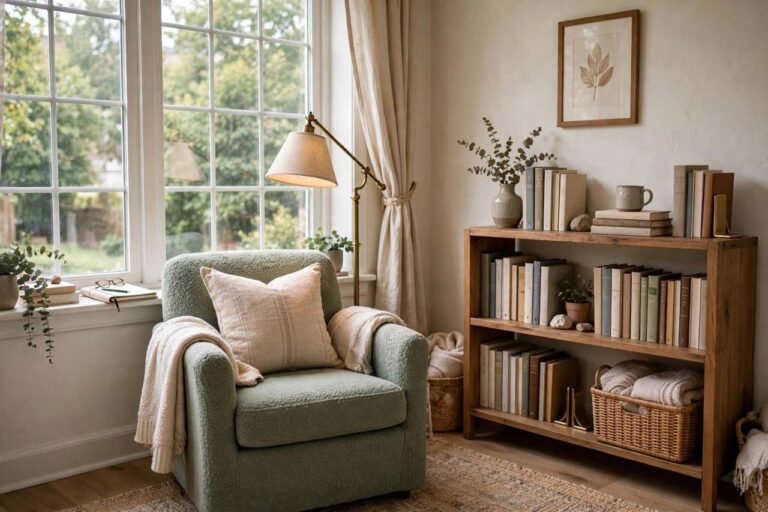
How to Organize Your Bookshelf: 12 Ideas That Actually Work

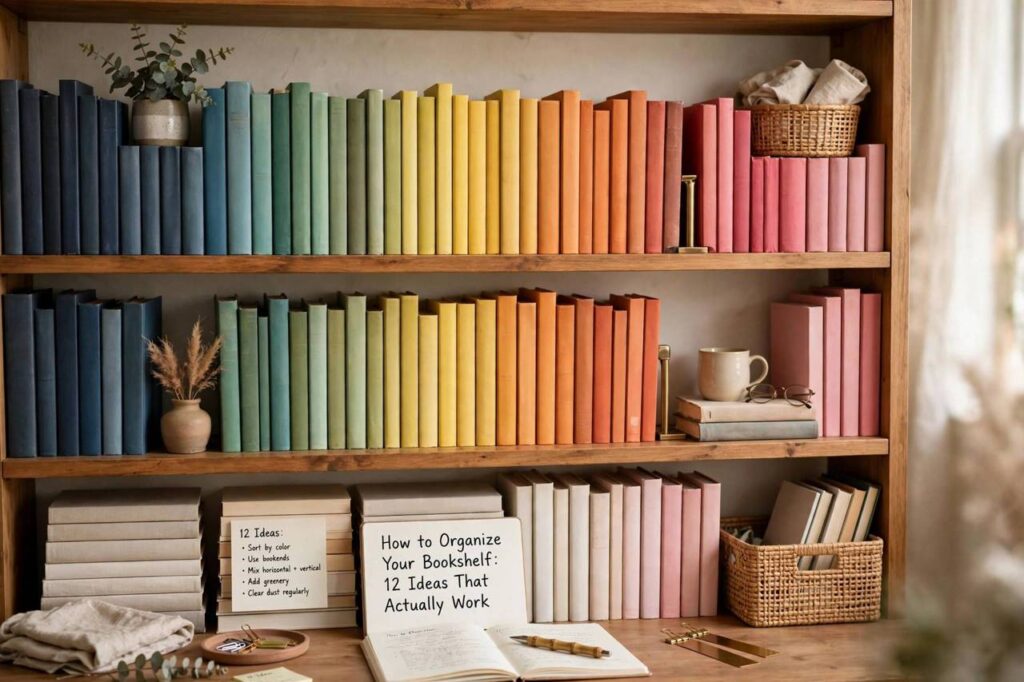
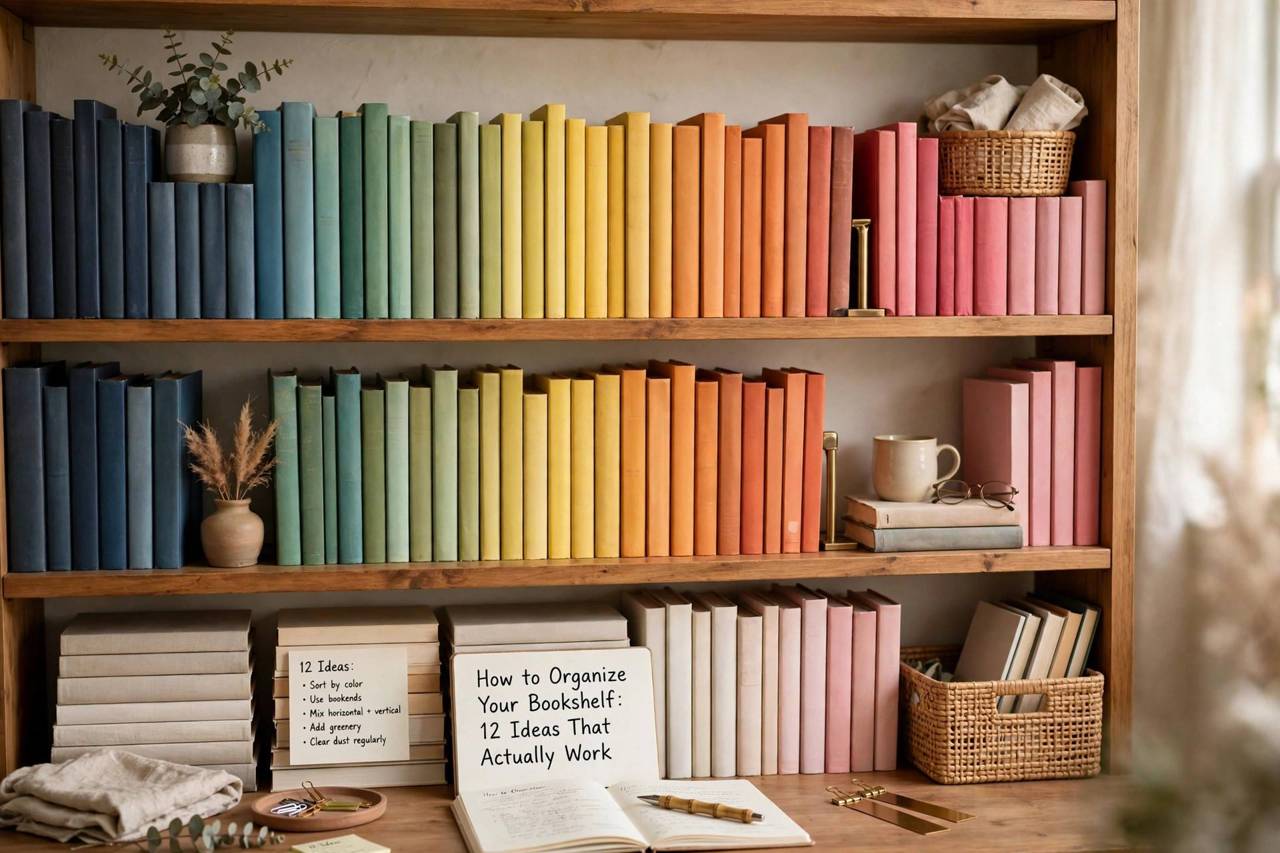
Learning how to organize your bookshelf sounds like a small weekend project, and then you pull the first stack of books down and realize it’s an afternoon. Mine had gotten to the point where books were double-parked behind other books, which is the shelf equivalent of hoarding. But here’s the good news: there isn’t one correct method. The best system is the one you can keep up without thinking about it. This guide walks through twelve approaches — from sorting by color to shelving by how often you reread — so you can pick the combination that suits your space, your memory, and how your brain finds things.
Before choosing a method, take everything off the shelf. Every single book. Dust the shelves, wipe the covers, and make a donation pile for the books you know you’ll never read again. This reset matters more than the system you pick afterward, because an organized shelf filled with books you don’t love is just clutter with better lighting. If you’re working in a tight space, the same declutter-first rule applies: I pair this whole process with my room-by-room decluttering routine before touching a shelf.
How to Organize Your Bookshelf by Color
The rainbow shelf is the most photographed method in existence, and it’s polarizing for a reason. Sorting by spine color looks gorgeous — there’s no arguing with it — but it scrambles authors, series, and genres into a gradient. That works if you remember what your books look like. If you remember books by title, it’ll drive you mad.
The trick that makes color-sorting livable: do it in broad color families instead of a perfect rainbow gradient. Black, white, red, blue, green, yellow, multicolor. Seven groups instead of thirty micro-shades. You still get the visual punch, and you can find a book by scanning its family instead of remembering that your copy of a certain novel has a teal spine with a yellow band.
Series stay together under this method. Don’t split a trilogy across three colors just for the aesthetic; group the series in the color that dominates the set, or keep series on their own shelf and color-sort the rest. A shelf that looks pretty but loses your books isn’t organized — it’s decorated.
Sort by Genre or Subject
If you use your library as a reference tool — cookbooks you cook from, craft books you actually open, history you reread — genre sorting is the most functional choice. Fiction by genre (mystery, romance, sci-fi, literary), nonfiction by subject (history, science, biography, self-development). Within each genre, alphabetical by author keeps it browsable.
This is also the method that handles growth best. When you bring home a new novel, you know exactly which section it joins. Color-sorting makes you reshuffle half a shelf for one book; genre-sorting absorbs newcomers gracefully. For readers with mixed collections — some novels, some poetry, some reference — genre is almost always the right answer.
Shelve Alphabetically by Author
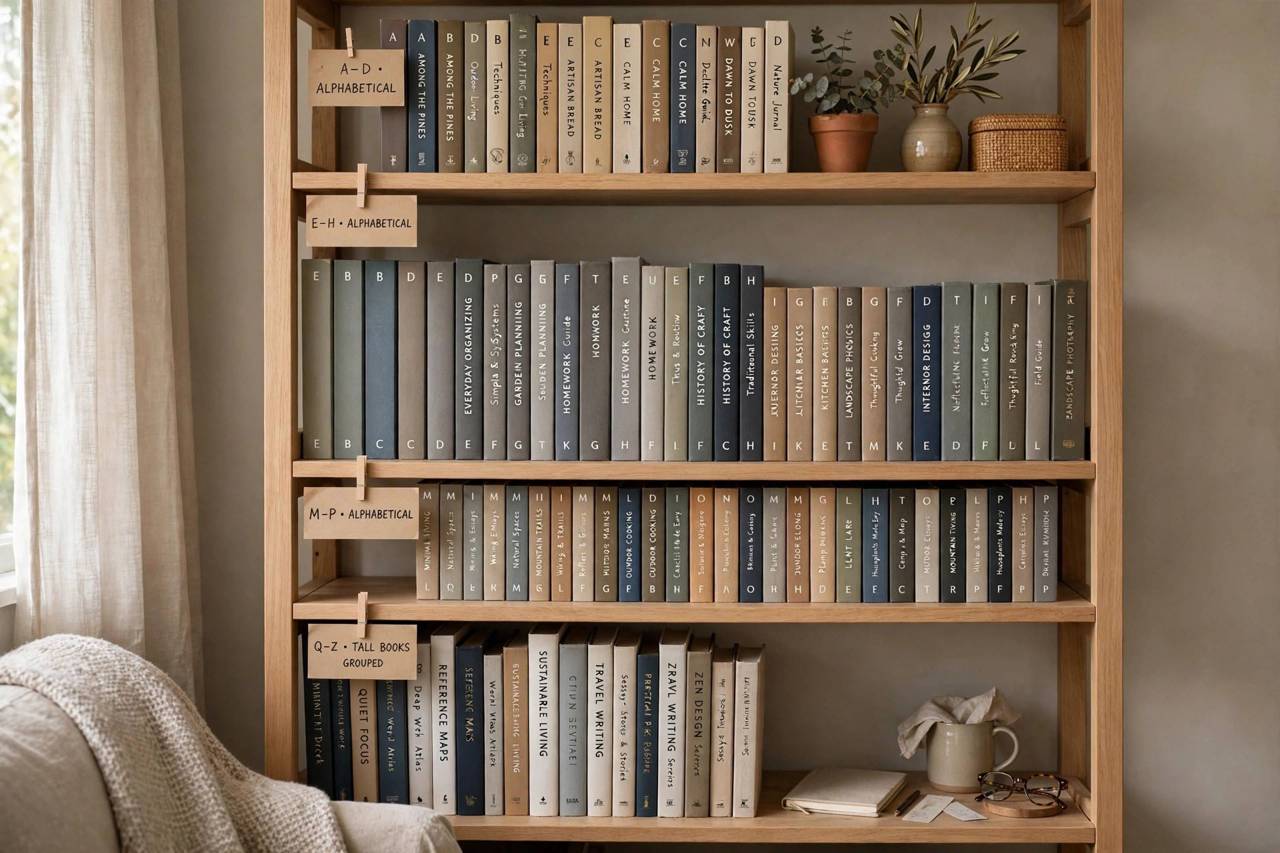
The librarian’s classic. Last name, A to Z, left to right, top shelf to bottom. It’s ruthlessly logical, guests can find anything without asking you, and it plays well with series (same author, publication or series order within the author block).
The downside is purely visual: alphabetical shelves look orderly but rarely striking. Tall books land next to short books and the spine line gets jagged. Fix it by putting oversized art and coffee-table books on their own shelf — they’re alphabetical outliers anyway, and they look better grouped.
Arrange by Size and Height
Some shelves — deep built-ins, short cubbies, adjustable shelving — demand that size comes first. Line each shelf with the tallest books first and descend to the shortest, or group by height bands so the spine line runs smooth. This is the most forgiving method for mismatched shelves and the one interior designers default to when the shelf is part of the room’s look.
You can layer a second system on top: size first, then author or genre within each height band. The result looks curated and stays findable. One warning — reshelving takes longer because every returned book needs its height slot, so this method suits people who finish shelves rather than rearrange them monthly.
The Rainbow-to-Genre Hybrid
If you want the rainbow look and the findability of genre, dedicate one shelf (or one bookcase) to each. Living room gets the color-sorted showpiece; the office or bedroom gets the genre-sorted working library. Or go horizontal: rainbow on the top shelves where guests look, genre on the lower shelves where you reach.
Organize by How You Read
This one’s for the re-readers. Shelf by frequency: books you reread constantly at eye level, reference books you grab weekly nearby, deep-archive books you keep for love or nostalgia on the top and bottom shelves. Put the to-be-read stack — yes, it deserves a shelf — at the easiest reach of all, because visibility is what turns a TBR pile into finished books.
Within the “reread often” zone, don’t over-systematize. These are your favorites; you know them by sight. A loose grouping by comfort (cozy reads, adventure reads, thinky reads) works better than alphabetizing books you could find blindfolded.
Use the Dewey-ish Trick for Nonfiction
If your nonfiction collection is serious — textbooks, manuals, research — borrow the logic of library classification: broad subject, then narrower topic, then author. History → American history → Civil War, for example. You don’t need actual Dewey numbers; the habit of nesting topics is what matters. Labeling shelf edges with small bookplates or washi tape makes it stick.
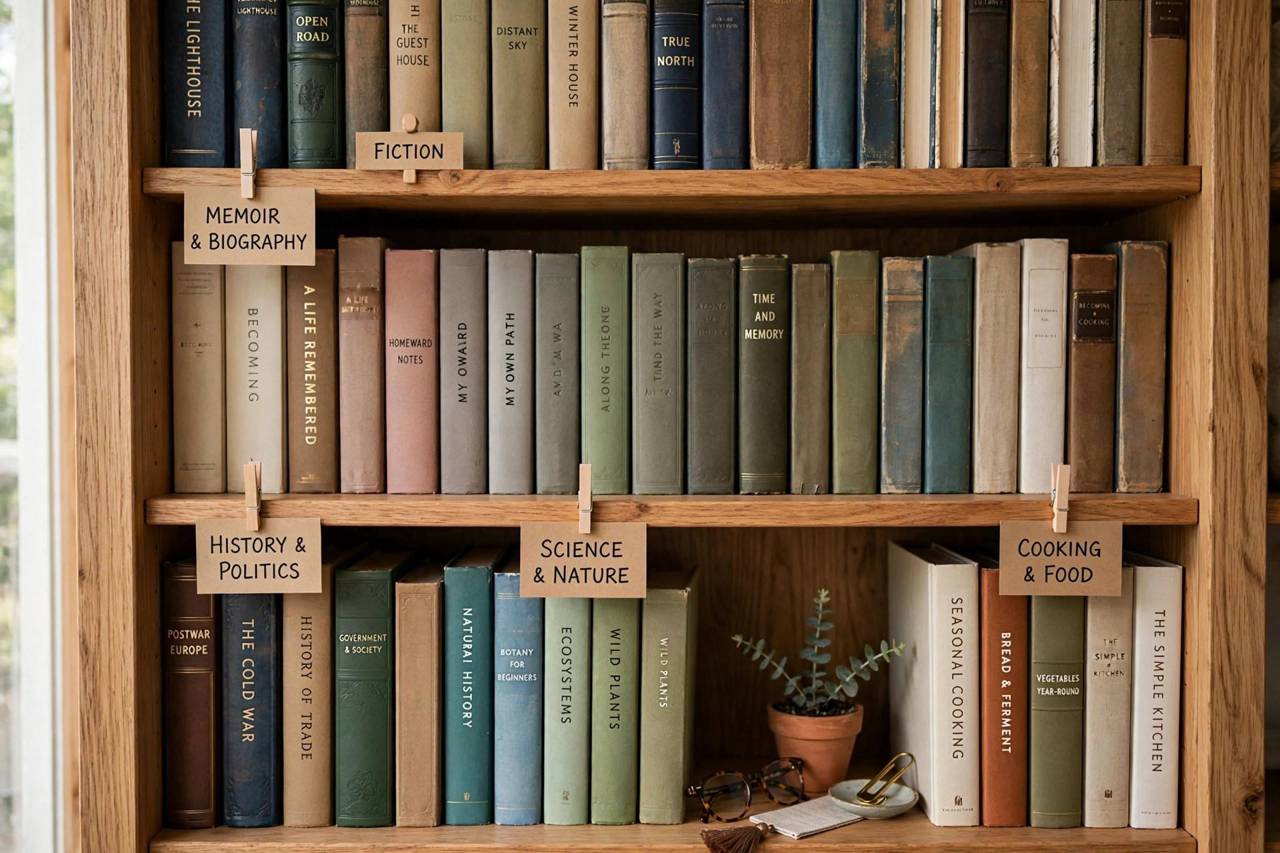
Display Some Books Face-Out
Bookstores face out their best covers because it works. You don’t need many — three or four per shelf is plenty — but face-out display breaks up the spine wall and makes the shelf feel curated instead of crammed. Rotate them seasonally or whenever you finish a favorite. This pairs especially well with genre sorting, since a face-out book advertises its whole section.
Corral the Odd Shapes
Oversized art books, spiral-bound manuals, graphic novels, and those weird tall paperbacks all break every system. Give them their own shelf or stack them horizontally at the end of a shelf as bookends. Horizontal stacks are also where your tallest books go when nothing else fits — a stack of three big books can anchor a whole shelf’s look.
Leave Breathing Room
The single biggest difference between a shelf that looks organized and one that looks stuffed is negative space. Aim for each shelf to be about 85 percent full. That leftover space is where new books go without a reshuffle, and it’s what lets you pull a book out without dislodging its neighbors. If every shelf is packed to the lip, no system will save it — thin the collection first.
Label the Back of Shelves for Kids’ Books
Kids’ books have a way of defeating adult systems, so give them a system a child can follow. Picture labels on shelf edges — animals for picture books, rockets for early readers — let little kids reshelve correctly. Sort by series and size rather than author, since kids remember characters, not surnames. And keep their shelves low; a system they can’t reach isn’t their system.
Maintain It in Five Minutes
Every system decays. Books get left on tables, new books arrive, and the shelf drifts. The fix is a five-minute weekly reset: walk the shelves, return strays to their homes, and straighten the face-outs. It’s the shelf equivalent of making the bed — small, fast, and weirdly satisfying. Once a year, do the full pull-down-and-dust reset and reassess whether your system still fits your collection. Collections change; systems should too.
And if you’re short on space overall, shelves work best inside a room that’s already under control — my small-apartment organizing guide covers the bigger picture, from furniture placement to storage that doesn’t eat your floor space.
Shelving for Small or Awkward Spaces
Not everyone has a wall of built-ins. If you’re working with a single narrow bookcase, a few floating shelves, or the classic student setup of books stacked on a dresser, the principles shrink but don’t change. Prioritize ruthlessly: the awkward space gets your current reads and favorites, and everything else goes into labeled boxes in a closet. A small shelf that’s curated beats a big shelf that’s chaotic.
For deep shelves — the kind where books disappear into shadow — try two rows with risers. A simple shelf riser or even a sturdy box at the back lifts the rear row above the front one, so nothing hides. For very tall shelves with wasted vertical space, add a mid-shelf with inexpensive shelf pegs and a cut board; most bookcases have the peg holes already, waiting. And if your shelves are in a hallway or other pass-through space, face-out display does double duty: it looks intentional and keeps the books you actually reach for at the front.
Renters, take heart: you don’t need built-ins to have a beautiful library. A single tall bookcase, styled with breathing room and a few face-out covers, reads as deliberate. What makes rental shelving look temporary isn’t the furniture — it’s the overstuffing. Leave the negative space, and even an inexpensive bookcase looks like a choice.
Frequently Asked Questions
What is the best way to organize a bookshelf?
There’s no universal best method — it depends on how you use your books. Readers who reread by genre do best with genre sections; visual people love color sorting; big mixed collections are easiest alphabetically by author. Pick the system that matches how your brain searches, and you’ll actually maintain it.
Should I organize my bookshelf by color or by author?
Choose color if you remember books by what they look like and want the shelf to be part of the room’s decor. Choose author if you have a large collection, buy books often, or want guests to find things without your help. Many people split the difference: color in the living room, author in the office.
How do I organize books when I have too many for my shelves?
First, edit: donate or pass along books you won’t reread or reference. Then double-shelve — rows behind rows only work for deep shelves, so it’s better to add a second bookcase, use the tops of short shelves, or rotate seasonal books into storage boxes. Packing every shelf to the lip always looks chaotic no matter the system.
How often should I reorganize my bookshelf?
Do a full pull-down, dust, and reassess once a year. Between those, a five-minute weekly tidy — returning strays and straightening — keeps any system working. Reorganize early if you find yourself hunting for books regularly; that’s the sign your system no longer matches your habits.
What’s the best way to organize a child’s bookshelf?
Sort by series and size with picture labels a child can follow, and keep their shelves within reach. Kids remember characters, not author surnames, so group by what they recognize. Keep it shallow — a few labeled sections beat an elaborate system they’ll never maintain.
Can I mix different organizing methods on one bookshelf?
Absolutely — most well-kept shelves are hybrids. Common combos: genre with series kept together, size-based shelving with alphabetical authors inside each band, or rainbow display shelves up top with functional genre shelving below. The only rule is that each section’s logic should be obvious at a glance.