


There’s a particular kind of tired that has nothing to do with sleep. You walk through your house and every surface is quietly shouting — the pile on the dining table, the drawer that won’t close, the corner of the bedroom where clean laundry goes to be re-folded later. It’s not dramatic. It’s just a low, constant hum of unfinished business, and it drains you in ways you don’t notice until it’s gone.
I’ve done the big dramatic declutter twice. Bags everywhere, whole weekends, donation runs, the works. And both times the house slowly filled back up, because decluttering as an event doesn’t work. What works is decluttering as a series of small, deliberate decisions — a room at a time, at a pace a normal life can sustain. Here’s the method that finally stuck for me.
One thing about scope: this guide is the whole-house version — room by room, living room to garage, at a pace a normal life can sustain. The one room it deliberately skips in depth is the closet, which deserves its own method and its own afternoon: the full closet guide →
Table of Contents
- Before You Start: The Ground Rules
- Step 1: Start With the Easiest Win
- Step 2: Declutter the Living Room
- Step 3: Declutter the Kitchen
- Step 4: Declutter the Bedrooms
- Step 5: Declutter the Bathroom
- Step 6: Tackle the Hard Zones (Garage, Storage, Paper)
- Step 7: Keep It That Way
- Frequently Asked Questions

Before You Start: The Ground Rules
Every decluttering attempt I’ve ever abandoned failed for the same reason: I treated it like a weekend project instead of a practice. These rules are the difference between the two.
Work in sessions, not marathons
Ninety minutes, tops, per session. Two to three sessions a week. Marathon decluttering produces marathon fatigue, and fatigue produces a half-sorted house and a week of avoidance. Small sessions let you make good decisions instead of desperate ones.
The four-box method
For every room, bring four containers and label them: Keep, Donate/Sell, Relocate (belongs in another room), and Trash/Recycle. Every single item you touch goes into one of the four. No “maybe” pile — the maybe pile is where decluttering goes to die. If you can’t decide in thirty seconds, it goes in Donate. Hesitation is usually the answer trying to get out.
Don’t organize clutter
This is the mistake that eats the most time. People buy bins and label makers before they’ve decided what stays. First you subtract, then you organize what’s left. Organizing things you don’t need is just expensive procrastination.
Get the outgoing stuff out of the house fast
Donation bags that sit in the hallway for three weeks get raided. Schedule the donation drop-off or pickup before you start the room. The exit must be as real as the decision.
Step 1: Start With the Easiest Win
Don’t start with the sentimental stuff, the garage, or the junk drawer. Start with the surface that bothers you most when you walk past it — the dining table, the kitchen counter, the entryway. Visible wins build momentum, and momentum is the fuel this whole project runs on.
My first win was the hall console: a dumping ground for keys, mail, dead batteries, and receipts from 2023. Twenty minutes, one bag of trash, one small tray for the things that actually belonged there. Every time I walked past it that week, I felt a little spark of competence. That’s what you’re building toward — evidence that the house responds to you.
A few easy wins to choose from: the surface you see first when you come home, the kitchen counter, your nightstand, one bathroom shelf. Pick one. Finish it completely. Enjoy it for a day. Then continue.
Step 2: Declutter the Living Room
The living room accumulates because it’s where life happens — and because guests see it, so it carries a particular guilt. Work top to bottom, left to right, touching every object.
Common living room culprits:
- Magazines and catalogs. Keep the current month. Recycle the rest.
- Cables and chargers. Keep one of each type you use. The tangled drawer of mystery cables from 2016 can go.
- Decorative items. You don’t have to become a minimalist, but every object on a surface is something you dust. Pick your favorites, donate the rest. The hygge lifestyle gets this right: a few meaningful things, well-placed, beat a shelf of obligations.
- Books. Be honest about which ones you’ll actually re-read. The aspirational stack can go to someone who wants them now.
- Furniture. One question per piece: does anyone use this, or does it just hold other clutter? The chair that only holds laundry is not a chair.
Step 3: Declutter the Kitchen
Kitchens are the heart of clutter because they’re the heart of the house. Do this in zones: counters, drawers, cabinets, pantry.
Counters first. The goal is a counter that can be wiped in one pass. The toaster you use daily stays. The bread maker you used twice in 2021 goes to storage or donation. Appliance rule: if it hasn’t been used in six months, it lives in a cabinet or leaves the house.
Drawers. Pull everything out, wipe the drawer, put back only what you use. The utensil drawer almost always contains duplicates — three vegetable peelers, two sets of tongs. Keep the best one of each. The gadget drawer (avocado slicer, egg separator, strawberry huller) is a museum of good intentions; keep one or two that genuinely earn their space.
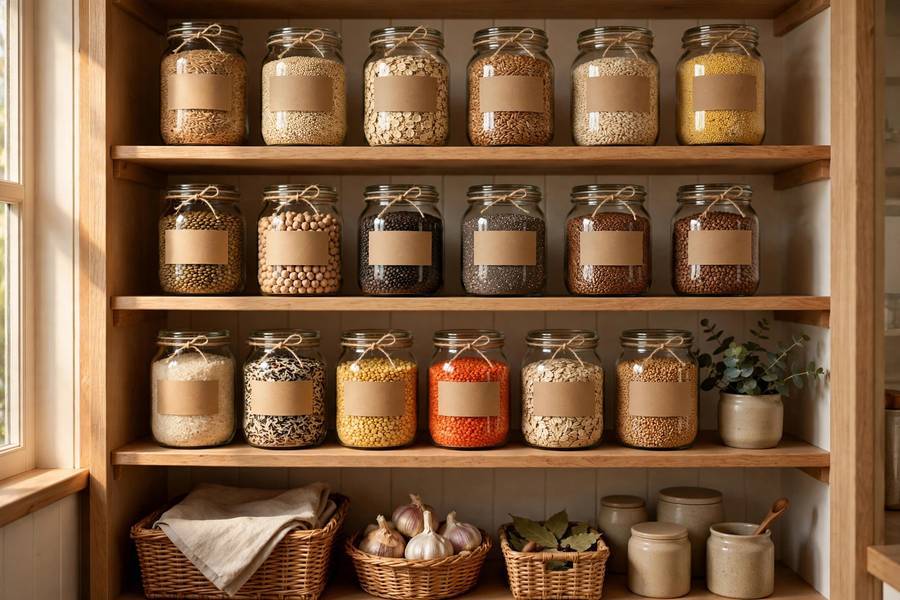
Cabinets and pantry. Check dates. Spices lose potency after about a year — if you can’t remember buying it, replace it. Match every plastic container to a lid; orphans go in recycling. The pantry rule that changed my kitchen: everything visible, nothing behind anything.
Step 4: Declutter the Bedrooms
Bedrooms should be restful, and clutter is the enemy of rest. Start with the surfaces: nightstands, dresser tops, the chair. Then the drawers. Then the closet.
The closet deserves its own session — it’s a project within the project, and this guide deliberately doesn’t try to cover it here. Clothes carry identity, aspiration, and guilt in ways kitchen gadgets don’t, so the full method lives in its own guide: the full closet method →
The short version, so the bedroom flow stays intact: try everything on, keep what fits the body and life you have now, and consider rebuilding around a capsule wardrobe once the closet is clear. Fewer clothes, all wearable, no morning negotiations.
For the rest of the bedroom:
- The nightstand: lamp, book, water. That’s the list. Everything else migrated there by accident.
- Under the bed: if you can’t name what’s under there without looking, pull it out and decide properly.
- The “chair”: give clothes three homes — the closet, the hamper, or one hook for tomorrow’s outfit. The chair is for sitting.
Step 5: Declutter the Bathroom
Small room, fast win, disproportionate satisfaction. Pull everything out of the medicine cabinet and under-sink area.
- Expired and nearly-empty products. Check dates on medications and sunscreen. Toss the hotel shampoo collection. Keep one backup of each staple, not five.
- The makeup and skincare graveyard. If it smells off, changed color, or you bought it more than a year ago and it’s open — it’s done. Mascara older than three months belongs in the trash for hygiene reasons alone.
- Duplicates. You need one shampoo in use and maybe one backup. The tower of half-used bottles is just indecision in plastic.
- Linens. Two sets of sheets per bed is enough. Towels: two per person plus two for guests. The stained ones become cleaning rags or leave the house.
Corral what’s left into trays or small bins so it reads as intentional. A bathroom with clear counters feels twice as big, and the morning routine gets noticeably calmer when you’re not excavating.
Step 6: Tackle the Hard Zones (Garage, Storage, Paper)
Save these for last. They’re the reason decluttering feels impossible, and by the time you get here you’ll have weeks of wins behind you.
The garage/storage room. Same four-box method, but allow more time and bring help — decisions go faster with a second brain. The one-year rule is your friend here: if it hasn’t been used in a year and isn’t a genuine emergency supply or heirloom, it can go. The box labeled “misc” from the last move, unopened? You already know the answer.
Paper. Set up three homes: an inbox tray for new paper, a small filing box for keepers (tax records, warranties, medical), and a shred/recycle routine. Then process the backlog in fifteen-minute sessions. Most of it is trash with extra steps. Going forward, choose paperless billing everywhere it’s offered.
Sentimental items. Give yourself a single memory box with a real size limit and keep only the true keepers in it. Digitize the rest: photograph the kids’ artwork, scan the letters.
Step 7: Keep It That Way
Decluttering fails at the maintenance stage, so build the maintenance in from the start. None of this is dramatic; that’s the point.
- One in, one out. Something new comes in, something old goes out. This single rule prevents most re-clutter.
- The ten-minute reset. Every evening, ten minutes: surfaces cleared, things returned to their homes. A house that’s reset nightly never needs another weekend marathon.
- The donation bag on standby. Keep one bag in a closet. When you notice something you don’t use, it goes straight in. When it’s full, it leaves the house. No waiting, no second thoughts.
- A seasonal pass. Four times a year, one quick walk-through per room. Catches the slow creep before it becomes a project.
- The 24-hour rule for purchases. Want something non-essential? Wait a day. Most urges expire. The ones that don’t are usually worth it — and you’ll enjoy them more in a clear house.
A decluttered house isn’t a perfect house. Mine still has a junk drawer — one, and it’s allowed. The goal was never empty rooms. It was a house that feels like it belongs to me instead of to my stuff. That hum of unfinished business? It’s quiet now.
Frequently Asked Questions
Start with the easiest visible win — the surface that bothers you most when you walk past it, like the dining table, kitchen counter, or entryway. Visible progress builds momentum. Save hard zones like the garage, storage rooms, and sentimental items for last, when you have weeks of wins behind you.
With 90-minute sessions two to three times a week, most houses take four to eight weeks. Marathon weekend sessions usually fail because fatigue leads to bad decisions and burnout. Slow, consistent sessions produce better decisions and results that actually last.
For each room, use four labeled containers: Keep, Donate/Sell, Relocate (belongs in another room), and Trash/Recycle. Every item you touch goes into one of the four — no “maybe” pile. If you can’t decide within thirty seconds, it usually belongs in Donate.
Give yourself one memory box with a real size limit and keep only the true keepers in it. Digitize the rest — photograph children’s artwork, scan letters. Save sentimental items for last, after you’ve built decision-making momentum in easier rooms. The memory survives without the storage burden.
Use the one-in-one-out rule for new purchases, do a ten-minute nightly reset of surfaces, keep a donation bag on standby, and do a seasonal walk-through four times a year. A 24-hour waiting rule for non-essential purchases stops most new clutter before it enters.
No. Organize only after you’ve subtracted. Buying bins and label makers first leads to organizing clutter you don’t need — expensive procrastination. Declutter completely, then buy storage only for what remains, measured to fit the actual items.