

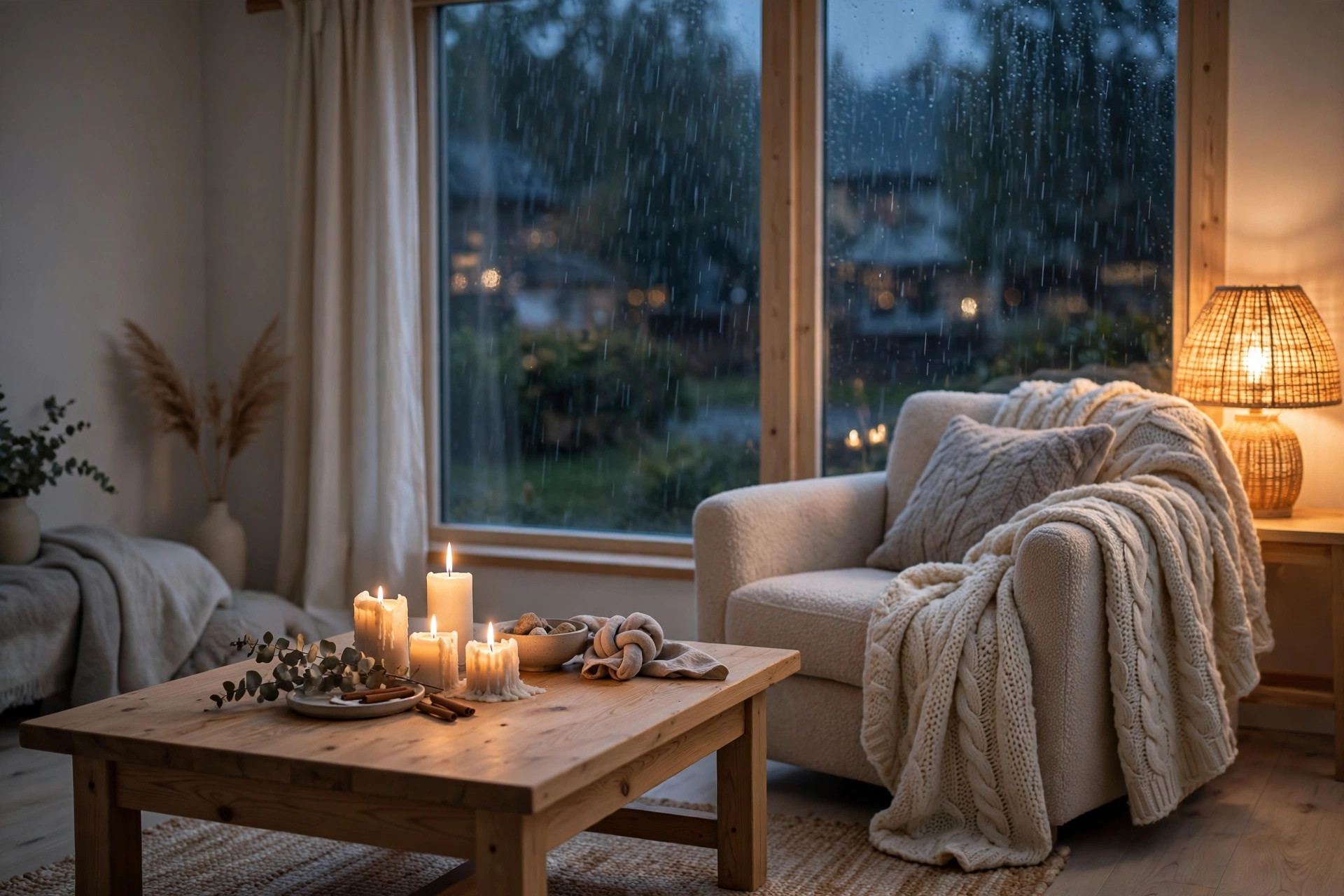
The first time I heard the word “hygge,” I was sitting in a friend’s kitchen on a gray February evening. Candles on the table. Soup on the stove. Nobody checking their phone. Someone said, “This is so hygge,” and everyone nodded like it was the most obvious thing in the world. I had to look it up later. Pronounced “hoo-gah,” by the way — I said “higgy” for an embarrassingly long time.
Here’s what I’ve come to understand since then: hygge isn’t a decorating style or a product category, no matter what the gift guides tell you. It’s a philosophy of paying attention to comfort — yours and the people around you. And in a life that keeps asking for more, faster, it’s quietly radical.
Slow down with me for a few minutes. Let’s talk about living well, not just looking like it.

What Hygge Actually Is
Hygge (noun, Danish) is usually translated as “coziness,” but that undersells it. It’s coziness plus contentment plus togetherness — the warm feeling of a moment that’s exactly enough. A candlelit dinner with old friends. A rainy Sunday with a book and nowhere to be. The first cup of coffee on a quiet morning.
The Danes consistently rank among the happiest people in the world, and hygge gets a lot of the credit in the popular telling. I won’t pretend a cultural philosophy explains national happiness statistics — that’s a bigger story about social trust, work culture, and safety nets. But there’s something real at the center of it: a culture that treats ordinary comfort as worthy of attention, not as a consolation prize for a life that’s otherwise too busy.
That’s the part I keep coming back to. Hygge says the small warm thing matters. Not the vacation. Not the milestone. The Tuesday evening.
What Hygge Isn’t
Before we go further, let’s clear the gift shop out of the room.
Hygge isn’t shopping. You cannot buy hygge, though a thousand product roundups will try to sell it to you. A $60 candle doesn’t create togetherness. The candle companies know this and hope you won’t notice.
Hygge isn’t perfection. It’s not a styled shelf or a color-coordinated throw collection. Real hygge is a chipped mug, a blanket with a pulled thread, a kitchen that smells like actual cooking. If it looks like a magazine shoot, something’s off.
Hygge isn’t isolation. The Instagram version is very solo — one woman, one blanket, one book. But the Danish original is deeply social. Togetherness is one of its core principles. Solitude counts too, but hygge at its best is shared.
Hygge isn’t denial. It’s not about pretending everything’s fine. It’s about making room for warmth alongside whatever else is going on. You can have a hard week and still light the candles.
The 10 Principles (In Plain Language)
Meik Wiking, who runs the Happiness Research Institute in Copenhagen, laid out a “hygge manifesto” of ten principles. They’re worth knowing because they show how much deeper this goes than throw pillows:
- Atmosphere — turn the lights down low. Candlelight over ceiling light, always.
- Presence — be here now. Phones away. This is the hardest one and the most important.
- Pleasure — coffee, chocolate, cake, a long bath. Enjoy things without apology.
- Equality — share the tasks and the conversation. Nobody performs; everybody participates.
- Gratitude — notice what’s good. Say it out loud sometimes.
- Harmony — no bragging, no competing. Leave the highlight reel at the door.
- Comfort — take it easy. Rest is not laziness.
- Truce — no drama, no heavy topics. Hygge time is a ceasefire.
- Togetherness — build relationships and shared stories.
- Shelter — a sense of safety and belonging. Your place, your people.
Read that list again. Notice how few of them you can buy. That’s the whole point.
Hygge at Home: Light, Texture, and the Nook
You don’t need a renovation. You need three things: warm light, soft textures, and one corner that feels like yours.
Light first. Overhead lighting is the enemy of atmosphere. Switch it off and use lamps, candles, and fairy lights instead. The Danes burn more candles per person than anyone else in Europe — it’s not a quirk, it’s the technology of coziness. Real flames beat LEDs for warmth, but use what feels safe in your home.
Then texture. Wool throws, worn wood, linen, a rug your feet actually want to touch. Hygge is tactile. Run your hand over things. If your home feels visually nice but physically cold, add texture before you add anything else.
Then the nook. The Danes have a word for it: hyggekrog — roughly, “the cozy nook.” A chair by the window. A corner of the couch with the good blanket. A spot that says: sit here, stay a while. Everyone deserves one. If you live with other people, negotiate for it. It’s worth it.
None of this requires spending much. The best hygge corner I ever saw was a secondhand armchair, a library book, and a ten-dollar candle. It felt like a hug.
Togetherness: The Low-Key Art of Being With People
Here’s where hygge quietly challenges modern social life. A hygge gathering is the opposite of a dinner party performance. No seating chart. No three-course menu. Just people, showing up as they are.
The formula is simple: keep it small, keep it easy, keep phones away. Soup instead of a production. Board games instead of background TV. Everyone helps with the dishes — that’s the equality principle, and honestly the dishwashing conversation is often the best part of the evening.
I think this is why hygge resonates so much right now. We’re drowning in curated socializing — events designed to be photographed. Hygge asks for the unphotogenic version: the ordinary evening that nobody posts about and everybody remembers. Presence is the whole game. I’ve written before about protecting the life part of your life — hygge evenings are what that protection is for.

Food and Drink the Hygge Way
Hygge food has rules, and they’re all about simplicity:
- Warm and simple. Stews, soups, roasted vegetables, fresh bread. Food that simmers and fills the house with smell.
- Shared. Big bowls in the middle of the table, not plated portions. Passing food around is togetherness you can taste.
- Unfussy. This is not the moment for a twelve-step recipe. If it takes longer to photograph than to eat, it’s not hygge.
- Indulgent without guilt. Cake is practically a hygge food group. The pleasure principle says enjoy it — fully, presently, without the side of self-reproach.
And the drinks: coffee, tea, hot chocolate, mulled wine in winter. The beverage matters less than the ritual — the making, the pouring, the sitting down with it. A slow morning coffee, made properly and drunk without scrolling, is a complete hygge practice. No equipment required.
Hygge Through the Seasons
Everyone associates hygge with winter — candles against the dark, blankets against the cold. And yes, Danish winters are long and dark, which is exactly why the philosophy grew there. But hygge isn’t seasonal. It just changes clothes.
Spring hygge is the first outdoor coffee, windows open, the smell of rain on warm pavement. Summer hygge is a picnic that lasts four hours, bare feet, a bonfire as the light fades. Autumn hygge is the return of the candles, soup season, the particular pleasure of a gray afternoon with nowhere to be.
The constant across seasons isn’t the weather — it’s the attention. Noticing that this moment, right here, is good. That’s a year-round practice.
12 Small Hygge Rituals to Try This Week
Don’t overhaul your life. Pick three.
- Light a candle at dinner, even on a Tuesday.
- Make your morning coffee slowly and drink the first cup without your phone.
- Put a blanket on the couch arm — the invitation matters.
- Call a friend instead of texting. Voice counts as togetherness.
- Cook one simple, warming meal from scratch.
- Take a walk after dark and notice the lit windows.
- Read a physical book for 20 minutes before bed.
- Invite someone over for soup. Keep it casual.
- Write down three good things about today. Gratitude, out loud or on paper.
- Turn off the overhead lights after 7pm for a week.
- Bake something and share it with a neighbor.
- Sit in your nook with tea and do absolutely nothing for ten minutes. Nothing. It’s harder than it sounds, and that’s the point.
Frequently Asked Questions
Hygge is a Danish concept often translated as coziness, but it means more: a feeling of contentment, warmth, and togetherness in ordinary moments. A candlelit dinner with friends, a quiet rainy afternoon with a book, a slow morning coffee — all hygge. It’s a philosophy of paying attention to comfort rather than a decorating style.
Hygge is pronounced “hoo-gah” (rhymes with “tuba”). The first syllable sounds like “who” and the second like “gah.” It’s one of the most mispronounced words in lifestyle writing — now you know better than most of the internet.
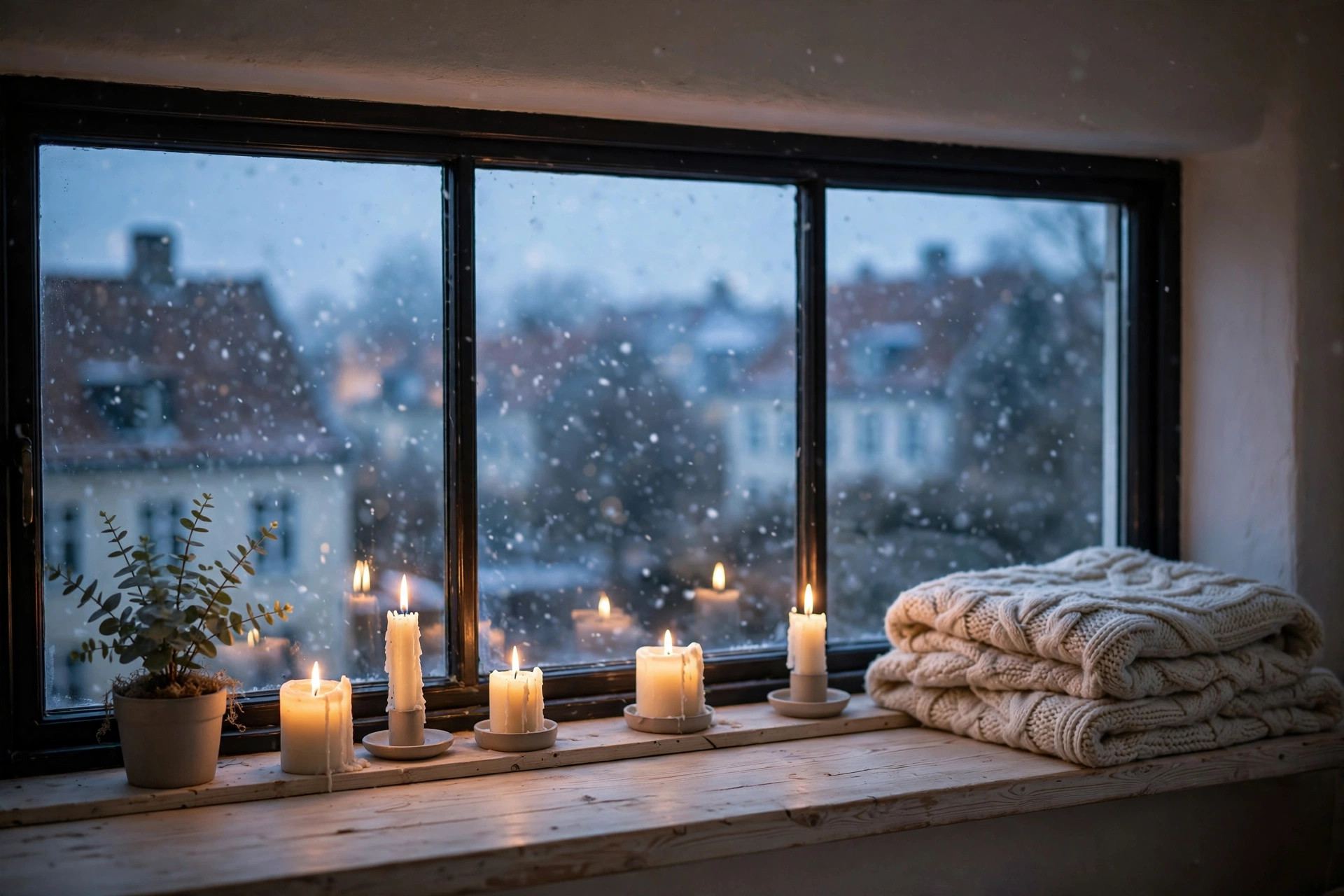
Sharing soup with friends by candlelight, reading in a cozy window nook on a rainy day, a long slow breakfast on a weekend morning, gathering around a bonfire, baking with family, or simply lighting candles at dinner on an ordinary Tuesday. The common thread is warmth, presence, and unhurried togetherness — not expense or perfection.
No. Winter is hygge’s most famous season because long dark evenings invite candles and blankets, but the philosophy works year-round. Summer hygge looks like long picnics, bonfires, and barefoot evenings; spring and autumn have their own versions. The constant isn’t the weather — it’s the attention you give to the moment.
Start with light: turn off overheads and use lamps and candles instead. Add soft textures — wool throws, a rug, linen. Create one cozy nook: a chair, a blanket, and a reason to sit there. None of it requires spending much. The feeling comes from warmth and intention, not from new furniture.
Cozy is part of it, but hygge goes further. Cozy describes a physical feeling; hygge adds contentment and togetherness — it’s as much about who you’re with and how present you are as about blankets and candles. You can be cozy alone under a duvet; hygge at its best is shared.
The Bottom Line
Hygge asks a small question with a big answer: what if the ordinary evening is the point? Not the thing you endure between the exciting parts — the part itself. The candles, the soup, the people, the staying a while.
You don’t need Denmark. You don’t need new furniture. You need a lit candle, a warm drink, your phone in another room, and someone — or just yourself — to share the quiet with. Start tonight. Light the candle on a Tuesday. That’s hygge.
For more slow-living ideas — the small, doable choices that quietly make life better — browse the lifestyle section.
For a deeper dive, see our guide to small apartment decorating ideas.