
I once watched a fellow traveler at Bangkok’s airport wrestle four bulging suitcases onto a luggage cart — for ten days in Thailand. By day three she’d abandoned half of it at her hotel and was wearing the same three outfits on rotation like the rest of us. Thailand is the easiest country in the world to pack light for, and the hardest to need an excuse to overpack for.
The formula is simple: it’s hot, it’s casual, laundry is cheap and everywhere, and you can buy anything you forget for less than it cost at home. Here’s exactly what to bring — and what to leave.
Table of Contents
- The Thailand Packing Philosophy
- Clothing
- The Temple Dress Code (Important)
- Shoes
- Beach and Island Gear
- Toiletries and Health
- Tech and Documents
- What to Skip
The Thailand Packing Philosophy
Three facts shape everything:
- It’s hot and humid. You’ll change clothes more from sweat than from fashion. Breathable, quick-dry fabrics win.
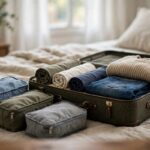
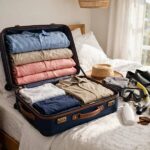
- Laundry is absurdly cheap. Every town has laundry shops that wash, dry, and fold a kilo of clothes for a couple of dollars, back the next day. Pack for 4–5 days regardless of trip length.
- You can buy it there. Forgot something? Thailand’s markets and malls (and 7-Elevens, which are everywhere and wonderful) sell it cheaper than home.
For the general system behind this list, my international travel packing guide covers the layering and mix-and-match method.
Clothing
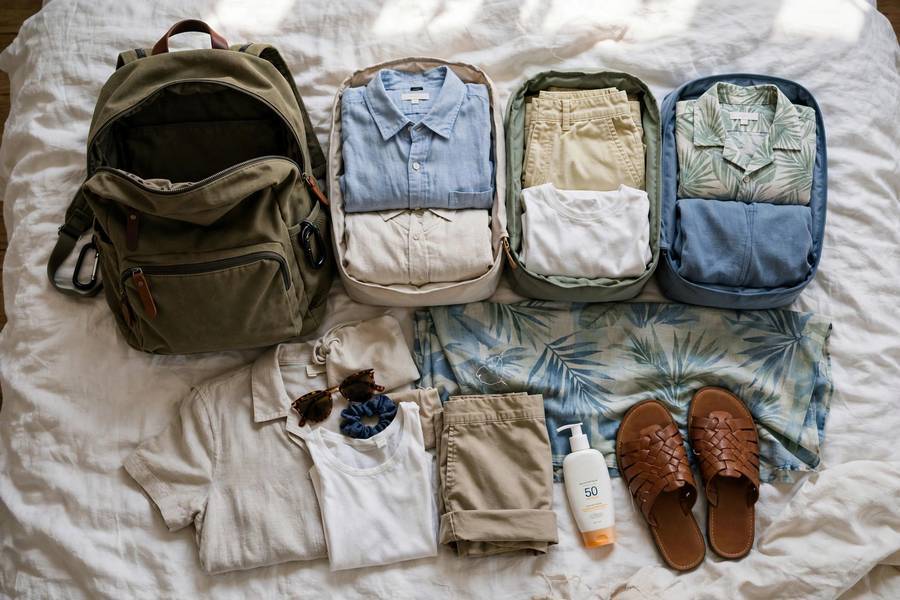
Tops (4–5): Lightweight t-shirts, tank tops, one or two nicer blouses/shirts for evenings. Quick-dry or linen beats heavy cotton — cotton stays damp in humidity.
Bottoms (3): Shorts, a skirt or lightweight trousers. One pair of longer trousers is useful for temples, cooler northern evenings, and the occasional dress code.
Dresses (1–2, optional): A casual sundress or two covers dinners and beach towns effortlessly.
Light layers (2): A thin long-sleeve shirt (sun protection, temples, air-conditioned malls) and a light rain jacket if traveling in rainy season (June–October). Northern Thailand in December–January can hit 15°C (59°F) at night — a fleece or hoodie earns its place then.
Underwear: 5–6 pairs. Socks: 3–4 pairs (you’ll remove shoes constantly at temples and some shops — slip-on friendly socks matter).
Sleepwear: Something light. Most budget rooms have fans rather than arctic AC.
The Temple Dress Code (Important)
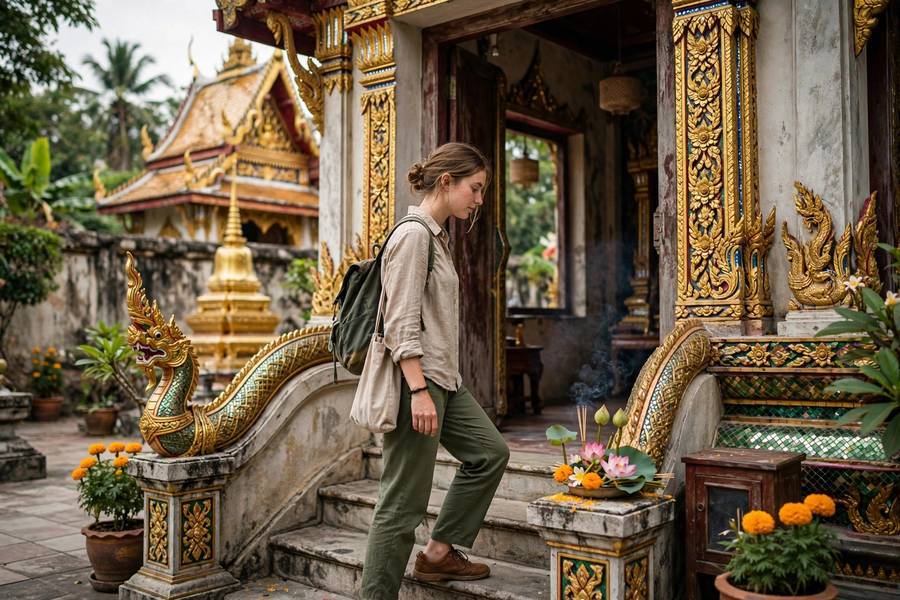
This isn’t optional or negotiable — Thailand’s temples (wats) enforce dress codes, and the Grand Palace in Bangkok will turn you away. Requirements:
- Shoulders covered (no tank tops, no spaghetti straps)
- Knees covered (no shorts, no short skirts)
- No beachwear, obviously
The fix is easy: carry a lightweight sarong or shawl in your daypack. It covers shoulders or doubles as a wrap skirt in seconds. Many major temples rent or loan cover-ups, but having your own is faster and more comfortable. This single item — which also works as a beach cover-up, blanket, and scarf — is the hardest-working thing on this entire list.
Shoe note for temples: You’ll remove shoes before entering temple buildings. Wear slip-ons on temple days and skip the complicated laces.
Shoes
Three pairs, maximum:
- Broken-in walking sandals (Teva-style or sturdy flip-flops) — your daily default
- Comfortable walking shoes — for cities, markets, and any hiking (closed-toe for the Grand Palace area’s dress expectations)
- One nicer pair — simple sandals or flats for evenings out
That’s it. Thailand is a sandals country. Your feet will thank you, and so will your suitcase.
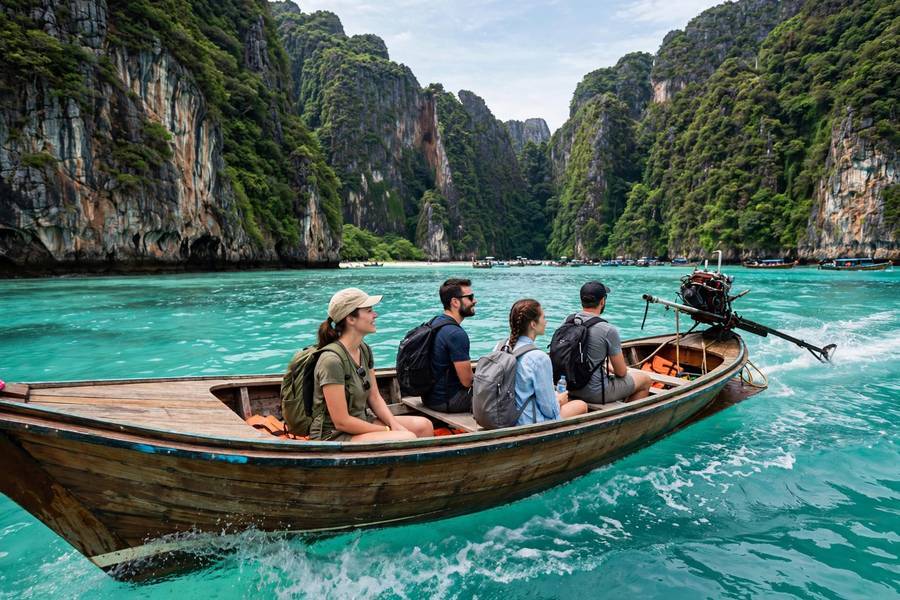
Beach and Island Gear
If islands are on the itinerary (and they should be):
- 2 swimsuits (rotation — humidity slows drying)
- Rash guard or swim shirt for snorkeling days
- Reef-safe sunscreen — bring from home; it’s expensive and harder to find in Thailand, and many marine parks now require it
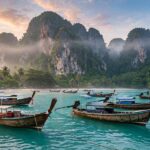
- Dry bag (5–10L) — longtail boats are wet; protect phone, camera, and cash
- Snorkel mask if you’re particular (rentals exist but are grim)
- Microfiber towel — guesthouses provide towels, but boats and beach-hopping don’t
Toiletries and Health
- Insect repellent with DEET or picaridin — dengue exists; dusk is prime mosquito time. This is the one health item I’d call essential.
- Sunscreen (as above — bring enough; you’ll use more than you expect)
- After-sun aloe
- Basic medications: pain relievers, antihistamines, anti-diarrheal, rehydration salts, any prescriptions (in original bottles)
- Hand sanitizer and wet wipes — street food is wonderful; clean hands make it worry-free
- Small first-aid kit: bandages, antiseptic
What to buy there: Shampoo, soap, toothpaste — Thai 7-Elevens stock everything at local prices. Don’t waste suitcase space.
Tech and Documents
- Passport (6+ months validity) + photocopies stored separately and in email
- Travel insurance details — medical care in Thailand is good and cheap, but evacuation isn’t
- Unlocked phone — buy a Thai tourist SIM at the airport (cheap, fast data, takes minutes)
- Universal adapter — Thailand uses a mix of plug types (A, B, C, O); a universal adapter covers all
- Power bank — long days out, heavy camera use
- Waterproof phone pouch — for islands and Songkran season
- E-reader — for beach and bus rides
Money: ATMs are everywhere but charge ~220 baht per withdrawal — take out larger amounts less often. Notify your bank before you go. Cash is still king in markets and small towns; cards work in malls and mid-range+ restaurants.
What to Skip
- Jeans and heavy clothing. You’ll wear them zero times. Thai heat makes denim a punishment.
- “Nice” outfits beyond one. Thailand’s dress code is casual everywhere except a handful of Bangkok rooftop bars.
- Full-size toiletries. Buy there.
- Guidebooks. Your phone plus offline maps is better and lighter.
- Too many “just in case” items. Thailand’s shops have everything, cheaper. The safety net is the country itself.
- Valuable jewelry. Beach + markets + hostels = leave it home.
Packing for Different Thailand Trip Styles
Tune the core list to your itinerary:
Islands and beaches: Maximize swim gear and sun protection. Add a dry bag and reef-safe sunscreen as essentials, not optionals. Minimize everything else — island life is flip-flops and a sarong.
Bangkok and cities: Add one nicer outfit for rooftop bars and good restaurants. Comfortable walking shoes matter more here than anywhere — you’ll log serious miles on markets and temples. A small crossbody bag beats a backpack for crowded streets (pickpocket-resistant and temple-friendly).
Northern trekking (Chiang Mai, Pai, Mae Hong Son): Add proper walking shoes or light hikers, a fleece for cool mountain nights (November–February), and insect repellent as a top priority. If trekking with an organized group, they’ll provide the specialized gear — check before packing your own.
Rainy season travel (June–October): A real rain shell (not a flimsy poncho), quick-dry everything, waterproofing for electronics, and extra socks. Embrace getting a little wet — it’s warm rain, and the country is at its most beautiful.
Pack for heat, respect, and water — temples, islands, and cities are the three modes of a Thailand trip, and this list covers all three in a carry-on. For the general principles behind it, see what to pack for international travel — and if Thailand hooks you on going slower, slow travel is worth a read before your next trip. The lighter you pack, the more nimbly you move, and nimble is exactly how Thailand rewards you: the best experiences here are the unplanned ones, and you can’t chase them with four suitcases.
Frequently Asked Questions
Cover your shoulders and knees — no tank tops, shorts, or short skirts. A lightweight sarong in your daypack works as a quick cover-up. You’ll also remove shoes before entering temple buildings, so wear slip-ons on temple days.
Easily. Pack for 4-5 days of light, quick-dry clothing and use Thailand’s cheap laundry shops (a couple of dollars per kilo, back next day) for longer trips. The heat means simple clothes, and anything you forget can be bought cheaply locally.
Yes — bring repellent with DEET or picaridin. Mosquitoes are active at dusk and dengue fever exists in Thailand. It’s the single most important health item on the packing list, more important than most medications.
Thailand uses a mix of plug types (A, B, C, and O) and 220V power. A universal travel adapter covers every socket you’ll encounter. Most modern electronics are dual-voltage, but check the label on anything with a heating element.
Bring reef-safe sunscreen from home. It’s significantly more expensive in Thailand, harder to find in reef-safe formulas, and you’ll use more than you expect. Many Thai marine parks now require reef-safe sunscreen by regulation.
Bring some home currency or USD to exchange, then rely on ATMs — they charge about 220 baht per withdrawal, so take larger amounts less often. Cash dominates markets, street food, and small towns; cards work in malls and mid-range restaurants.