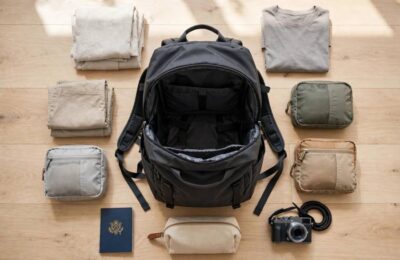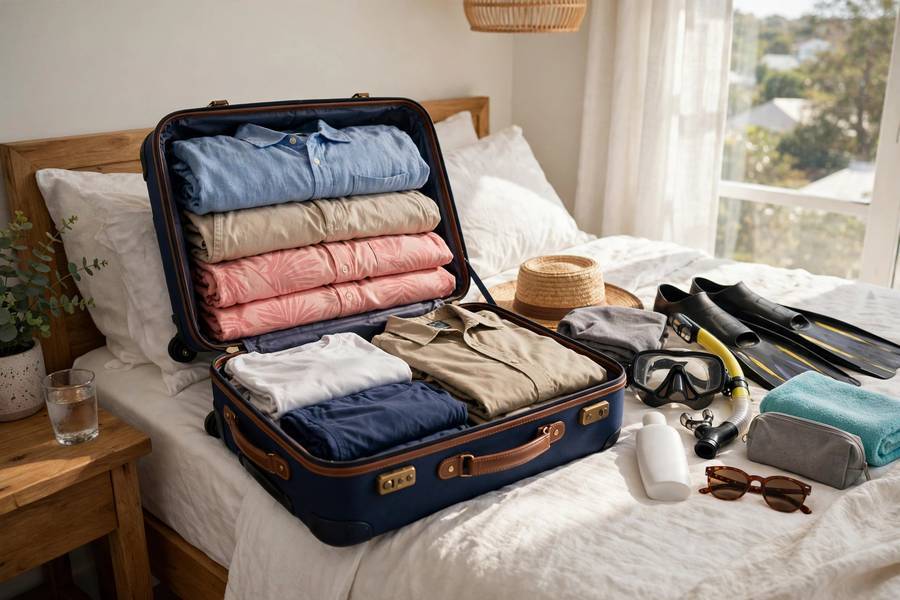
My first cruise, I packed like I was moving aboard for a month. Three suitcases for a seven-day Caribbean sailing. I used about a third of it, wrestled the rest through a terminal, and spent the week stepping over bags in a cabin the size of a parking space. Lesson learned the hard way, so you don’t have to.
Cruise packing is its own skill. You’re dressing for multiple climates (air-conditioned ship, tropical ports, formal nights), living in a small cabin, and — critically — you can’t run to a store mid-ocean. Here’s the complete checklist, refined over several sailings.
Table of Contents
- Documents and Money
- Clothing: The Day-to-Evening System
- Formal and Theme Nights
- Shoes: Less Is More
- Toiletries and Medications
- Cabin Essentials (The Difference-Makers)
- Tech and Entertainment
- What NOT to Pack
Documents and Money
This is the non-negotiable section. Without these, you don’t sail.
- Passport (required for most international itineraries; must be valid 6+ months beyond travel). Some closed-loop Caribbean cruises accept birth certificate + government ID, but a passport is simpler and safer. If you need one, start with how to apply for a passport.
- Cruise documents: booking confirmation, boarding pass (usually in the cruise line’s app), luggage tags (print at home — the line mails or emails them).
- Travel insurance documents: I never sail without it. Medical evacuation at sea is catastrophically expensive.
- Credit cards + small cash: The ship is cashless (everything goes on your onboard account), but ports need local currency or small USD bills for taxis, markets, and tips.
- Emergency contacts written down, not just in your phone.
Pro tip: Photograph every document and keep copies in your email and with someone at home. If your passport goes overboard (it happens), copies speed up the consulate process enormously.
Clothing: The Day-to-Evening System
Cruise dress codes run on a simple rhythm: casual by day, smart-casual most evenings, with one or two formal nights on longer sailings. Pack mix-and-match pieces, not outfits.
Daytime (ports and pool deck): – 4–5 lightweight tops/t-shirts – 2–3 shorts or casual skirts – 1–2 swimsuits (so one can dry while you wear the other) – 1 cover-up or sarong – 1 light rain jacket or windbreaker (for Alaska/Northern Europe cruises, make it a real rain shell) – 1 sweater or fleece (ships are aggressively air-conditioned; the theater at night is freezing)
Evenings (main dining room, shows): – 3–4 smart-casual outfits: collared shirts/blouses, nice trousers, casual dresses – 1–2 dressier outfits for formal night (see below)
The formula: For a 7-day cruise, I pack for 5 days of clothes and do one laundry run mid-week (most ships have self-service laundries or affordable wash-and-fold). This cuts the suitcase nearly in half.
For general packing principles that apply beyond cruises, my international travel packing guide covers the layering system in depth.
Formal and Theme Nights
Most 7-day cruises have 1–2 formal nights; longer sailings have more. “Formal” on a modern cruise is flexible — it ranges from cocktail dresses and suits to simply “nicer than usual.” You won’t be turned away for skipping the tux, but the main dining room does dress up and it’s fun to join in.
- Women: a cocktail dress or elegant jumpsuit, dressy shoes
- Men: collared shirt, slacks, optional blazer; a tie is increasingly optional
- Kids: nice outfits, nothing extreme
Theme nights are the wildcard — Caribbean nights, white nights, 80s parties, masquerade. Check your sailing’s schedule in the cruise app before you pack. A white outfit for white night is the most common ask, and it’s an easy one to include.
My take: Don’t overthink formal night. One versatile dressy outfit beats three fussy ones. And nobody remembers what you wore — they remember whether you were having fun.
Shoes: Less Is More
Shoes are the suitcase-killers. Limit yourself to three pairs:
- Comfortable walking shoes (broken in, not new) — for port days, you’ll walk miles on cobblestones.
- Sandals or flip-flops — pool deck, beach excursions, casual evenings.
- One dressy pair — for formal nights and nice dinners.
That’s it. The hiking boots “just in case” stay home. If your itinerary includes serious hiking (Alaska, Norwegian fjords), swap the sandals for trail shoes — but that’s the exception.
Toiletries and Medications
Cabins provide basic soap and shampoo, but bring your own if you’re particular — and bring these:
- Sunscreen (reef-safe for port excursions) — ship shops charge double
- After-sun/aloe — you will underestimate the equatorial sun at least once
- Seasickness remedies: ginger chews, acupressure bands, or medication. Even if you’ve never been seasick, pack something. The first night out of port can surprise you.
- Prescription medications in original bottles, plus a few days’ extra supply
- Small first-aid kit: bandages, antiseptic, pain relievers, anti-diarrheal, antihistamines
- Insect repellent for tropical ports
Cabin Essentials (The Difference-Makers)
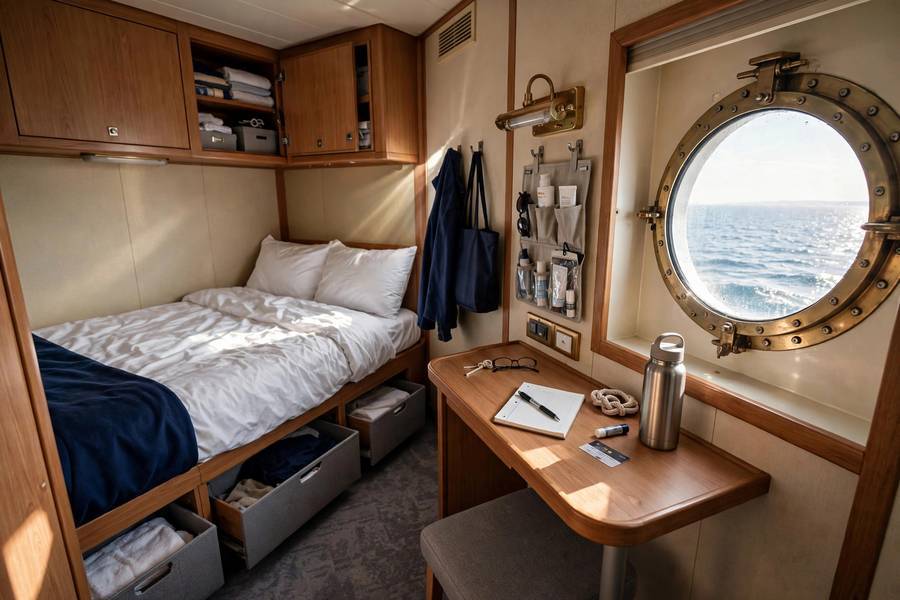
These are the items that separate miserable cruisers from happy ones. Cabins are small, outlets are few, and walls are thin.
- Power strip or multi-USB charger (non-surge-protected — surge protectors are confiscated as fire hazards): cabins often have just one or two outlets
- Over-the-door shoe organizer: hang it in the bathroom or closet for instant storage — the single best cruise hack I know
- Magnetic hooks: cabin walls are metal; a few strong magnets create hanging space out of thin air
- Nightlight: interior cabins are pitch black; a small motion-sensor light saves stubbed toes
- Earplugs and eye mask: for light sleepers, non-negotiable
- Refillable water bottle: fill at buffet stations, take ashore
- Small backpack or tote: for port days
- Ziplock bags: wet swimsuits, sandy shells, leaky toiletries — endlessly useful
- Laundry bag: keeps the tiny cabin livable
Tech and Entertainment
- Phone + waterproof pouch for beach/pool days
- E-reader or books: sea days are made for reading
- Camera (plus charger) — or just your phone; modern phones are plenty
- Headphones: for the gym, the balcony, the lido deck
- Portable charger: long port days drain batteries
About Wi-Fi: Ship internet is expensive and slow. Decide in advance whether you’re buying a package or going dark. I usually go dark — it’s one of the cruise’s secret gifts.
Hotel bedsheets aside, learning to fold a fitted sheet at home means one less thing to wrestle with before you travel.
What NOT to Pack
- Too many clothes. The number one rookie mistake. You need half what you think.
- Valuables you can’t afford to lose. Leave the expensive jewelry home; the cabin safe is fine, but simplicity is better.
- Prohibited items: irons, steamers, candles, power strips with surge protection, and (on most lines) alcohol beyond the small embarkation allowance. Check your line’s list — confiscated items are held until disembarkation.
- Beach towels. The ship provides them, including for port use.
- Hair dryers. Cabins have them.
One last piece of advice: pack your carry-on as if your checked bag won’t arrive until dinner — because sometimes it doesn’t. Swimsuit, sunscreen, medications, documents, a change of clothes, and anything valuable goes in the bag that stays with you. Then relax. The ship is coming, the sea is waiting, and you’ve packed exactly right.
Frequently Asked Questions
Pack for about 5 days and plan one mid-week laundry run. That means 4-5 casual daytime outfits, 3-4 smart-casual evening outfits, and 1-2 dressy outfits for formal nights. Mix-and-match pieces stretch further than full outfits.
For most international itineraries, yes — and it should be valid at least 6 months beyond your travel dates. Some closed-loop cruises (starting and ending at the same US port) accept a birth certificate plus government ID, but a passport is simpler, safer, and required if you ever need to fly home from a foreign port.
Modern cruise formal night is flexible: cocktail dresses, jumpsuits, or dressy separates for women; collared shirts with slacks and an optional blazer for men. Full tuxedos and gowns are increasingly rare. One versatile dressy outfit is enough.
Policies vary by cruise line. Most allow one or two bottles of wine per cabin at embarkation (sometimes with a corkage fee); spirits and beer are generally prohibited and will be confiscated until disembarkation. Check your specific line’s policy before sailing.
The most-forgotten items are seasickness remedies, a power strip (non-surge), magnetic hooks, an over-door organizer, reef-safe sunscreen, and small cash for ports. A swimsuit and essentials in the carry-on is the other big one — checked bags can arrive hours after you board.
Standard interior and ocean-view cabins run about 150-200 square feet including the bathroom — cozy but functional, with clever storage. The small space is exactly why packing organizers (shoe organizer, magnetic hooks, packing cubes) make such a difference to comfort.