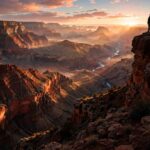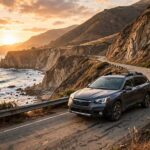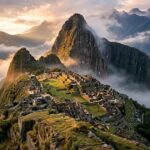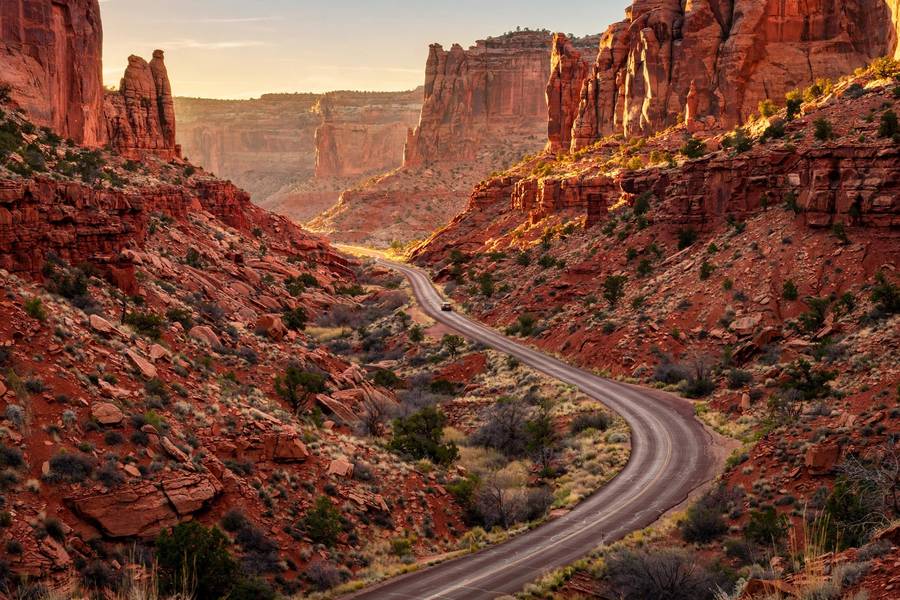
I’m Emma. I write travel guides from places I’ve actually stood in — and the roads between national parks are some of my favorite places to stand. There’s a particular kind of tired you earn on a national park road trip — and a particular kind of grin when a canyon you didn’t expect opens up in front of you.
This isn’t a list of parks — it’s a list of routes: the actual drives, how long to budget, the best months, and what I wish someone had told me before I went.
Table of Contents
- Utah’s Mighty 5 Loop: The Greatest Hits Road Trip
- Glacier + Yellowstone + Grand Teton: The Northern Giants
- The Pacific Northwest Trio: Rainier, Olympic, North Cascades
- California’s Alpine Loop: Sequoia, Kings Canyon, Yosemite
- Arizona’s Desert Circuit: Grand Canyon, Saguaro, Petrified Forest
- Blue Ridge Parkway: Shenandoah to the Smokies
- Acadia’s Park Loop Road: The Perfect Long Weekend
- Rocky Mountain High Country: Colorado’s Alpine Route
- How to Choose Your Trip
- Practical Tips That Actually Matter
- National Park Road Trip FAQ
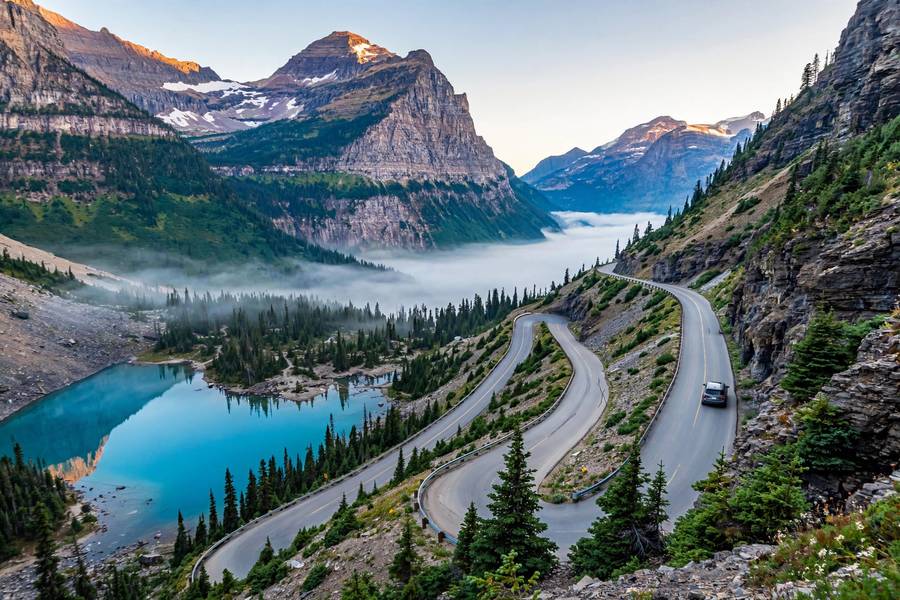
Utah’s Mighty 5 Loop: The Greatest Hits Road Trip
The route: Zion → Bryce Canyon → Capitol Reef → Arches → Canyonlands, starting from Las Vegas or Salt Lake City. Roughly 900–1,000 miles total.
Time needed: 7–10 days. I did it in 8 and still felt rushed in Zion.
Best months: March–May and September–November. Summer is brutal — Arches in July hit 108°F on my thermometer.
Five parks, each a completely different kind of beautiful — and the drive between them on Highway 12 through Grand Staircase is one of the great American drives, full stop.
My mistake to save you from: I tried to see Delicate Arch at midday. Don’t. Go at sunrise or sunset, when the stone glows.
Rough cost: $1,200–$1,800 per person for a week, including a rental car, mid-range motels, and groceries. The parks pass ($80 annual America the Beautiful) pays for itself by park two. If you’re building your broader trip list, my guide to the best national parks in the USA covers the parks themselves in more depth.
Glacier + Yellowstone + Grand Teton: The Northern Giants
The route: Fly into Kalispell or Bozeman, hit Glacier, then drive south through Yellowstone to Grand Teton. Roughly 600–700 miles of driving plus park miles.
Time needed: 7–9 days.
Best months: Late June–September. Going-to-the-Sun Road often doesn’t fully open until July.
Going-to-the-Sun Road is 50 miles of engineering madness cut through the Rockies. Logan Pass is the high point — literally and emotionally. Then Yellowstone’s geothermal weirdness and the Tetons rising straight out of the valley floor.
What I got wrong: I underestimated distances inside Yellowstone — figure 2+ hours between major areas, and gas up whenever you see a station.
The Pacific Northwest Trio: Rainier, Olympic, North Cascades
The route: Seattle loop — Mount Rainier → Olympic → North Cascades, with the ferry to the Olympic Peninsula as a bonus drive.
Time needed: 5–7 days.
Best months: July–September. Wildflowers at Rainier in August are worth planning your whole year around.
Rainier is the mountain that fills your windshield from a hundred miles away. Olympic gives you three parks in one — rainforest (the Hoh), alpine ridges (Hurricane Ridge), and wild coast (Ruby Beach at low tide is otherworldly). North Cascades is the least visited of the three and maybe my favorite: Diablo Lake’s impossible turquoise color barely looks real in person.
California’s Alpine Loop: Sequoia, Kings Canyon, Yosemite
The route: Fly into Fresno, drive through Sequoia → Kings Canyon → up to Yosemite. About 400–500 miles.
Time needed: 5–7 days.
Best months: May–October. Tioga Road (Yosemite’s high crossing) closes with snow, usually opening in late May or June.
Standing at the base of General Sherman — the largest tree on Earth by volume — is humbling. Then Kings Canyon’s scenic byway, one of the deepest canyons in North America, and Yosemite: Tunnel View, the Mist Trail, Glacier Point at sunset.
My honest tip: start the Mist Trail before 8 a.m. to beat the crowds, and book Yosemite lodging the day reservations open — this is not a park you wing.
Arizona’s Desert Circuit: Grand Canyon, Saguaro, Petrified Forest
The route: Phoenix or Flagstaff start — Saguaro (Tucson) → Grand Canyon → Petrified Forest, with the Painted Desert as the grand finale.
Time needed: 4–6 days.
Best months: March–May and September–November.
The Grand Canyon’s South Rim at sunrise is unforgettable. But the rest of this circuit surprises people: Saguaro’s cactus forests at golden hour are gorgeous, and the Petrified Forest’s Blue Mesa badlands look like another planet. Desert View Watchtower at the Grand Canyon’s east end is the perfect exit — the architecture alone is worth the drive.
Bonus: the desert parks are certified dark-sky places — the Milky Way from the Grand Canyon looks fake.
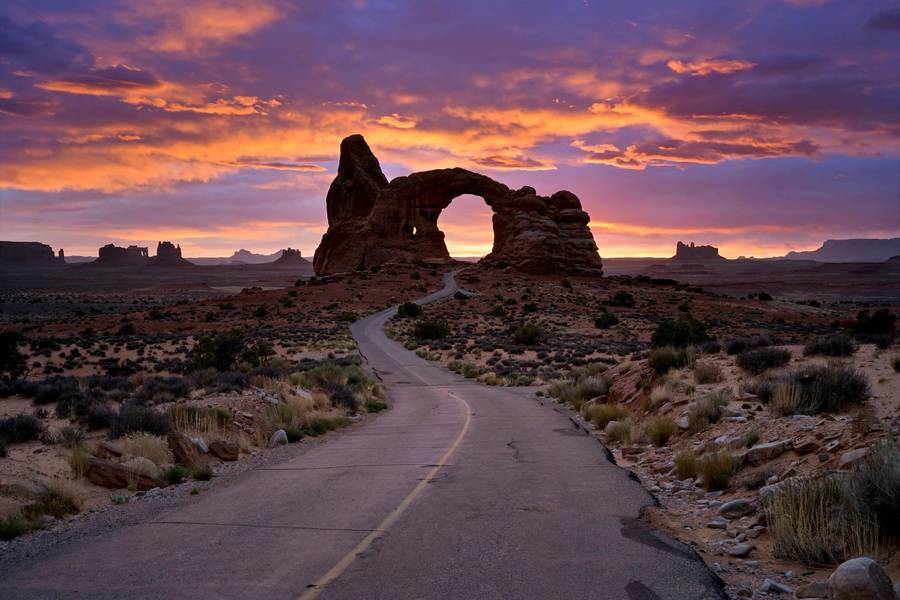
Blue Ridge Parkway: Shenandoah to the Smokies
The route: 469 miles from Shenandoah National Park in Virginia to Great Smoky Mountains National Park in North Carolina/Tennessee.
Time needed: 4–7 days (it’s slow — the speed limit is 45 mph and you’ll stop constantly).
Best months: October for fall color — but mid-October weekends are packed, so aim for late September or early November.
This is the gentle giant of national park road trips: rolling Blue Ridge mountains, overlooks every few miles, and small towns with apple butter and live bluegrass.
Budget reality check: this is one of the cheapest trips on this list. No park entrance fees on the Parkway itself (it’s a free road), affordable mountain-town motels, and you can picnic at overlooks for days. Under $1,000 per person for a week is very doable.
Acadia’s Park Loop Road: The Perfect Long Weekend
The route: Fly into Bangor or Portland, Maine — the 27-mile Park Loop Road plus the drive up Cadillac Mountain.
Time needed: 3–4 days.
Best months: Late September–mid-October for foliage; summer for the full experience.
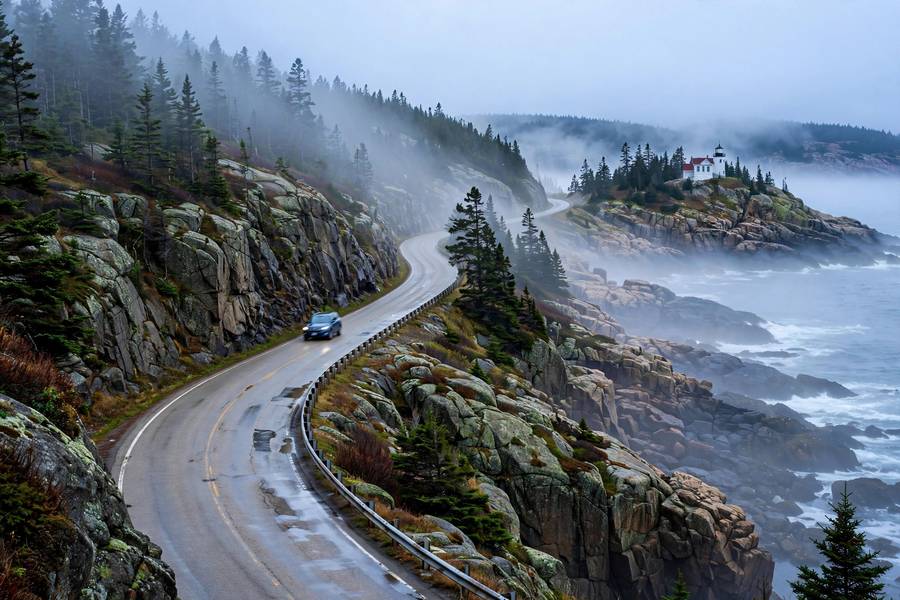
Short on time? This is your trip. One compact park, one perfect loop road, coastline that looks carved by giants. Sunrise from Cadillac Mountain with a thermos of coffee is unforgettable. Sand Beach, Thunder Hole, the carriage roads for biking.
It’s the only park on this list you can fully do in a long weekend without feeling cheated.
Rocky Mountain High Country: Colorado’s Alpine Route
The route: Denver → Rocky Mountain National Park (Trail Ridge Road) → down through the state’s high country, optionally looping to Black Canyon of the Gunnison.
Time needed: 4–6 days.
Best months: July–September. Trail Ridge Road — the highest continuous paved road in America — is a summer-only affair.
Trail Ridge Road climbs above 12,000 feet, and the tundra up there feels like the top of the world. Elk bugling in the fall is one of the great wildlife sounds in America. The drive down into Estes Park, with its taffy shops and elk wandering main street, is pure Colorado.
Altitude warning from someone who learned the hard way: drink twice the water you think you need, take it easy on day one, and go easy on the alcohol. Altitude sickness is real and it ruins itineraries.
How to Choose Your Trip
My framework, after all these miles:
- First-timer with a week: Utah’s Mighty 5 — maximum wow per mile.
- Only a long weekend: Acadia. No contest.
- You hate crowds: North Cascades, Capitol Reef, or the Petrified Forest — the quiet corners of the system.
- Fall colors: Blue Ridge Parkway in October.
- Wildlife: Yellowstone/Tetons or Rocky Mountain in September.
- With kids: The Smokies or the Mighty 5 — short hikes, big payoffs, great junior ranger programs.
- Photographer: Glacier at sunrise, the desert parks at golden hour, Acadia’s coast in fog.
Before any of these, spend 20 minutes on the NPS website checking road status, reservation requirements, and alerts — timed-entry systems are everywhere now, and nothing kills a road trip like arriving at a gate you can’t enter. For the full catalog of options, see my roundup of the best American road trips — and if you’re flying to your start point, my notes on finding cheap flights will save you real money.
Practical Tips That Actually Matter
Book lodging early. In-park lodges sell out 6–12 months ahead for summer. Gateway towns are your backup — Moab, Springdale, Estes Park, Bar Harbor all have solid options, but they fill up too.
Download offline maps. Cell service dies in most parks — download the region in Google Maps before you go.
The $80 annual pass. If you’re visiting more than two parks in a year, the America the Beautiful pass pays for itself immediately. Buy it at your first park.
Build in a rest day. One slow morning — coffee, a short walk, no agenda — makes the whole trip better.
Check the weather twice. Mountain weather changes in an hour — pack layers on every trip, even in August.
National Park Road Trip FAQ
Utah’s Mighty 5 loop is the best first national park road trip: straightforward driving, five spectacular parks close together, and easy logistics from Las Vegas or Salt Lake City. Allow 7–10 days.
Plan 7–10 days for all five Utah parks (Zion, Bryce Canyon, Capitol Reef, Arches, Canyonlands). Ten days minimum if you want the signature trails in each park.
Late spring and early fall are the sweet spots for most parks — good weather, thinner crowds, lower prices. Desert parks: spring and fall; mountain parks like Glacier: July–September.
Many parks now use timed-entry reservations for peak season, including Arches, Glacier (Going-to-the-Sun Road), and Rocky Mountain. Always check the NPS website for your specific park and dates before you go.
Going-to-the-Sun Road in Glacier, the Blue Ridge Parkway, and Utah’s Highway 12. My personal pick: Highway 12 through Grand Staircase-Escalante — 124 miles of constantly changing desert scenery.
Yes, but choose carefully. Desert parks (Death Valley, Saguaro, Big Bend) are best in winter; mountain parks largely close their high roads. Always check NPS winter road status.