

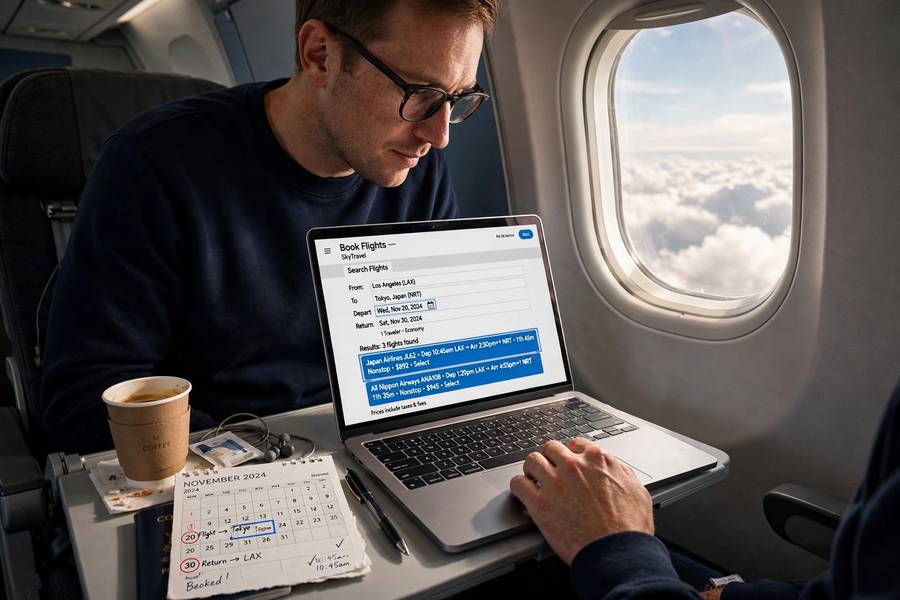
“When should I book?” is the most-asked question in travel, and the internet is full of confident-sounding answers that contradict each other. Book on Tuesdays! Never book on weekends! Clear your cookies! I’ve tested most of these claims across years of booking flights, and here’s what actually holds up.
I’m Emma, and I’ve booked everything from $40 budget hops to $1,200 long-hauls. This is the honest, data-backed guide — including which “rules” are myths.
Table of Contents
- The Short Answer
- How Far Ahead to Book: Domestic
- How Far Ahead to Book: International
- Cheapest Days to Fly (And to Book)
- The Myths That Waste Your Money
- Tools That Actually Help
- How Airline Pricing Actually Works
- Booking for Families and Groups
- Frequently Asked Questions

The Short Answer
- Domestic flights: Book 1–3 months ahead. The sweet spot is usually around 4–8 weeks out.
- International flights: Book 2–6 months ahead. Long-haul prices climb steeply in the final month.
- Fly midweek (Tuesday, Wednesday) for the lowest fares; avoid Friday and Sunday.
- The booking day barely matters — it’s the travel day that counts.
- Set a price alert and book when the price drops into your target range rather than trying to time the absolute bottom.
Airlines use dynamic pricing — fares move with demand, remaining seats, and how far out you are. You’re not outsmarting an algorithm; you’re playing probabilities.
How Far Ahead to Book: Domestic
For domestic (within your country) flights, large fare studies consistently show:
- Too early (6+ months): Prices are often higher — airlines haven’t started discounting yet, and you’re paying the “planner’s premium.”
- The sweet spot (4–8 weeks): This is where the lowest average fares cluster for domestic routes.
- 2–3 weeks out: Prices start climbing as cheap fare buckets sell out.
- Last week: The most expensive window — airlines know these are business travelers and desperate planners who’ll pay anything.
- Last minute (1–2 days): Occasionally cheap on empty flights, but usually brutal. Don’t gamble unless you must.
Exception: Holiday periods (Christmas, Thanksgiving, summer peak) — book these 3–6 months out. Everyone’s data agrees: holiday fares only go up.
How Far Ahead to Book: International
International pricing moves earlier and harder:
- Sweet spot: 2–6 months ahead. Transatlantic and transpacific fares typically bottom out in this window.
- Peak season (European summer, Christmas/New Year): book 4–8 months ahead. These routes sell out fare classes fast.
- Shoulder season (April–May, September–October): the best value in travel — good weather, fewer crowds, lower fares. My favorite time to fly anywhere.
- Last month: Long-haul fares spike aggressively. A $600 ticket can become $1,100 in the final three weeks.
If your trip involves slow travel — longer stays, flexible dates — you gain enormous pricing power. Flexibility is the single biggest lever on flight prices.
Cheapest Days to Fly (And to Book)
Cheapest days to FLY: Tuesday and Wednesday are consistently cheapest, followed by Saturday. Friday and Sunday are the most expensive — that’s when everyone wants to travel.
Cheapest day to BOOK: This is where myth meets reality. The old “book on Tuesday” advice came from a real pattern (airlines filed fare sales Monday nights), but modern dynamic pricing has mostly erased it. Studies now show the booking day matters far less than the travel day — differences of a few percent at most.
What actually matters:
– Fly midweek — saves 10–20% vs. weekend flights, consistently
– Take the early or late flight — 6 AM and red-eye departures are cheaper than prime-time
– Avoid flying the day before/after major holidays — the most expensive travel days of the year
The Myths That Waste Your Money
“Clear your cookies / use incognito.” The idea: airlines track your searches and raise prices. The reality: extensive testing has found no consistent evidence of this. Prices change because fares change (seats selling), not because you’re being personally targeted. Incognito doesn’t hurt, but it doesn’t help either.
“There’s one perfect day to book.” No. Fare studies show a range (weeks), not a magic day. Anyone selling you “book exactly 54 days ahead” is selling precision that doesn’t exist.
“Budget airlines are always cheaper.” Often, but check the total: bag fees, seat selection, and inconvenient airports can erase the difference. Compare all-in prices, not base fares.
“Connecting flights are always much cheaper.” Sometimes significantly, sometimes barely. And a 6-hour layover to save $30 is a bad trade — value your time.
“Prices only go up.” They mostly do as departure nears, but airlines do drop prices on undersold flights. Price alerts catch these — which is why they’re the real pro move.
Tools That Actually Help
- Google Flights: The best search interface, with a price grid, date flexibility view, and genuinely useful price tracking with “typical price” guidance.
- Price alerts: Set them on Google Flights for your route and dates. You’ll get emailed when prices drop — this beats any timing rule.
- Flexible date search: Skyscanner and Google Flights’ calendar views show which days are cheapest at a glance. Shifting by a day or two often saves more than any booking trick.
- Mistake fares: Occasionally airlines publish absurdly low fares by error ($200 business class to Asia). Sites and forums track these — they’re real but rare, and airlines sometimes honor them.
And before any international booking, make sure your documents are in order — here’s how to apply for a passport if yours isn’t ready.
How Airline Pricing Actually Works
Understanding the machinery makes the advice above intuitive instead of arbitrary:
Fare buckets. Each flight has a fixed number of seats sold at each price level (“buckets”). The cheapest buckets sell first. When they’re gone, the price jumps to the next bucket — even if the plane is half empty. This is why prices mostly rise: it’s not gouging, it’s inventory.
Dynamic pricing algorithms. Airlines adjust prices continuously based on demand signals: search volume for the route, booking pace, competitor prices, days to departure, even events at the destination. The algorithm’s goal is maximizing revenue per flight, not punishing you personally.
Why Tuesdays (used to) matter. Airlines historically filed fare sales on Monday evenings; competitors matched by Tuesday morning. The pattern was real in the 2000s. Modern revenue management updates continuously, so the weekly rhythm has faded — but the travel-day pattern (midweek cheap, weekend expensive) persists because it’s driven by human demand, not airline filing schedules.
The takeaway: You’re not fighting a system designed to trick you — you’re navigating inventory. Book when cheap buckets are available (early, but not too early), fly when demand is low (midweek, off-peak), and let price alerts do the watching. That’s the whole game.
Booking for Families and Groups
Traveling with kids or a group changes the calculus:
Book earlier than solo travelers. You need multiple seats together, and cheap fare buckets have limited seats — a family of four needs four seats in the same bucket, or you pay the higher bucket price for everyone. The sweet-spot windows above still apply, but err toward the early side.
Split the booking (sometimes). If 2 cheap-bucket seats remain and you need 4, booking 2+2 separately can save money — but you risk being seated apart and complicate changes. Worth it for big savings; not for $20.
Kids’ fares. Under-2s fly as lap infants (usually 10% of adult fare internationally, free-ish domestically). Ages 2+ pay full child fares on most airlines — there are rarely meaningful child discounts anymore, so budget accordingly.
Group bookings (10+). Airlines offer group desks with different (sometimes better, sometimes worse) pricing and flexible deposit terms. Worth a call for weddings, sports teams, and big family trips — the terms differ enough from online booking to matter.
Seat selection fees multiply. That $25 seat fee is $100 for a family of four, each way. Factor it into the “cheap fare” math — a slightly pricier airline with free seat selection can win overall.

Frequently Asked Questions
For domestic flights, 1–3 months ahead (sweet spot: 4–8 weeks). For international, 2–6 months ahead. Holiday travel should be booked 3–6 months out, as those fares only increase.
The booking day matters far less than people think — modern studies show minimal difference. The travel day matters much more: flying Tuesday or Wednesday is consistently 10–20% cheaper than Friday or Sunday.
Usually not — prices typically rise in the final 2–3 weeks as cheap fare classes sell out. Airlines occasionally discount undersold flights last-minute, but counting on it is a gamble. Set a price alert instead.
No consistent evidence supports this. Prices change because fare availability changes as seats sell — not because airlines target repeat searchers. Use incognito if you like, but don’t expect savings from it.
Yes — Tuesday and Wednesday flights are consistently among the cheapest because demand is lowest midweek. Saturday is also relatively cheap. Friday and Sunday command the highest fares.
Book directly with the airline when prices are equal. Direct bookings are far easier to change, refund, or get help with during disruptions. Third-party savings are rarely worth the customer-service headache if something goes wrong.