
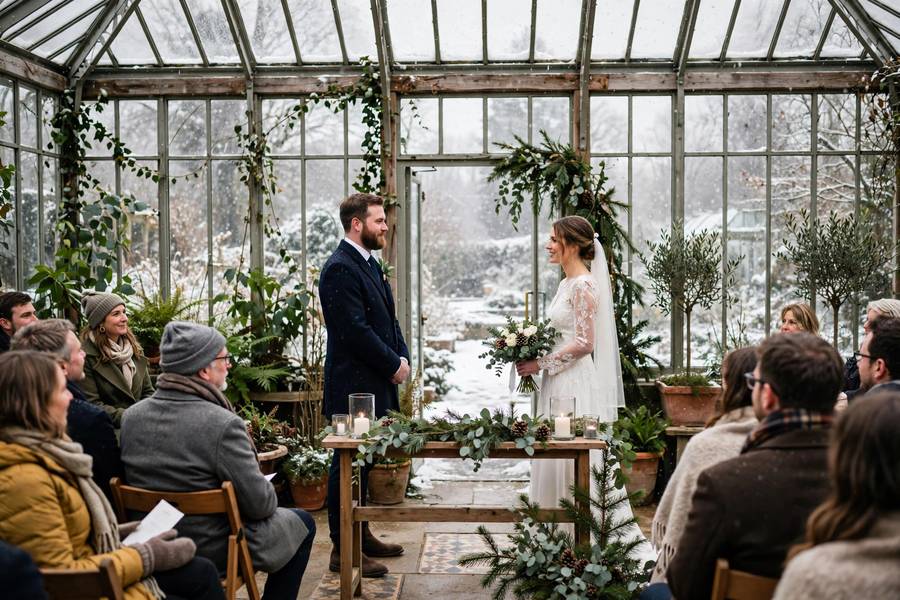
Some of my favorite weddings have been winter ones. There’s something about candlelight against early darkness, evergreens against snow, and everyone drawn a little closer together against the cold. Winter weddings have a built-in atmosphere that summer weddings spend thousands trying to manufacture.
But winter also has logistics — short days, cold guests, weather risk. Here are twenty ideas that lean into the magic while handling the practical side, from someone who’s coordinated her share of December ceremonies.
Related: affordable wedding ideas.
Table of Contents
- Why Winter Weddings Work
- Venue Ideas
- Décor Ideas
- Attire and Comfort
- Food and Drink Ideas
- Photo Ideas
- Winter Logistics You Can’t Skip
Why Winter Weddings Work
Three advantages before the ideas:
- Availability and pricing. December through February (outside the Christmas–New Year spike) is off-season for most venues and vendors. You’ll get your pick of dates and often 15–30% lower prices.
- Built-in ambiance. Darkness falls early, which means candlelight, string lights, and fireplaces do the decorating for you.
- Guest focus. No one’s splitting attention with three other summer weddings. Your winter date feels like an event.
The trade-off is weather risk and guest travel in snow season — addressed in the logistics section.
Venue Ideas
1. A glass conservatory or orangery. Snow falling outside, tropical warmth inside, you in the middle. Botanical garden conservatories are the single most magical winter venue type.
2. A historic mansion or estate. Wood paneling, fireplaces, grand staircases for photos — winter was made for these rooms.
3. A mountain lodge. Stone fireplaces, timber beams, snow outside the windows. Rustic-luxe perfection.
4. A museum or library after hours. Dramatic architecture, built-in art, and the cozy intellectual vibe winter loves.
5. A heated clear-top tent. If you want “outdoor” in winter, a clear tent with heaters, draping, and chandeliers gives you snowfall views without frozen guests.
Décor Ideas
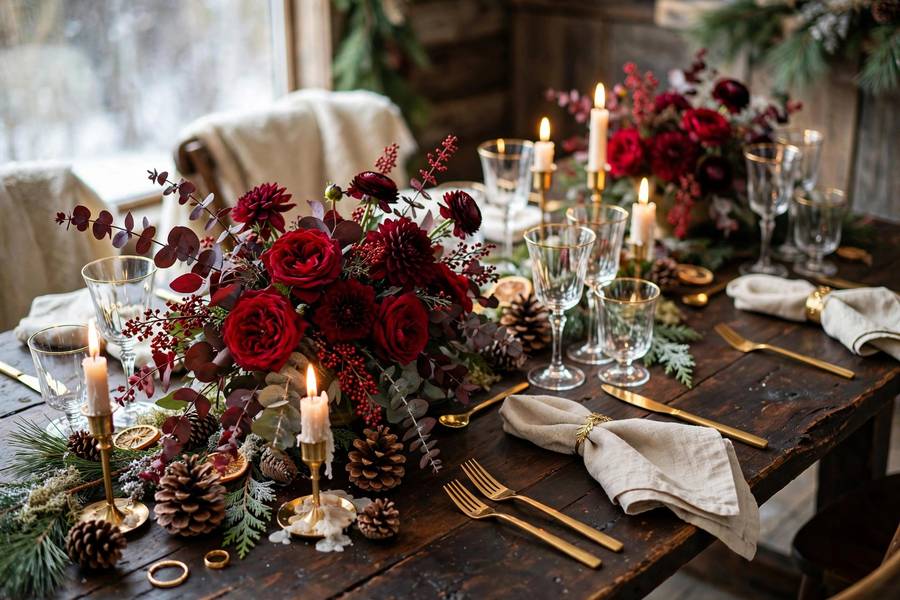
6. Candlelight everywhere. Pillar candles, votives, taper candles in brass holders — winter weddings should glow. Budget more for candles than flowers; the light does more work.
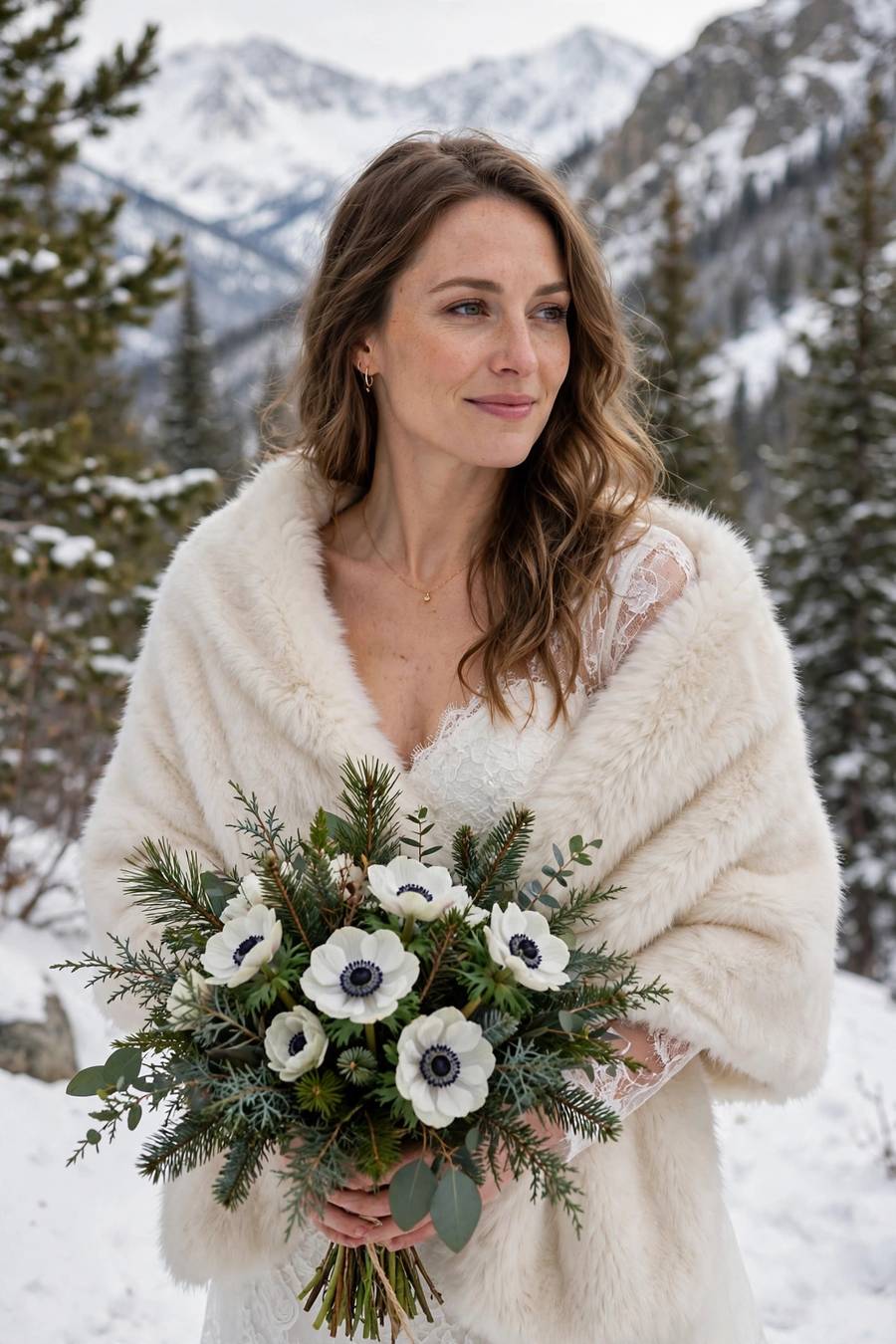
7. Evergreens over flowers. Cedar garlands, pine boughs, eucalyptus, and white anemones or roses. Seasonal, fragrant, and far cheaper than out-of-season peonies. A single dramatic cedar garland down a long banquet table often outshines a dozen small arrangements — scale beats quantity in winter.
7b. Fruit and natural elements. Pomegranates, figs, kumquats, and pinecones tucked into arrangements add winter texture and color for almost nothing. Your florist can forage the pinecones; the fruit comes from the grocery store. Some of the most striking winter tables I’ve seen were built on produce.
8. Velvet and texture. Velvet table runners, velvet ribbon on bouquets, textured linens — winter invites touch in a way summer doesn’t.
9. A fireplace focal point. If your venue has one, make it the heart of cocktail hour. If not, rented fire pits (with proper ventilation/safety) create the same gathering magic outdoors.
10. Deep, moody color palettes. Burgundy, emerald, navy, plum, and gold — winter’s jewel tones photograph gorgeously against snow and candlelight.
Attire and Comfort
11. The faux-fur wrap or cape. Practical and photogenic — it keeps shoulders warm for outdoor photos and looks stunning. Faux, always.
12. Closed-toe shoes and warm layers underneath. Long dresses hide thermal leggings and warm boots beautifully. No one will know; you’ll be the comfortable one.
13. Blankets as favors. Drape pashminas or fleece blankets on ceremony chairs — guests use them immediately, and they double as décor and favors.
14. A hot drink station. Mulled wine, hot cider, or hot chocolate on arrival warms guests literally and emotionally. It’s hospitality you can taste. Set it up where guests naturally gather — near the entrance or the cocktail area — and keep it replenished through cocktail hour. For an extra touch, offer both spiked and non-spiked versions clearly labeled.
The Winter Timeline Advantage
Here’s something couples don’t realize: winter’s early darkness is a scheduling gift. A 3 p.m. ceremony means golden-hour portraits at 3:45, candlelit cocktail hour at 4:30, and a reception that feels like evening from the start — no awkward daylight-drinks limbo. Summer weddings fight the sun until 9 p.m.; winter hands you atmosphere on arrival. Plan the photography timeline around the early sunset (check exact times for your date and latitude), and let the darkness do the decorating.
Winter Guest Comfort Checklist
Run through this a month before the wedding:
- Ceremony seating: Are outdoor or unheated-space guests covered? Blankets, heaters, or a shorter ceremony — pick at least one.
- Transportation gaps: Any moment guests wait outside (shuttle lines, venue entry queues)? Heated waiting areas or staggered timing fix this.
- The venue walk: Visit at the same time of day as your wedding. A path that’s charming at noon can be an ice rink at 5 p.m. — literally. Ask about salting, lighting, and handrails.
- Vendor warmth: Your photographer will be outside in the cold for portraits — a warm car nearby and hand warmers keep them functional and happy.
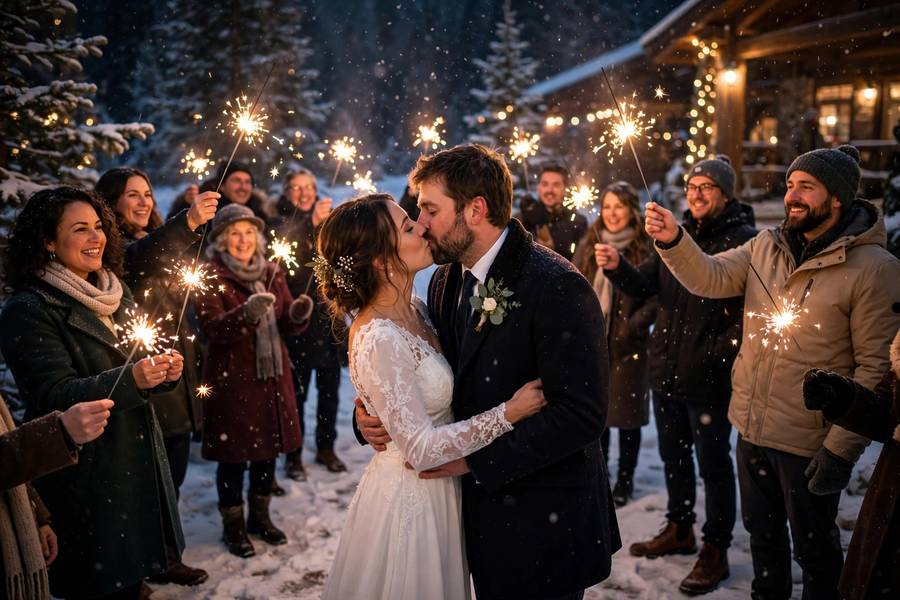
- The send-off: If it’s outdoors at night in winter, keep it brief. Sparklers in falling snow are magical for five minutes; after ten, everyone’s just cold.
Food and Drink Ideas
15. Hearty comfort menus. Braised short ribs, root vegetables, wild mushroom dishes — winter food is the best food. Lean into it.
16. A hot chocolate or coffee bar. With the works: whipped cream, peppermint sticks, liqueurs for the adults. Interactive and cozy.
17. Seasonal signature cocktails. Spiced old fashioneds, cranberry mules, hot toddies — winter’s cocktail game is strong.
18. Late-night comfort food. Grilled cheese and tomato soup shooters, mini pot pies, or breakfast sandwiches at 11 p.m. Guests will talk about this for years.
Photo Ideas
19. The snow photo plan. If snow is possible, build 15 minutes into the timeline for outdoor portraits — fresh snow is the most flattering backdrop in photography. Have the wrap, the touch-up kit from your emergency kit, and a warm car nearby.
20. Sparkler or lantern send-off. Winter’s early darkness makes send-offs spectacular — long-burning sparklers against snow, or (where permitted and safe) floating lanterns. Check local regulations first.
Winter Logistics You Can’t Skip
The magic needs a foundation:
- The weather contingency isn’t optional. Outdoor elements need a real indoor backup — not a hope, a plan. Venues with built-in bad-weather options are worth prioritizing.
- Guest travel. Choose venues near major airports and block hotel rooms close by. Share driving directions and consider shuttles — winter roads stress out-of-town guests.
- Timeline for light. In December, sunset can be 4:30 p.m. Schedule the ceremony and portraits around it — golden hour is brief, so plan precisely.
- Heat the getting-ready spaces. Bridal suites in old mansions can be drafty. Confirm heating with the venue.
- Vendor travel. Ask vendors about their winter travel policies and backup plans — photographers especially should have weather contingencies.
- Insurance. If you haven’t already, winter is the season that justifies wedding insurance most clearly — it covers the weather disasters that are actually plausible in winter.
Winter weddings reward the couples who embrace the season instead of fighting it. Don’t try to recreate June in December — lean into candlelight, evergreens, comfort food, and early darkness. Do that, and your wedding won’t just survive winter. It’ll be the one guests talk about for years.
Frequently Asked Questions
Generally yes — December through February (excluding the Christmas-New Year spike) is off-season, with venues and vendors often 15-30% cheaper and far more available. Holiday weekends themselves command premium pricing.
Suggest warm formal wear on the invitation or website: wraps, heavier fabrics, closed-toe shoes. Providing pashminas or blankets at the ceremony is a thoughtful touch guests genuinely appreciate.
Heated spaces are non-negotiable — confirm venue heating. Add blankets on ceremony chairs, a hot drink station on arrival, and minimize outdoor time. Heated tents with proper heaters work for tented receptions.
Anemones, ranunculus, hellebores, amaryllis, and evergreens (cedar, pine, eucalyptus) are winter stars. They’re fresher, cheaper, and more striking than out-of-season imports like peonies. Evergreen garlands give the most visual impact per dollar.
Plan around early sunset — in December, daylight can end by 4:30-5 p.m. A 2-3 p.m. ceremony allows daylight portraits plus a golden-hour window. Work backward from sunset for your specific date and location.
Yes — any outdoor element needs a real indoor alternative, decided in advance with a clear trigger (who calls it, and when). Venues with built-in bad-weather options simplify this enormously. Wedding insurance is especially worthwhile in winter.