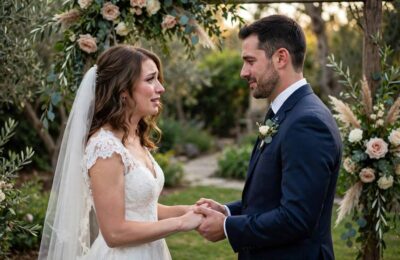

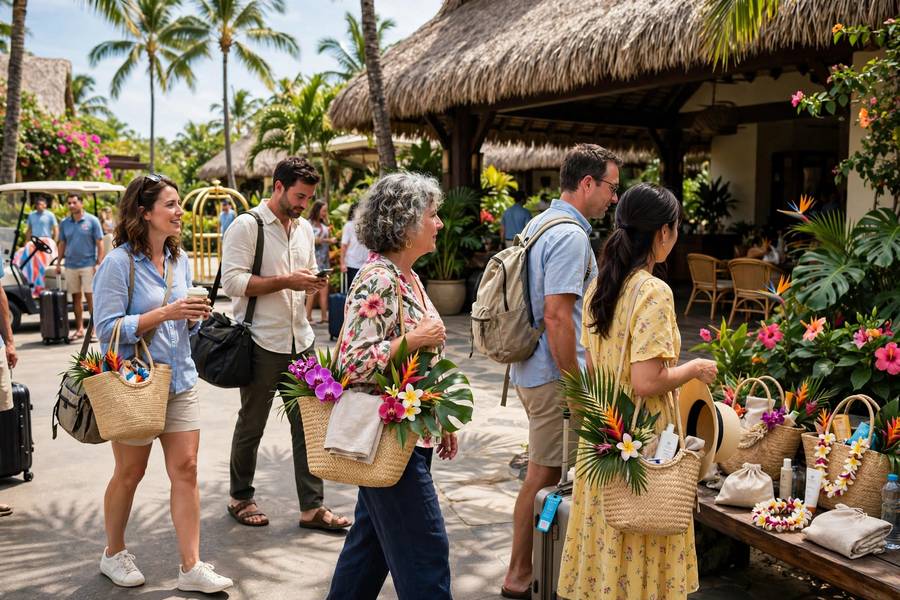
A destination wedding is a wedding held somewhere that requires most of your guests to travel — typically defined as 100+ miles from home or anywhere requiring flights and overnight stays. A beach in Mexico, a villa in Tuscany, a mountaintop lodge in Colorado. The ceremony and reception happen away from home, and the wedding usually stretches into a multi-day event.
I’ve planned more than 40 of them, and I want to give you the version nobody’s Pinterest board shows: the real costs, the real trade-offs, and how to know if it’s right for you. Because destination weddings are either the best decision a couple ever made or an expensive lesson in logistics — and the difference is entirely in the planning.
Table of Contents
- The Simple Definition (and What Counts)
- Why Couples Choose Destination Weddings
- The Real Cost Breakdown
- The Pros: Why They’re Worth It
- The Cons: What Nobody Tells You
- Guest Logistics: Your Biggest Job
- Legal Requirements Abroad
- Timeline: When to Do What
- Is a Destination Wedding Right for You?
- Frequently Asked Questions

The Simple Definition (and What Counts)
The wedding industry defines a destination wedding as any wedding where the majority of guests must travel and stay overnight — generally 100 miles or more from the couple’s home, often involving flights. A wedding two hours away at a nice venue isn’t really a destination wedding; a wedding in another state or country is.
Common destination wedding types I see:
- Resort weddings (Caribbean, Mexico, Hawaii): all-inclusive packages, on-site coordinators, simplest logistics.
- Villa and estate weddings (Tuscany, Provence, Bali): private, stunning, more moving parts.
- Domestic destination weddings (Napa, Aspen, Charleston, national parks): no passports, still a getaway feel.
- Cruise weddings: the venue moves; guests love it or hate it, rarely in between.
- Hometown-away weddings: marrying where you grew up or where family lives — travel for you, not for them.
The defining feature isn’t the beach. It’s that the wedding becomes a trip — for you and for everyone you invite. That changes everything about how you plan.
Why Couples Choose Destination Weddings
The reasons I hear most, in order:
- Smaller guest list, naturally. This is the number one reason. It’s much easier to have a 40-person wedding when it requires a flight than to cut your 200-person hometown list down by hand. The distance does the editing for you.
- Built-in intimacy. A three-day celebration with your favorite 50 people creates bonds a six-hour hometown reception can’t.
- The honeymoon is built in. You’re already somewhere beautiful. Many of my couples stay an extra week at the venue or nearby.
- Simplified planning. Resort packages bundle venue, catering, flowers, music, and coordination. Fewer vendors to hire, fewer decisions to make.
- It’s just more fun. A wedding that doubles as a vacation is genuinely a better time for most guests than a Saturday night at a local banquet hall.
The Real Cost Breakdown
Here’s where I get honest, because the myth is that destination weddings are always cheaper. Sometimes they are. Often they aren’t. Real numbers from weddings I’ve planned:
What the couple typically pays:
- Venue/package: $5,000–$15,000 (resort packages) or $10,000–$30,000+ (private villas/estates)
- Travel for two + scouting trip: $2,000–$6,000
- Photographer/videographer travel: $2,000–$5,000 extra if you bring your own (and you should — more on that below)
- Welcome party and extra events: $2,000–$8,000 (most destination weddings include at least a welcome dinner)
- Décor upgrades beyond the package: $1,000–$5,000
- Total typical range: $15,000–$45,000
What guests typically pay: $800–$2,000+ per person for flights, hotel, food, and activities over 3–4 days. This is the number that matters most. Every guest you invite is being asked to spend a vacation’s worth of money on your wedding. Never forget that.
The honest math: a destination wedding often costs the couple less than a 150-person hometown wedding (which averages $30,000+), but it shifts thousands of dollars of cost onto guests. That’s the trade. It’s fine — as long as you go in with eyes open and treat your guests accordingly.
The Pros: Why They’re Worth It
- Natural guest list control. The couples who are happiest with their weddings almost always say the small guest list was the best part.
- Multi-day celebration. Rehearsal dinner, welcome party, wedding day, farewell brunch — you actually spend time with people instead of a receiving-line blur.
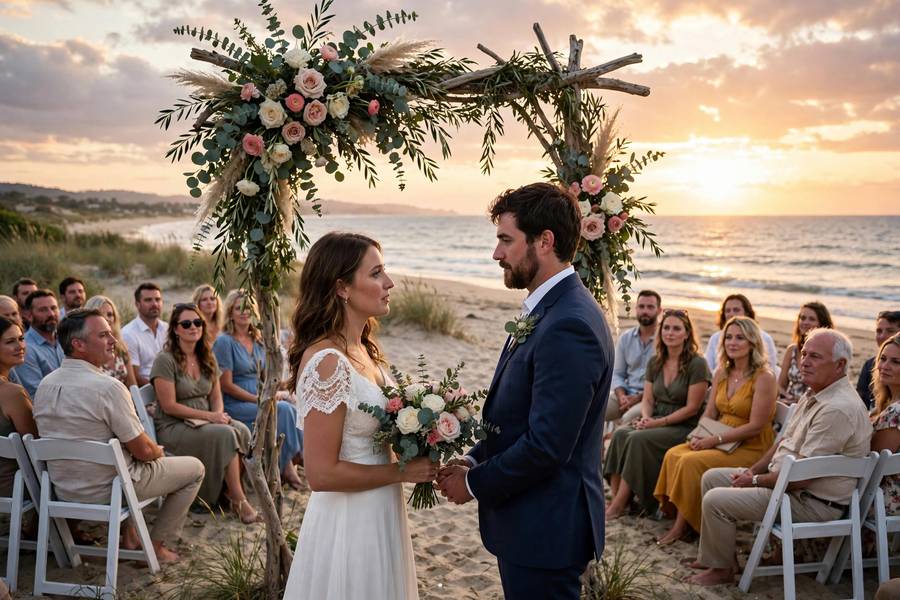
- Stunning backdrops for less décor. An ocean sunset needs no centerpieces. Nature does the decorating.
- Fewer vendors, less stress. A good resort package means one contract instead of twelve.
- Memorable for everyone. Guests remember destination weddings for years. They forget hometown ballroom weddings by Monday.

The Cons: What Nobody Tells You
I owe you the other side, because this is where couples get blindsided:
- Key people may not come. This is the big one. Elderly grandparents, friends with newborns, anyone tight on money — some people you love won’t make it. I’ve seen brides cry about this two weeks before the wedding. Decide now whether you can live with that.
- You lose control. Planning from 2,000 miles away means trusting vendors you’ve never met. Site visits help but don’t eliminate it.
- Weather risk is real. Hurricane season, rainy season, “it’s always sunny there” (it is not always sunny there). Always have a real backup plan, not a hopeful one.
- Legal paperwork abroad is a maze. More on this below, but some countries make it genuinely hard.
- Vendor quality varies wildly. That resort “photographer included in the package” is often not the photographer you want. Budget to bring your own key vendors.
- It’s your problem when guests are unhappy. Flight delayed, room not ready, too hot, too far from the venue — you become the travel agent, concierge, and complaint department for 50 people.
Guest Logistics: Your Biggest Job
This is where destination weddings are won or lost. Your guests are spending serious money and vacation days. Treat their experience like the product it is.
Send save-the-dates 9–12 months out. Not six. People need to budget, request time off, and find flight deals. Late notice is the top reason guests decline.
Negotiate a room block. For 20+ rooms, most resorts offer discounted rates and sometimes a free room for the couple. Get the block in writing with a cutoff date.
Build a wedding website with real travel info. Airport options, ground transport, what the resort includes, what to pack, visa requirements, the daily schedule. Answer every question before it’s asked.
Host a welcome event. A casual welcome party on arrival night is non-negotiable in my book. Guests who flew six hours shouldn’t wander around wondering what’s happening.
Consider a travel agent. For 30+ guests, a dedicated travel agent (often free — they earn commission from the resort) saves you dozens of hours answering “which flight should I book?”
Be gracious about declines. Some people can’t come. Thank them warmly, mean it, and never guilt-trip. The fastest way to sour a friendship is making someone feel bad about their budget.
Legal Requirements Abroad
This surprises people every time: getting legally married in another country can be complicated. Common requirements include:
- Residency periods: Some countries require you to be in-country 2–7 days before the ceremony.
- Documents: Birth certificates, passports, divorce decrees, all often needing apostilles and certified translations.
- Blood tests: A few destinations still require them.
- Waiting periods and fees: Vary enormously by country.
My practical advice, and what most of my couples do: get legally married at home first — a quiet courthouse ceremony before you travel — and treat the destination ceremony as the symbolic celebration. It’s not less real. Every couple I’ve suggested this to has been relieved. It removes an entire category of stress and paperwork, and nobody at the wedding knows or cares.
Timeline: When to Do What
Destination weddings need a longer runway than local ones:
- 12–18 months out: Choose the destination, take a scouting trip, book the venue. Send save-the-dates.
- 10–12 months out: Book key vendors (photographer, videographer — decide whether you’re bringing your own), launch the wedding website, secure the room block.
- 6–9 months out: Send invitations, plan welcome events, research legal requirements, book your own travel.
- 3–6 months out: Finalize guest count, plan the wedding seating chart ideas for destination events (yes, you still need one for the reception dinner), confirm vendor arrival logistics.
- 1–3 months out: Final payments, pack the wedding day emergency kit checklist (destination version: add sunscreen, bug spray, mini sewing kit, and copies of every vendor contract), confirm every guest’s travel details.
- 1 week out: Arrive early. Meet vendors in person. Breathe.
Is a Destination Wedding Right for You?
After 40+ of these, here’s my honest filter. A destination wedding is probably right if:
- You genuinely want a smaller wedding and the guest list is your biggest stress.
- Your must-have people are willing and able to travel (ask them — don’t assume).
- You’re comfortable giving up some control and planning remotely.
- The idea of a multi-day celebration with your favorite people excites you more than a big hometown party.
It’s probably wrong if:
- Having elderly grandparents or specific people there is non-negotiable and they can’t travel.
- You’d feel guilty about what guests are spending (that guilt doesn’t go away — listen to it).
- You’re a control freak about details (said with love — I plan weddings, I know the type).
- Your families would be hurt by the distance and you’d spend the engagement managing that.
There’s no wrong answer. There’s only the wedding that fits your life — and a great wedding isn’t about the perfect day, it’s about starting a marriage right, wherever you say the vows.
Frequently Asked Questions
A wedding held somewhere that requires most guests to travel — generally 100+ miles from home, often involving flights and overnight stays. The wedding typically becomes a multi-day event with a smaller guest list than a hometown wedding.
Couples typically spend $15,000–$45,000 total, including venue packages, travel, vendor travel fees, and extra events like a welcome dinner. Guests usually spend $800–$2,000+ per person on flights, hotel, and food — the cost shift to guests is the key trade-off to understand.
Often yes for the couple, because the guest list is naturally smaller — a 40-person destination wedding usually costs less than a 150-person hometown wedding. But it’s not automatically cheaper, and it shifts thousands in travel costs onto your guests.
Traditionally guests pay their own travel and accommodation, while the couple covers wedding events. Some couples cover hotel rooms as a thank-you. At minimum, negotiate a discounted room block, host a welcome event, and be genuinely gracious when people decline.
12–18 months is ideal. Send save-the-dates 9–12 months out so guests can budget and book flights. The longer runway also gives you time for scouting trips, vendor booking, and any legal paperwork the destination requires.
Usually yes, but requirements vary widely — residency periods, apostilled documents, translations, and waiting periods. The simplest approach most couples choose: get legally married at home first, then hold the symbolic ceremony at the destination with zero paperwork stress.
Still deciding? Browse our latest guides for timelines, budgets, and checklists that work whether you’re marrying on a beach or in your backyard.