
I’ve spent ten years with my hands inside engine bays, and I’ve watched hundreds of people buy “fun” cars they regretted within a year. They bought the badge or the horsepower number — and never asked what the car costs to actually own.
So here’s my rule, and it’s the only one that matters: would I spend my own money on it? Not a press loan. My money, my driveway, my repair bills.
Every car below passed that test. These are the best affordable sports cars in 2026 — genuinely fun to drive, sane to maintain, and holding value well enough to sell without crying.
Table of Contents
- What “Affordable” Actually Means in 2026
- My Ground Rules Before We Start
- Mazda MX-5 Miata (ND, 2016–present)
- Toyota GR86 and Subaru BRZ (2022–present)
- Ford Mustang EcoBoost (2018–present)
- Honda Civic Si (2022–present)
- Hyundai Elantra N (2022–present)
- Nissan 370Z (used, 2009–2020)
- Porsche Boxster 987 (used, 2005–2012)
- The Ones I’d Skip
- Used Sports Cars: My Inspection Checklist
- The Ownership Costs Nobody Talks About
- Frequently Asked Questions
What “Affordable” Actually Means in 2026
Let’s be honest about numbers. A brand-new sports car under $30,000 barely exists anymore. My working definition: under $35,000 new, or under $25,000 used — a price where the purchase doesn’t wreck your finances and the running costs stay sane. Every car on this list can be bought, insured, fueled, and maintained by a normal person with a normal job. That’s the whole point.
My Ground Rules Before We Start
Every car here clears four checks: reliability I can verify (I’ve seen what breaks in shops), sane parts prices, driving feel over numbers, and resale that holds. Now, the cars.
Mazda MX-5 Miata (ND, 2016–present)
Roughly: $28,000–$32,000 new, $15,000–$22,000 used
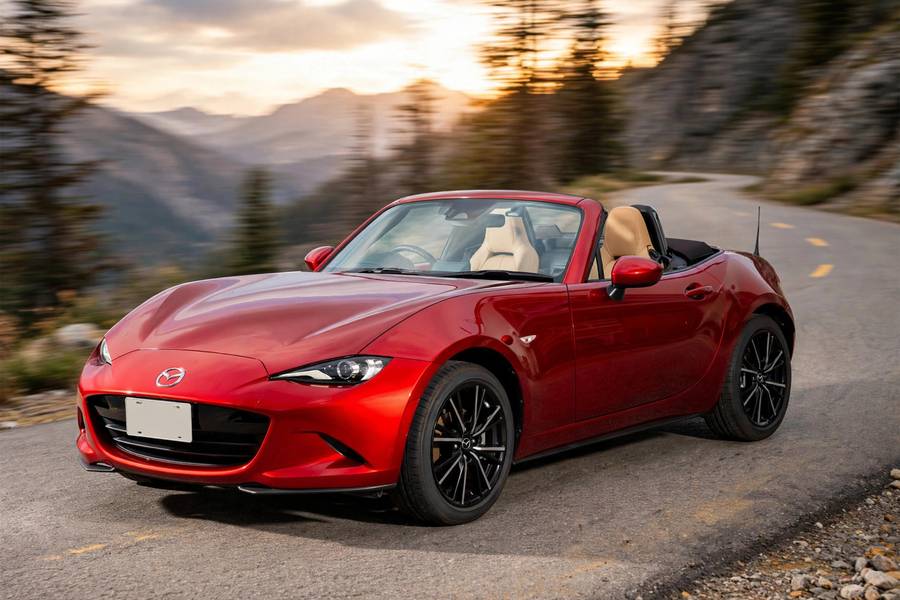
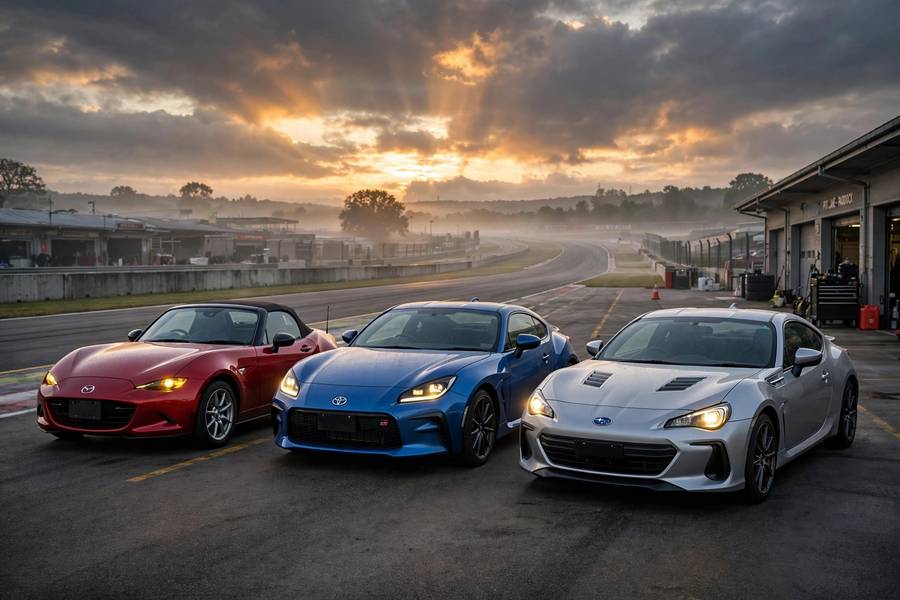
The Miata is the answer, and it has been the answer for 35 years. ND Miatas almost never break — the 2.0-liter Skyactiv is one of Mazda’s most reliable engines, and the soft top mechanism is dead simple.
The catch: it’s tiny, and tall drivers should sit in one before buying. But if you want the purest driving experience per dollar on Earth, this is it.
Toyota GR86 and Subaru BRZ (2022–present)
Roughly: $30,000–$34,000 new, $24,000–$28,000 used
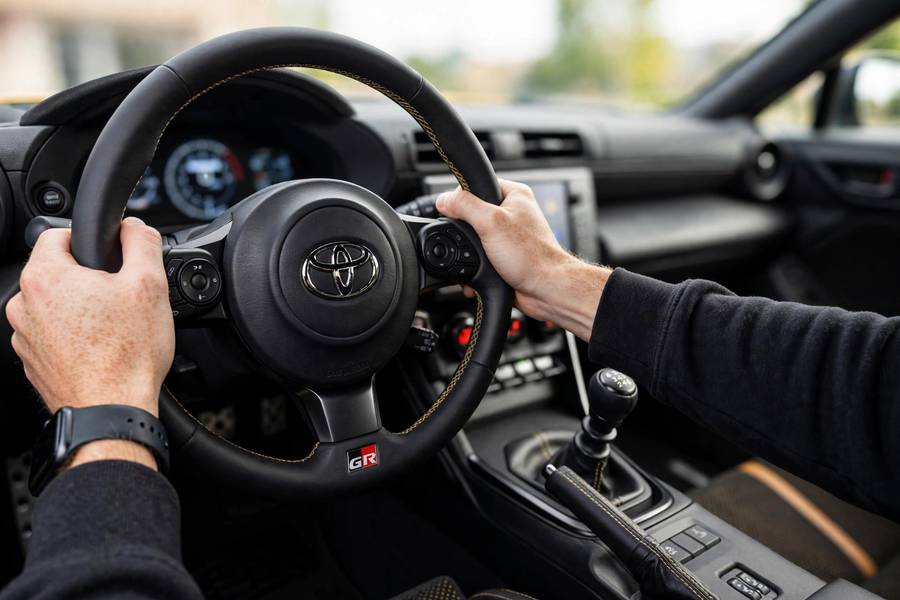
Same car, two badges. The second generation fixed the first one’s biggest complaint: the old 2.0-liter felt gutless below 4,500 rpm. The new 2.4-liter has real mid-range torque, and the car is properly quick now.
From the shop side, these are honest cars. The boxer engine needs its oil kept full — boxers drink a little oil by design — but the drivetrain is stout and I’ve seen GR86s with 100,000 hard miles that still drive tight.
Why it’s fun: rear-wheel drive, limited-slip differential standard, and a chassis that begs you to learn car control. This is the car I’d recommend to someone who wants to do track days. One note: the back seat is decorative. Buy it as a two-seater and you’ll never be disappointed.
Ford Mustang EcoBoost (2018–present)
Roughly: $32,000–$36,000 new, $20,000–$26,000 used
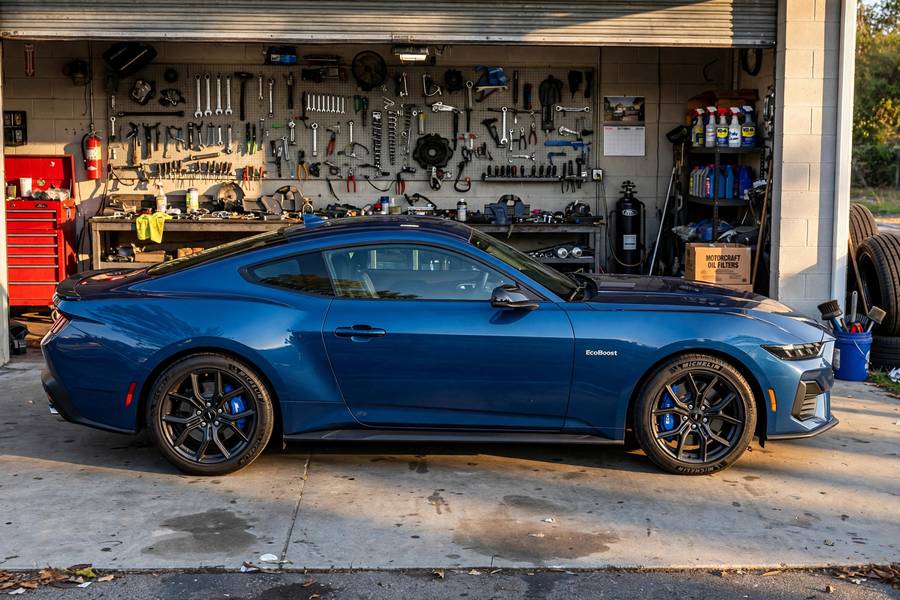
“A four-cylinder Mustang isn’t a real Mustang” — spare me. 310 horsepower, 0–60 in about five seconds, 30 mpg highway, $10,000 cheaper than the V8, and lighter over the nose so it turns better.
Reliability-wise, the 2018+ cars are solid. The 10-speed automatic is good; the 6-speed manual is more fun and simpler to maintain.
Why it’s fun: it’s a proper rear-drive coupe with real presence, a usable back seat, and a trunk that fits actual luggage. For one car that does everything — commute, road trip, weekend fun — the EcoBoost is the most complete package here.
Honda Civic Si (2022–present)
Roughly: $30,000–$32,000 new, $24,000–$28,000 used
“But Marcus, it’s a Civic.” Yes. And it’s one of the best driver’s cars you can buy new, period. The 1.5-liter turbo makes 200 horsepower, the 6-speed manual is the best shifter under $50,000 — I’ve driven nearly everything, and Honda’s manuals are still the benchmark — and the limited-slip differential means it pulls out of corners like a much more expensive car.
From a mechanic’s perspective, this is the safest pick on the list. The turbo four is proven, parts are everywhere and cheap, any shop on Earth can work on it, and Civics hold value like they’re made of gold.
Why it’s fun: front-wheel drive done right. The steering is sharp, the chassis is playful, and you can drive it at ten-tenths on a mountain road while staying at sane speeds. Plus it’s a practical sedan — four doors, big trunk, 37 mpg highway.
Hyundai Elantra N (2022–present)
Roughly: $34,000–$36,000 new, $26,000–$30,000 used
Five years ago I’d have laughed at a Hyundai on a sports car list. I’m not laughing now. Hyundai’s N division hired the former head of BMW M, and it shows: 276 horsepower, a proper mechanical limited-slip diff, an exhaust that crackles like a rally car, and chassis tuning that embarrasses cars costing twice as much.
Reliability: the 2.0-liter turbo is built to a different standard than Hyundai’s older motors, the track record so far is genuinely good, and the warranty (5-year/60,000-mile bumper-to-bumper, 10-year/100,000-mile powertrain in the US) is the best safety net on this list.
Why it’s fun: it’s the loudest, rowdiest, most extroverted car here. The N mode transforms it from a quiet commuter into something that feels alive. If the Civic Si is the responsible choice, the Elantra N is the one you buy with your heart.
Nissan 370Z (used, 2009–2020)
Roughly: $18,000–$26,000 used
The 370Z is old — Nissan barely changed it in eleven years — and that’s exactly why it’s a smart buy. Every weakness is documented, every fix is known, and the aftermarket has solved everything worth solving. The 3.7-liter V6 makes 332 horsepower, the 6-speed manual is solid, and the car has real old-school muscle-car character.
What to watch: the VQ37 engine has a known oil gallery gasket issue on 2009–2012 models, and the clutch slave cylinder on manuals can fail. Budget $1,500 for deferred maintenance and get a pre-purchase inspection — always.
Why it’s fun: it’s raw in a way modern cars aren’t. Heavy steering, a big naturally-aspirated V6 that loves to rev, rear-drive balance that rewards commitment. Clean manual coupes are starting to creep up in price — buy a good one now and you might drive it for free.
Porsche Boxster 987 (used, 2005–2012)
Roughly: $15,000–$22,000 used
A mid-engine Porsche for Honda Civic money. I’m serious. The 987-generation Boxster is one of the best-handling cars ever made at any price, and depreciation has done its beautiful work.
Now the mechanic’s warning, and I mean this: get a pre-purchase inspection from a Porsche specialist. The 2005–2008 cars have the infamous IMS bearing issue — a failure means a new engine. The 2009+ cars with the 9A1 engine don’t have this problem; those are the ones I’d buy. Budget $1,500–$2,500 a year for maintenance; Porsche parts cost Porsche money even on a cheap Porsche.
Why it’s fun: mid-engine balance, steering feel modern electric racks can’t match, and a flat-six soundtrack that makes every drive an event. The most car per dollar here — if you buy carefully and maintain religiously.
The Ones I’d Skip
Honesty cuts both ways. I’d avoid out-of-warranty German performance cars (a $25,000 used M4 can cost you $8,000 in one bad year), salvage-title exotics, the Mazda RX-8 (a rotary rebuild runs $4,000–$6,000), and heavily modified cars (someone else’s project is someone else’s problems).
Used Sports Cars: My Inspection Checklist
If you’re buying used — and at these prices, you should seriously consider it — here’s my shop-floor checklist: pre-purchase inspection, always ($150–$250 at an independent specialist — non-negotiable); service records (a sports car with full records is worth 15% more); tire date codes (old tires are dangerous, and a fresh set costs $800–$1,200); cold start (insist on seeing it start dead cold — listen for rattles, watch for smoke); and look underneath for leaks, rust, and bent suspension parts.
The Ownership Costs Nobody Talks About
The sticker price is maybe 60% of what a sports car costs you. Budget for insurance (get quotes before you buy — sports cars can cost double a sedan to insure), tires ($800–$1,400 a set every 25,000–35,000 miles if you drive enthusiastically), brakes ($600–$1,000 per full job at an independent shop), and fuel (most of these want premium — roughly $400–$600 extra per year).
None of this is scary if you plan for it. It’s only scary as a surprise. Keep up with the basics too — like knowing how to jump start a car and how to clean car headlights to keep it running and looking right.
Frequently Asked Questions
The Mazda MX-5 Miata is the best affordable sports car for most people. It’s lightweight, extremely reliable, cheap to maintain, and delivers the purest driving experience under $35,000. If you need practicality, the Honda Civic Si is the smarter pick; if you want maximum theater, the Hyundai Elantra N.
On the used market, a Ford Fiesta ST or a high-mileage Mazda MX-5 can be found for $12,000–$16,000 and both are genuinely fun. New, the Mazda MX-5 Miata and Toyota GR86 start around $28,000–$30,000, which is about as cheap as a new sports car gets in 2026.
It depends on the car. Japanese options like the Miata, GR86, and Civic Si have Toyota/Honda/Mazda running costs — cheap parts and any-shop serviceability. Used European sports cars like the Porsche Boxster cost significantly more to maintain, so budget $1,500–$2,500 per year for those.
Used usually wins on value — sports cars depreciate, and a 3–5-year-old example with full service records gives you 90% of the experience for 60% of the price. Buy new if you want the full warranty and the exact spec you want, especially for cars like the Elantra N where the warranty is a major asset.
Always get a pre-purchase inspection from an independent specialist ($150–$250), verify full service records, check tire date codes, insist on a cold start, and look underneath for leaks, rust, or bent suspension parts. Never skip the inspection — it’s the cheapest insurance in car buying.
Better than most cars. Manual-transmission enthusiast cars like the Miata, GR86, Civic Si, and 370Z depreciate slowly because demand from enthusiasts stays strong. Limited colors and unmodified examples hold value best. Avoid heavy modifications if resale matters to you.