

“Where do we even start?” It’s the first thing almost every couple says to me, usually with a mix of excitement and low-grade panic. And it’s a fair question — a wedding has hundreds of moving parts, and nobody teaches you this.
So here’s the answer, from someone who’s guided hundreds of couples through it: you start with three decisions, then follow the steps in order. This guide walks you through every one — what to do, when to do it, and the mistakes to skip.
Table of Contents
- Step 1: Set the Budget
- Step 2: Draft the Guest List
- Step 3: Choose Your Vision
- Step 4: Book the Venue
- Step 5: Hire Key Vendors
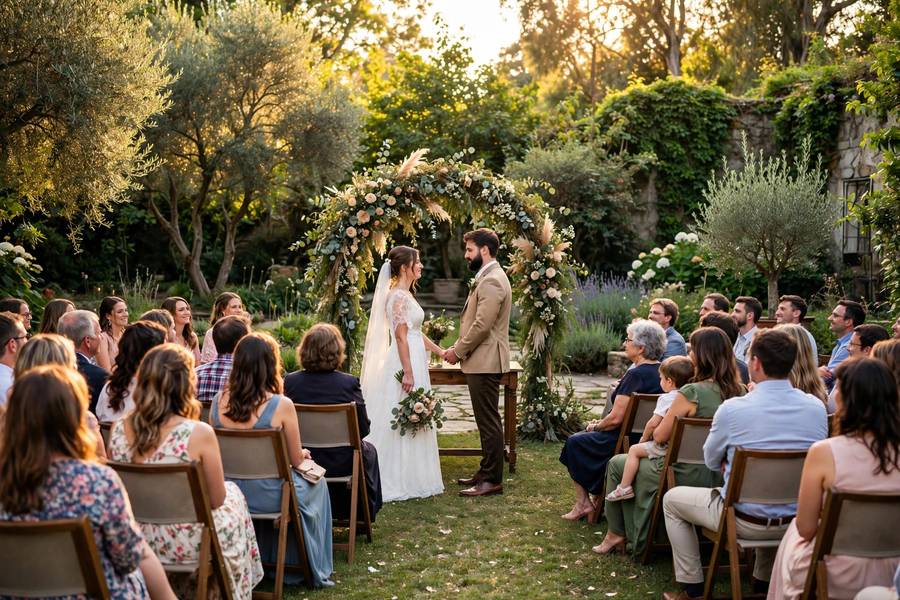
- Step 6: Plan the Ceremony
- Step 7: Plan the Reception
- Step 8: Handle the Details
- Step 9: The Final Month
- Step 10: The Wedding Week

Step 1: Set the Budget
Everything flows from the budget, so this comes first — before venues, before Pinterest, before anything.
Have the money conversation. Total amount, who’s contributing (both families? just you two?), and whether contributions come with expectations. Write it down. Vague agreements cause the worst conflicts.
Build a budget breakdown. A typical allocation:
– Venue + catering + bar: 40–50%
– Photography/videography: 10–15%
– Attire: 5–8%
– Flowers and décor: 8–10%
– Music: 5–8%
– Everything else (stationery, favors, transport, etc.): the remainder
– Contingency: 5% — something always costs more than expected
Track everything. A spreadsheet with columns for estimated cost, actual cost, deposit paid, and balance due. Update it religiously. Couples who track stay on budget; couples who don’t, don’t.
Step 2: Draft the Guest List
You can’t book a venue without a headcount, and you can’t set a catering budget without one either. So: list time.
Make three tiers:
– A-list: must-invite (immediate family, closest friends)
– B-list: want-to-invite (extended family, good friends)
– C-list: maybe (colleagues, plus-ones, distant relatives)
Your venue’s capacity and your budget will tell you where the line falls. This is also when you decide the big policies: plus-ones for everyone or only serious partners? Kids or adults-only? Make these calls now — changing them later is painful.
Step 3: Choose Your Vision
Before booking anything, align on what you both want. Not the details — the feeling.
Ask each other:
– Big party or intimate gathering?
– Indoor elegance or outdoor natural?
– Traditional or unconventional?
– What are your three non-negotiables? (Great food? Amazing photos? A killer dance party?)
Gather inspiration — but with discipline. A shared Pinterest board or folder is fine; a 400-pin spiral is not. Look for patterns: are you pinning barns or ballrooms? Neutrals or jewel tones? The patterns reveal your actual taste.
Pick a season. Each has trade-offs: spring and fall have the best weather and highest prices; summer offers long days (and heat); winter brings deals and cozy vibes (and early sunsets). Venue availability varies enormously by season.
Step 4: Book the Venue
The venue is the domino — it sets your date, capacity, location, and often your caterer. Tour 3–5 venues in person. Photos lie; light, sound, and flow don’t translate.
Ask every venue:
– What’s included? (Tables, chairs, linens, setup/breakdown, parking, bridal suite?)
– What are the restrictions? (Outside vendors? Noise curfews? Candle policies? End time?)
– What’s the rain plan for outdoor spaces?
– What are the payment and cancellation terms?
– How many events happen here per day? (You don’t want to be wedding #3.)
Read the contract before signing. Every word. The unglamorous clauses — damage deposits, overtime rates, vendor insurance requirements — are where surprises hide.
Step 5: Hire Key Vendors
Book in this order, roughly 9–12 months out for peak dates:
- Photographer/videographer — style is everything; review full galleries, not highlights. Confirm hours, second shooters, and delivery timelines.
- Caterer (if not via venue) — tastings are essential; discuss dietary needs and bar options.
- Music (band or DJ) — hear them live or watch full performance videos. Discuss MC duties.
- Florist — bring your budget and inspiration; ask what’s in season.
- Officiant — start the ceremony conversation early.
Vetting vendors: Read recent reviews, meet in person or by video, check backup plans (what if the photographer is sick?), and get everything in the contract — verbal promises evaporate.
Step 6: Plan the Ceremony
The ceremony is the reason for everything else. Give it the thought it deserves.
- Choose the format: religious, civil, or personalized. Your officiant guides the structure.
- Write or select vows, readings, and rituals. Start early — meaningful words take drafts.
- Plan the music: processional, recessional, and any mid-ceremony pieces.
- Order of events: a typical ceremony runs 20–30 minutes. Longer risks restless guests.
- Rehearsal: schedule it the day before with everyone involved — wedding party, readers, musicians.
Step 7: Plan the Reception
- Layout: work with the venue/caterer on floor plans — dance floor placement, bar location, and table arrangements shape the whole evening’s energy.
- Timeline: cocktail hour, entrances, first dance, dinner, toasts, cake cutting, bouquet toss, send-off. Build in buffer — everything runs 15 minutes late.
- Food and drink: finalize the menu, bar package, and cake. Consider late-night snacks — the best money you’ll spend.
- Seating: start the chart early; it’s the most time-consuming detail. My seating chart guide breaks down the strategy.
Step 8: Handle the Details
The middle months are for the hundred small things:
- Attire: order the dress 6–8 months out (alterations take time); suits need less lead time but don’t procrastinate.
- Invitations: design now, mail 6–8 weeks out. Save-the-dates go 6–8 months ahead.
- Rings: order with time for engraving and resizing.
- Hair and makeup trials: book trials, bring photos, wear white to the trial.
- Transportation: guest shuttles for remote venues, getaway car for you.
- Registry: set it up early — showers and engagement parties come before you expect.
- Marriage license: check your location’s requirements, waiting periods, and validity windows now.
Step 9: The Final Month
- Final headcount to the caterer (usually due 1–2 weeks out).
- Final fittings for attire.
- Confirm every vendor in writing: times, locations, contacts, balances.
- Build the day-of emergency kit.
- Write vows (if you haven’t — and don’t leave them to the last night).
- Delegate everything: every task assigned to a named person. Nothing lives in your head on the wedding day.
Step 10: The Wedding Week
- Rehearsal dinner and ceremony walkthrough.
- Pick up attire, confirm the license is in hand.
- Pack for the wedding night and honeymoon.
- Rest. No new projects this week. Sleep, hydrate, eat.
On the day: eat breakfast, drink water, and hand every problem to your coordinator or point person. Your job is to be present — to actually feel the day you’ve worked so hard to create.
Here’s what I want every couple to know: planning a wedding is a project, but a wedding is not a project. It’s the first day of your marriage, surrounded by everyone who loves you. The steps above get you there calm and ready. Then let the plan do its job, and be there for it.
Don’t forget the final details: wedding seating chart ideas for the reception puzzle, and a wedding day emergency kit checklist so the morning-of surprises stay small.
Frequently Asked Questions
Set your budget, draft your guest list, and align on your vision (size, style, season). These three decisions determine your venue options, and the venue determines nearly everything after it. Don’t book anything until these are settled.
Twelve months is the comfortable standard. Nine months works with focus. Six months or less is absolutely doable but requires fast decisions, flexible dates, and accepting that some popular vendors will be booked. The steps are the same regardless — only the pace changes.
Costs vary enormously by location and guest count, but a typical breakdown allocates 40-50% to venue/catering/bar, 10-15% to photo/video, and the rest across attire, flowers, music, and details. Always include a 5% contingency — something always costs more than expected.
Not everyone does, but almost everyone benefits from at least a day-of coordinator. Full planners suit busy couples, complex logistics, or destination weddings. A coordinator handles the wedding day itself so you can be present instead of problem-solving.
Book venue first, then photographer/videographer, caterer, music, florist, and officiant — ideally 9-12 months out for peak-season dates. The best vendors in every category book up earliest, so prioritize the vendors whose style matters most to you.
Booking the venue before setting the budget and guest list. The venue locks in capacity and cost structure — couples who reverse the order often end up with a venue that doesn’t fit their guest count or budget, forcing painful compromises on everything after.