


Last spring, I reached for a sweater and half my closet slid off its hangers onto me. Not metaphorically — an actual small avalanche of sweaters, onto my head, on a Tuesday morning, before coffee. I stood there in a pile of my own clothes and thought, honestly, for the first time: this is too much. Not “I have too many clothes” in a smug minimalist way. More like, quietly, “this isn’t serving me anymore.”
So slow down with me for a few minutes. I’m going to walk you through how to declutter your closet in a way that actually works for real people — not people with empty white wardrobes and a film crew. People with sentimental concert tees, jeans that don’t fit, and a drawer that hasn’t been opened since 2022. Small, doable choices. That’s the whole philosophy.
This guide stays inside the closet — the kitchen, the garage, and the rest of the house each get their own treatment in my room-by-room house guide. Tackling everything at once? Start there, then come back here when it’s the closet’s turn.
Why Your Closet Feels Impossible
Here’s what I’ve learned: a cluttered closet is rarely just about clothes. Every crowded rail is made of tiny decisions you’ve been postponing. The dress you might wear someday. The gift from your aunt you feel guilty about. The “good” outfit for a life you don’t quite have yet.
Clutter in a closet is deferred decision-making, and that’s why it feels so heavy. You open the door and your brain quietly registers forty unresolved decisions before you’ve even had breakfast. No wonder getting dressed feels exhausting.
So the first thing to know: there’s nothing wrong with you. Closets get cluttered because life happens — sizes change, jobs change, tastes change, and nobody teaches you the maintenance part. What we’re doing today is gentle and practical, not dramatic. We’re not throwing everything into a dumpster and crying. We’re making small, clear choices, one hanger at a time.
Before You Touch a Single Hanger
Don’t just dive in. Five minutes of setup will save you an hour of frustration. Here’s what I gather before I start:
- Three boxes or large bags (I’ll explain in a minute)
- One smaller box for the “maybe” pile — this is the secret weapon
- A trash bag for things that are genuinely done (stained, torn beyond repair)
- Your phone timer
- A drink and something to listen to — a podcast, a playlist, whatever keeps you company
Now, the mindset part. You are not doing a speed-run. Give yourself one unhurried session — two to three hours — or split it across two days. I also wrote about slowing down the rest of my life once I realized that rushing through a declutter just makes you keep everything out of panic.
The One Rule That Makes It All Work
Work in zones, not the whole closet at once. This is the rule that separates a calm afternoon from a meltdown.
Pick one category — tops, or pants, or shoes. Finish it completely before moving on. Why? Because the moment your entire wardrobe is on the bed, your brain checks out and you keep everything just to end the chaos. Zones keep decision fatigue manageable. Small choices, one at a time.
Step 1: Take It All Out
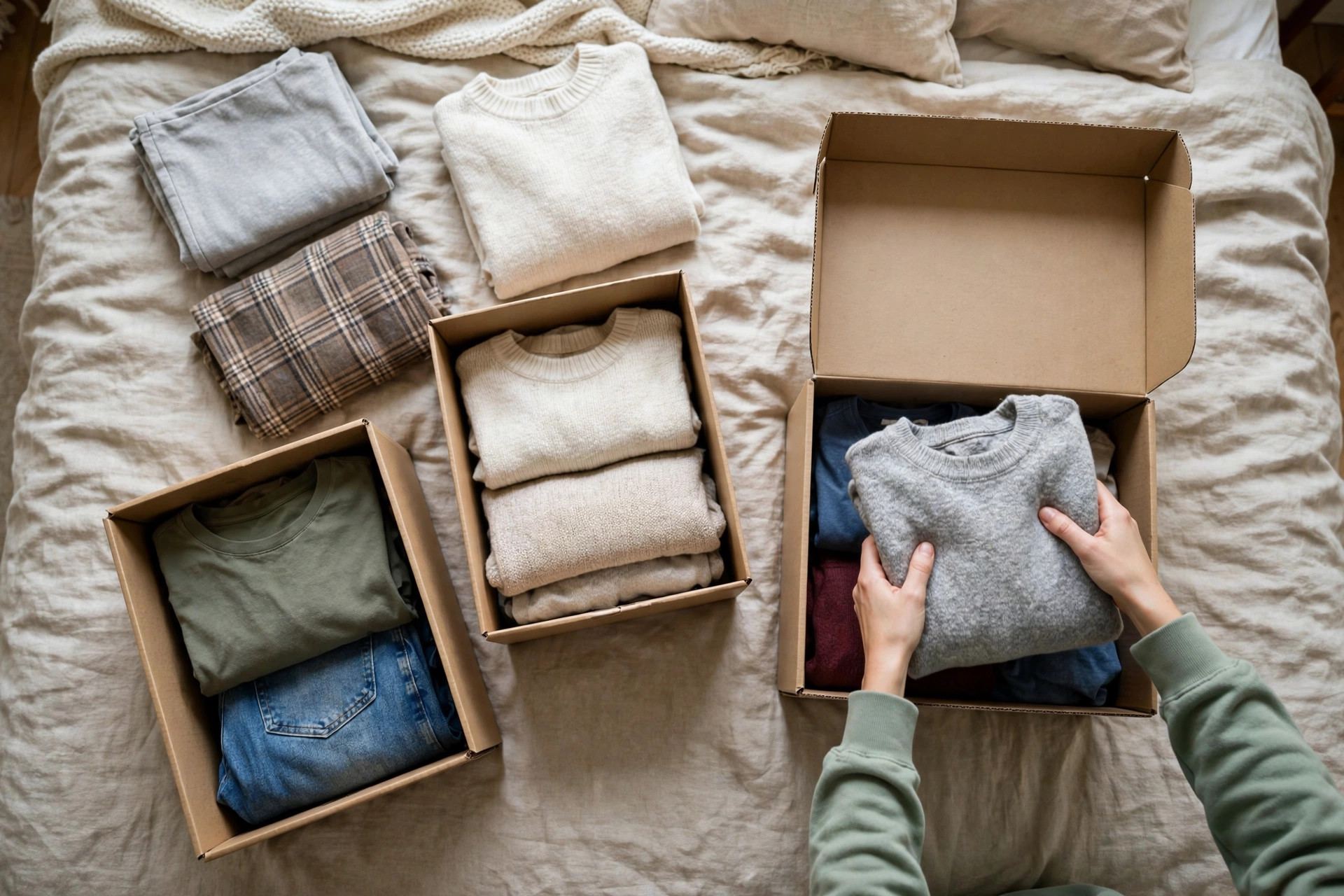
I know this sounds dramatic, but for each zone, take everything out. All of it. Put it on the bed.
There are two reasons this works. First, you finally see the true volume — and seeing thirty black tops laid out together is strangely clarifying in a way that seeing them jammed in a row never is. Second, it gives your closet a reset moment. You’re not just removing things; you’re starting from empty and choosing what earns its way back in.
This is also the step where you find the surprises. The birthday gift you never thanked anyone for. Two identical white shirts. The blazer you forgot you owned. Say hello, and keep going.
Step 2: Sort Into Three Honest Piles
Pick up each item, one by one, and make an honest, quick decision. Not a perfect decision — a quick, honest one. There are only three piles: keep (you wear it, it fits, no arguments needed), let go (worn out, wrong fit, or it gives you a little pang of guilt — it’s leaving the house), and maybe box (you hesitate, there’s a story attached). That last pile isn’t a failure; it’s a strategy. Everything uncertain goes into a box dated thirty days out, stored out of sight. When the date comes and you open it, about ninety percent will feel obviously let-go-able — the distance does the deciding for you. The ten percent you genuinely missed goes back with my full blessing. You didn’t fail at decluttering; you just did it on a delay.
Step 3: Try the “Would I Buy It Today?” Test
For the pieces where you’re stuck between keep and let go, I use one question: if I saw this in a shop today, at full price, would I buy it again?
It’s a surprisingly powerful filter. The answer for most “maybe” items is no — you’d walk right past them. That dress from three jobs ago? You’d never pick it up now. The jeans that fit a version of you from five years ago? Not today.
The one exception: sentimental pieces. The concert tee, your grandmother’s scarf, the jacket from a trip that changed you. Those aren’t really clothes anymore — they’re memory objects that happen to be made of fabric. They get special treatment, which we’ll get to. Don’t let the test bully your memories.
Step 4: Put It Back With Intention
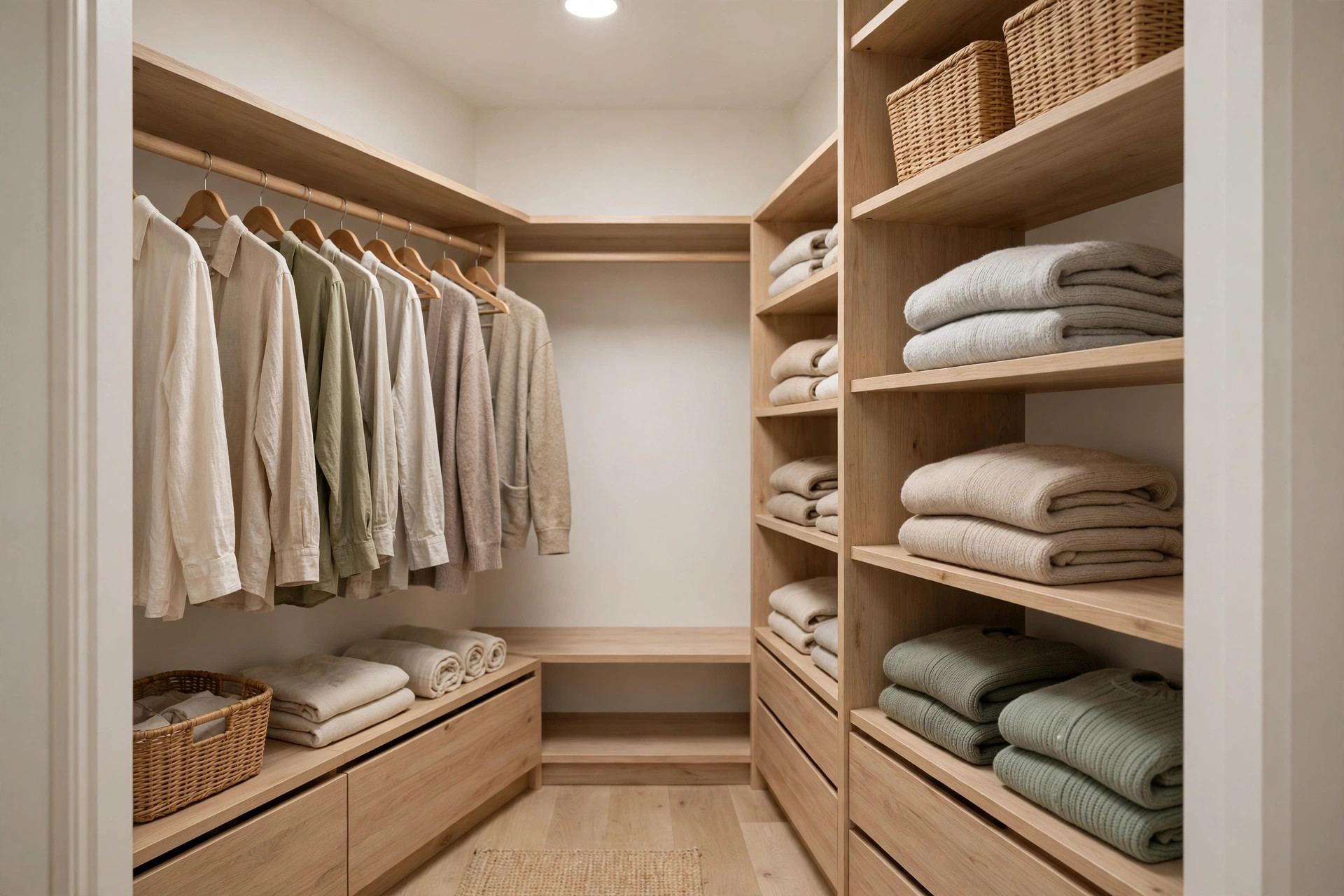
Now the satisfying part. Everything that earned its way back goes in deliberately, and this is where the breathing room comes from.
A few things I do every time:
- Give every hanger space. If you have to shove to get a hanger on the rail, it’s still too crowded. Clothes need air — you need to see them to wear them.
- Face everything the same direction. It sounds trivial. It is not trivial. A closet where everything faces one way looks calm, and calm closets stay tidy.
- Zone it simply. Work clothes together, casual together, going-out together. Whatever makes sense for your actual life — not a magazine’s idea of your life.
- Fold the knits, hang the structured stuff. Sweaters stretch on hangers. Blazers and dresses need hangers. This alone stops half the “where did that shirt go” mystery.
Skip the matching-hanger shopping spree mid-declutter — it’s procrastination in a shopping bag. Declutter first with what you have.
Oh — and when you’re putting things back, this is a perfect time to notice what your actual wardrobe looks like. If you’re suddenly thinking about how much easier packing a suitcase from a tidy closet would be, you’re not wrong. A decluttered closet is the quiet beginning of easier travel, easier mornings, easier everything.
What to Do With Everything You’re Letting Go
The “let go” pile is not a garbage pile — well, a small corner of it is, and that’s fine. Stained underwear and single socks with holes: trash, no guilt. The rest deserves a plan:
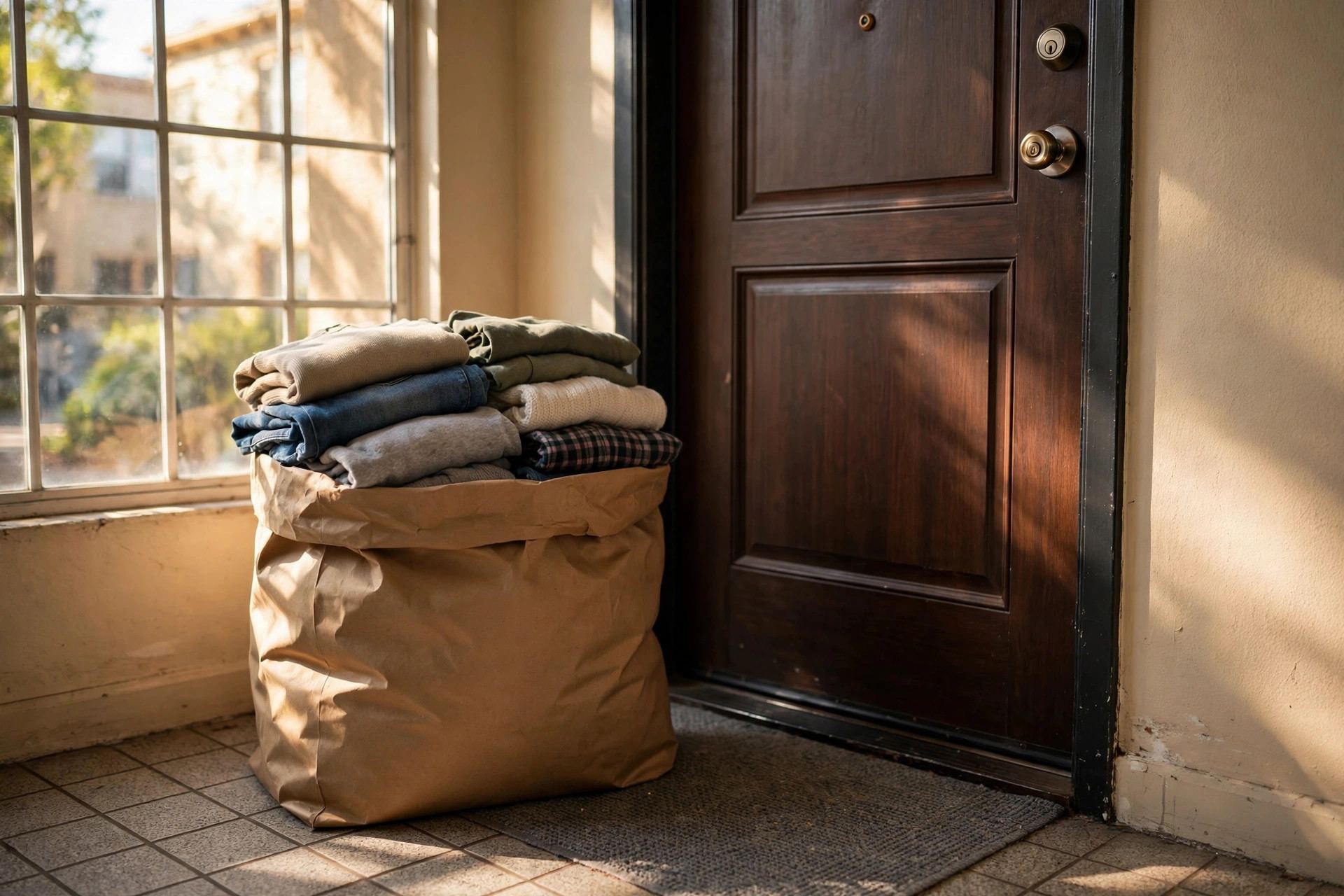
- Donate: Clean, wearable clothes go to a local charity shop. Bag them and drop them off within the week — the “I’ll donate someday” bag is how clutter moves rooms, not out of the house.
- Sell: Good-condition brand-name pieces can go to consignment or a resale app. But be honest: if listing feels like a burden, donate instead and take the lightness as your payment.
- Recycle: For clothes too worn to donate, search for textile recycling near you — many cities and some retailers run take-back programs.
The goal is the same in every case: out of your house, soon. A let-go pile sitting in the corner for three months is just clutter with paperwork.
The Sentimental Stuff Gets Its Own Drawer
Let’s talk about the concert tee I’ve kept for six years. I don’t wear it. I will never wear it. And yet, when I tried to put it in the let-go pile, my hands wouldn’t do it.
So here’s my rule: sentimental clothes don’t live in your everyday closet. They get one box — one — with a lid, somewhere safe. Inside it, you’re allowed to keep the things that are really memories: the tee, the baby blanket you can’t explain, the scarf your grandmother wore. No justifying, no minimum wear requirements.
One box, not three. And the box gets a little ceremony — I folded everything neatly, and honestly it made me like the memories more, seeing them cared for instead of crammed between jeans. The difference between clutter and a keepsake box is intention. When you choose to keep something on purpose, it’s not clutter anymore.
Keeping It This Way
A decluttered closet is like a tidy kitchen — it only stays that way with tiny habits. Mine are boring, which is exactly why they work:
- One in, one out. New sweater comes home, one old one leaves. This single rule does more than any annual purge.
- The five-minute weekly reset. Once a week — I do Sunday evenings — hang up the strays, refold the shelf, put away the chair. The chair, you know the one. Five minutes.
- The doorway test. When you’re about to buy something, ask: does this earn closet space? If your closet is full of things you love, new things have to beat the current residents to get in.
- A yearly seasonal pass. Twice a year, when the seasons change, do a light version of this process. It takes forty minutes the second time. Maintenance is always easier than rescue.
And if this closet win has you eyeing the rest of the house, the method scales: my room-by-room house declutter guide applies the same session-by-session approach to every room, from the kitchen to the garage.
Frequently Asked Questions
For most closets, two to three hours in one unhurried session — or split across two days if that’s kinder. Working in zones (tops one hour, pants the next) keeps decision fatigue away, which is the real time thief.
Yes — zone by zone, not all at once. Emptying each category onto the bed shows you the true volume and lets you choose what earns its way back in, instead of just removing a few things from a crowded rail.
Unworn clothes with tags are prime let-go candidates — you bought them for a life or a version of you that didn’t happen, and that’s okay. Sell them if they’re brand-name and you’d genuinely list them; otherwise donate. Someone else gets a brand-new piece, and you get the space back.
Don’t force it — guilt-based decluttering backfires. Move sentimental pieces to one dedicated keepsake box with a lid, kept somewhere safe outside your everyday closet. Chosen-on-purpose keepsakes aren’t clutter. If you can’t choose which memories to keep, you haven’t failed; you’re just not done deciding yet.
When you can’t decide on an item, it goes in a box dated thirty days out, stored out of sight. If you haven’t missed or needed it in thirty days, it leaves. Most people find around ninety percent of the maybe box feels obviously let-go-able once the distance does the deciding.
A light seasonal pass twice a year — about forty minutes — keeps things in shape, plus the one-in-one-out rule for new purchases. A full declutter like this guide is worth doing once properly; after that, maintenance is small and easy.
A Softer Start
You don’t need a perfect closet. You need a closet that doesn’t shout at you in the morning — one where you can see what you own, reach what you love, and get dressed without the quiet dread.
Start with one zone this weekend. Just the tops, just the drawer, just the shoe pile. Make three honest piles and one maybe box. See how it feels.
And when you stand in front of that calmer closet on Monday morning, coffee in hand, and pick an outfit in thirty seconds — that’s not really about the closet. That’s the small, doable choice working exactly the way it’s supposed to. You’ll find my other lifestyle guides whenever you’re ready. Slow down, choose well, and wear what you love.