What Is Minimalism? A Gentle, Honest Guide to Living With Less

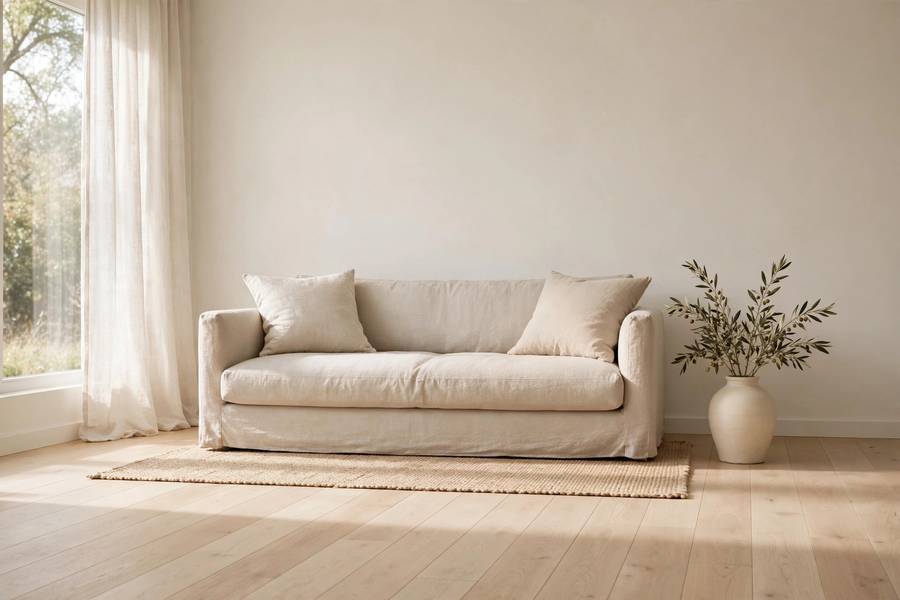
Let’s clear something up first, because the internet has done minimalism no favors: it’s not about white rooms, owning thirty things, or throwing away everything you love. I’ve met people who call themselves minimalists and own a record collection that fills a wall — they just don’t own anything they don’t care about. That’s the whole idea, and it’s much kinder than the stereotype.
Minimalism, at its core, is the practice of removing what doesn’t matter so you can notice what does. Fewer possessions competing for your attention. Fewer commitments competing for your time. More room — in your home, your calendar, and your head — for the things you actually chose.
Table of Contents
- What Minimalism Actually Means
- What Minimalism Is Not
- A Short History of the Idea
- The Different Flavors of Minimalism
- Minimalism vs. Decluttering: What’s the Difference?
- Why People Choose This Life
- How to Start: A Gentle Path In
- The Honest Criticisms
- Frequently Asked Questions
What Minimalism Actually Means
Strip away the aesthetic photos and minimalism is a question you keep asking: does this add to my life, or does it just take up space in it? You ask it about objects, yes — but also about habits, obligations, apps on your phone, and the way you spend a Saturday.
The philosopher’s version: minimalism is intentionality. Every thing you own, every commitment you keep, is there because you chose it — not because it drifted in, was gifted to you, or felt too awkward to decline.
The practical version: you own less stuff, so you clean less, organize less, move easier, and spend less. You guard your time the same way. The result isn’t emptiness. It’s that the things remaining have room to matter.
Nobody agrees on a number, and that’s fine. Minimalism was never about a number.
What Minimalism Is Not
Since the misconceptions are doing real damage, let’s name them:
It’s not deprivation. A minimalist can own a beautiful camera, a beloved guitar, a shelf of cookbooks. The point was never to own nothing — it’s to own nothing by accident.
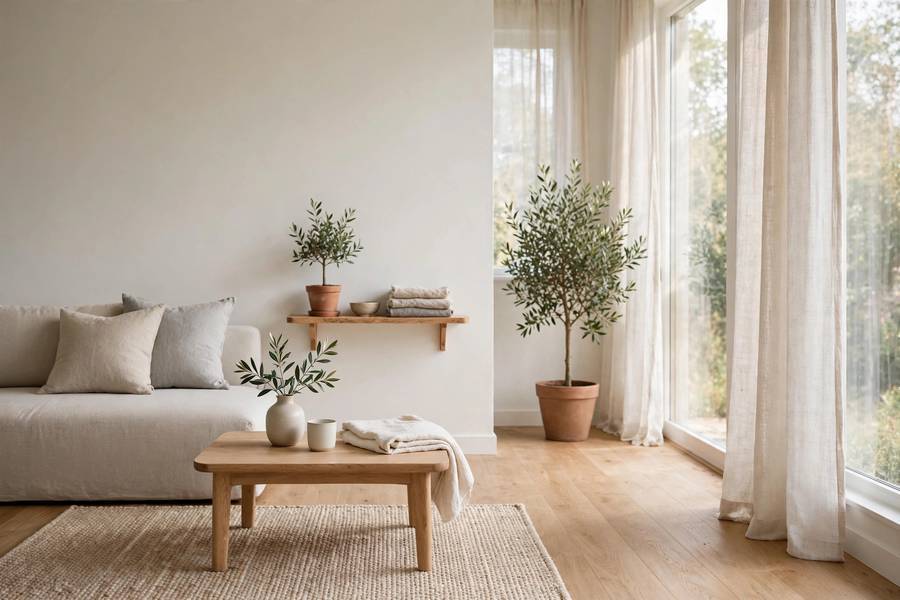
It’s not a look. The all-white, empty-room aesthetic is one expression of it, mostly from design blogs. Plenty of minimalists live in colorful, cozy homes. If a thing is chosen and loved, it belongs, whatever color it is.
It’s not a competition. Counting possessions, judging other people’s homes, announcing your number — that’s performance, not philosophy. The quiet version is better.
It’s not only for the privileged. This criticism has teeth (more on that below), but the practice itself — buying less, wanting less, maintaining less — is as available to a student in a studio flat as to anyone. You don’t need to buy special minimalist products. In fact, please don’t.
It’s not a one-time purge. Anyone can fill donation bags on a motivated Sunday. Minimalism is what happens on the ordinary Tuesdays after that — the habit of pausing before something new comes in.
A Short History of the Idea
Minimalism as a word comes from the art world of the 1960s — spare, geometric work that refused decoration. But the idea is ancient. Stoic philosophers wrote about wanting less two thousand years ago. Most of the world’s spiritual traditions have a version of voluntary simplicity.
The modern lifestyle version took shape in the late 2000s and 2010s, partly as a reaction to something real: homes getting bigger while feeling more cluttered, inboxes overflowing, everyone busy but oddly unsatisfied. Writers and filmmakers gave it a name and a story, and the story spread because it named a feeling many people already had — that the volume of modern life had crept past what any person could actually enjoy.
It’s worth knowing this history for one reason: minimalism isn’t a trend someone invented to sell you storage boxes. It’s a very old human impulse, recently rebranded.
The Different Flavors of Minimalism
People practice this in different areas of life, and you don’t have to do all of them:
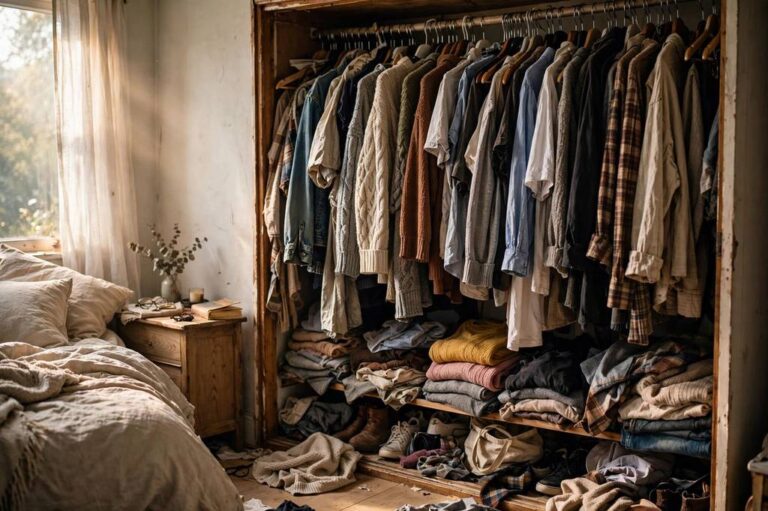
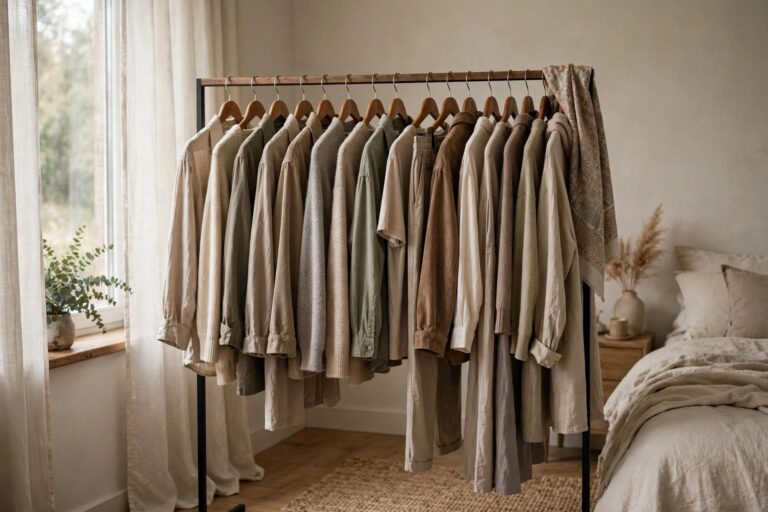
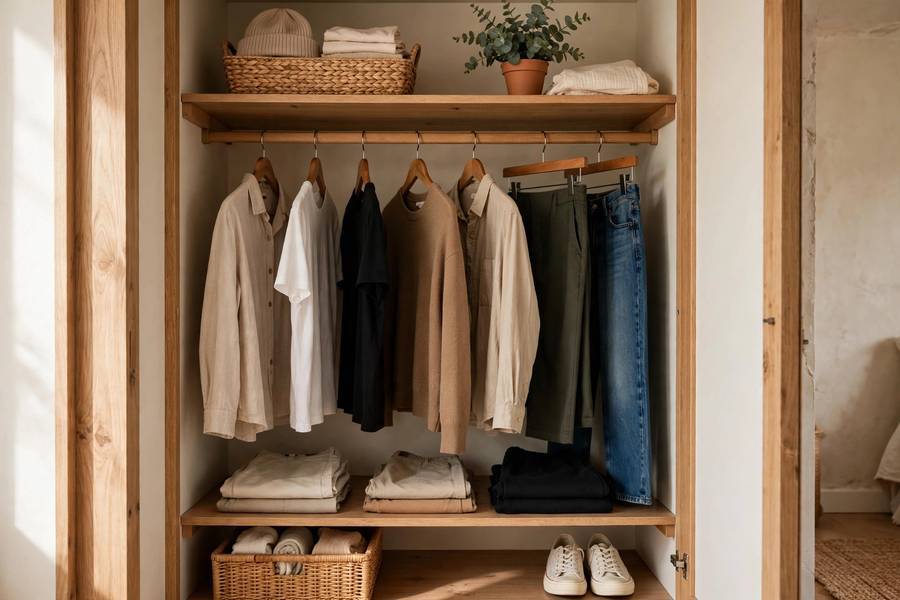
Possession minimalism is the classic one — fewer, better things. A wardrobe where everything gets worn. A kitchen where every tool earns its drawer. If your closet is the starting point, my guide to decluttering your closet walks through it step by step.
Digital minimalism means treating your attention as the scarce resource it is. Fewer apps, notifications off by default, the phone charging outside the bedroom. Many people find this harder than the physical kind — and more transformative.
Time minimalism is about commitments. Saying no to the things you’d resent. Leaving white space in the calendar instead of filling every gap. Protecting one unscheduled hour the way you’d protect an appointment.
Financial minimalism follows naturally: when you stop buying things to fill feelings, money starts accumulating instead of leaking. Not as a goal in itself, but as a side effect of wanting less.
Aesthetic minimalism — the clean rooms and neutral palettes — is optional. Some people love it. Some minimalists live among rich color and texture. The aesthetic is a preference; the philosophy is the practice.
Minimalism vs. Decluttering: What’s the Difference?
They’re related but not the same, and the distinction matters.
Decluttering is an event: you go through your things, keep what serves you, release the rest. It’s valuable. Everyone should do it periodically.
Minimalism is what keeps you from needing to declutter every year. It’s the ongoing practice of being deliberate at the entrance — noticing before something comes home with you, asking the question before the purchase, the commitment, the subscription.
Think of it this way: decluttering empties the boat. Minimalism stops drilling holes in it.
Why People Choose This Life
Ask minimalists why they started and you’ll hear variations on a few themes:
Less cleaning and maintaining. Every object you own asks something of you — dusting, storing, repairing, insuring, worrying. Fewer objects, fewer demands. People consistently underestimate how much mental bandwidth their stuff consumes until it’s gone.
More money, less stress about money. Buying less is the most reliable personal finance strategy ever discovered. Not investing tips, not side hustles — just wanting fewer things.
Easier decisions. A small wardrobe means getting dressed in two minutes. A simple kitchen means cooking without excavation. Fewer options, less friction, more mornings that start smoothly.
Environmental weight. Most people who stay with minimalism mention this eventually: consuming less means wasting less, and that feels like living in line with your values rather than against them.
Room for what matters. This is the one people describe with actual emotion. When the noise drops — the clutter, the commitments, the constant low-grade maintenance of a full life — there’s suddenly space for the walk, the friend, the project, the quiet. Minimalism doesn’t give you meaning. It gives meaning somewhere to sit down.
There’s a kinship here with the hygge lifestyle — both are about choosing coziness and presence over accumulation — and with slow travel, which applies the same “fewer, deeper experiences” logic to how we move through the world.
How to Start: A Gentle Path In
Forget the dramatic purge. Here’s the slower way that actually sticks:
1. Start with the easy wins. A junk drawer. The expired things in your bathroom. The cables nobody can identify. Early wins build the muscle.
2. Do one category, not one room. Rooms mix categories and exhaust you. Instead: all the mugs. All the t-shirts. Seeing every item in a category at once makes the keep-or-release decision almost automatic. For clothes specifically, the capsule wardrobe guide is a natural next step.
3. Use the box method for the maybes. Not sure? Box it, date it, put it away. If you haven’t opened the box in six months, you have your answer — without the anguish of deciding today.
4. Practice the pause at the entrance. Before buying, wait 48 hours. Before saying yes to a commitment, wait a day. Most urges expire quietly if you give them time.
5. Define your “enough.” This is the deep work. What does a good ordinary day actually require? Write it down. You’ll be surprised how short the list is — and how much of your current life isn’t on it.
6. Go at your own pace. Anyone telling you to do it all this weekend is selling urgency, not wisdom. A drawer a week transforms a home in a few months, with none of the burnout.
The Honest Criticisms
I’d rather you hear these from me than discover them mid-journey:
It can be a privilege to own less. If you can rebuy anything you give away, decluttering is low-risk. If you can’t, every “release” feels dangerous. Minimalism advice that ignores this is incomplete. The practice still has value — wanting less costs nothing — but the breezy “just get rid of it!” tone isn’t for everyone.
It can become another form of consumption. Buying a whole new set of matching minimalist containers, or replacing everything with the “perfect” version, is just shopping with better branding. The most minimalist purchase is the one you don’t make.
It can tip into control. For some people, the pursuit of less becomes its own anxiety — counting items, judging mess, never at peace. If minimalism is making you more rigid instead of more free, step back. The philosophy serves you, not the other way around.
None of these mean the idea is wrong. They mean it’s a practice to hold lightly, with self-awareness — like anything worth doing.
So: what is minimalism? Not an empty room. Not a number. Just the ongoing, gentle practice of making sure your life is full of things you chose — and not much else.
Frequently Asked Questions
Minimalism is the practice of intentionally living with less — fewer possessions, fewer commitments, fewer distractions — so you have more time, money, and attention for what genuinely matters to you. It’s not about owning nothing; it’s about owning nothing by accident.
Some do, but there’s no required number. A minimalist might own a large record collection or a full set of professional tools — the difference is that everything they own was deliberately chosen and actively used or loved. It’s about intentionality, not a possession count.
Start small and go by category, not by room: one junk drawer, all your mugs, all your t-shirts. Use a “maybe box” for uncertain items — seal it, date it, and revisit in six months. Most importantly, practice pausing before new things enter your life: wait 48 hours before buying and a day before accepting new commitments.
No. Decluttering is a one-time event — sorting through what you have and removing the excess. Minimalism is the ongoing practice that follows: being deliberate about what enters your life so you don’t need to declutter constantly. Decluttering empties the boat; minimalism stops new holes from being drilled.
Yes — it’s one of the most reliable ways to spend less. When you consistently pause before purchases and buy only what you’ve deliberately chosen, spending drops without budgeting willpower. Many minimalists find their savings grow as a natural side effect rather than through strict financial discipline.
The honest criticisms: it can reflect privilege (it’s easier to own less when you can rebuy), it can become disguised consumerism (buying all-new “minimalist” products), and for some people it tips into anxiety about control. The remedy is holding the practice lightly — minimalism should make you freer, not more rigid.