How to Create a Cozy Reading Nook in Any Corner

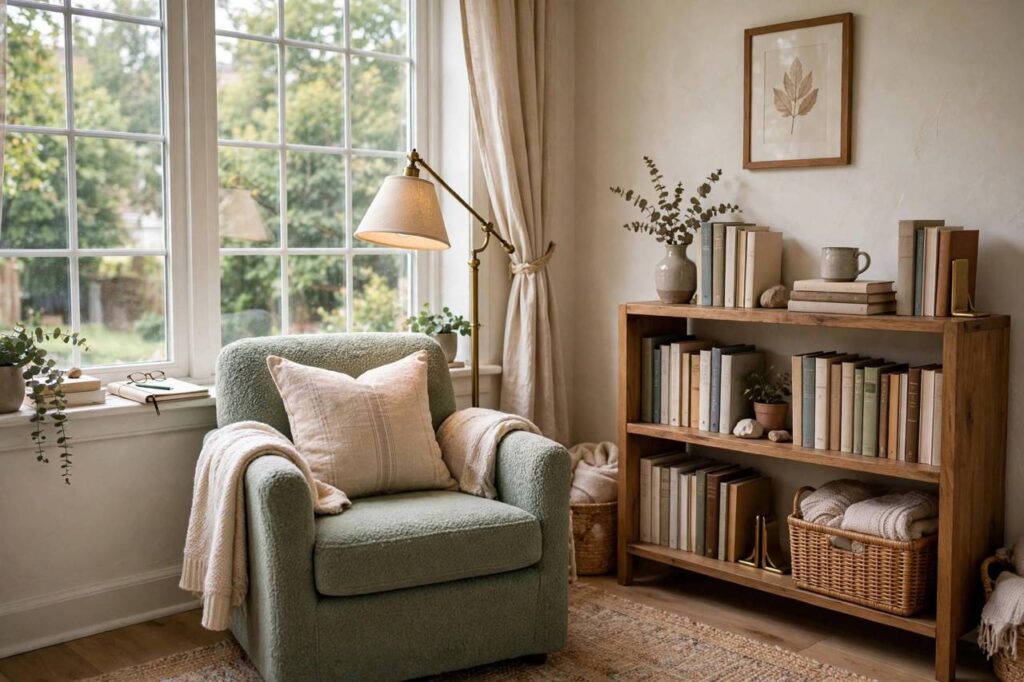
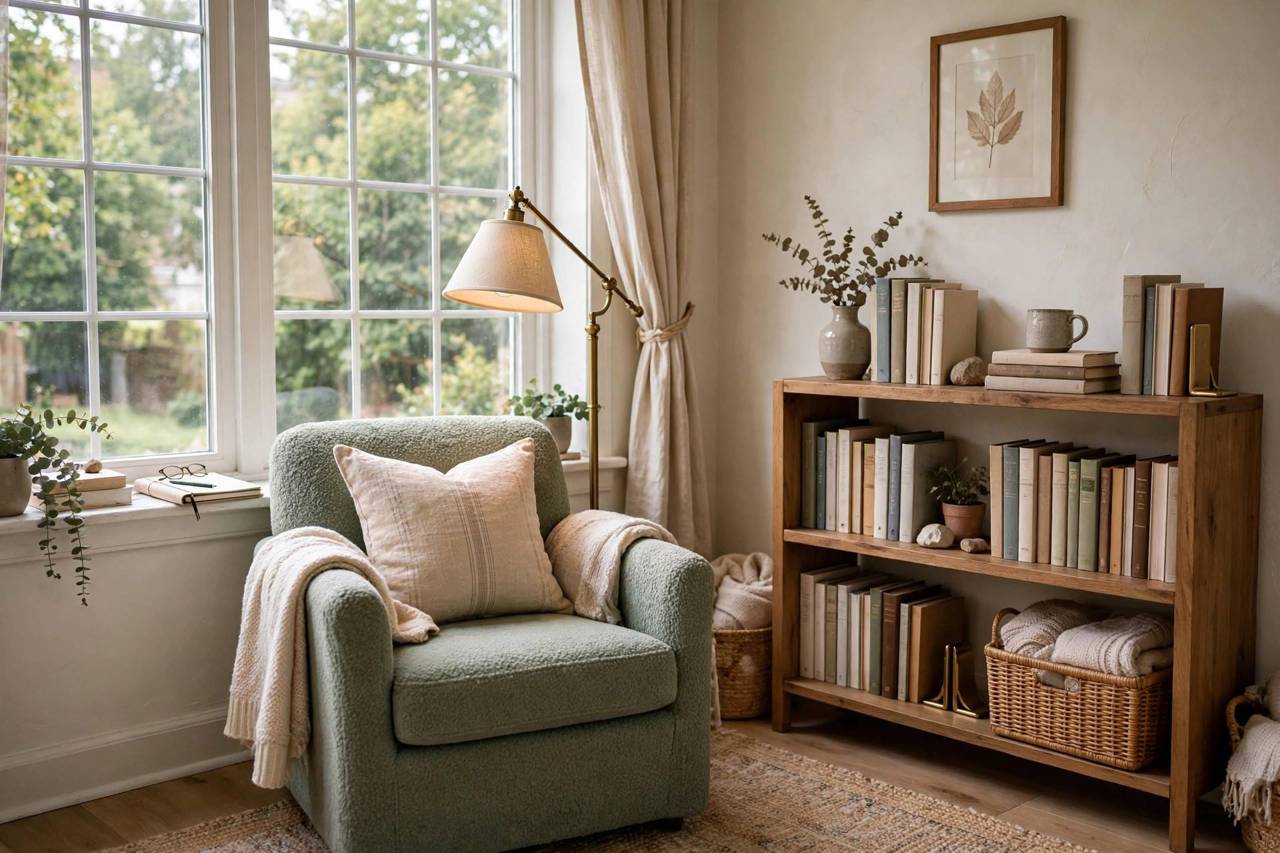
For years, my “reading spot” was the corner of the couch where the springs had given up. Then one rainy Saturday I dragged an old armchair next to the bedroom window, threw a blanket over it, and suddenly I was finishing books again. That’s the whole secret of how to create a cozy reading nook: it isn’t about square footage or budget. It’s about building one small place that your brain associates with settling in and turning pages.
A reading nook has four ingredients — a seat you don’t want to leave, light that doesn’t strain your eyes, something to rest a drink on, and a boundary that says “this corner is for slowing down.” Here’s how to put them together in whatever space you have.
How to Create a Cozy Reading Nook: Finding Your Corner
You don’t need a spare room. The best reading nooks I’ve seen were carved out of forgotten spaces: the dead corner of a bedroom, a wide hallway landing, the space under a staircase, a bay window with a deep sill, even a large closet with the doors removed. Walk through your home slowly and look for the spots you currently walk past — those are your candidates.
Natural light is the single biggest factor, so prioritize a window if you can. Morning light is ideal for weekend reading; a west-facing window gives you that golden late-afternoon glow that makes everything feel cinematic. If no window is available, don’t force it — a well-lit interior corner beats a drafty window seat every time.
Think about noise, too. The corner next to the front door or the kitchen might look perfect but will never feel restful during the dinner rush. Bedrooms, spare corners of living rooms, and enclosed balconies tend to work best because they’re naturally quieter. You’re building a retreat, so give it the calmest real estate you can spare.
The Chair: The Whole Point
Everything revolves around the seat, so this is where to spend your effort (and if you have any budget at all, your money). The ideal reading chair lets you sit upright enough to hold a book comfortably but reclined enough to stay for an hour. Deep armchairs, small loveseats, chaise lounges, and oversized floor cushions all work — the test is simple: sit in it for twenty minutes with a book. If you start fidgeting, keep looking.
Don’t overlook what you already own. That armchair nobody uses because it’s “the ugly one”? Throw a washable slipcover or a big throw blanket over it and it’s suddenly the most popular seat in the house. A dining chair with a thick cushion and a pillow behind your back can work in a tight corner. I’ve even seen a bathtub-turned-reading-spot (drained, obviously, filled with pillows) that its owner swore by.
Foot support matters more than people expect. An ottoman, a pouf, or even a sturdy storage box at the right height takes the pressure off your lower back and makes long sessions genuinely comfortable. If your feet dangle or your knees sit higher than your hips, you’ll be shifting within half an hour.
Lighting That Loves Your Eyes
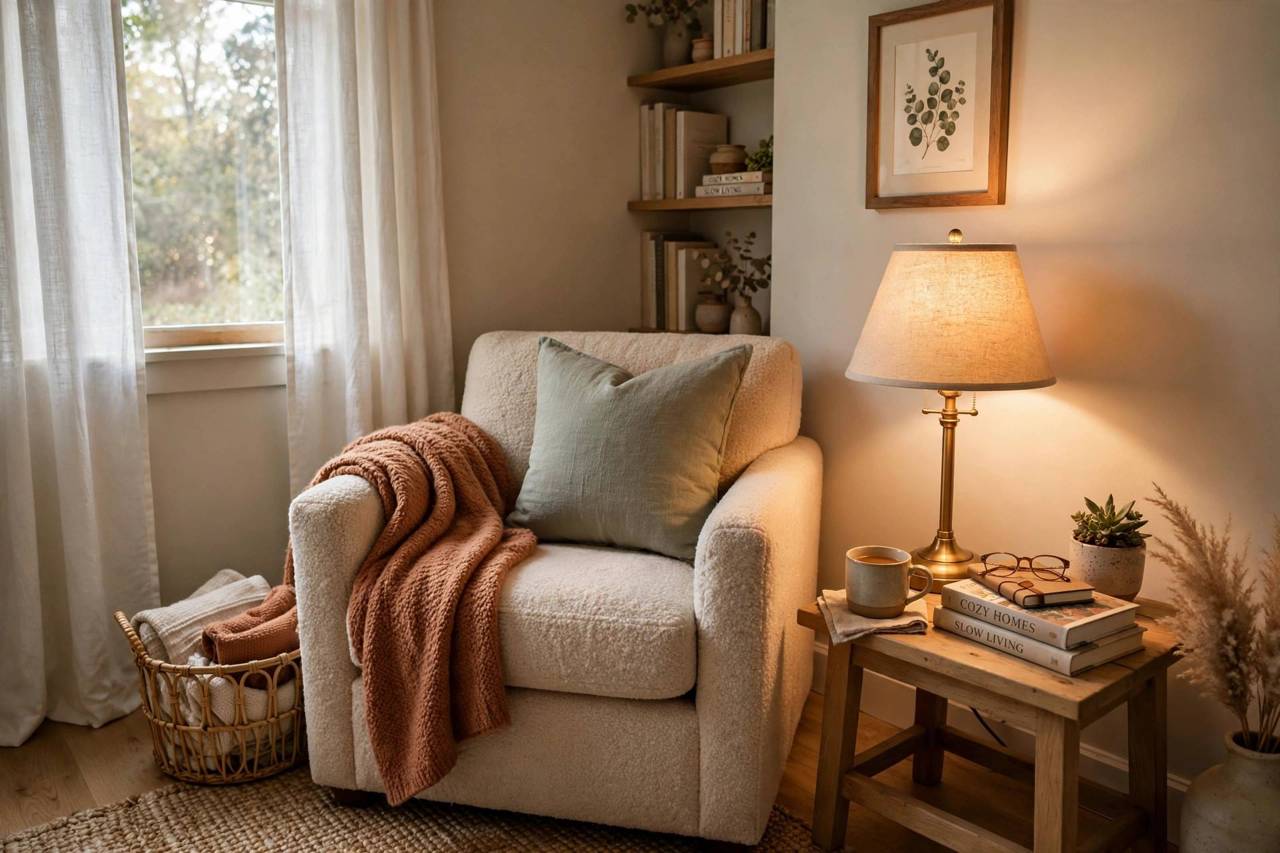
Bad lighting kills a reading nook faster than an uncomfortable chair. Overhead lights create glare and shadows; the goal is a warm, focused pool of light that falls on your pages without shining in your eyes.
A floor lamp with an adjustable arm, positioned just behind and to the side of your reading shoulder, is the classic solution for a reason. If floor space is tight, a wall-mounted sconce or a clamp lamp on a nearby shelf does the same job. Aim for warm white bulbs (around 2700K) — cool daylight bulbs feel clinical and make a cozy corner feel like an office.
Layer the light if you can. A small secondary source — a candle-style LED, a string of fairy lights, a salt lamp — adds the ambient glow that makes the nook feel like an evening destination rather than just a well-lit chair. This is also what makes the space inviting when you’re not reading: a softly lit corner draws you in the way a dark one never will.
And don’t forget the natural light you started with. A sheer curtain softens harsh direct sun without killing the brightness, and it gives you privacy if your nook faces the street. If your best corner gets direct afternoon sun, that’s a feature, not a bug — just angle the chair so the light falls over your shoulder, not into your eyes.
The Small Touches That Make It Yours
Once the big three — seat, light, side table — are in place, the magic is in the details. A soft throw blanket within arm’s reach is non-negotiable; even in summer, there’s something about tucking in that signals to your brain that it’s time to settle. A cushion for lower back support, sized to the chair, prevents the slow slide into a slouch.
The side table earns its place fast: a coaster for tea or coffee, a spot for your current book, and room for reading glasses. It doesn’t need to be a real side table — a sturdy stack of books, a small stool, or a wooden crate all work. What matters is that your drink isn’t on the floor where you’ll kick it over mid-chapter.
Book storage should be within arm’s reach, not across the room. A small shelf, a basket for your current stack, or even a wall-mounted ledge keeps your “to read” pile visible and tempting. There’s real psychology here: books you can see get read; books in another room get forgotten. If you’re trying to read more books this year, the nook and the visible stack work together beautifully.
Add one sensory detail that makes the corner feel separate from the rest of the house: a small plant, a framed print, a rug that defines the boundary, or a scented candle you only light when you’re reading. Over time, that detail becomes a cue — your brain learns that this smell, this light, this chair means it’s reading time. The same principle that helps you make your bedroom cozy applies here in miniature: texture, warmth, and intention.
Making It Work in a Small Space
No spare corner? No problem. A reading nook can be a state of mind as much as a place. The end of a bed with good pillows and a wall-mounted light becomes a nook. A deep windowsill with cushions becomes a nook. I’ve seen a perfectly happy reader whose “nook” was a specific cushion on the couch, a blanket that lived on its arm, and a rule that when the blanket was on her lap, she wasn’t to be disturbed.
In shared spaces, a folding screen, a tall plant, or even a bookshelf turned perpendicular to the wall creates a visual boundary that signals “someone is retreating here.” You don’t need walls — you need the suggestion of enclosure. Humans have liked reading in nooks since before houses had rooms; a little bit of boundary goes a long way.
Keep the footprint honest. A nook that sprawls into the walkway or eats the room’s only good light will breed resentment from housemates and eventually get dismantled. Measure your corner, choose pieces that fit with room to spare, and remember: cozy means snug, not cramped.
Keeping the Nook Alive Long-Term
Here’s the part nobody talks about: building the nook is the easy half. The hard half is keeping it from slowly turning into a laundry staging area. A reading nook survives on one habit — the five-second reset. Every time you stand up, the blanket gets folded over the chair arm, the book goes on the side table, and the mug goes to the kitchen. It takes five seconds and it’s the difference between a corner that invites you in and one that guilts you from across the room.
Rotate the details seasonally and the nook stays fresh. A heavier throw and a candle in winter; a lighter blanket and a small fan in summer. Swap the art on the wall or the plant on the shelf every few months. These tiny changes cost nothing and trick your brain into rediscovering the corner, the same way rearranging a room makes it feel new.
Finally, protect the nook’s purpose gently but firmly. If you start answering emails there, it stops being a retreat and becomes just another chair. The occasional laptop session won’t kill it, but the nook earns its keep by being the one place in the house with a single job: helping you disappear into a book for a while. Guard that job and the nook will pay you back every single day.
Frequently Asked Questions
How much space do I need for a reading nook?
As little as a 3-by-3-foot corner can work — enough for a chair, a small side table, and a light. The key isn’t square footage but separation: even a visual boundary like a rug or a plant makes a corner feel like a destination.
What is the best lighting for a reading nook?
A warm (2700K) adjustable lamp positioned behind and to the side of your reading shoulder, so light falls on the page without glare. Layer it with a soft ambient source like fairy lights or a candle-style LED for evening coziness.
How can I make a reading nook without buying furniture?
Repurpose what you have: an underused armchair with a throw blanket, floor cushions, a sturdy box as a side table, and a lamp you already own. The nook is about arrangement and intention more than new purchases.
Where is the best place for a reading nook in a small apartment?
Look for underused spots: a bedroom corner near a window, a wide hallway, under-stair space, or the end of a bed. Prioritize natural light and quiet over size — a calm 3-foot corner beats a noisy 6-foot one.
How do I keep my reading nook from becoming a clutter magnet?
Give everything a home: a basket for the current book stack, a dedicated spot for the blanket, and a rule that the side table holds only your drink, book, and glasses. A five-second tidy when you stand up keeps it inviting.