How to Plan the Perfect Picnic (Without Any of the Stress)

My first attempt at a romantic picnic was a minor disaster. I packed a gorgeous cheese board that melted into a puddle, forgot a corkscrew, and chose a spot directly downhill from a goose pond. We laughed about it for years, but I’ve since figured out how to plan the perfect picnic — the kind where everything feels effortless because the effort happened quietly, the day before.
A great picnic is really three decisions done well: where you go, what you eat, and what you bring to stay comfortable. Get those right and the rest takes care of itself. Here’s the whole playbook, refined over a decade of park blankets and lakeside lunches.
How to Plan the Perfect Picnic Starts With the Spot
The location sets the tone more than the menu does. A simple sandwich tastes better on a quiet hilltop than a gourmet spread tastes next to a parking lot. Start by thinking about what kind of afternoon you want: shaded and sleepy, sunny and social, or scenic enough for photos.
Scout before you commit. That “beautiful meadow” on the map might be a mosquito farm in July or a wind tunnel in April. If you can’t visit ahead of time, check recent reviews and photos of the park — people are brutally honest about mud, crowds, and bathrooms. Speaking of which: confirm there’s a restroom within a reasonable walk. Nothing ends a picnic faster than a bathroom emergency with no facilities in sight.
Check the rules, too. Many parks require permits for groups over a certain size, and some ban alcohol, glass bottles, or open flames entirely. A quick look at the park’s website saves you from a ranger politely ruining your afternoon. Arrive with a backup spot in mind — if your first choice is packed or waterlogged, you’ll be glad you thought of a plan B while you were still calm and dry.
Timing matters as much as place. Late morning to early afternoon is the sweet spot for most picnics: the light is good, the temperature is climbing rather than falling, and you have a buffer before evening bugs come out. If you’re planning a sunset picnic, do it in reverse — arrive an hour before golden hour so setup is done before the light gets good.
The Menu: Food That Travels Well and Eats Easy
The golden rule of picnic food: if it needs a knife, a plate, reheating, or refrigeration to be safe, think twice. The best picnic menus are built from foods that are delicious at room temperature and easy to eat with one hand while the other holds a drink.
Build around a centerpiece that’s simple to transport. A baguette sandwich bar works beautifully — bring the bread, a few good fillings, and condiments, and let everyone assemble their own. Grain salads (farro, couscous, orzo) hold up far better than leafy ones, which wilt within the hour. Roast chicken, eaten cold, is the most underrated picnic food in existence: satisfying, portable, and better than it has any right to be.
Snacks do the heavy lifting between the main event and dessert. Think in terms of the classic picnic trinity: something salty, something fresh, something sweet. Aged cheddar and crackers, a tub of cherry tomatoes, and a bar of good chocolate cover it. Fruit that doesn’t need peeling — grapes, berries, stone fruit in season — disappears faster than anything else you pack.
Drinks deserve real thought, not just a tossed-in six-pack. A big batch of lemonade or iced tea in a sealed jug feels special and costs almost nothing. If you’re bringing wine or beer, freeze a few water bottles the night before — they double as ice packs and drinking water as they melt. And bring more water than you think you need. Outdoor air and salty snacks make everyone thirstier than expected. The same menu-planning instincts that help when hosting a dinner party — balance, portions, a little variety — apply here, just with everything served at blanket level.
Packing: The Checklist That Prevents Regret
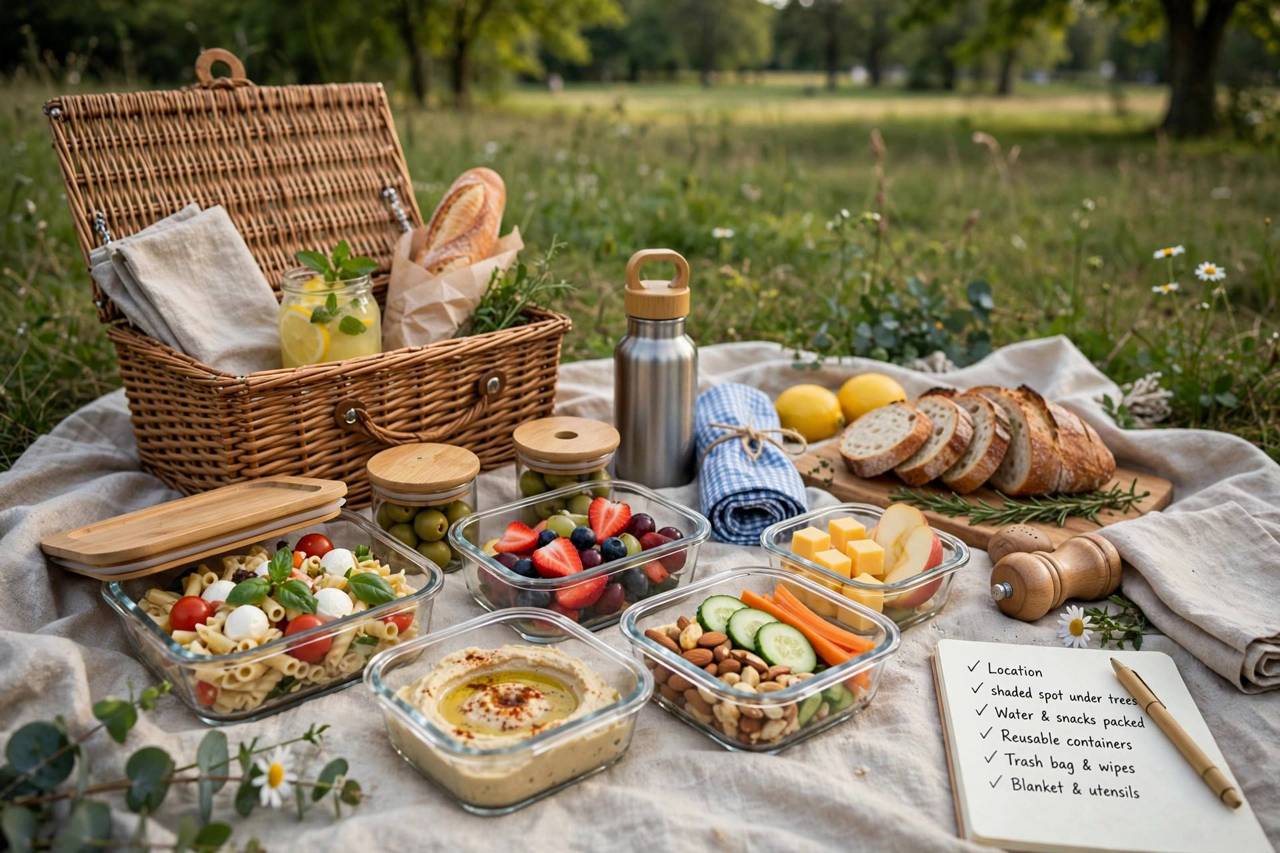
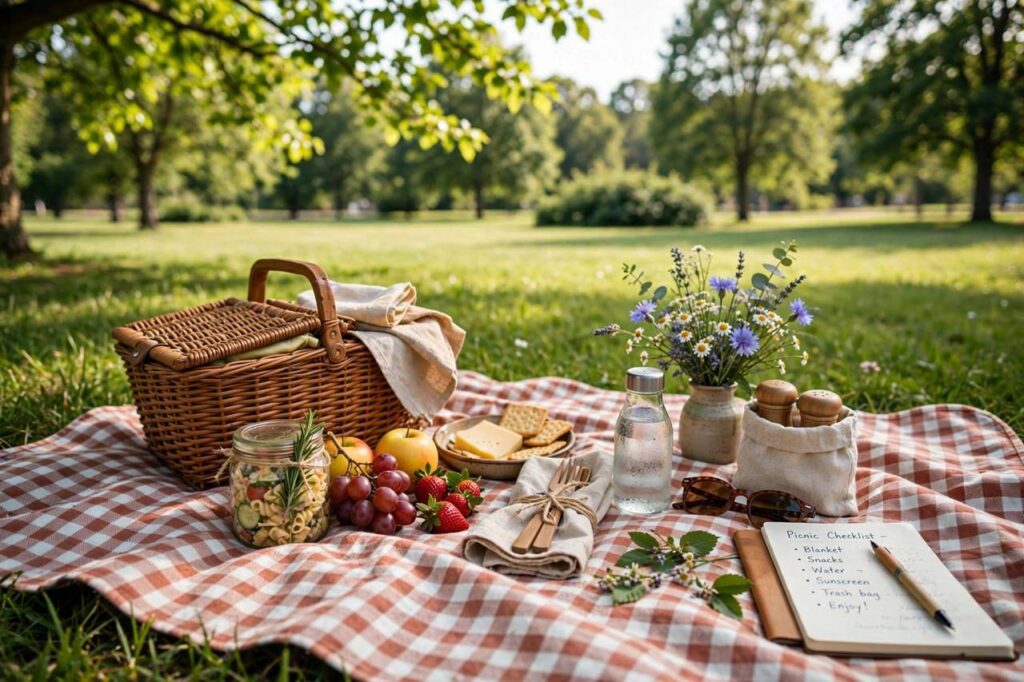
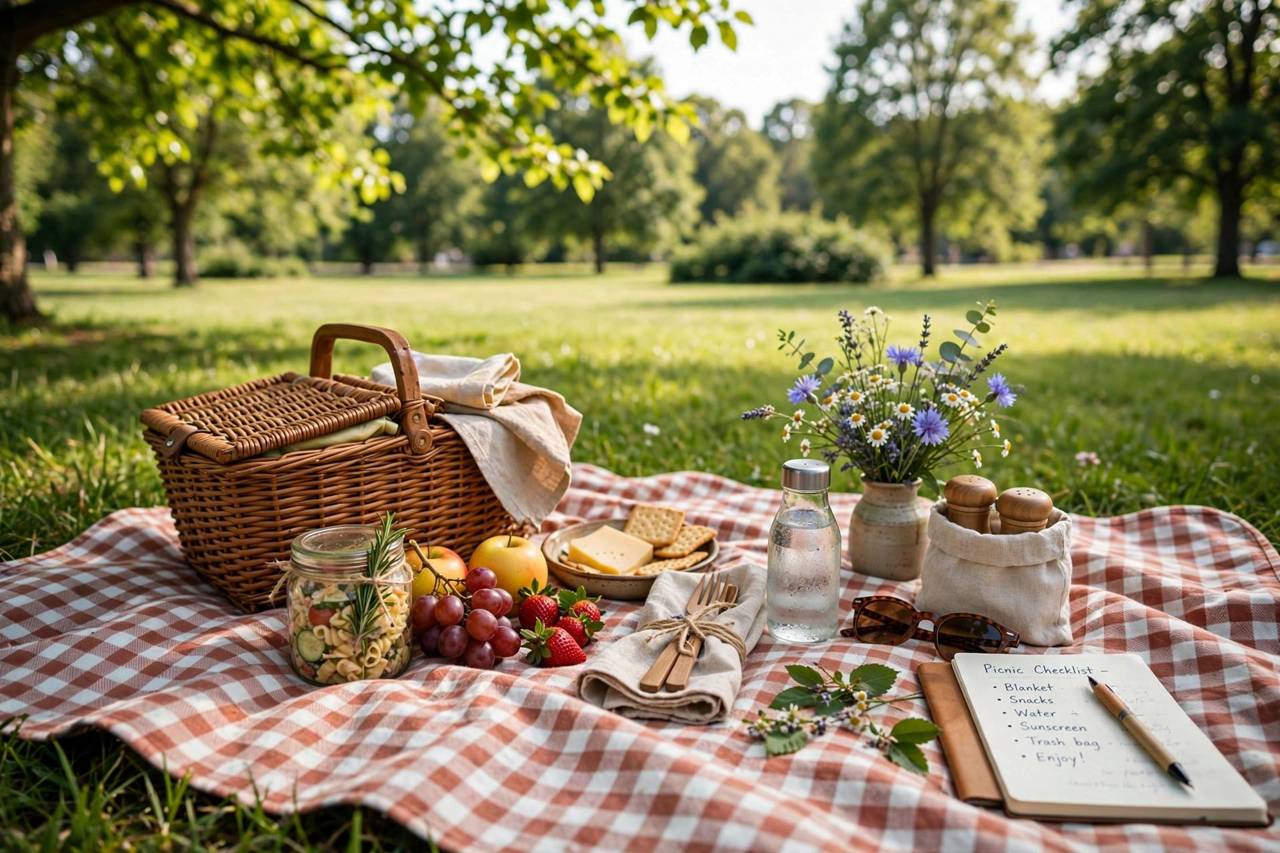
Packing is where picnics are won or lost, and the secret is packing in reverse order of need. The things you’ll want first — blanket, drinks, snacks — go in last, on top. The things you’ll want later — dessert, coffee, the trash bag — go in first, at the bottom.
Beyond food, the non-negotiables are: a blanket big enough that nobody’s sitting on damp grass (bring a waterproof-backed one, or a cheap shower curtain liner underneath a regular blanket), a real trash bag, napkins (twice as many as seems reasonable), a small cutting board and a decent knife, wet wipes, sunscreen, and bug spray. The nice-to-haves that separate good picnics from great ones: a portable speaker kept at background volume, a frisbee or deck of cards, a small pillow or two for the loungers, and a thermos of coffee for the winding-down hour.
Pack food in rigid containers, not bags — crushed sandwiches are a tragedy nobody needs. Keep cold things together in one insulated bag with your frozen water bottles, and keep the whole thing in the shade once you arrive, even if the day feels mild. A cooler left in direct sun becomes an oven within an hour.
One more thing experienced picnickers always bring and beginners never do: a change of plan for leftovers. A few extra containers or zip bags mean you can re-pack cleanly instead of balancing half-eaten plates on the drive home.
Comfort Details Most People Forget
Comfort is what turns “nice outing” into “can we do this every weekend.” The blanket is the foundation — if it’s too small or too thin, everyone spends the afternoon shifting around instead of relaxing. For two people, a full-size flat sheet folded double is about right; for a group, go bigger than you think.
Seating matters more than you’d expect. Blanket-sitting is charming for twenty minutes and punishing after an hour, especially for anyone over thirty or with a bad back. A couple of low camp chairs or even sturdy cushions give people options, and options keep everyone happy longer.
Sun and shade need managing all afternoon. A spot that’s perfectly shaded at noon can be blazing by two as the sun moves. If there’s no tree cover, a cheap pop-up shade or even a big umbrella changes everything. Conversely, if the breeze picks up, have a light layer handy — temperature drops faster than expected once the sun starts going down, and a chilly ending sours a perfect afternoon.
Finally, think about the ground itself. A quick once-over of your spot for ants, stickers, or goose evidence takes thirty seconds and prevents the kind of surprises that end picnics. Shake out the blanket before you lay it down, and you’ll avoid importing half the meadow into your sandwiches.
Games and the Art of Lingering
The difference between a picnic that ends at 2 p.m. and one that drifts happily into the evening is usually something to do. Not a schedule — nobody wants an itinerary — just a couple of low-effort options within reach. A deck of cards, a frisbee, and a bocce set cover nearly every group and age range, and all three pack flat.
For couples or small groups, conversation games beat equipment every time. The “two truths and a dream” variant — two true stories from your past, one thing you want to do in the next five years — reliably produces the best picnic conversations I’ve ever had. A small Bluetooth speaker with a shared playlist queued up fills the quiet gaps without dominating them; keep it at background volume, both for your neighbors and for the general principle that nobody at the next blanket wants to hear your music.
Kids change the equation, mostly for the better. A scavenger hunt list (something smooth, something yellow, something that makes noise) buys you a solid forty minutes of peace, and a bubble wand is the highest entertainment-per-dollar item in existence. Just keep the sugary snacks slightly out of reach until after the running-around phase, unless you enjoy the particular chaos of over-sugared children near an ant population.
Weather Plans and Leaving No Trace
Check the forecast the night before and the morning of, and have a real threshold for calling it off — sustained wind over 20 mph or a real chance of thunderstorms means reschedule, not tough it out. A light drizzle with a backup plan (a covered pavilion, a car trunk tailgate version) can still be lovely. A downpour is just misery with sandwiches.
When you leave, the spot should look like you were never there. This means more than taking your trash — it means picking up the bottle cap someone else dropped, shaking crumbs out of the grass, and checking for anything that blew away. Pack a dedicated trash bag from the start so cleanup is one motion, not a scavenger hunt.
Food scraps deserve the same treatment as wrappers. Apple cores and bread crusts might be “natural,” but they don’t belong in every ecosystem, and they attract animals to human areas. Pack it in, pack it out, all of it.
Frequently Asked Questions
What is the best time of day for a picnic?
Late morning to early afternoon works best for most picnics — good light, warming temperatures, and fewer bugs. For a sunset picnic, arrive about an hour before golden hour so you’re set up before the best light arrives.
What food should I avoid bringing on a picnic?
Avoid anything that needs reheating, anything with mayonnaise sitting in heat for hours, delicate leafy salads that wilt, and anything requiring serious cutting or plating. Stick to foods that are delicious at room temperature and easy to eat by hand.
How do I keep food cold without a cooler?
Freeze water bottles overnight and pack them with the food in an insulated bag — they act as ice packs and become drinking water as they melt. Keep the bag in the shade, and choose foods that tolerate some warmth, like hard cheeses and whole fruit.
What should I bring to a picnic besides food?
A blanket (bigger than you think), a trash bag, double the napkins you expect, wet wipes, sunscreen, bug spray, a knife and small cutting board, and drinking water. Comfort upgrades: low chairs or cushions, a portable speaker, and a deck of cards.
Do I need a permit for a picnic in a public park?
It depends on the park and your group size. Many parks require permits for groups over 10–25 people, and rules on alcohol, glass, and amplified sound vary widely. Check the park’s website before you go — it takes five minutes and prevents a ruined afternoon.