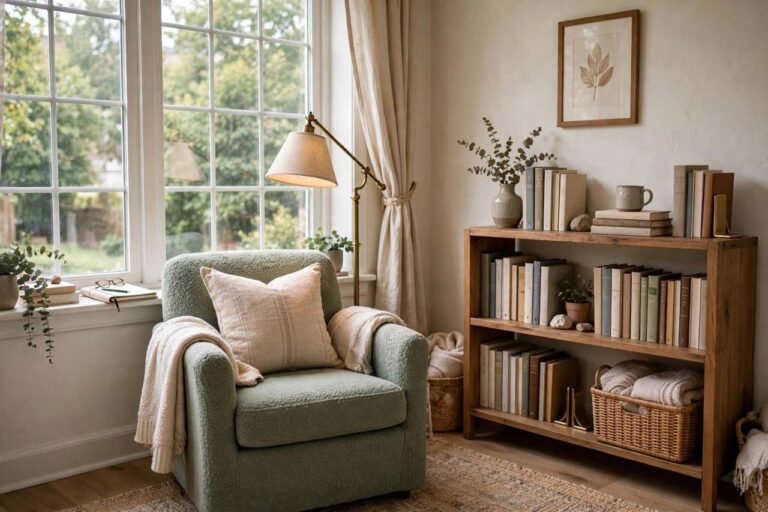
How to Make Your Home Office Cozy (Without Renovating)

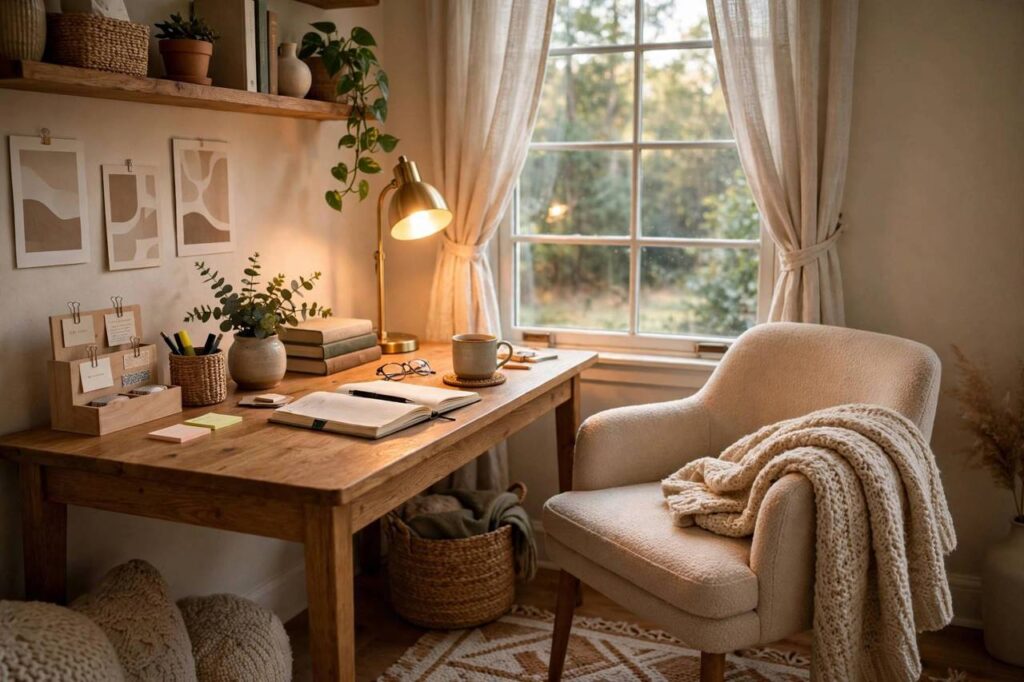
My first home office was a folding table wedged against a blank wall, lit by a single overhead bulb that made the whole corner feel like a waiting room. I dreaded sitting down there. What changed things was not a renovation or a big budget — it was a string of small, cheap decisions that taught me how to make your home office cozy: warmer light, something soft underfoot, and a layout that stopped feeling like punishment. If your workspace feels cold and clinical, here is everything I learned about warming it up.
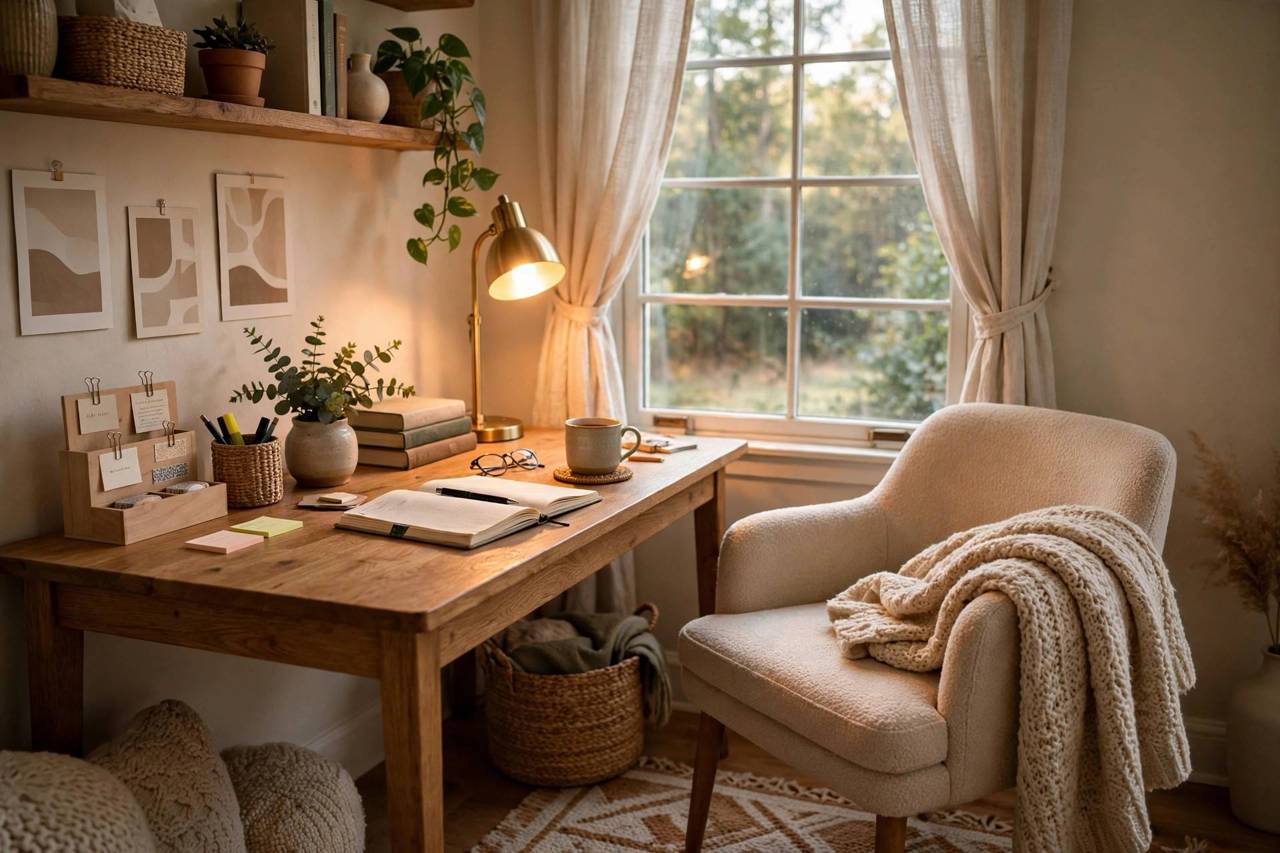
Start With Light, Because It Changes Everything
Overhead lighting is the fastest way to make any room feel like an office park. The single highest-impact change you can make is turning off the ceiling light during the day and working with a combination of natural light and one or two warm lamps instead.
A desk lamp with a warm-toned bulb (around 2700K) pointed at your work surface, plus a small floor lamp in a corner, creates pools of light instead of one flat glare. This is called layering, and it is the same trick hospitality designers use in hotels — nobody feels cozy under a fluorescent panel. If your room gets harsh afternoon sun, a sheer curtain or light-filtering blind softens it without blocking it.
Soften the Surfaces
Cozy is, at its core, a texture problem. Hard floors, hard desk, hard chair, bare walls — every hard surface bounces sound and light around in a way that feels sterile. You do not need to carpet the room. A low-pile rug under your chair and desk absorbs noise and gives your feet something warm to land on, which matters more than you would expect when you sit for hours.
Then look at what you touch and see most: your chair, your desk surface, the wall in front of you. A cushion or folded throw on the chair back, a desk mat instead of bare wood, and one framed print or piece of art on the wall in your sightline. None of these are expensive. Together they remove the “temporary setup” feeling. If you want to extend this thinking beyond the office, the same principles apply to making your bedroom cozy — texture and warm light do most of the work in any room.
Fix the Layout, Not Just the Decor
Most sad home offices have the desk shoved wherever it fit, usually facing a wall in a corner. If you can, pull the desk a few inches off the wall and angle it so you face into the room or toward a window. Facing open space feels expansive; facing a wall all day feels like a cubicle, because that is exactly what a cubicle is.
Keep the essentials within arm’s reach and push everything else out of sight. Visible clutter reads as stress. A simple rule: the desk holds what you use daily. Everything else lives in a drawer, a box, or a small shelf. Cord clutter is a special offender — one cable organizer box under the desk removes the tangle that makes even a tidy setup look chaotic.
Bring in Something Alive
A plant is the cheapest personality a room can have. You do not need a jungle or a green thumb. A pothos, a snake plant, or a ZZ plant survives low light and forgetful watering, and all three look good on a shelf or filing cabinet. If you travel constantly or simply do not trust yourself, a small vase of dried eucalyptus or pampas grass gives the same visual softness with zero maintenance.
Natural materials do similar work: a wooden desk organizer, a woven basket for papers, a ceramic mug instead of a plastic cup. These small organic textures break up the plastic-and-metal monotony of computer equipment.
Make It Smell and Sound Like Somewhere You Want to Be
Cozy is not only visual. A candle, a reed diffuser, or a small essential-oil diffuser with something warm — cedarwood, vanilla, bergamot — signals your brain that this is a pleasant place. Scent is strongly tied to how we judge spaces, and it is the sense most home offices ignore completely.
Sound matters too, especially in small apartments. A white-noise machine or low ambient playlist covers household noise and gives your work hours a consistent acoustic backdrop. Headphones help, but a small speaker at low volume makes the room feel inhabited rather than silent.

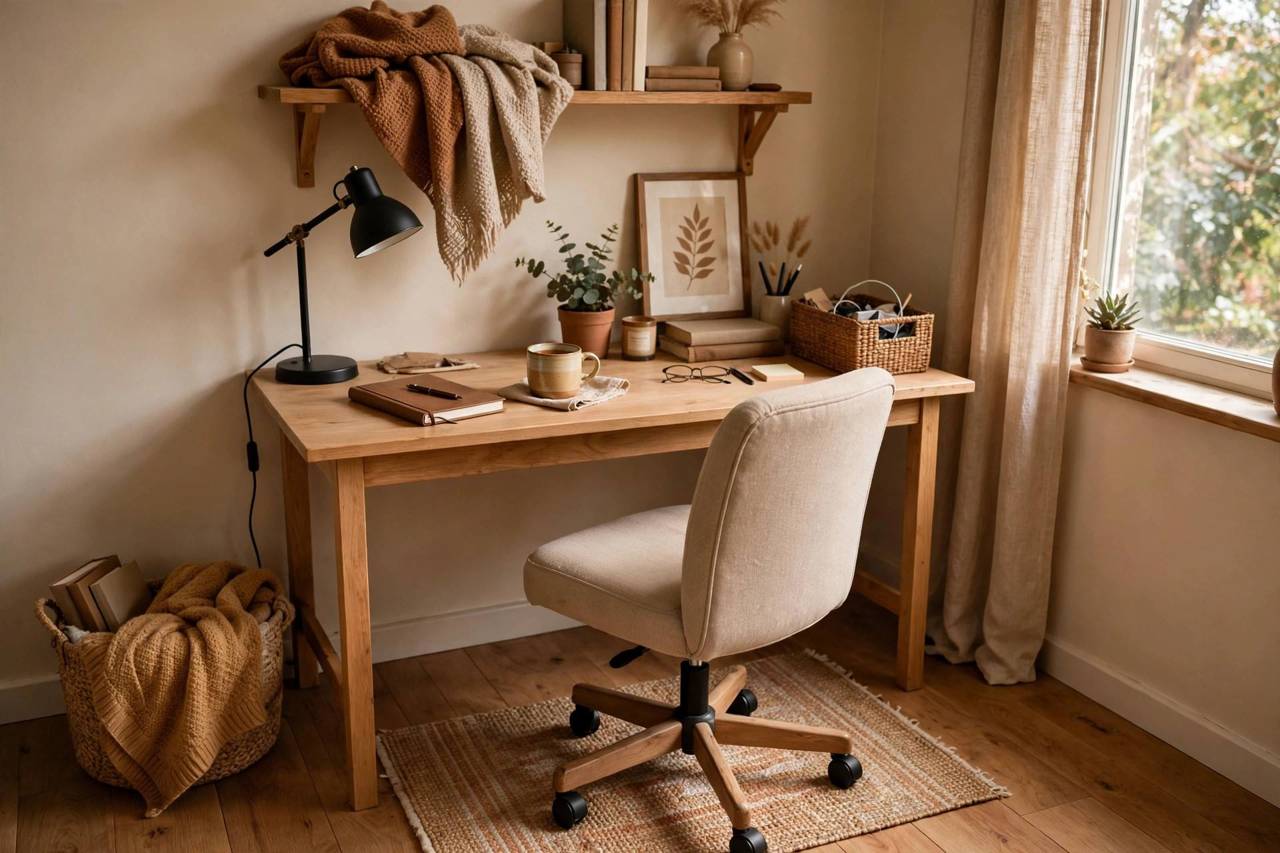
The Five-Minute Comfort Audit
Walk into your office and ask: what is the first thing I notice? If the answer is a tangle of cables, a harsh bulb, or a blank wall, fix that one thing first. Coziness is cumulative — five small fixes beat one expensive one. My own list, in the order I did them: warm desk lamp, rug under the chair, art on the wall, cable box, plant on the shelf. Each took under an hour. Each made Monday mornings slightly less grim.
For those working with truly tiny spaces, small apartment decorating ideas cover how to make multi-use corners work harder — useful when your office is also your living room.
How to Make Your Home Office Cozy in a Single Weekend
If you want the whole transformation done by Monday, here is the order of operations. Saturday morning: lighting. Buy one warm desk lamp and one small floor lamp or string lights, turn off the overhead, and live with the new light for an hour before deciding anything else — light changes how every other choice looks. Saturday afternoon: textiles. Lay the rug, drape the throw, put the cushion on the chair. Sunday morning: layout. Pull the desk off the wall if you can, face it toward the room or window, and do the cord cleanup. Sunday afternoon: the living touches — plant, art on the wall, the diffuser or candle.
Total time: a weekend. Total cost: well under what most people spend on a single piece of furniture. And the psychological effect is disproportionate, because you are not just decorating — you are telling your brain that this corner is a place you chose, not a place you were exiled to.
Small Spaces and Shared Rooms
Not everyone has a spare room. If your office is a corner of the bedroom or living room, coziness has to do double duty: the workspace should feel inviting during work hours and disappear afterward. A folding screen or a tall bookshelf as a divider creates a psychological boundary without construction. A desk that closes — a secretary desk, a wall-mounted drop-leaf — lets you physically shut work away at 6 p.m., which does more for work-life balance than any app.
In shared spaces, keep the office footprint tight and the styling consistent with the room. A desk area that clashes with the living room looks like clutter; one that echoes the room’s colors and materials looks intentional. Noise matters more here too — a white-noise machine or soft background music keeps your calls from colonizing the whole apartment.
Keeping It Cozy (Not Just Making It)
Cozy decays. Cables creep back, papers pile up, the plant gets dusty, and six months later the corner looks tired again. The maintenance is unglamorous: a five-minute Friday reset — clear the desk, water the plant, toss the dead pens. Seasonal rotation helps too — a heavier throw in winter, lighter textiles in summer, a different scent when the weather changes. Small refreshes keep the space feeling chosen rather than settled-into, and they cost almost nothing.
The Cozy Office Starter List (Under $100)
If you want a shopping list instead of a philosophy, here it is — in priority order, with rough prices. Warm desk lamp ($20–30): the single biggest upgrade. Low-pile rug ($25–40): sized to fit under your chair and desk. Throw blanket ($15–25): for the chair back. Small plant with pot ($10–15): pothos or snake plant. Cable organizer box ($10–15): hides the tangle. One framed print ($10–20): anything you actually like looking at. Total: roughly $90–145, and you can phase it across paychecks in exactly this order — each item independently improves the room, so there is no wrong stopping point.
What Not to Do
A few things that backfire: scented everything at once (pick one scent, not four), motivational posters you would be embarrassed to explain on a video call, and buying furniture before fixing light and layout. A thousand-dollar chair under a harsh ceiling light still feels like a waiting room. Light first, layout second, decor last.
One Last Thing: Ergonomics Is Cozy Too
Comfort is physical as well as visual. If your chair hurts your back or your monitor sits too low, no amount of warm lighting fixes the underlying dread — your body keeps score. The basics: screen top at or slightly below eye level, feet flat on the floor, and a chair that supports your lower back. A $20 lumbar cushion or a monitor riser often does more for “I like sitting here” than any decor item. Cozy that ignores ergonomics is just a pretty room you still avoid.
Frequently Asked Questions
How can I make my home office cozy on a budget?
Start with lighting: a warm desk lamp and turning off the overhead light costs very little and changes the room the most. Then add one textile (a rug or throw), one plant, and clear visible clutter. Most people can transform a corner for well under a hundred dollars.
What colors make a home office feel cozy?
Warm neutrals — warm whites, soft beiges, muted greens, warm grays — feel cozier than cool whites and stark grays. You do not need to repaint; you can introduce warmth through textiles, art, and lamp light instead.
Should my desk face the window or the wall?
Facing the window gives you natural light and a view, which most people prefer, but watch for screen glare — a side-on position to the window is often the best compromise. Facing a wall works if you hang something worth looking at in your sightline.
How do I make a home office cozy in a rental?
Everything above is renter-friendly: lamps, rugs, textiles, plants, removable art, and cord organizers require no drilling or painting. Use adhesive hooks and leaning frames if you cannot put nails in the walls.
Does a cozy office actually help productivity?
There is no magic productivity hack, but people consistently report that comfortable, pleasant spaces reduce the friction of starting work and make long sessions less draining. If you dread your workspace, fixing that is worth more than any productivity app.