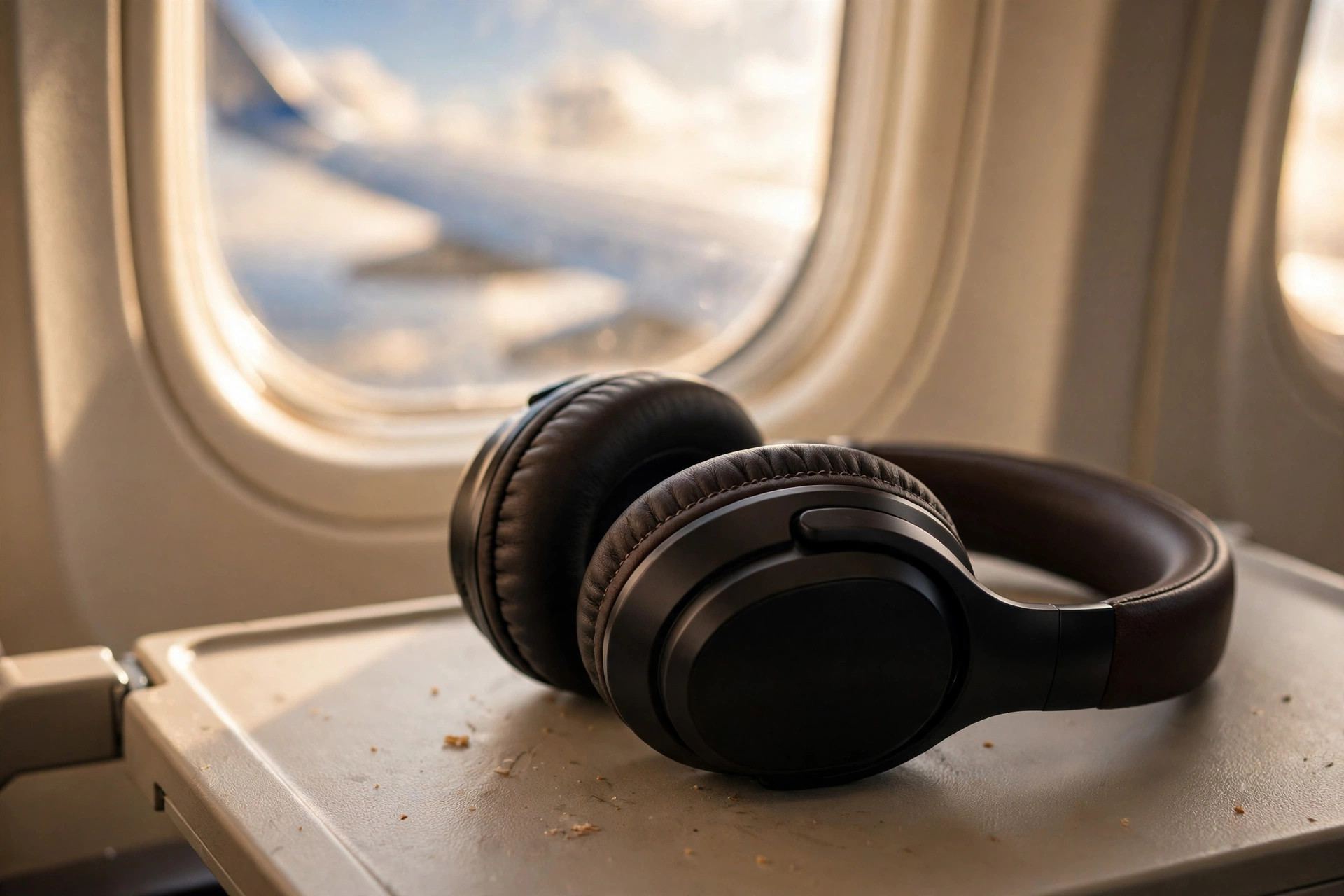
I’ll never forget the first time I put on a pair of noise cancelling headphones. I was on a red-eye, the engines were roaring, the guy behind me was already snoring — and then I flipped the switch. The roar just… melted. Not quieter. Gone, like someone had turned down the volume of the entire airplane. I sat there grinning like an idiot, toggling it on and off, on and off, while my seatmate judged me.
That was years ago, and the wonder never fully wore off — but the mystery did, because I had to understand it. How do you cancel sound? You can’t un-shout a shout. And yet these things do something that feels exactly like that. Here’s the real explanation, in plain English, plus the honest limitations nobody’s marketing department wants to lead with.
The Trick in One Paragraph: Fighting Sound With Sound
Here it is, the whole secret, before we get into the details: the headphones listen to the noise around you, instantly create an exact opposite sound wave, and play it into your ears. The original noise and the opposite wave collide and cancel each other out — silence (or near-silence) where the roar used to be.
Sound is just air vibrating in waves — crests and troughs rippling toward your ears. If you make a second wave whose crests line up exactly with the first wave’s troughs, they flatten each other. It’s called destructive interference, which is a dramatic name for a simple idea: +1 plus -1 equals zero. Your music then plays on top of that engineered quiet. That’s the entire trick. The rest is engineering to make it happen fast enough and accurately enough to feel like magic.
Step 1: Listening to the Noise
Before the headphones can fight noise, they have to hear it — and hear it the way your ears will. That’s the job of tiny microphones built into the ear cups. There are two architectures, and the difference matters:
Feedforward mics sit on the outside of the ear cup, listening to the world before it reaches you. They’re fast — they hear the noise early, giving the processor a head start on building the anti-noise. The weakness: they don’t know what’s actually happening inside the cup at your ear. It’s like a weather forecaster predicting rain without looking out the window.
Feedback mics sit inside the ear cup, right by the driver, listening to what your ear is actually receiving — noise plus music together. They can correct errors the system made, which makes the cancellation more accurate. The weakness: they hear everything late, after it’s already arrived, so they have less time to react.
Hybrid systems use both — outside mics for the early warning, inside mics for the accuracy check. This is what most good modern headphones do, and it’s a big reason noise cancelling got so much better over the last decade. More mics, more data, smarter cancellation. When you see “8 microphones” on a spec sheet, this is mostly what they’re for.
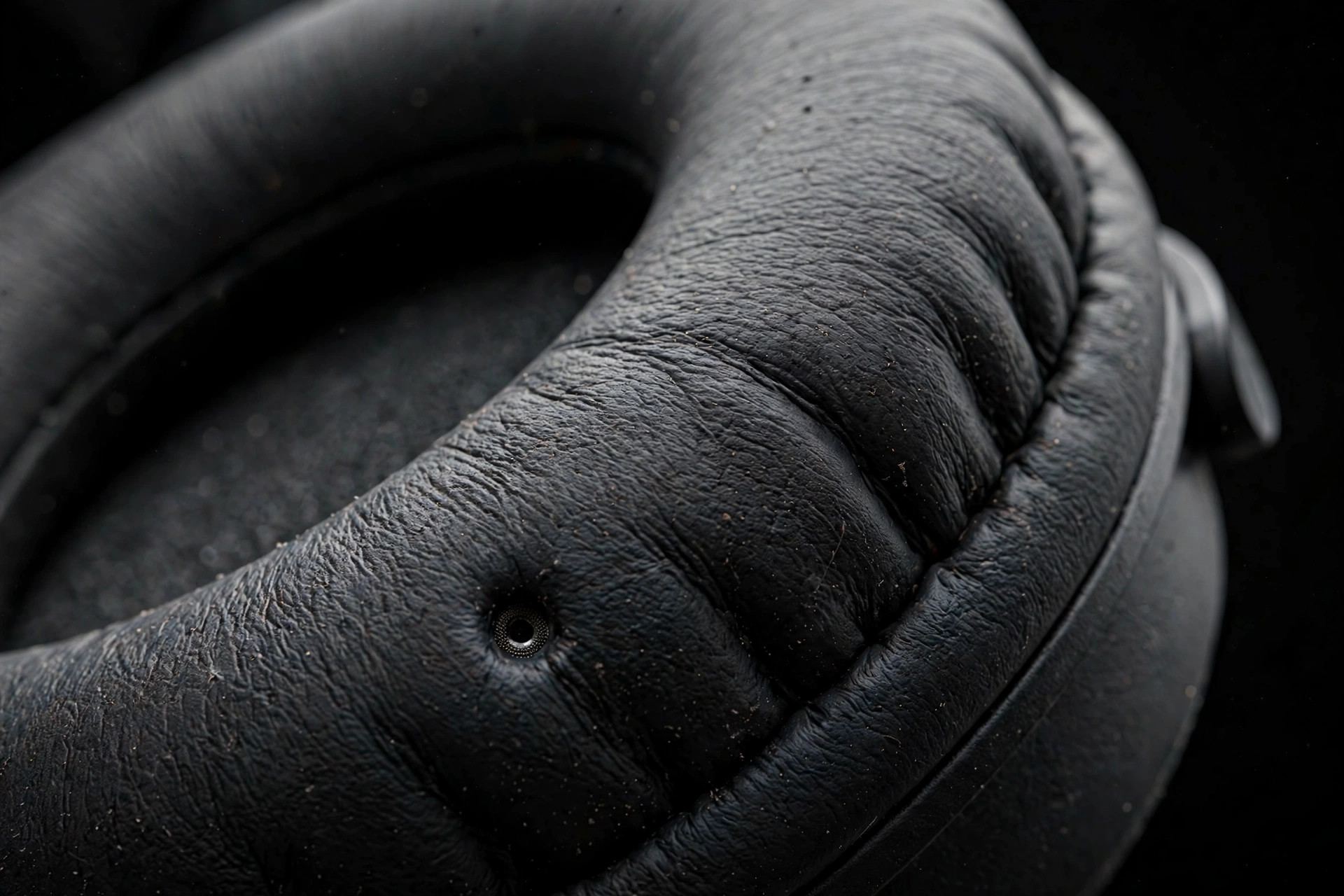
The mics are comically small — pinhead-sized holes you can barely see on the ear cup. I spent an embarrassing amount of time with a magnifying glass finding them all on my first review pair.
Step 2: The Anti-Noise Wave
Here’s where the magic happens, several thousand times per second. A dedicated chip takes the microphone feed and does real-time math: for every incoming sound wave, compute its exact inverse — same shape, flipped upside down — and play it through the headphone driver mixed with your music.
The pond analogy I always use: throw a pebble in a pond and ripples spread out. Now throw a second pebble at exactly the right moment and place, and its ripples can flatten the first set where they meet. That’s destructive interference in water. Headphones do the same thing in air, except the “pebbles” are computed in microseconds by a chip, and the “pond” is the tiny space between the driver and your eardrum.
The timing has to be essentially perfect. Sound travels fast, and your brain detects mismatches ruthlessly — if the anti-noise arrives even slightly late or slightly wrong, you don’t get silence, you get weird artifacts: a faint hiss, a hollow “pressure” feeling, or in bad cases, more noise. The entire history of noise cancelling is the history of making this loop faster and more accurate. Early systems handled only low, steady hums. Modern ones juggle complex soundscapes in real time. The principle never changed; the math just got quicker.
This is also why noise cancelling needs power. No battery, no anti-noise — the chip, the mics, and the constant computation all drink electricity. Passive isolation (the ear cup’s physical seal) works with the headphones off. The active magic does not.
Why It Nails Engine Hum but Not Crying Babies
The honest limitation, and the question I get most: why does it erase airplane engines but not the baby three rows back?
It comes down to predictability. An engine’s roar is a steady, repeating wave — the same shape, over and over. The chip hears the pattern, builds the inverse, and applies it continuously. Easy math, done brilliantly.
A baby’s cry — or a conversation, a door slam, a dog bark — is sudden, irregular, and full of high frequencies. By the time the mic hears it, the chip computes the inverse, and the driver plays it, the sound has already changed or stopped. The system is always one step behind chaos. It reduces sudden sounds (the mics still catch part of them), but it can’t erase them.
High frequencies are doubly hard: their waves are short and fast, so the timing has to be even more precise, and tiny errors matter more. That’s why voices — mostly mid-to-high frequency, constantly changing — sail through noise cancelling while low engine drone vanishes. It’s not a flaw in your headphones; it’s physics. Anyone promising “total silence” is selling you something physics won’t deliver.
What this means practically: noise cancelling is phenomenal for constant low noise (planes, trains, office air conditioning, lawn mowers next door) and merely decent for the unpredictable stuff. Set expectations there and you’ll love it. Expect a cone of silence and you’ll be disappointed.
Passive vs Active: The Ear Cup Does Half the Job
Here’s something the marketing buries: roughly half of what you experience as “noise cancelling” is just… a good seal. Passive noise isolation — the physical blocking of sound by the ear cushion clamping around your ear — handles high frequencies and sudden sounds far better than the electronics do. It’s earplugs, basically, but comfortable and stylish.
The active system (mics + anti-noise) specializes in what passive can’t touch: low-frequency drone that passes right through cushions. Together they’re a perfect team — passive blocks the highs and the sudden, active erases the low and the constant. That’s why a good seal matters so much: if sound leaks around a loose cushion, the active system has to work overtime on noise it was never designed to fight. Glasses wearers, take note — the arms break the seal slightly, and it genuinely reduces performance. Thinner frames help.
This is also why in-ear buds with foam tips can rival over-ears for isolation despite having no room for big electronics: the seal does the heavy lifting. And it’s why your noise cancelling seems “worse” some days — it’s often the fit, not the tech.

Transparency Mode: Noise Cancelling in Reverse
Most good headphones now include the opposite feature: transparency (or ambient) mode, which uses those same outside microphones to pipe the world in instead of cancelling it out. Same hardware, reversed purpose.
It’s genuinely useful, not a gimmick. Airport announcements, a barista asking for your order, crossing a street safely — moments when you want your music and your surroundings. The best implementations sound eerily natural, like you’re not wearing headphones at all; cheaper ones sound like you’re listening through a seashell. The difference is mic quality and processing — the same ingredients as good ANC, pointed the other way.
I use transparency mode more than I expected — on walks, in offices, anywhere I need to be reachable. It’s the feature I didn’t know I wanted until I had it. If you’re comparing models, test this mode in the store: pipe-in quality varies enormously and nobody puts it on the spec sheet honestly.
What Drains the Battery
All that listening and math costs power. With ANC on, most flagship headphones deliver 30–40 hours per charge; turn ANC off and you’ll often get 50–60. The active system is the single biggest power draw after the Bluetooth radio itself — those mics never sleep and the chip never stops computing.
Real-world factors that shrink the numbers: cold weather (batteries hate the cold — winter commutes cost you 10–20%), high volume, long calls (mics + two-way radio), and age. Lithium batteries degrade; after two to three years of daily use, expect 70–80% of original capacity. That’s normal chemistry, not planned obsolescence — though the sealed, non-replaceable batteries in most models make it feel that way.
Charging has gotten mercifully fast: 10–15 minutes plugged in typically buys 4–5 hours of playback on modern flagships. And nearly all of them play passively (wired, ANC off) with a dead battery — the drivers still move air without power. You’ll lose the magic, but not the music. For movie marathons, by the way, that battery life matters — I think about sound a lot when I watch films, which is part of why I dug into how movies are actually made. The sound design in a great film deserves good headphones.
My Honest Take: Are They Worth It?
My signature question. Here’s the honest breakdown by use case, because “worth it” depends entirely on your life:
Frequent flyers and commuters: absolutely. If you spend hours weekly in planes, trains, or open offices, good ANC is life-changing — not an exaggeration. Less fatigue, better focus, lower volumes (which protects your hearing — you stop cranking music to overcome the roar). This is the use case the technology was born for.
Home/office casual listeners: probably. Even without travel, ANC makes music and podcasts dramatically more enjoyable in noisy households. The $150–$250 range now delivers 85% of flagship performance. Diminishing returns kick in hard above $300.
Gym and runners: maybe not. Sweat, movement, and wind all fight the seal that ANC depends on. Many athletes prefer simple wireless earbuds — and if invisible wireless tech fascinates you, my plain-English breakdown of how WiFi works covers the same family of radio waves. For workouts, fit and sweat resistance beat cancellation.
One caution: try before you buy if you can. A small percentage of people find ANC’s “pressure” sensation uncomfortable — that faint underwater feeling from the anti-noise waves. It’s harmless, but if it bothers you in the store, it’ll bother you on a plane. Your ears, your call.
Frequently Asked Questions
Tiny microphones listen to surrounding noise, a chip computes the exact opposite sound wave, and the driver plays it into your ears. The original noise and the anti-noise collide and cancel out through destructive interference — plus one minus one equals zero.
Voices are sudden, irregular, and high-frequency — by the time the system hears a word and computes its inverse, the sound has already changed. Noise cancelling excels at steady, predictable low sounds like engine drone, not chaotic human speech.
Yes. The anti-noise system works independently of your audio — you can wear them in silence on a plane and still get the quiet. That’s why frequent flyers sometimes wear them just for the peace, with nothing playing at all.
Passive is physical — the ear cushion sealing around your ear blocks sound like earplugs, best at high frequencies. Active is electronic — microphones and anti-noise waves erase low, steady drone. Good headphones use both working together.
There’s no evidence it harms hearing — the anti-noise is just sound waves, at safe levels. In practice it often protects hearing, because you stop cranking the volume to overcome background roar. The “pressure” sensation some people feel is harmless, though it can be uncomfortable.
Your brain interprets the sudden absence of low-frequency background noise as a pressure change — similar to the feeling in an elevator or airplane cabin. It’s a perception quirk, not actual pressure on your eardrums, and most people stop noticing it within minutes.
The Bottom Line
Noise cancelling headphones are applied physics you can wear: microphones eavesdropping on the world, a chip computing anti-noise thousands of times per second, and waves colliding into silence right at your eardrums. They erase the steady drone of engines and offices brilliantly, shrug at sudden chaos like voices, and lean heavily on a good old-fashioned cushion seal for the rest.
I still toggle mine on and off sometimes, just to feel the airplane disappear. The wonder faded into understanding — but honestly, understanding made it cooler. For more tech demystified the same way, browse my technology explainers.