
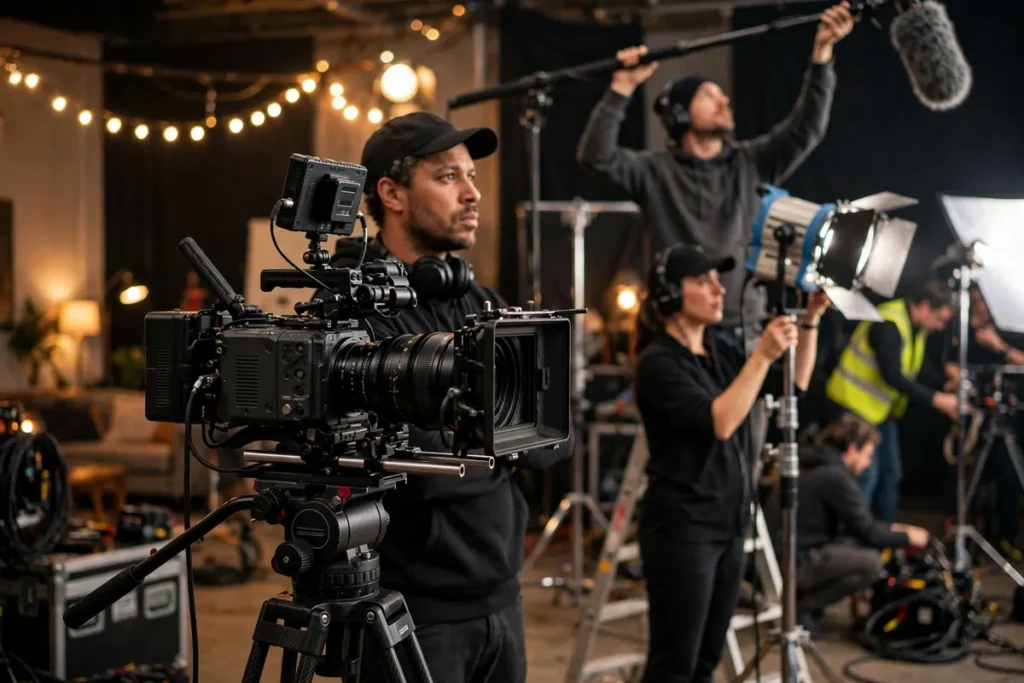
You’ve watched hundreds of movies. You’ve sat through the great ones, the terrible ones, and the ones where you checked your phone seventeen times but stayed because your friend picked it. But have you ever stopped mid-credits and thought: how does any of this actually get made?
I’m Chris, and I watch an unreasonable amount of film — the good, the bad, and the straight-to-streaming stuff nobody admits to finishing. Somewhere along the way I got curious about the machine behind the magic. A movie isn’t just pointed-a-camera-and-action. It’s a small army of people, working for months or years, spending amounts of money that would make your eyes water, all to produce two hours of entertainment you’ll argue about at dinner.
So here’s the whole thing, start to finish. Every movie you’ve ever loved went through these five stages, and nobody skips one.
The 5 Stages of Filmmaking
Every film — from a tiny indie shot in someone’s apartment to the biggest blockbuster you’ve ever seen — moves through the same five stages:
- Development — the idea becomes a script someone will pay for
- Pre-production — everything gets planned down to the last detail
- Production — the actual shooting, the part everyone pictures
- Post-production — editing, sound, visual effects, music
- Distribution — getting the finished film in front of you
Here’s the thing most people get wrong: the shooting — the glamorous part with the cameras and the trailers — is usually the shortest stage. The real work happens before anyone yells “action” and long after they yell “cut.” Let’s walk through it.
Stage 1 — Development: From Idea to Script
Every movie starts as nothing. A sentence in someone’s notes app. A “what if” over coffee. Development is the long, unglamorous process of turning that nothing into a screenplay a studio or producer believes in enough to fund.
First comes the pitch — a writer (or a writer with an agent) sells the concept. If it lands, they write a treatment (a prose summary of the story), then draft after draft of the actual screenplay. Scripts get rewritten constantly. A single script might go through dozens of drafts over several years, passed between writers, punched up by people whose names never appear in the credits.
Then there’s the money question. A producer attaches themselves to the project, figures out roughly what it will cost, and starts hunting for financing — a studio, a streamer, independent investors, or some combination. Some films sit in development for years. Industry people call this “development hell,” and it’s exactly as fun as it sounds. Scripts get bought, shelved, rewritten, revived, and shelved again. The movies that survive this stage are the ones where enough powerful people kept saying yes.
Development ends when the film is “greenlit” — someone with a checkbook says “go,” and the real machine starts moving.
Stage 2 — Pre-Production: Planning Everything
If development is dreaming, pre-production is engineering. This is where the entire movie gets planned, scheduled, cast, and budgeted before a single frame is shot — because shooting days are insanely expensive, and every unplanned minute burns money.
Here’s what actually happens in pre-production:
Casting. The director and casting director audition actors for every speaking role. For big films, this involves offers to stars, contract negotiations, and scheduling puzzles. For smaller films, it’s open calls and hopeful unknowns. Getting the cast right is arguably the single most important decision in the whole process.
Locations and sets. Location scouts find real places to shoot — streets, houses, deserts, whatever the script needs. Meanwhile production designers design and build the sets that don’t exist in the real world. Every location gets photographed, measured, and permitted.
Storyboards and shot lists. The director (often with a storyboard artist) sketches out key scenes panel by panel, like a comic book version of the movie. The cinematographer turns those into a shot list — every camera setup, every angle, planned in advance.
The budget and schedule. A line producer breaks the script down scene by scene and prices literally everything: actors, crew, equipment, locations, food, insurance, post-production. Then the schedule gets built — and here’s a fun detail: movies are almost never shot in story order. Scenes get grouped by location and actor availability, so the emotional climax might be filmed on day three and the opening scene on day forty.
Pre-production can take anywhere from a few weeks (small indie) to the better part of a year (big studio film). When it’s done, the production has a bible: a schedule, a budget, a cast, a crew, and a plan for every shooting day.
Stage 3 — Production: The Actual Shoot
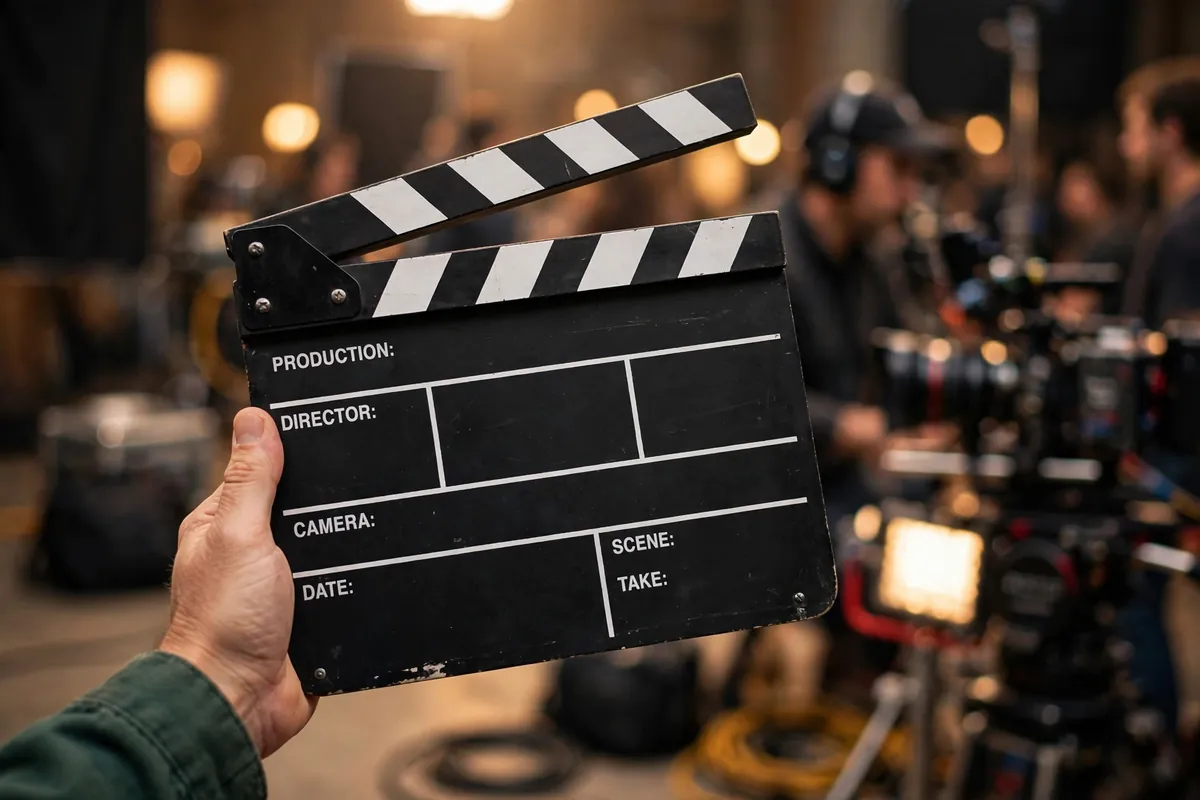
This is the part everyone imagines — cameras rolling, directors shouting, trailers in the parking lot. Production is when the movie is physically filmed, and it’s controlled chaos from day one.
A typical shooting day runs around 12 hours. The crew arrives before dawn, sets up lighting and camera for the first scene, rehearses with the actors, and then shoots the same scene over and over from different angles — wide shot, close-ups, reverses — until the director has what they need. A good day might capture two to five minutes of usable footage. Let that sink in: twelve hours of work for a few minutes of movie.
Who Does What on a Film Set
A film set looks like organized madness, but everyone has a job. Here’s the short version of the key players:
- Director — the creative boss. Decides how every scene looks, sounds, and feels. Answers the question “what are we making?” a hundred times a day.
- Producer — the business boss. Hired the director, controls the money, solves the problems nobody else wants. If the director is the artist, the producer is the one making sure the artist doesn’t bankrupt everyone.
- Cinematographer (DP) — runs the camera and lighting departments. The visual right hand of the director.
- Actors — the faces you actually see. The leads get the trailers; the background extras get the folding chairs. If you’ve ever wondered how much actors actually get paid, the gap between the star and everyone else is wider than you’d think.
- Assistant directors — run the schedule on set. The first AD is basically the set’s air-traffic controller, keeping the day moving.
- Sound department — boom operators, mixers, the people holding fuzzy microphones over everyone’s heads. Bad sound ruins movies faster than bad visuals, and these folks know it.
- Art department — production designers, set decorators, prop masters. Everything you see on screen that isn’t an actor was chosen or built by these people.
- Costume, hair, and makeup — self-explanatory, and far more work than it looks. Continuity alone (making sure the coffee cup is in the same hand in every take) is a full-time job.
Depending on the size of the film, the on-set crew can range from a dozen people to several hundred. And every single one of them is there because pre-production said they needed to be.
Stage 4 — Post-Production: Editing, Sound, VFX
The shoot wraps. Everyone goes home. And then the movie gets made again — this time in dark rooms full of monitors.
Editing comes first. The editor assembles the raw footage — hours and hours of it — into a coherent film. This is where the movie truly takes shape: scenes get reordered, performances get tightened, entire subplots get cut. There’s an old saying that a film is written three times: once in the script, once on set, and once in the edit. The edit is where pacing is born. A great editor can make an average shoot look brilliant, and no amount of great footage survives a bad edit.
Sound is the invisible half of every movie. Dialogue gets cleaned up or re-recorded (ADR), sound effects get designed and layered (every footstep, door slam, and explosion is crafted), and the mix balances it all. Here’s a test: watch a scene from your favorite movie with the sound off, then with sound but no picture. You’ll realize sound is doing half the emotional work and you never noticed.
Visual effects (VFX) range from invisible to obvious. The obvious kind — superheroes, spaceships, dragons — gets the attention. But most VFX is invisible: removing a modern building from a period film, extending a crowd, fixing the weather. If you didn’t notice it, the VFX team did their job perfectly.
Music and color. A composer writes the score (or the production licenses existing music), and a colorist gives the film its final look — the warm glow, the cold blue tension, all of it dialed in frame by frame.
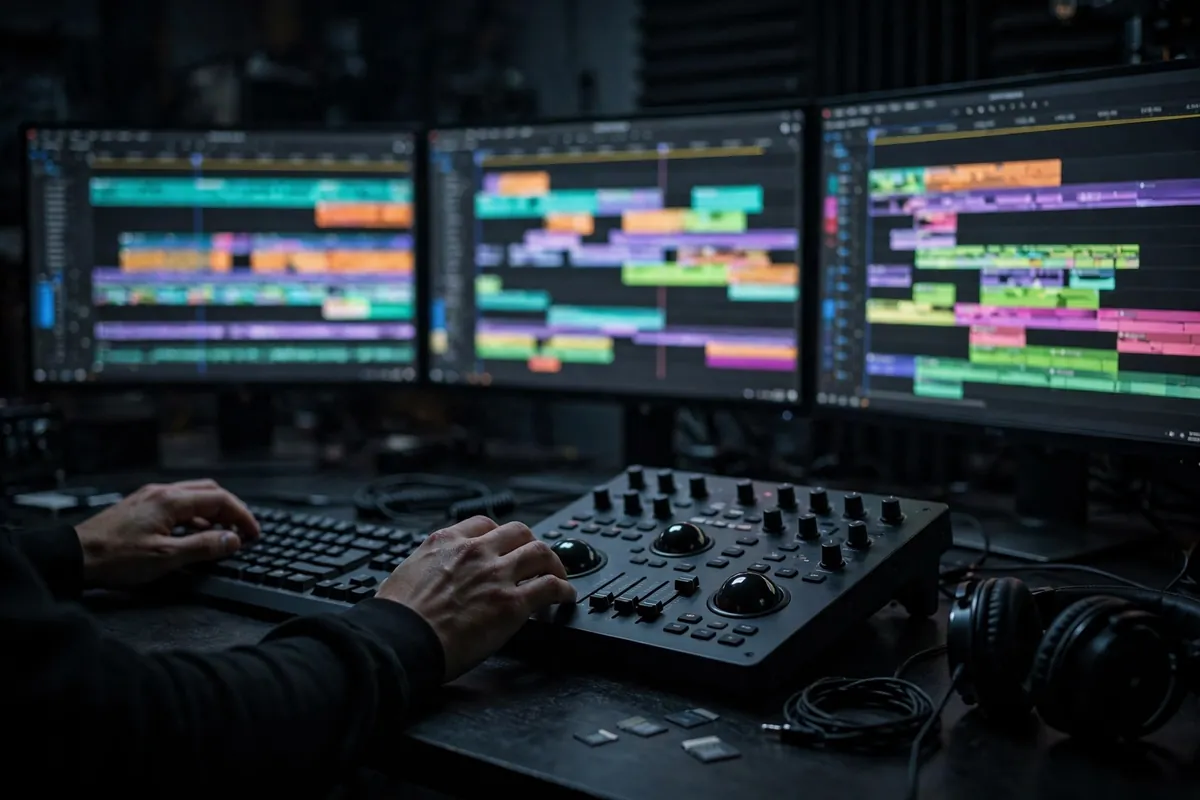
Post-production often takes longer than the shoot itself — several months at minimum, sometimes over a year for effects-heavy films. Test screenings happen during this stage: real audiences watch rough cuts and fill out cards, and studios sometimes order reshoots based on the feedback. Yes, those awkward “they clearly filmed this later” scenes you spot? Now you know why they exist.
Stage 5 — Distribution: Getting It in Front of You
The movie is finished. Now someone has to convince you to watch it.
Distribution is the business of getting the film to audiences — and it’s a whole industry most viewers never think about. For theatrical releases, distributors book the film into cinemas, negotiate how many screens it gets and for how long, and run the marketing campaign: trailers, posters, press tours, talk-show appearances, the works. Marketing budgets for big films can rival the production budget itself. That trailer you saw seventeen times before every other movie? That cost real money to put in front of you.
Then there’s the release strategy: the film opens in cinemas, then moves through a sequence of “windows” — premium rental, streaming, cable, and eventually the bargain bin of eternity. Each window is a separate revenue stream, and the timing is negotiated down to the week.
For streaming originals, the distributor is the platform itself. The film premieres on the service, the algorithm decides who sees the thumbnail, and success is measured in viewing hours instead of ticket sales. It’s a completely different game with the same goal: get eyeballs on the thing we spent two years making.
How Long Does It Take to Make a Movie?
The honest answer: it depends wildly, but longer than you’d guess.
A small independent film might go from greenlight to premiere in under a year — a few weeks of pre-production, three to six weeks of shooting, a few months of post. A big studio production typically takes two to three years end to end, with development alone sometimes stretching much longer before the clock even starts. Animated films are the marathon runners: four to five years is normal, because every frame is built from scratch.
And those are the smooth ones. Films get delayed by weather, injuries, financing collapses, creative overhauls, and once in a blue moon, a global event nobody planned for. The movie you watched last weekend might have started life as a pitch in 2015. Development hell is real, and it’s patient.
Where Does a Movie’s Budget Actually Go?
Movie budgets are famously opaque — studios guard the real numbers like state secrets — but the broad shape is consistent. The biggest slice goes to people: actors, the director, and the crew, from the stars down to the person whose entire job is keeping the coffee hot. Above-the-line talent (stars, director, key producers) can take a huge chunk on big films.
Then comes the physical production: locations, set construction, costumes, equipment rentals, catering for hundreds of people, insurance, transportation. Shooting on location in a real city costs a fortune; building it on a soundstage costs a different fortune.
Post-production — editing, VFX, sound, music — is the next big line item, and on effects-heavy films it can rival the shoot itself. A single complex action sequence can cost more than an entire indie film.
And don’t forget financing costs. Studios spend money years before they earn a dollar back, and money has a time value — which is exactly why how compound interest works matters even in Hollywood.
Marketing, as mentioned, is often counted separately from the “production budget” — which is why a film that “cost $200 million to make” might have needed far more than that to actually turn a profit.
How Movies Are Made Today: Streaming Changed the Game
The five stages haven’t changed. The business around them has — a lot.
Streaming platforms now greenlight, fund, and distribute films that would never have survived the old theatrical system. Mid-budget movies — the comedies, dramas, and thrillers that used to fill cinemas — mostly live on streaming now. The theatrical window, once a sacred months-long exclusivity period, has shrunk dramatically; some films hit streaming weeks after their cinema debut.
Technology changed the craft too. Digital cameras replaced film stock on the vast majority of productions. Virtual production — giant LED screens displaying real-time environments behind the actors — lets filmmakers shoot “on location” without leaving the studio. And the line between a “movie” and a “limited series” keeps blurring, with the same talent and money flowing between both.
But here’s what hasn’t changed: it still starts with someone’s idea, it still takes an army, and the good ones still make you forget you’re watching something hundreds of people built by hand.
The five stages are development (idea to script), pre-production (planning, casting, budgeting), production (the actual shoot), post-production (editing, sound, visual effects), and distribution (marketing and release). Every film goes through all five, in that order.
It varies a lot. A small indie film can go from greenlight to premiere in under a year. A big studio production typically takes two to three years, and animated films often take four to five years. Development — getting the script and financing together — can add years before production even starts.
Pre-production is everything that happens before filming: casting, location scouting, storyboarding, budgeting, and scheduling. Production is the actual shoot — cameras rolling, actors performing, the crew capturing footage. Pre-production plans the movie; production executes the plan.
It depends on the kind of decision. The director is the creative authority — how every scene looks and feels. The producer controls the money and the business side. On a day-to-day level, the first assistant director runs the shooting schedule. All three have real power, in different domains.
The range is enormous. A micro-budget indie can cost under $100,000, a typical studio film runs from tens of millions into the hundreds of millions, and marketing is often counted separately on top of that. Most of any budget goes to people — cast and crew — followed by locations, equipment, and post-production.
Yes, and people do — especially now. Affordable cameras, free editing software, and streaming distribution mean a single filmmaker can write, shoot, edit, and release a film alone. It won’t look like a studio blockbuster, but some genuinely good films have been made by tiny crews or solo creators. The five stages still apply; one person just does all the jobs.