What Is a Catalytic Converter? How It Works and Why It Matters

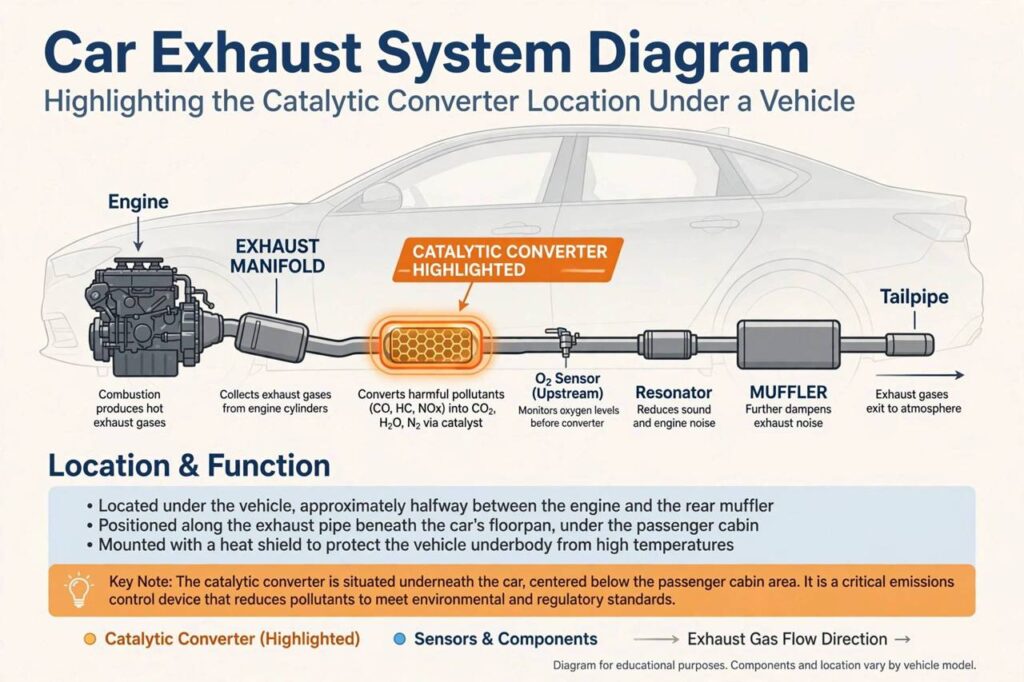
It is one of the most important parts of your car that you never think about — until it fails, or worse, gets stolen. So what is a catalytic converter? It is the device in your exhaust system that converts harmful engine emissions into far less harmful gases. Every gasoline car built in the last few decades has one, and understanding it will save you money, headaches, and failed emissions tests.
I am Marcus, and I will break this down the way I would for a friend in my garage: what the part does, how the chemistry works (in plain English), how to tell when yours is dying, what replacement really costs, and how to protect yourself from the theft epidemic targeting these things. Let us get under the car — figuratively.
What Is a Catalytic Converter? The Simple Answer
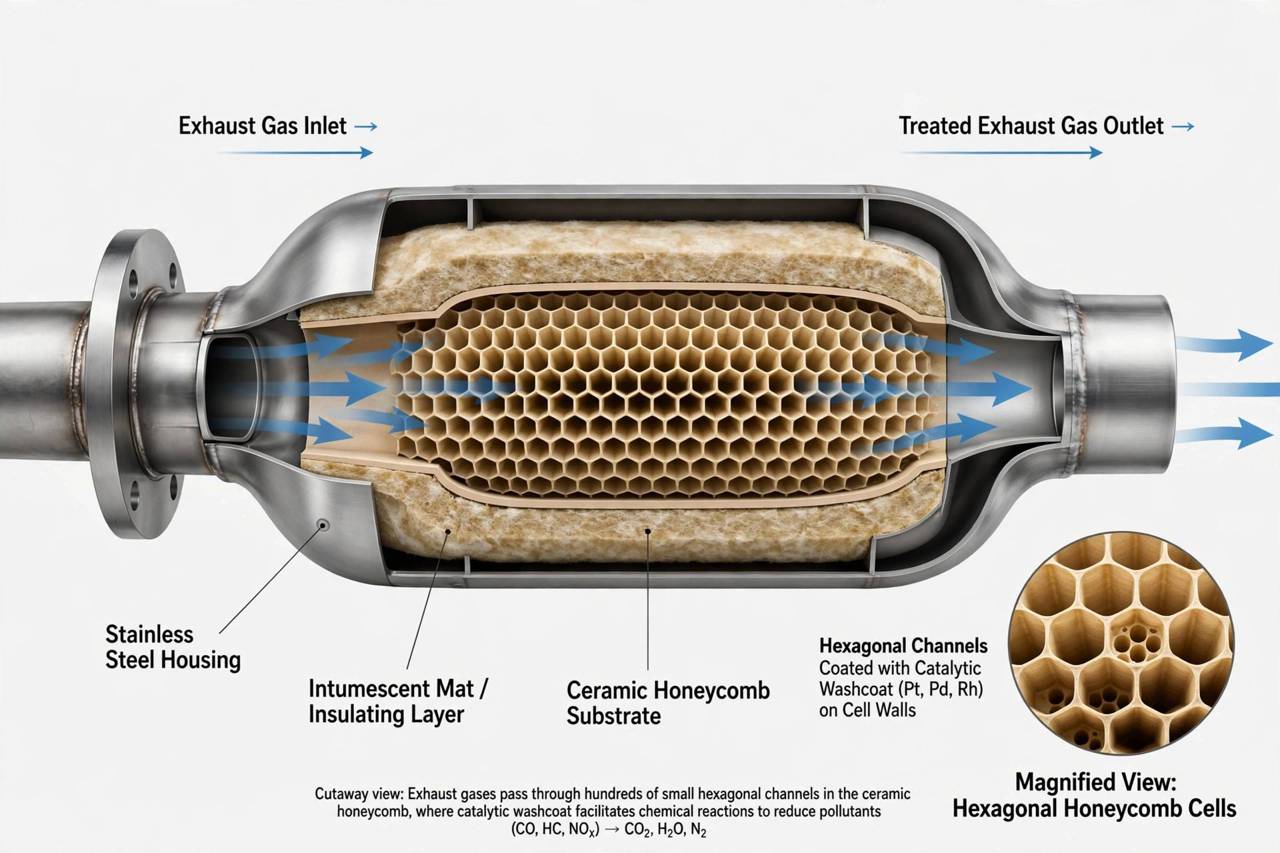
A catalytic converter is a canister-shaped component in your vehicle’s exhaust system, located between the engine and the muffler. Inside it, a ceramic or metallic honeycomb structure is coated with precious metals — platinum, palladium, and rhodium. As hot exhaust gases flow through, these metals trigger chemical reactions that convert three major pollutants into much less harmful substances:
- Carbon monoxide (toxic) → converted to carbon dioxide
- Unburned hydrocarbons (smog-forming) → converted to carbon dioxide and water
- Nitrogen oxides (smog and acid rain contributors) → converted to nitrogen and oxygen
The word “catalytic” is key: the precious metals enable these reactions without being consumed by them. In theory, a converter could last the life of the car — in practice, contamination, damage, and age eventually take their toll.
How It Works: The Chemistry in Plain English
Modern cars use “three-way” catalytic converters handling all three pollutant types simultaneously. Here is what happens inside that unassuming metal can:
- Reduction stage: exhaust first passes over rhodium-coated surfaces, which strip oxygen from nitrogen oxides, leaving harmless nitrogen gas.
- Oxidation stage: the gases then pass over platinum and palladium, which add oxygen to carbon monoxide and unburned hydrocarbons, converting them to CO2 and water vapor.
- Oxygen sensors monitor everything: sensors before and after the converter constantly report to the engine computer, which adjusts the fuel mixture to keep the chemistry in its sweet spot.
The converter needs to be hot to work — typically several hundred degrees. That is why the first minute or two after a cold start produces the most pollution: the converter has not “lit off” yet. It is also why short trips are disproportionately polluting, and why converters are mounted as close to the engine as practical.
Signs Your Catalytic Converter Is Failing
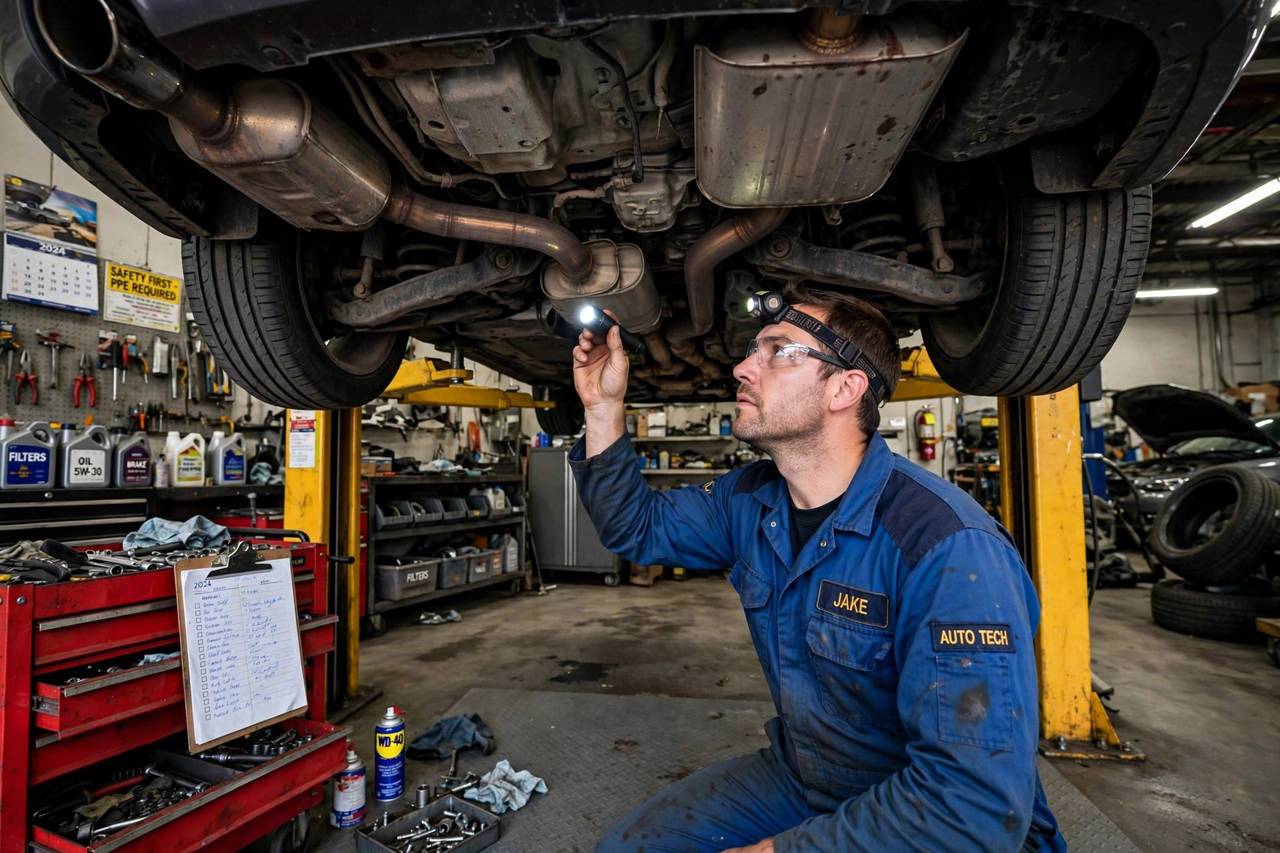
Converters usually fail gradually. Watch for these symptoms:
- Check engine light — especially codes in the P0420/P0430 family (catalyst efficiency below threshold). This is the classic sign.
- Rotten egg smell — sulfur odor from the exhaust means the converter is not processing gases properly.
- Reduced power and acceleration — a clogged converter restricts exhaust flow, strangling the engine. The car feels asthmatic, especially uphill.
- Rattling underneath — the internal honeycomb can break apart and rattle inside the housing, particularly noticeable at idle.
- Failed emissions test — the converter’s whole job is emissions; failure here points directly at it.
- Dark exhaust smoke or poor fuel economy — secondary symptoms of the engine compensating for restricted flow.
Important: these symptoms overlap with other issues (bad O2 sensors, ignition problems). Get a proper diagnosis before replacing — converters are expensive, and misdiagnosis is common.
What Causes Catalytic Converters to Fail?
- Engine problems upstream: the #1 killer. Misfires dump unburned fuel into the exhaust, which ignites inside the converter and melts the honeycomb. Fix misfires promptly — a $200 ignition repair prevents a $2,000 converter replacement.
- Oil or coolant contamination: burning oil or leaking coolant coats the catalyst surfaces, poisoning them. Watch for blue or white exhaust smoke.
- Physical damage: road debris strikes, especially on lowered vehicles or rough roads, can crack the housing or shatter the internals.
- Age and mileage: even healthy converters degrade slowly over 100,000+ miles of thermal cycling.
- Wrong fuel or additives: leaded fuel (still found in some places) destroys converters rapidly. Stick to the fuel your manual specifies.
The pattern: converters rarely die of old age alone — they are usually murdered by neglected engine problems. Maintain your engine and the converter largely takes care of itself.
Replacement: What It Costs and What to Know
Let us talk money, because this is where converter failure hurts:
- Cost range is wide: from a few hundred dollars for universal aftermarket converters on common cars, to several thousand for OEM units on luxury or performance vehicles. The precious metals inside drive the price.
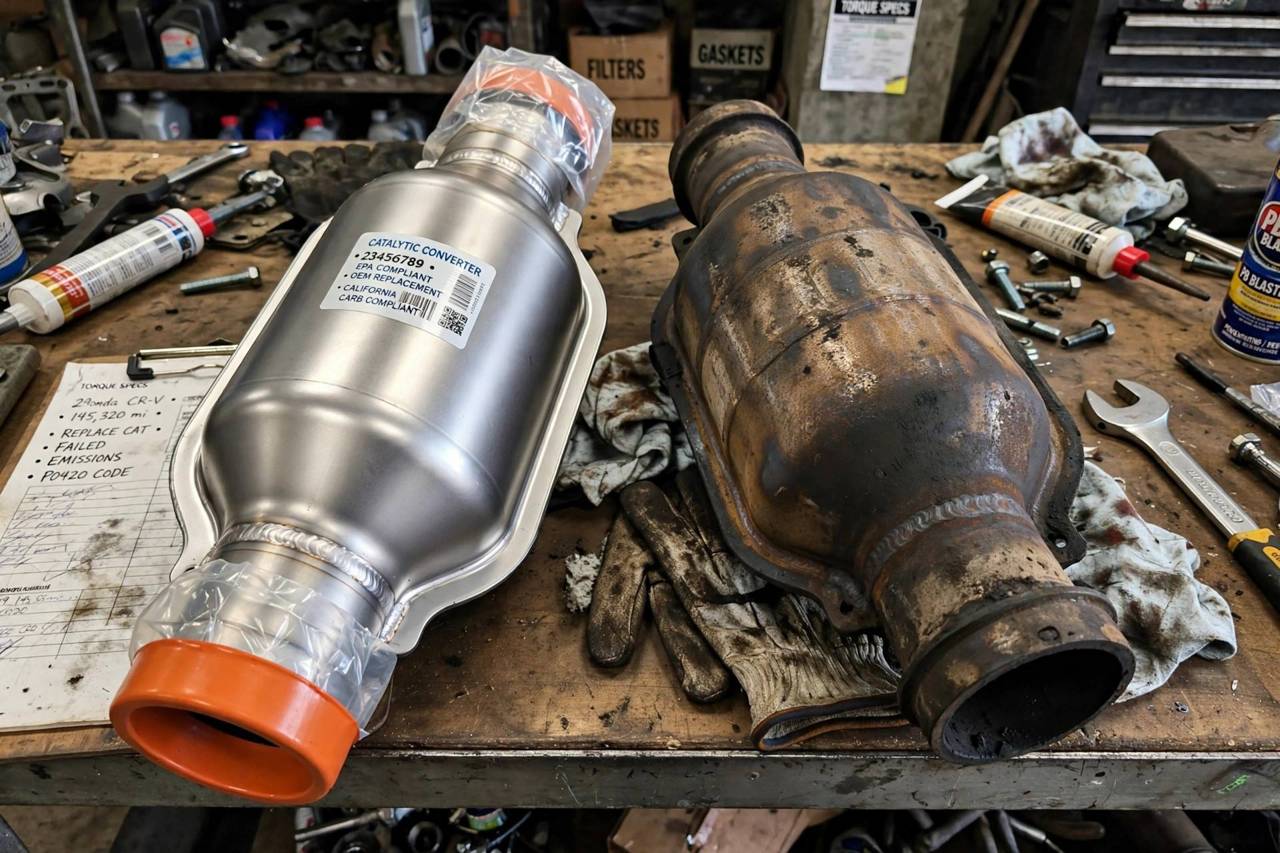
- OEM vs. aftermarket: OEM (original equipment) guarantees fit and emissions compliance but costs most. Quality aftermarket converters from reputable brands work well for most cars at significant savings. Avoid the cheapest no-name units — they often fail quickly or will not pass emissions.
- Direct-fit vs. universal: direct-fit bolts on with no cutting or welding (easier, pricier). Universal requires cutting and welding (cheaper part, more labor).
- Emissions compliance matters: some regions (notably California and states following its standards) require CARB-compliant converters. Installing a non-compliant unit means failing inspection — verify your local requirements before buying.
- Labor: typically 1–3 hours depending on accessibility. Rusted exhaust hardware on older cars can complicate the job.
Get multiple quotes, and be wary of shops that jump straight to converter replacement without diagnosing upstream causes — a new converter will quickly die if the misfire that killed the old one is still present.
Catalytic Converter Theft: Protecting Your Car
Here is the ugly reality: converters contain valuable precious metals, they are accessible under the car, and a thief with a saw can remove one in minutes. Theft has surged in many areas. Protect yourself:
- Park smart: well-lit areas, garages when possible, close to building entrances or security cameras. Thieves prefer dark, quiet spots.
- Anti-theft devices: catalytic converter shields, cages, and cable locks make removal dramatically harder. A $200–$400 shield beats a $2,000 replacement.
- Etch your VIN: some shops and police programs etch your vehicle identification number onto the converter, making it harder to sell and easier to trace.
- Alarm sensitivity: some alarms offer tilt/jack-up sensors that trigger if someone lifts your car — exactly what converter thieves do.
- Know the high-risk vehicles: trucks, SUVs, and hybrids (hybrids’ converters contain more precious metals and see less wear) are frequent targets due to ground clearance and converter value.
If your converter is stolen, file a police report immediately (required for insurance), and check whether your comprehensive coverage applies — many policies cover theft minus your deductible.
Can You Drive With a Bad Catalytic Converter?
Technically, often yes — but you should not for long. A failing converter means: you are polluting far more than legal limits, you will fail any emissions inspection, fuel economy and performance suffer, and a severely clogged converter can cause overheating or leave you stranded. In some jurisdictions, driving with a removed or gutted converter is explicitly illegal with hefty fines. Get it diagnosed and fixed promptly — delaying rarely saves money.
Extending Your Converter’s Life
- Fix check-engine lights promptly — especially misfire codes. This is the single most important habit.
- Keep up with maintenance: spark plugs, air filters, and oil changes all keep combustion clean.
- Address oil consumption: burning oil poisons converters steadily. Do not ignore it.
- Use the correct fuel and skip unproven fuel additives.
- Let the engine warm up sensibly: gentle driving for the first few minutes beats extended idling for converter health.
The Environmental Impact: Why This Part Matters
It is easy to view the catalytic converter as just another expensive car part, but its historical impact is staggering. Before catalytic converters became mandatory, vehicle exhaust was a primary driver of urban smog crises – cities choked under brown haze, and air quality alerts were routine. The widespread adoption of converters cut per-vehicle emissions of key pollutants by well over 90% compared to uncontrolled cars.
That is the context for the cost and the regulations: your converter is quietly preventing kilograms of toxic pollutants from entering the air you and your neighbors breathe, every single year you drive. When it fails and you replace it, you are not just fixing your car – you are restoring a small but real piece of public health infrastructure. It is one of the rare car parts where the maintenance genuinely matters beyond your own vehicle.
Bottom line: respect the converter. Fix engine problems early, maintain your car properly, park smart, and this unassuming canister will quietly do its job for a hundred thousand miles or more. It is the hardest-working environmentalist you will ever own. Treat it well, and it will return the favor every single mile you drive, for years.
FAQ
What does a catalytic converter do?
It converts harmful exhaust pollutants — carbon monoxide, unburned hydrocarbons, and nitrogen oxides — into far less harmful gases (carbon dioxide, water vapor, and nitrogen) through chemical reactions triggered by precious metal catalysts inside the unit.
How do I know if my catalytic converter is bad?
Classic signs: check engine light (especially P0420/P0430 codes), rotten egg smell from exhaust, loss of power, rattling from underneath the car, failed emissions test, and reduced fuel economy. Get a professional diagnosis before replacing, as symptoms overlap with other issues.
How much does it cost to replace a catalytic converter?
Costs vary widely: a few hundred dollars for aftermarket units on common vehicles, up to several thousand for OEM converters on luxury models. Labor typically adds 1–3 hours. Always verify emissions compliance requirements for your region before choosing a replacement part.
Why are catalytic converters stolen?
They contain valuable precious metals (platinum, palladium, rhodium) that thieves sell to scrap dealers. They are accessible under the vehicle and can be removed in minutes with basic cutting tools. Anti-theft shields, smart parking, and VIN etching are effective deterrents.
Can I drive with a bad catalytic converter?
Short distances, usually — but it is unwise to delay repair. You will pollute excessively, fail emissions tests, lose performance and fuel economy, and risk being stranded by a severely clogged unit. Driving with a removed converter is illegal in many jurisdictions.
Keep Reading
- What Is Tire Rotation? Why It Matters and When to Do It
- Travel Adapter vs. Converter: What’s the Difference? (2026)
- What Is AI Bias? Where It Comes From and Why It Matters