Travel Adapter vs. Converter: What’s the Difference? (2026)

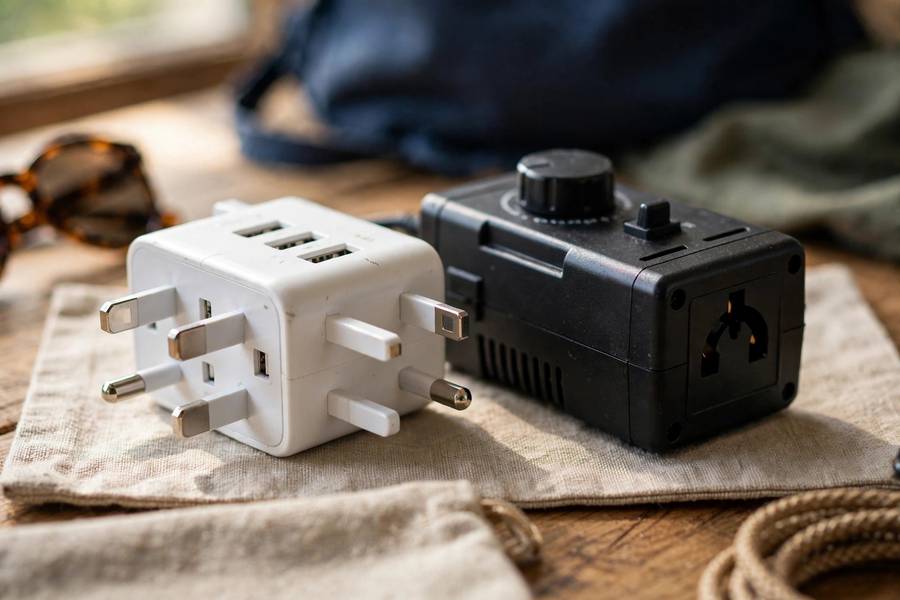
The adapter vs. converter confusion fries more electronics than any other travel mistake — I’ve watched a $200 hair dryer die in a Paris hotel room because someone (me) thought ‘adapter’ meant ‘makes it work.’ It doesn’t. The adapter changes the plug’s shape; the converter changes the electricity’s voltage. Different jobs, different devices, and mixing them up is how things burn.
This guide settles it permanently: what each does, which devices need which, the dual-voltage labels that make converters obsolete for most travelers, and the 2026 USB-C reality. For the basics, see what is a travel adapter and the best travel adapter guide.
The Core Difference: Shape vs. Electricity
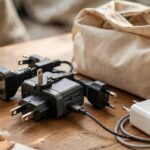
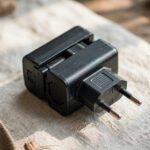
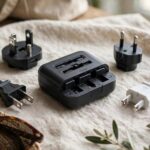
The adapter: the physical (the plug shape — the US flat pins to the EU round, the fit). It does nothing to the electricity (the 110V device on 240V — the adapter-fitted, the doomed). The cost ($8–25 — the simple, the passive). The analogy: the translator (the words’ shape, not the meaning).
The converter: the electrical (the voltage — the 220V to the 110V, the transformation). The types: the step-down (the 220→110, the US devices in Europe), the step-up (the 110→220, the rare, the EU devices in the US), and the dual (the both-way, the versatile). The cost ($30–60 — the active, the heavy). The analogy: the interpreter (the meaning, the actual conversion). how to plan a Europe trip
The critical: the adapter never converts voltage (the common misconception — the fried devices, the lesson). The converter always includes the adaptation (the plug shape — the built-in, the combined). The rule: the shape problem (the adapter); the voltage problem (the converter); the both (the converter, the covered).
Voltage Around the World: The Map
The 220–240V world: Europe, Asia, Africa, Australia (the most — the US traveler’s destination, the converter’s territory). The 100–127V world: North America, Japan (100V — the lower, the special), parts of Latin America (the mixed — the Brazil, the both, the check). The map (the adapter guide — the plug types, the country list).
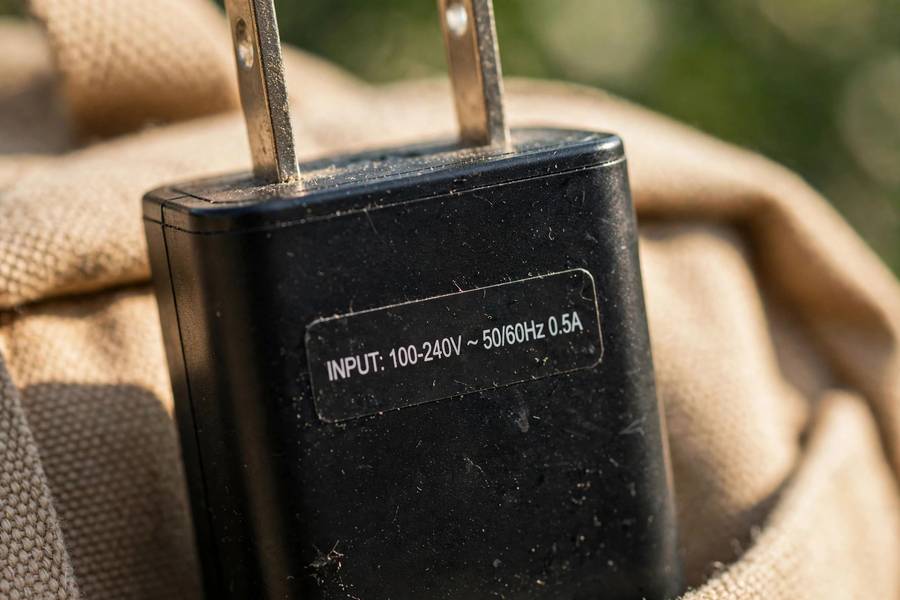
The device labels: the dual-voltage (the ‘INPUT: 100–240V’ — the phones, the laptops, the cameras, the modern — the adapter-only, the majority). The single-voltage (the ‘INPUT: 110V’ or ‘220V’ — the heat appliances, the old, the minority — the converter-needed, the careful). The check (the 10 seconds — the label, the fine print, the device-saving).
The heat appliances (the problem children): the hair dryers (the 1875W — the US, the 110V, the classic fryer), the straighteners (the single-voltage, the frequent), and the curling irons (the same, the lesson). The solution hierarchy: the dual-voltage travel version ($25–40 — the best), the hotel’s (the provided, the free), the converter (the heavy, the last resort).
When You Need Only an Adapter (Most Cases)
The modern electronics: the phones (the 100–240V, the universal), the laptops (the bricks — the labeled, the dual), the tablets (the same), the cameras (the chargers — the dual), and the USB chargers (the GaN — the 65W, the 2026 standard). The verdict: the adapter-only (the 90% of devices, the 90% of travelers).
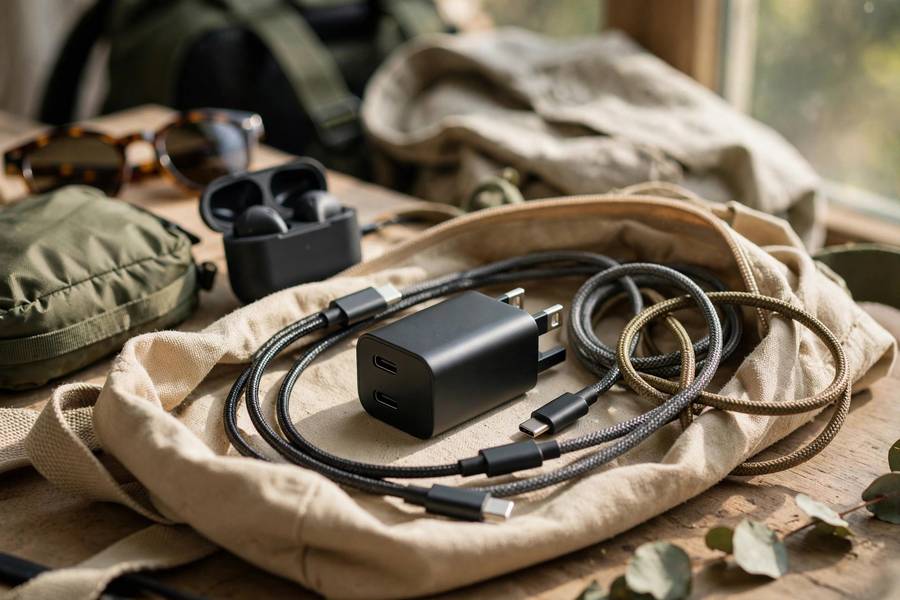
The USB-C consolidation (the 2026): the single GaN charger (the 65W — the laptop + the phone + the buds, the one brick), the cables (the 2, the C-to-C), and the adapter (the Europlug/universal — the wall, the fit). The kit (the under-a-pound, the everything, the future). The EU directive (the USB-C standard — the hotels’ built-in ports, the accelerating).
The test: the label check (the ‘100–240V’ — the safe, the worldwide), the heat check (the warming — the appliance, the suspect), and the age check (the pre-2010 — the maybe-single, the verify). The confidence (the labeled, the known, the adapter-only).
When You Need a Converter (The Exceptions)
The single-voltage heat tools: the US hair dryer in Europe (the 110V on 240V — the burnout, the smoke, the lesson), the straightener (the same), and the solution (the dual-voltage travel version — the $30, the replacement, the correct). The converter (the 2000W — the heavy, the $40–50, the works-but-why).
The high-wattage (the converter’s limit): the 50W converters (the electronics — the small, the light), the 2000W (the appliances — the heavy, the 2-pound, the serious), and the mismatch (the under-rated — the overheating, the danger, the correct-sizing). The rule: the converter’s wattage ≥ the device’s (the 2× margin, the safe). how to pack light
The better alternatives: the dual-voltage purchase (the travel dryer — the $25–40, the permanent fix), the hotel provision (the dryers — the every-hotel, the free), and the abstinence (the air-dry — the vacation, the freedom). The converter (the last resort — the heavy, the hot, the hum).
Converter Types: Transformer vs. Electronic
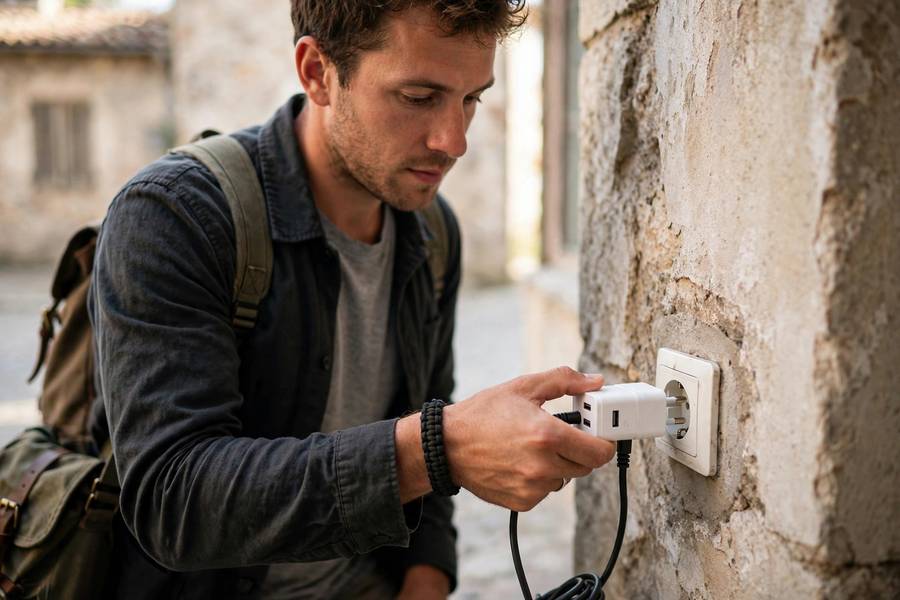
The transformer (the heavy): the iron core (the 2-pound, the reliable), the continuous (the hours-long, the safe), and the cost ($40–60 — the 2000W, the investment). The use: the extended (the expat, the long-stay, the daily dryer).
The electronic (the light): the circuitry (the pocket-sized, the $20–30), the intermittent (the 30-minutes-on, the cool-down — the limited), and the risk (the overheating, the cheap, the careful). The use: the short (the trip, the occasional, the sufficient).
The recommendation: the neither (the dual-voltage tools, the hotel dryers — the 2026 answer). The if-forced: the transformer (the reliable, the safe, the heavy). The never: the no-name electronic (the fire, the risk, the $15 lesson).
The 2026 Setup: What to Actually Buy
The optimal kit ($50): the 65W GaN USB-C charger ($30–40 — the Anker/UGreen, the one-brick), the universal adapter ($15–25 — the cube, the world), and the cable set (the 100W C-to-C, the backup). The dual-voltage travel dryer ($30 — the if-needed, the Conair/Babyliss). The total (the under-a-pound, the everything, the done).
The budget kit ($20): the phone charger (the owned), the Europlug adapter ($8 — the region, the simple), and the cable (the owned). The sufficient (the phone-only, the light traveler, the fine). The upgrade path (the GaN, the later, the when-laptop).
The skip list: the voltage converter (the unless — the single-voltage tools, the replaced-instead), the 200W charging station (the overkill, the heavy), and the single-country adapters (the universal, the $15, the better). The 2026 (the USB-C, the GaN, the consolidated — the simplest travel-charging in history).
Troubleshooting and Safety
The fried device (the prevention): the label check (the 10 seconds, the habit), the heat-tool rule (the dual-voltage-or-hotel, the absolute), and the strip rating (the 100–240V — the power strip, the melt, the checked). The aftermath (the dead — the lesson, the replacement, the dual-voltage).
The slow/no charge: the adapter fit (the loose Europlug — the wiggle, the seated), the socket switch (the UK — the individual, the on), and the cable (the 100W-rated, the speed, the matters). The hotel USB (the 5W — the trickle, the 2015, the bring-your-own).
The safety (the non-negotiable): the certified (the CE/UL — the marks, the real), the wattage (the matched, the 2×, the safe), and the unattended (the never — the converter, the heat, the watched). The traveler’s electricity (the respected, the understood, the uneventful).
Real-World Scenarios: The Decision in Practice
The Paris business trip (the laptop + the phone): the GaN charger (the 65W, the both), the Europlug adapter (the $8, the wall), and the done (the dual-voltage, the adapter-only, the 2 items). The converter (the unneeded, the left-home, the correct).
The 2-week Thailand (the dryer + the straightener): the dual-voltage travel dryer (the $30, the purchased, the packed), the hotel’s dryer (the backup, the free), and the straightener (the dual-voltage, the checked-label, the confirmed). The converter (the skipped, the heavy, the avoided).
The year abroad (the expat, the daily): the local purchases (the kettle, the dryer, the destination-voltage, the correct), the dual-voltage electronics (the adapter-only, the brought), and the one converter (the transformer, the specific device, the justified). The rule (the settled, the long-term, the local-buy).
An adapter changes only the plug’s shape (so it fits foreign sockets); a converter changes the voltage (110V ↔ 220V). Adapters are $8–25, passive, and sufficient for dual-voltage electronics (phones, laptops). Converters are $30–60, heavy, and needed only for single-voltage appliances (usually US heat tools) on foreign voltage.
Only for single-voltage devices — almost always heat appliances (US hair dryers, straighteners labeled 110V only). Phones, laptops, tablets, and cameras are dual-voltage (100–240V) and need only a plug adapter. Check the device label: ‘100–240V’ = adapter only.
No — an adapter alone will let it plug in, then the 240V will burn out the 110V dryer (possibly spectacularly). Solutions: buy a dual-voltage travel dryer ($25–40), use the hotel’s dryer, or bring a proper 2000W voltage converter (heavy — last resort).
Dual voltage — the device safely handles any voltage worldwide (US 110V through European 240V). You need only a plug adapter (shape), never a converter. Most modern electronics (phones, laptops, USB chargers) are dual-voltage — check the fine print on the brick.
A 65W GaN USB-C charger ($30–40 — charges laptop + phone + earbuds from one tiny brick) + universal travel adapter ($15–25) + two USB-C cables. Under a pound, charges everything, works worldwide. The EU’s USB-C standard means many hotels now have built-in USB-C ports too.