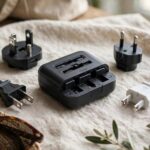
Do I Need a Travel Adapter for Europe? (2026 Guide)

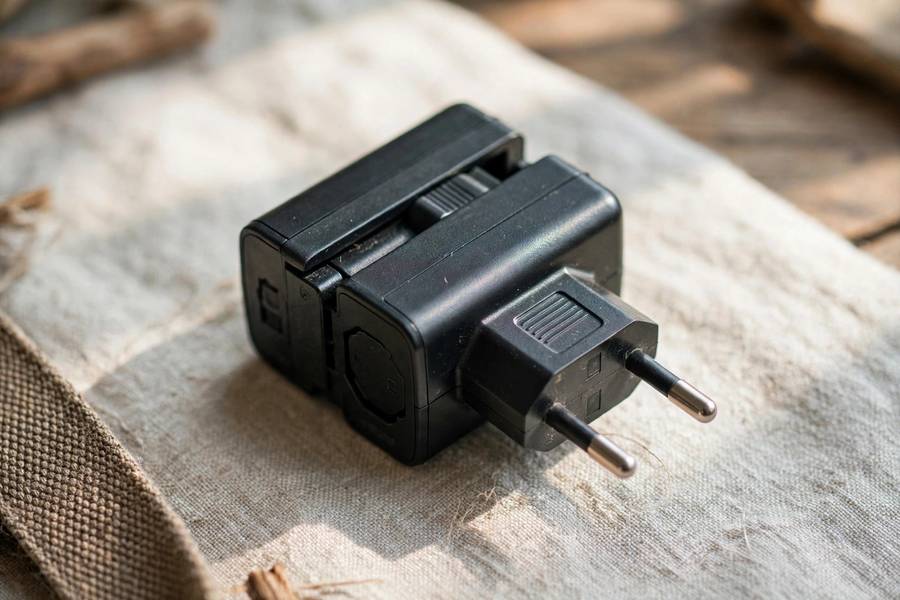
Short answer: if you’re coming from outside Europe (US, UK, Australia, most of Asia), yes — European plugs are physically different, and your charger won’t fit the socket. But the longer answer is more useful: which adapter, whether you also need a voltage converter, and how the USB-C shift is changing the whole game.
I’ve charged devices in 30+ European countries, blown up one hair dryer (RIP), and learned the plug map the hard way. This guide covers everything: the plug types, the country exceptions, adapter vs. converter (the distinction that saves your electronics), and the 2026 reality of USB-C.
For the buying guide, see our best travel adapter for international travel and the basics in what is a travel adapter.
The Short Answer by Country
Most of Europe (France, Germany, Spain, Italy, Netherlands, Scandinavia, Eastern Europe): Type C (two round pins) and Type E/F (the grounded versions with the same two-pin shape). One Europlug adapter (Type C) works in all of these — it’s the most universal plug on earth, fitting the E/F/G sockets’ round-pin holes in most cases. how to plan a Europe trip
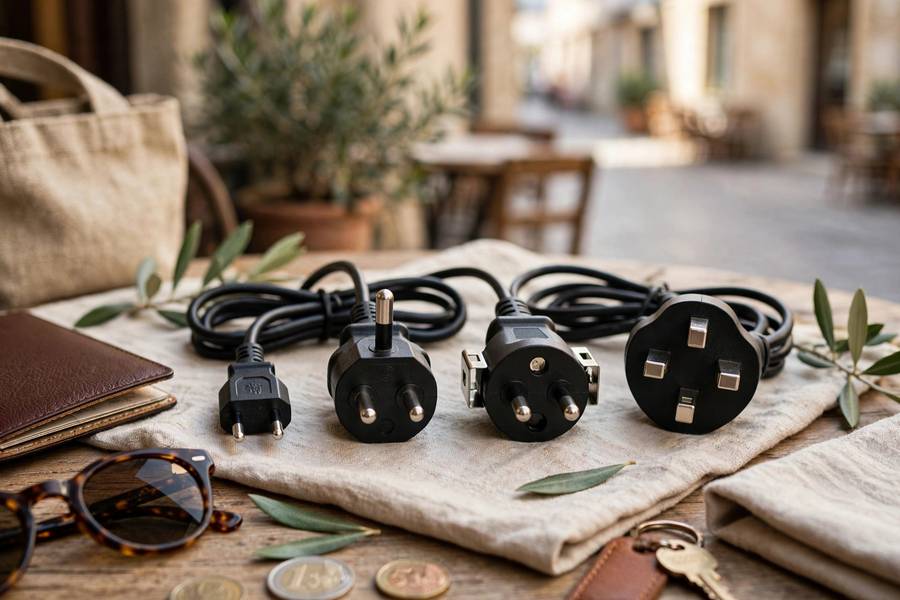
The exceptions: UK + Ireland — Type G (the big three rectangular pins, fused). Completely different; you need a separate UK adapter. Switzerland — Type J (three round pins, recessed — the Europlug fits, but loosely; a proper J adapter is better). Italy — Type L (three round pins in a line; the Europlug usually fits the smaller 10A sockets). Denmark — Type K (the Europlug fits most modern Danish sockets).
The practical kit: one universal adapter (covers UK + Europe + everywhere else, $15–25) handles the whole continent. If you’re only doing mainland Europe (no UK/Ireland), a simple Europlug adapter ($8) suffices. The universal is the better buy — trips change, and the UK leg appears unexpectedly.
Adapter vs. Converter: The Critical Distinction
An adapter changes the plug SHAPE (so it fits the socket). A converter changes the VOLTAGE (so your device doesn’t fry). Europe runs 220–240V; the US runs 110–120V. This distinction is the #1 source of fried electronics in travel.
The good news: most modern electronics are dual-voltage (check the label: ‘INPUT: 100–240V’). Phones, laptops, tablets, cameras, USB chargers — all dual-voltage. They need only an adapter (shape), not a converter (voltage). The label check takes 10 seconds and saves the device.
The bad news: heat appliances are usually single-voltage — hair dryers, straighteners, curling irons (US versions are 110V only). Plug a 110V hair dryer into 240V with just an adapter and it will burn out spectacularly (ask me how I know). Solutions: buy a dual-voltage travel version ($25–40), use the hotel’s dryer (European hotels have them), or bring a proper voltage converter ($30–50, heavy — the last resort).

The USB-C Revolution: 2026 Reality
The EU’s common-charger directive (in force since 2024) means USB-C is now the standard — and it’s changing travel charging. Many European hotels, airports, and trains now have USB-C ports built into the room/desk/seat. The iPhone 15+ (USB-C), all Android flagships, and most new laptops charge via USB-C.
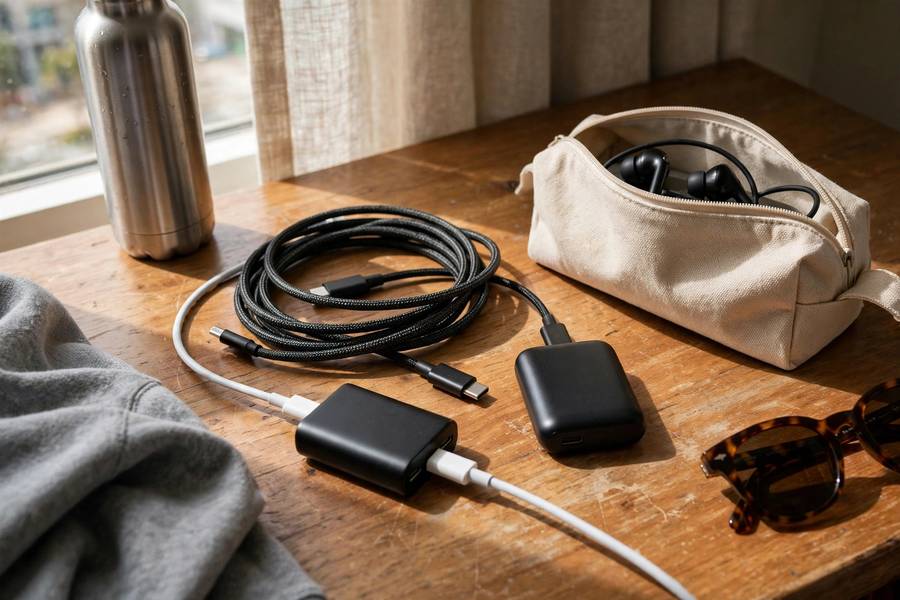
What this means for your kit: a single GaN USB-C charger (65W, $30–40 — charges laptop + phone + earbuds simultaneously) plus a Europlug adapter (or a charger with interchangeable EU prongs) can replace the old tangle of device-specific chargers. The 65W GaN is the 2026 travel-charging standard — smaller than a deck of cards, more powerful than the brick your laptop came with.
The cable kit: 1× USB-C to USB-C (100W rated — for the laptop), 1× USB-C to Lightning (if you still have Lightning devices), 1× short USB-C (the backup). That’s it. The days of five chargers are over; the USB-C consolidation is the biggest packing win of the decade.
Charging on Trains, in Hotels, and at Airports
Trains: most European intercity trains have power sockets at seats (Eurostar, TGV, ICE, Frecciarossa — usually Type E/F or universal). The Eurail traveler’s tip: the window seats usually have the sockets; the aisle seats share. Bring the adapter even for the train — the sockets are European, obviously.
Hotels: the socket situation varies wildly — historic hotels (one socket for the room, behind the wardrobe), modern hotels (USB ports bedside, sockets at the desk). The power strip ($12, with USB ports) is the great equalizer — one adapter into the wall, everything into the strip. (Check the strip’s voltage rating — 100–240V for the strip itself.) how to pack light
Airports: the major hubs (Heathrow, CDG, Frankfurt, Schiphol, Madrid) have abundant charging — USB ports and sockets at gates, paid charging lockers, and the lounges (the best lounges have the best charging setups). The rule: top up at every opportunity — the travel day drains batteries faster than you expect.
Country-by-Country Quick Reference
France, Germany, Spain, Netherlands, Belgium, Austria, Scandinavia, Eastern Europe (Poland, Czechia, Hungary, Romania, Balkans): Type C/E/F — the Europlug adapter covers all. Voltage 230V. No surprises.
UK, Ireland: Type G only — separate adapter required. Voltage 230V. (The UK’s fused plugs are the safest in the world and the bulkiest — the adapter is chunky, plan the bag space.)
Switzerland: Type J — the Europlug fits but a J adapter sits properly. Italy: Type L — Europlug fits 10A sockets (most hotel rooms); the 16A sockets (kitchens, some bathrooms) need the L adapter. Denmark: Type K — Europlug fits modern sockets. Greece, Portugal, Turkey: Type C/F — Europlug fine.
The universal adapter ($15–25) covers all of these — it’s the one-purchase solution. The country-specific adapters ($8 each) are for the minimalist doing one region. When in doubt, universal.
What to Buy: The 2026 Recommendations
The best setup (total ~$50): 65W GaN USB-C charger ($30–40 — Anker, UGreen, Baseus all make excellent ones) + universal travel adapter ($15–25 — the all-in-one cube with USB ports) + the cable kit above. This charges everything, fits everywhere, and weighs under a pound.
The budget setup (~$20): your phone’s charger + a Europlug adapter ($8) + a USB-A to USB-C cable. It works — just slower (the phone charger won’t power the laptop) and with more pieces. Fine for the phone-only traveler; insufficient for the laptop traveler.
What to skip: the ‘200W 8-port charging station’ (overkill, heavy), the voltage converter (unless you have single-voltage heat tools — and even then, buy dual-voltage tools instead), and the hotel ‘universal socket’ hope (some have them, most don’t — bring your own).
Troubleshooting: When Charging Goes Wrong
The device won’t charge: check the adapter’s connection (Europlugs in E/F sockets can be loose — wiggle it), check the socket’s switch (UK sockets have individual switches — the #1 ‘broken charger’ cause in Britain), and check the device’s voltage label (the 110V-only device on 240V won’t charge — it’ll die).
The slow charge: the hotel’s USB port (often 5W — the 2015-era trickle), the wrong cable (USB-A to C on a C-to-C charger halves the speed), or the multi-device split (the 65W charger gives 45W to the laptop + 20W to the phone — full speed needs the single-device mode). The cable matters more than people think — the 100W-rated C-to-C is the standard.
The fried device (prevention): the 10-second label check (‘100–240V’ = safe worldwide), the heat-tool rule (dual-voltage or hotel-provided only), and the power-strip rating (the strip itself must be 100–240V — the cheap US-only strips melt on 240V). I’ve seen the melted strip; it’s educational and terrifying.
Yes — US plugs (Type A/B) don’t fit European sockets (Type C/E/F/G). You need at least a plug adapter (shape). Most modern electronics (phones, laptops) are dual-voltage (100–240V) so they don’t need a voltage converter — just the adapter. Check the device label.
An adapter changes the plug shape to fit foreign sockets; a converter changes the voltage (110V ↔ 220V). Phones/laptops need only adapters (they’re dual-voltage). US hair dryers/straighteners need converters (or dual-voltage travel versions) — otherwise they burn out on Europe’s 220–240V.
Yes — the UK/Ireland use Type G (three rectangular pins); mainland Europe uses Type C/E/F (round pins). A universal travel adapter ($15–25) covers both plus the rest of the world — it’s the one-purchase solution.
Yes, with a plug adapter — all phone chargers are dual-voltage (100–240V). The 2026 upgrade: a 65W GaN USB-C charger ($30–40) charges phone + laptop + earbuds from one tiny brick. The EU’s USB-C standard means many hotels now have built-in USB-C ports.
Modern hotels increasingly do (the EU common-charger directive accelerated this), but historic hotels often have one socket for the whole room. Bring a small power strip ($12, 100–240V rated) — one adapter into the wall, everything into the strip.