What to Put in Wedding Welcome Bags for Hotel Guests (2026)

Your hotel guests traveled to celebrate you — the welcome bag is your first hug. But what actually goes in a wedding welcome bag? After assembling hundreds (and seeing which items get used vs abandoned), here’s the definitive guide: what to include, what to skip, and how to do it on any budget.
The Essential Checklist
Every great welcome bag has five categories: 1. Snacks (guests arrive hungry), 2. Drinks (water at minimum), 3. Practical items (the weekend survival kit), 4. Information (itinerary, maps, contacts), 5. Something personal (the touch that makes it yours). Hit all five and the bag feels complete; miss the practical items and it’s just a gift bag.
The golden rule: think like a traveler, not a bride. Your guests just navigated airports, highways, and hotel check-in. What do THEY need right now? Water, a snack, wifi info, and the plan. Start there.
Snacks and Drinks
Must-haves: bottled water (2 per bag — non-negotiable), a salty snack (chips, pretzels, popcorn), something sweet (cookies, chocolate, candy). Nice additions: local specialties (regional chips, famous cookies), breakfast items (granola bars, muffins for the morning), a mini bottle of champagne or local beer (check hotel alcohol policies first).
Dietary awareness: include at least one nut-free, one gluten-free option. You don’t need to customize every bag — just make sure the shared items cover common needs. A small card listing ingredients for homemade items is a thoughtful touch.
The Practical Items
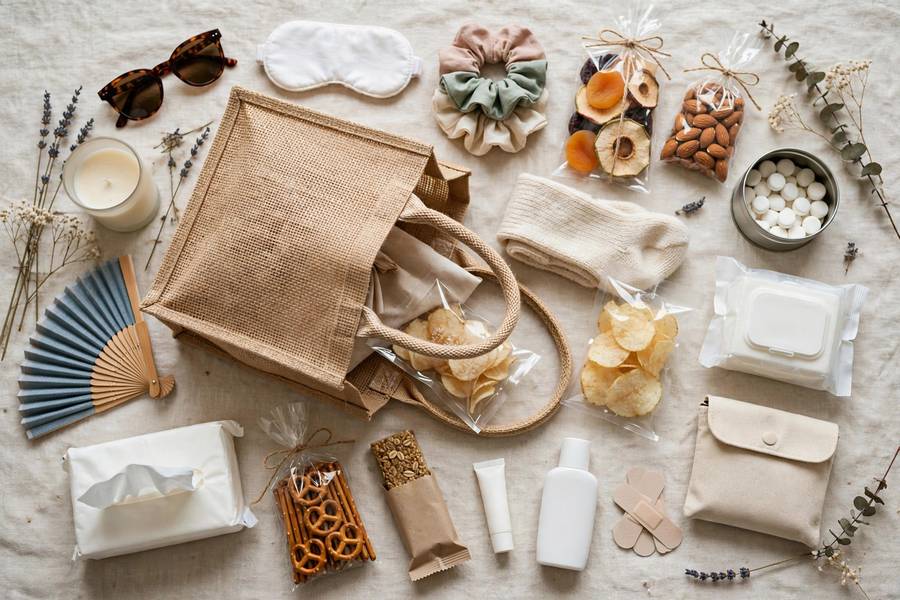
The items guests actually use most: pain relievers (Advil/Tylenol packets — the #1 most-used welcome bag item, I swear), mints or gum, a phone charger (cheap multi-packs — guests ALWAYS forget these), tissues, band-aids (new shoes + dancing = blisters), stain remover pen, sunscreen (for outdoor/destination weddings).
These unglamorous items are what guests remember. Nobody remembers the monogrammed cookie; everyone remembers who saved them with Advil at midnight. Practical beats pretty in welcome bags.
The Local Touch
Show off your wedding location: local snacks (the city’s famous candy, regional chips), a city guide (YOUR favorite spots — coffee, restaurants, sights), local crafts (a small handmade item, local honey, regional hot sauce), transit info (how to get around — guests in unfamiliar cities stress about this).
The city guide is the highest-value item: a one-page “Our Favorite [City]” with your personal recommendations. Guests use it all weekend. It costs almost nothing and feels incredibly thoughtful. For destination weddings, this becomes even more critical — see our destination wedding guide.
The Personal Touch
What makes the bag YOURS: a handwritten note (2–3 sentences per guest — “We’re so glad you came all this way”), a custom itinerary card (the weekend’s events, beautifully designed), a wedding weekend playlist (QR code to Spotify), a photo (a favorite picture with the guests — costs pennies to print, priceless to receive).
The handwritten note is the item guests keep. The $3 water bottle gets recycled; the note gets saved. If you’re short on time or budget, a heartfelt note + practical basics beats an expensive bag with no soul.
What NOT to Include
Skip: anything with your wedding hashtag (nobody wants hashtag merch), cheap trinkets (keychains, magnets — straight to the trash), scented items (allergies and preferences vary), full-size anything (guests have to pack it home), perishables without a plan (chocolate in a hot hotel room = disaster), alcohol without checking (some hotels prohibit it; some guests don’t drink).
The test for every item: “Will they use this this weekend, or will it go home in a suitcase (or trash)?” If it’s the latter, cut it.
Budget Breakdowns
Budget ($8–12/bag): water, granola bars, mints, Advil packets, printed itinerary, handwritten note, tote bag. Mid-range ($15–25/bag): add local snacks, phone charger, quality tote, mini champagne, sunscreen. Splurge ($30–50/bag): add local artisan item, nice candle, premium snacks, custom cookies.
For affordable wedding ideas across your whole wedding, the same principles apply: spend on what guests experience, save on what they won’t notice. Welcome bags are high-visibility — but $15 thoughtful beats $40 generic every time.
Assembly and Delivery
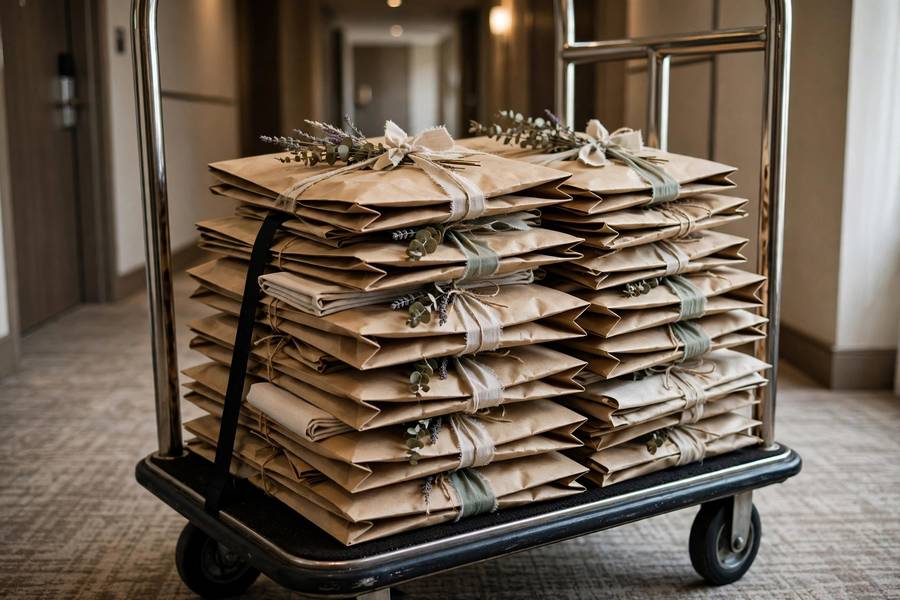
Assembly: production line 1–2 weeks before (bridesmaids + wine + assembly line = actually fun). Storage: bags take shocking amounts of space — confirm with your hotel. Delivery: hotels charge $3–8 per bag for front-desk delivery; handing out at the rehearsal dinner or welcome party is free and more personal. Timing: bags should be waiting at check-in or at the first group event.
Pro tips: don’t overfill (6–8 thoughtful items beats 15 cluttered ones), label bags with guest names (prevents mix-ups, feels personal), and keep a few extras (for surprise plus-ones and forgotten guests).
Destination Wedding Bags
Destination bags work harder — guests traveled far, and the bag is their survival kit. Add: extra water, aloe/sunscreen, insect repellent, a detailed local guide, and currency/exchange tips if international. Budget $20–35 per bag for destination — the gesture matters more when guests invested heavily to be there.
For the complete guide, see wedding welcome bag ideas.
Welcome Bags for Kids
Don’t forget the littlest guests — a kid bag makes parents’ weekends dramatically easier:
What to include: coloring books + crayons ($3), a small toy or puzzle ($5), kid-friendly snacks (goldfish, fruit snacks, juice boxes — $5), a nightlight ($4 — hotel rooms are dark and unfamiliar), and a note (“We’re so glad you’re here!”). Total: ~$15–20 per kid.
Why it matters: parents at weddings are stressed — keeping kids happy in an unfamiliar hotel while attending wedding events is genuinely hard. A kid bag buys them 30 minutes of peace, which buys YOU happy, present adult guests. It’s hospitality with compound returns.
Age matters: toddlers need simple (crayons, soft toys, snacks). Kids 5–10 like activities (puzzle books, card games, LEGO minifigures). Teens appreciate being treated like adults (give them the regular bag + a gift card). Ask parents: “Any allergies or things to avoid?” — a quick text prevents problems. And label kid bags clearly (they look different from adult bags — use a different color tote).
Welcome Bag Presentation: Making It Beautiful
The bag itself is part of the gift:
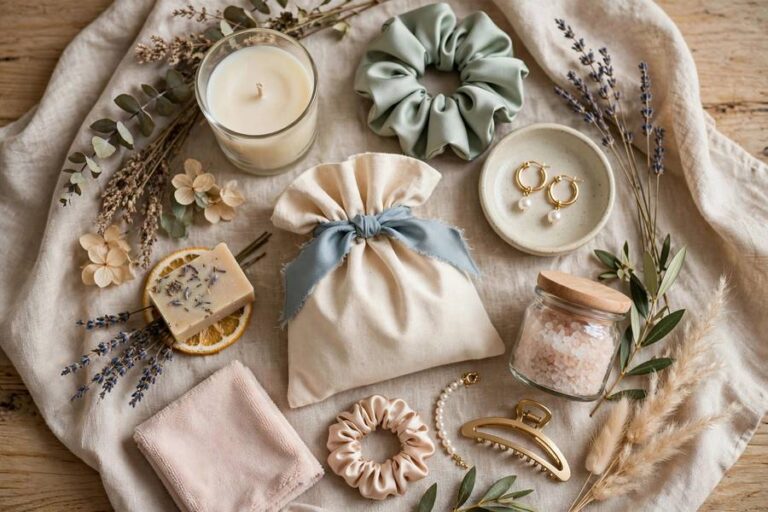
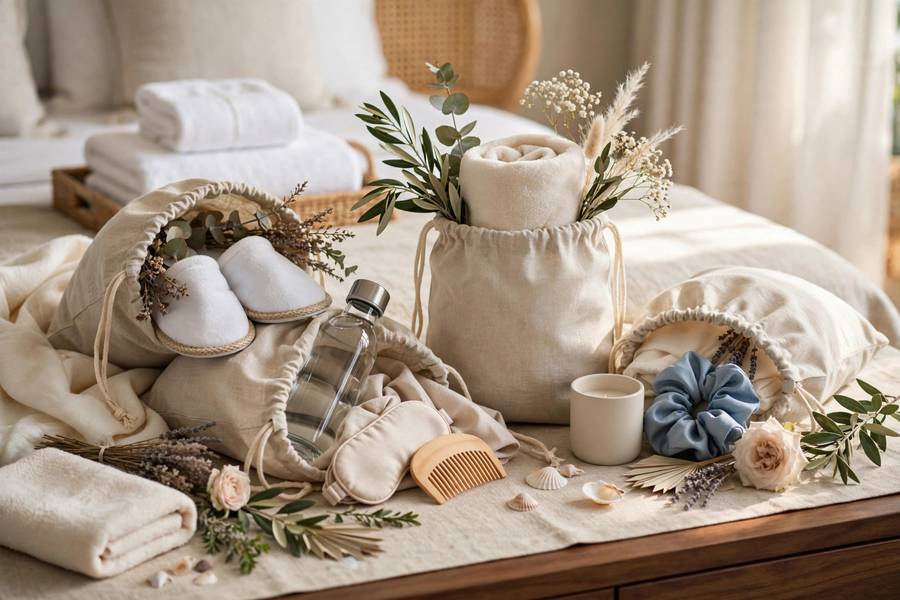
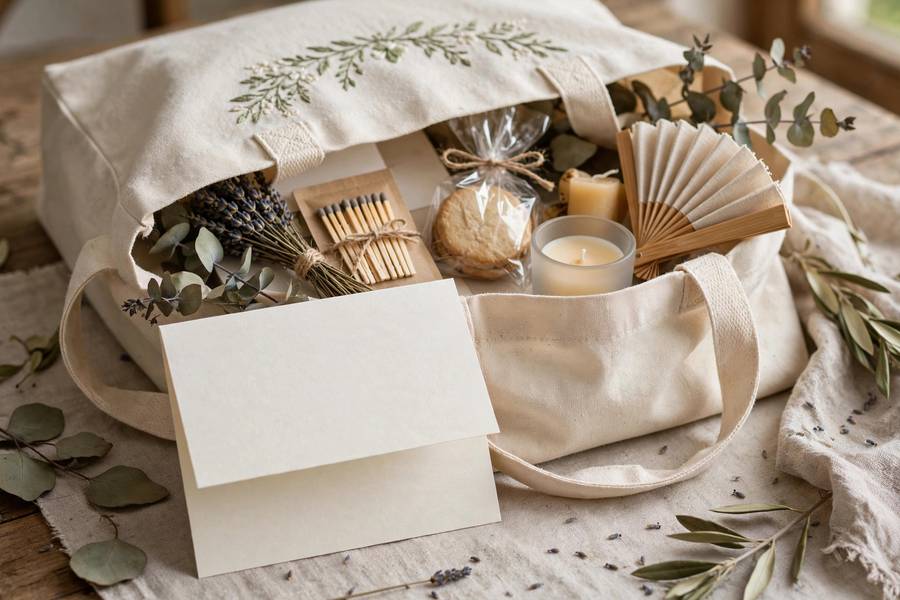
The container: canvas totes ($3–5 in bulk) are the standard — reusable, sturdy, customizable. Paper gift bags ($1–2) work for budget. Boxes ($4–6) feel premium. Avoid: plastic bags (cheap-looking, wasteful). Personalization: a custom stamp or sticker with your names/date ($0.30 each) transforms a plain tote. Handwritten name tags (not printed — handwritten feels personal). Tissue paper in your wedding colors.
Arrangement: heaviest items on the bottom, tissue paper on top, note card visible (it’s the first thing they should see). Don’t overstuff — a bag bursting at the seams feels chaotic, not generous. The note: on top, handwritten, visible immediately. “We’re so glad you’re here! Here’s a little survival kit for the weekend. Love, [names].” It’s the first impression — make it warm.
Delivery presentation: if the hotel delivers, the bags should look good sitting on the bed (that’s where guests find them). If you hand them out, present them with a smile and a “we’re so glad you came!” The handoff is part of the hospitality. Photograph them before delivery — you’ll want to remember, and the photos are great for thank-you notes.
Key Takeaways
Cover the five categories: snacks, drinks, practical items, information, and something personal. Water is non-negotiable. Two bottles per bag — guests arrive dehydrated. Pain relievers are the #1 used item. Pack them generously. The handwritten note matters most. It’s the item guests keep; everything else gets used or recycled. Don’t overfill. 6–8 thoughtful items beat 15 cluttered ones. Edit ruthlessly — if they won’t use it this weekend, cut it.
Water (2 bottles), snacks (salty + sweet), pain relievers, mints, a phone charger, an itinerary card, local recommendations, and a handwritten note. Practical items beat decorative ones — guests remember who saved them with Advil at midnight, not who gave the cutest cookie.
$8–12 budget, $15–25 mid-range, $30–50 splurge. $15 thoughtful beats $40 generic — personalization (handwritten note, local guide) matters more than price. For destination weddings, budget $20–35 since guests invested more to attend.
Hotels charge $3–8 per bag for front-desk delivery. Handing them out at the rehearsal dinner or welcome party is free and more personal. Confirm storage with the hotel — bags take up surprising space.
Hashtag merch, cheap trinkets, scented items (allergies), full-size products (guests must pack them home), perishables without a plan, and alcohol without checking hotel policy. Test every item: ‘Will they use this this weekend?’
1–2 weeks before the wedding — production line with bridesmaids. Order custom items 2–3 months out (they have lead times). Buy perishables the week of. Never assemble the night before; you’ll be exhausted.
Same structure, but add sun protection, insect repellent, extra water, a detailed local guide, and currency tips if international. Start 3–4 months out — shipping to the destination takes time.