How to Plan a Destination Wedding: The Complete Guide

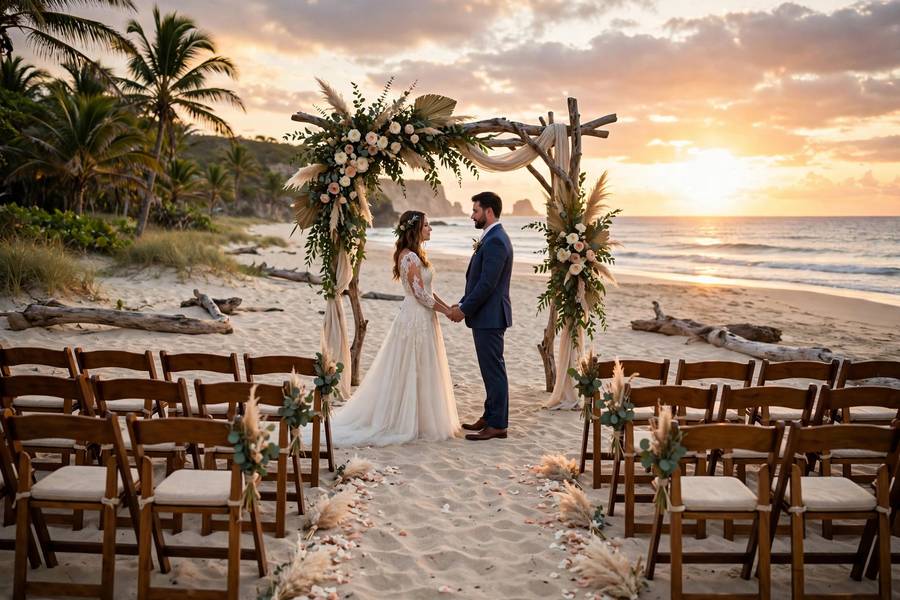
A destination wedding — marrying somewhere that requires travel — is equal parts dream vacation and logistical puzzle. I’ve planned them on beaches, in vineyards, on mountaintops, and in foreign cities. Here’s everything you need to know: the decisions, the timeline, the costs, and the mistakes to avoid.
Is a Destination Wedding Right for You?
Choose destination if: you want an intimate wedding (guest lists naturally shrink), you love travel, your families are spread out anyway (everyone travels regardless), or you want the wedding + honeymoon combined. Think twice if: elderly or ill loved ones can’t travel, your must-have guests can’t afford it, or you want a big traditional wedding with everyone present.
The honest truth: destination weddings are somewhat selfish — you’re asking people to spend $1,000–2,500 to attend your wedding. That’s OK! But own it: keep the guest list to people who’d genuinely enjoy the trip, never guilt anyone who declines, and host generously once they’re there.
Choosing Your Destination
Consider: travel ease (direct flights matter — every connection loses guests), cost for guests (a $300/night resort vs $150 changes attendance), weather (research hurricane/rainy seasons — don’t gamble), activities (guests need things to do beyond the wedding), and meaning (somewhere special to you beats somewhere merely pretty).
Popular tiers: Mexico/Caribbean (affordable, easy, all-inclusive), Hawaii (domestic, stunning, pricier), Europe (romantic, complex logistics), national parks/mountains (adventurous, weather-dependent). Visit first if possible — photos lie, and you’ll make better decisions standing in the actual space.

The Budget Reality
For the COUPLE, destination weddings are often cheaper: resort packages ($5,000–15,000) frequently include venue, catering, coordination, and decor — compare to $25,000–40,000 for a traditional wedding. But factor in: site visit trips, shipping decor, vendor travel (if bringing your own photographer), welcome events, and activities you host.
Budget rule: the couple’s costs go down, guests’ costs go up. Acknowledge this by hosting generously on-site: welcome party, group excursion, farewell brunch. Since guests paid to come, the least you can do is feed them well while they’re there.
Legal Requirements
Marriage laws vary wildly by destination: Mexico: blood tests and 2–4 day residency in most states — many couples marry legally at home first. Hawaii: simple — license online, no residency. Italy/France: bureaucratic — documents, translations, timing; most do the legal part at home. Caribbean: generally easy, 24–48 hour residency common.
The pro move: legal ceremony at home (courthouse, 20 minutes, $50), symbolic ceremony at the destination. You get the dream wedding without the foreign paperwork nightmare. For more on intimate options, see how to elope.
Guest Logistics
Give 8–12 months notice (save-the-dates are mandatory for destination weddings). Negotiate a room block with real discounts — 10–20 rooms minimum for leverage. Create a wedding website with: travel info, what to pack, local customs, the full weekend schedule, and FAQs. Arrange group transfers from the airport — guests arriving in a strange place need guidance.
Welcome bags are essential for destination weddings (not optional) — see our guide on wedding welcome bag ideas. Include: water, snacks, sunscreen, local guide, and the itinerary. Your guests are your responsibility once they land.

Vendors: Local vs Bring Your Own
Use local vendors for: venue, catering, flowers, music, coordination — they know the area, have backup plans for local weather, and don’t charge travel fees. Consider bringing: photographer/videographer (the most important vendor — if you have someone you trust, pay their travel), and sometimes hair/makeup (if you have specific needs).
Finding local vendors: your venue’s preferred list (vetted), destination wedding planners (worth every penny for complex locations), and recent reviews from other destination couples. Always video-call before booking — you need to trust people you may not meet until the wedding week.
The Planning Timeline
12+ months: choose destination, visit if possible, book venue/resort, send save-the-dates. 9–10 months: book key vendors (photographer, planner), launch wedding website, reserve room block. 6–8 months: book remaining vendors, plan guest activities, order invitations. 3–4 months: final payments, confirm guest count, plan welcome bags. 1 month: confirm all vendors, pack, arrive 2–3 days early.
Arrive early. Non-negotiable — 2–3 days minimum. You need buffer for travel delays, a venue walkthrough, vendor meetings, and decompressing before the wedding. The couples who arrive the day before are stressed; the ones who arrive early are radiant.
Common Mistakes
Choosing hurricane season to save money. Your guests’ ruined vacation isn’t worth the discount. Not visiting first. Photos lie. Skimping on the planner. A local planner is the highest-ROI hire for destination weddings. Forgetting guest comfort. Shade, water, fans, bug spray — destination details matter. Over-scheduling. Guests need downtime; don’t plan every minute. Ignoring the legal stuff. Research marriage requirements 12 months out, not 2.
For the basics, start with what is a destination wedding.
The Welcome Week: Hosting Beyond the Wedding Day
Destination weddings aren’t one day — they’re a week. Plan the arc:
Guests arrive (2–3 days before): welcome bags at check-in, a casual meetup (beach bar, hotel lobby drinks — no host required, just a time and place). Let people decompress from travel. Day before: group activity (catamaran, wine tasting, hiking — optional, not mandatory). Rehearsal dinner (intimate — wedding party + family). Wedding day: the main event. Keep the morning relaxed; guests are on vacation.
Day after: farewell brunch (the loveliest goodbye — host it, it’s worth it). Guests depart over the next 1–2 days. What to host vs suggest: HOST the welcome event, wedding, and farewell brunch (these are your responsibility). SUGGEST activities for free time (a list, not a schedule). Guests need downtime — don’t program every minute.
The budget reality: hosting 3 events for 50 people adds $3,000–8,000. Factor it in from the start — it’s not optional if you’re doing destination well. The couples who host generously have guests who’d travel again; the ones who don’t… don’t get a second chance to fix it.
Travel Tips for Destination Wedding Guests
Put this on your wedding website — your guests will thank you:
Booking flights: book 3–6 months out for the best prices. Tuesday/Wednesday flights are cheapest. Consider travel insurance (especially for international). Passports: check expiration NOW (many countries require 6+ months validity). Renewal takes 8–12 weeks — don’t wait.
What to pack: wedding attire (in carry-on, never checked — lost luggage shouldn’t ruin the wedding), sun protection, comfortable shoes (for exploring), layers (even tropical destinations get cool at night), and any medications (pharmacies abroad differ).
Money: notify your bank of travel (avoid frozen cards), carry some local currency (not everywhere takes cards), know the tipping customs (they vary enormously). Health: check if vaccinations are recommended, bring prescriptions in original bottles, know the local emergency number (it’s not 911 everywhere).
The golden rule for guests: arrive 2 days early (buffer for delays, time to decompress). Nothing is worse than landing the morning of the wedding — stressed, tired, and rushed. The wedding is a vacation too — treat it like one.
Key Takeaways
Give 8–12 months notice. Save-the-dates are mandatory — guests need time to save and plan. Visit first if possible. Photos lie; standing in the space tells the truth. Hire a local planner. Highest-ROI hire for destination weddings — they know what you can’t know remotely. Handle the legal simply. Courthouse at home + symbolic ceremony abroad = zero paperwork nightmares. Host generously on-site. Guests paid $1,000+ to come — welcome party, activities, and great food are your thank-you.

12+ months ideally. Send save-the-dates 10–12 months out — guests need time to save, plan time off, and book travel. Book your venue as early as possible; popular resorts fill up fast for wedding dates.
For the couple, often yes — resort packages ($5,000–15,000) vs traditional weddings ($25,000–40,000). But guests pay $1,000–2,500 each to attend. Ethically, host generously on-site (welcome party, activities, farewell brunch) since they invested heavily to be there.
Strongly recommended. Photos lie, and you’ll make better decisions standing in the actual space. At minimum, arrive 2–3 days before the wedding for walkthroughs, vendor meetings, and decompressing.
Research 12 months out — requirements vary wildly (Mexico needs blood tests; Italy needs documents and translations). The pro move: legal ceremony at home (courthouse, $50), symbolic ceremony at the destination. No foreign paperwork nightmare.
Yes — it’s the highest-ROI hire for destination weddings. They know local vendors, weather backup plans, permit requirements, and logistics you’d never anticipate remotely. Your venue’s coordinator is not enough.
Advance notice (8–12 months), a real room block discount, a detailed wedding website (travel, packing, customs, schedule), group airport transfers, and welcome bags with water, snacks, and local info.