Wedding Dress Appointment Tips: Make Every Visit Count

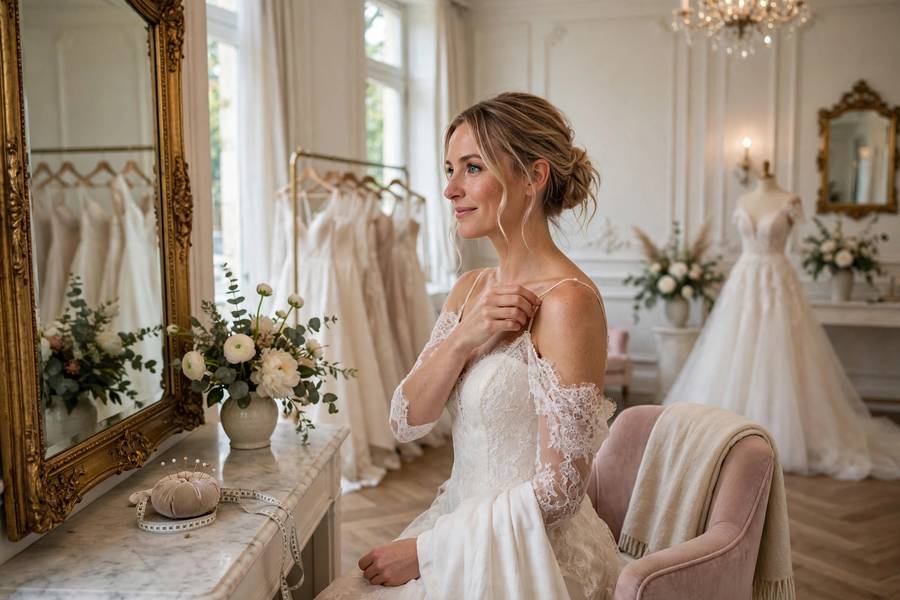
A wedding dress appointment is a very specific kind of experience — part shopping, part therapy, part performance. Knowing how they work transforms the experience from overwhelming to wonderful. Here’s everything: booking, preparing, what happens inside, and how to walk out with clarity (and maybe a dress).
Booking Your Appointments
Book 2–4 weeks ahead for regular salons, 4–6 for popular ones (weekends book up). Ask about: appointment length (typically 60–90 minutes), how many dresses you can try (usually 5–10), whether there’s a fee (some high-end salons charge $25–100, often credited toward purchase), and their size range (do they carry plus samples? petite?).
Book weekday mornings if possible — quieter, more relaxed, your consultant isn’t rushed from the previous appointment. Saturday afternoons are the most chaotic; you’ll feel the difference.
For choosing your dress style, see how to choose a wedding dress — and for the boutique experience, how to choose a wedding dress (salon guide).
How Appointments Work
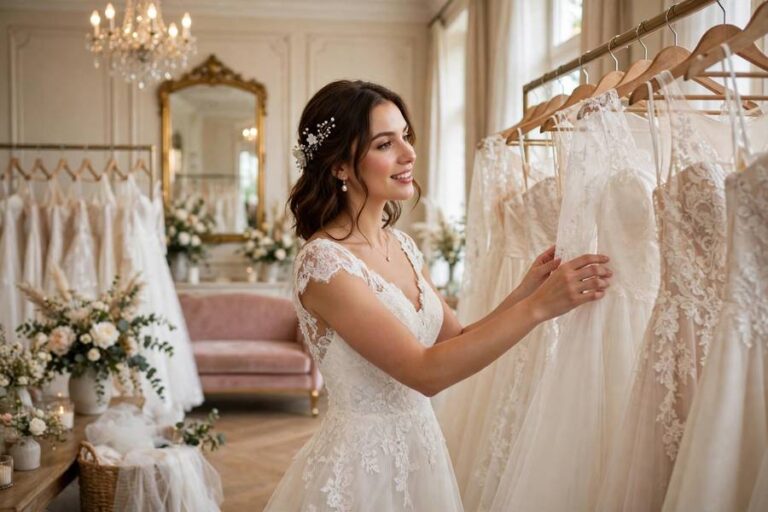
Typical flow: consultation (10–15 min — budget, vision, wedding details) → consultant pulls dresses (they’ll select based on your input + their expertise) → trying on (45–60 min — consultant helps you in/out, clips for fit) → review (photos, discussion, pricing) → next steps (sleep on it, or say yes).
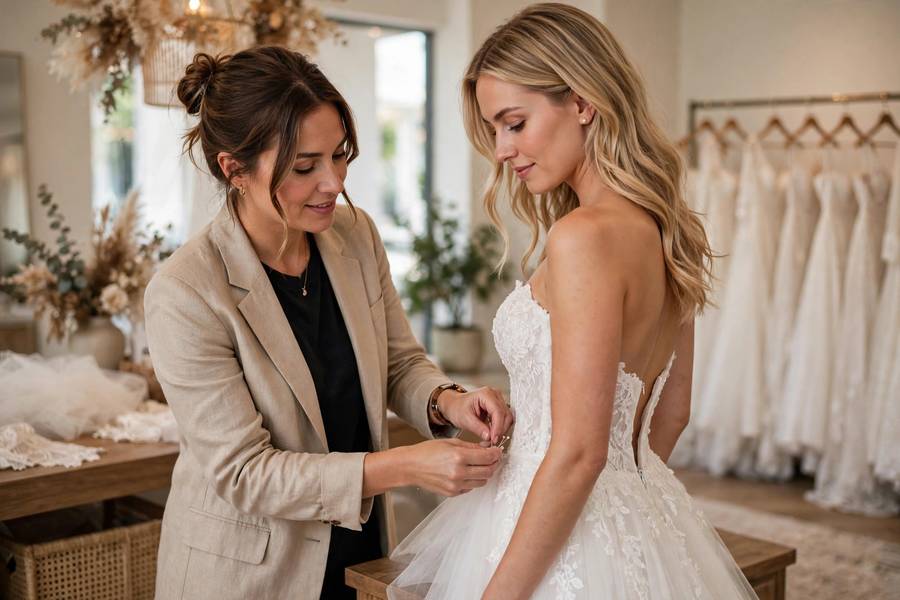
What surprises brides: the consultant dresses/undresses you (it’s normal — they’re professionals), sample sizes are often 10–12 (they’ll clip larger; smaller brides see the shape via clipping), and you’ll be in your underwear more than expected (wear good nude seamless).
Questions to Ask
About the dress: “What size would I order?” (bridal sizing runs 1–2 sizes small). “How long is production?” “What customization is possible?” “What does it look like bustled?” About the salon: “Do you do alterations in-house?” “What’s the price range of your alterations?” “What’s your cancellation policy?” “Do you offer trunk shows?” (10–15% discounts + wider selection).
About timing: “When would this arrive?” “What’s the rush cutoff?” “When should I schedule alterations?” Write down the answers — after 3 salons, they blur together.
Trying On: The Process
Start with variety: try one of each silhouette early — it calibrates your eye. Give every dress 2 minutes: walk, sit, look at the back, check the movement. First impressions lie; the dress that looked “meh” on the hanger might transform on your body. Narrow to 2–3 favorites and re-try them back-to-back — comparison clarifies.
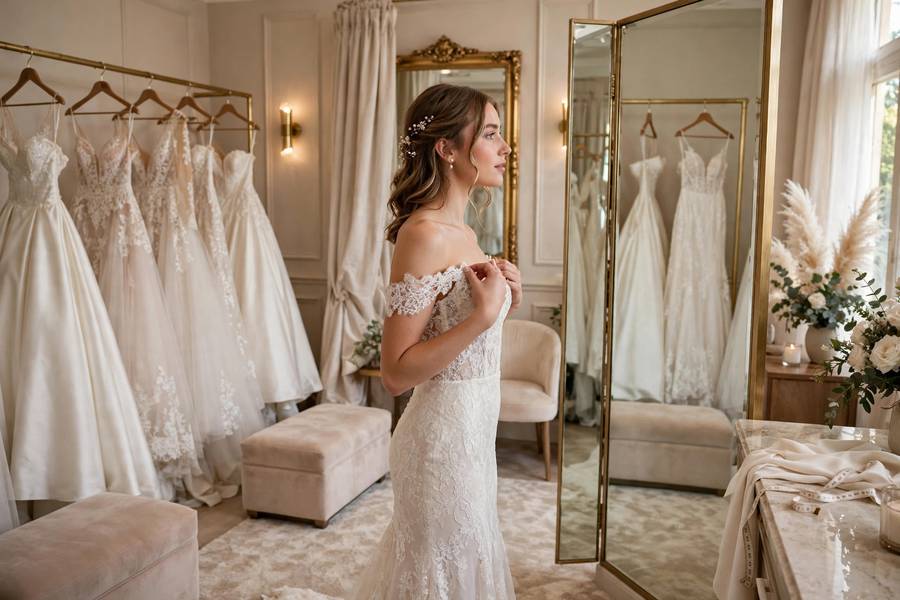
The photo trick: photograph each finalist (front, back, side), then look at the photos — not the mirror. Photos show what the camera (and guests) see; mirrors show what anxiety sees. Brides are consistently surprised by how different photos look from mirror impressions.
Working With Your Consultant
Be honest: about budget (real numbers), about what you hate (don’t be polite — “I hate this, here’s why” helps them), about your wedding (venue, vibe, formality). Trust their expertise: consultants do this daily — when they say “just try it,” try it. But stay in charge: it’s your dress. “No” is a complete sentence.
The best consultant relationships feel collaborative, not salesy. If you feel pressured, rushed, or judged — that’s a salon problem, not a you problem. Leave. There are other salons.
Appointment Red Flags
Walk out if: they won’t tell you prices upfront, they pressure you to decide TODAY (real “today only” deals are rare; manufactured urgency is common), they disparage your budget, they won’t let you photograph (some high-end salons restrict — but it shouldn’t feel secretive), or the samples are in terrible condition (it reflects how they treat inventory — and will treat your order).
Green flags: they listen more than they talk, they respect your budget without comment, they explain sizing honestly, they encourage you to sleep on decisions, and the salon feels calm and clean.
After the Appointment
Same day: review photos, note your favorites (salon, designer, style number, price), jot how each made you FEEL. Within a week: compare across salons, narrow to top 3, schedule follow-ups for finalists. Don’t: visit 10 salons (paralysis), decide under pressure (regret), or keep shopping after buying (torture).
For your wedding morning prep, our wedding day emergency kit checklist has you covered.
Virtual Appointments
Many salons now offer virtual consultations — great for initial research, trying to narrow styles, or when salons are far away. What works virtually: discussing vision, seeing dresses on models, understanding pricing and timelines. What doesn’t: judging fit, fabric feel, or how a dress moves. Use virtual for research; in-person for decisions.
Try-on-at-home services (like Azazie) bridge the gap — real dresses shipped to you. It’s not the boutique experience, but for budget-conscious or remote brides, it’s genuinely useful. Just remember: at-home try-ons don’t include a consultant’s eye, so bring a honest friend.
The Entourage Question: Who to Bring
Who you bring shapes the experience. Choose carefully:
The ideal crew (2–4 people): your mom (if you’re close and she respects your vision), your maid of honor / best friend (honest, supportive), and maybe one more trusted voice (sister, future mother-in-law if the relationship is good). Who NOT to bring: anyone who cries at everything (unhelpful), anyone with a strong agenda (their dream ≠ yours), anyone negative about weddings or your choices, or a large group (6+ opinions = paralysis).
Set expectations upfront: “I’m looking for honest feedback on FIT, but the final decision is mine.” Say it kindly, say it clearly, say it BEFORE the appointment (not after someone oversteps). Consider one solo trip: just you, no audience. Many brides have their clearest moment alone — without performing for an audience, you hear your own voice. Then bring the crew to the second appointment for celebration.
Handling disagreements: when your mom loves the ballgown and you love the sheath — thank her, acknowledge her taste, and choose yours. “I love that you love it — but this feels like me.” It’s your dress. The people who love you will come around when they see you happy in it.
What to Wear to Appointments
What you wear affects what you see:
Undergarments: nude, seamless, strapless bra (or the closest you have). The dress is the star — your underwear shouldn’t distract. Avoid: bright colors (show through), lace with texture (creates lines), and sports bras (wrong shape). Shoes: bring your wedding shoes (or the same height). Heel height changes everything — hem, posture, how the dress falls. If you haven’t bought shoes, bring your best guess and note the height.
Hair and makeup: light makeup, hair half-done (enough to see the full picture, not so done you can’t imagine alternatives). Avoid: heavy makeup (distracts from the dress), elaborate hairstyles (you’ll want to try different looks). What NOT to wear: complicated outfits (you’ll change 10 times — wear easy on/off clothes), strong perfume (salons are small spaces), or fake tan (it transfers to samples — and salons notice).
Bring: inspiration photos (on your phone, organized), a water bottle and snack (appointments are long), and an open mind. The golden rule: dress for the appointment like you’re already a bride — comfortable, simple, ready to transform. The less time you spend wrestling with your own clothes, the more time for dresses.
Key Takeaways
Book 2–4 weeks ahead. Weekday mornings are calmest; Saturday afternoons are chaos. Bring the essentials. Nude undergarments, wedding shoes (or same height), inspiration photos, snacks. Be honest with your consultant. Real budget, real dislikes, real wedding details — specificity gets you the right dresses. Photograph finalists. Front, back, side — review at home without pressure. Watch for red flags. Hidden prices, pressure tactics, budget-shaming — walk out. Good salons listen, respect, and never rush.
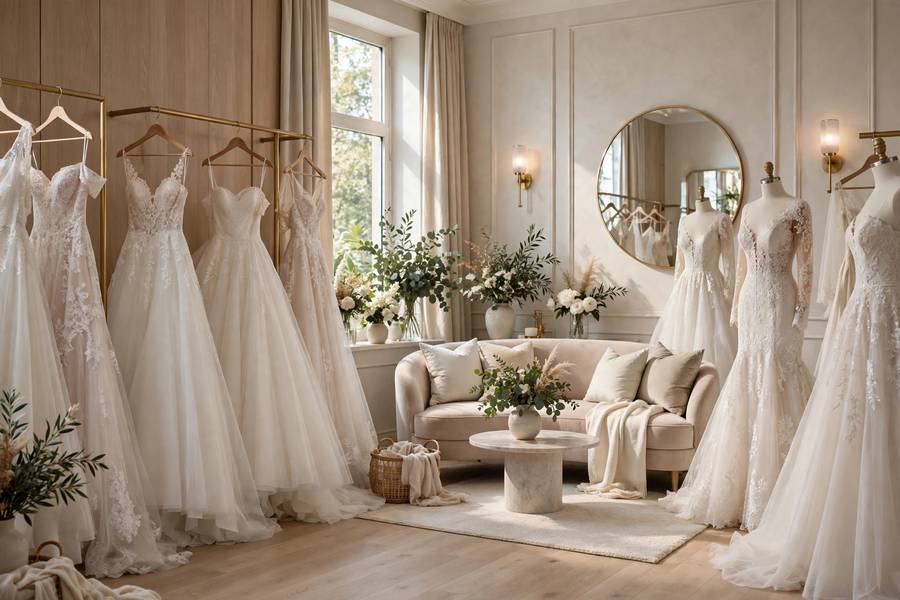
Typically 60–90 minutes: 10–15 min consultation, 45–60 min trying on (5–10 dresses), then review and pricing. Book weekday mornings for the most relaxed experience — Saturday afternoons are chaotic.
At most salons, yes — book 2–4 weeks ahead (4–6 for popular weekend slots). Some high-end salons charge a fee ($25–100), often credited toward purchase. Walk-ins are rarely accommodated.
5–10 per appointment is typical. Start with variety (one of each silhouette to calibrate your eye), then narrow to 2–3 favorites for back-to-back comparison. Quality of trying-on beats quantity.
What size would I order (bridal runs 1–2 sizes small)? Production timeline? Customization options? Alteration costs? Cancellation policy? When to schedule fittings? Write down answers — they blur across salons.
Usually yes — ask permission first. Photograph finalists (front, back, side) and review at home without pressure. Photos show what the camera (and guests) see; mirrors show what anxiety sees.
Hidden prices, high-pressure ‘decide today’ tactics, budget-shaming, banning photos secretively, or trashed samples. Good salons listen more than they talk, respect budgets without comment, and encourage sleeping on decisions.