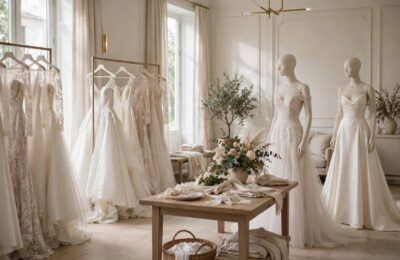
The dress appointment is supposed to be magical. For a lot of brides, it’s… not. It’s overwhelming boutiques, pushy consultants, dresses that cost triple the budget, and the creeping feeling that everyone else just knew.
Here’s what I tell every bride: choosing a dress is a decision process, not a lightning bolt. Follow the process and you’ll find your dress — maybe with tears, maybe without, but with confidence either way.
Table of Contents
- When to Start (The Timeline)
- Set the Budget First
- Know Your Silhouettes
- Fabric Matters More Than You Think
- The Appointment Strategy
- How You’ll Know
- Alterations: The Real Magic
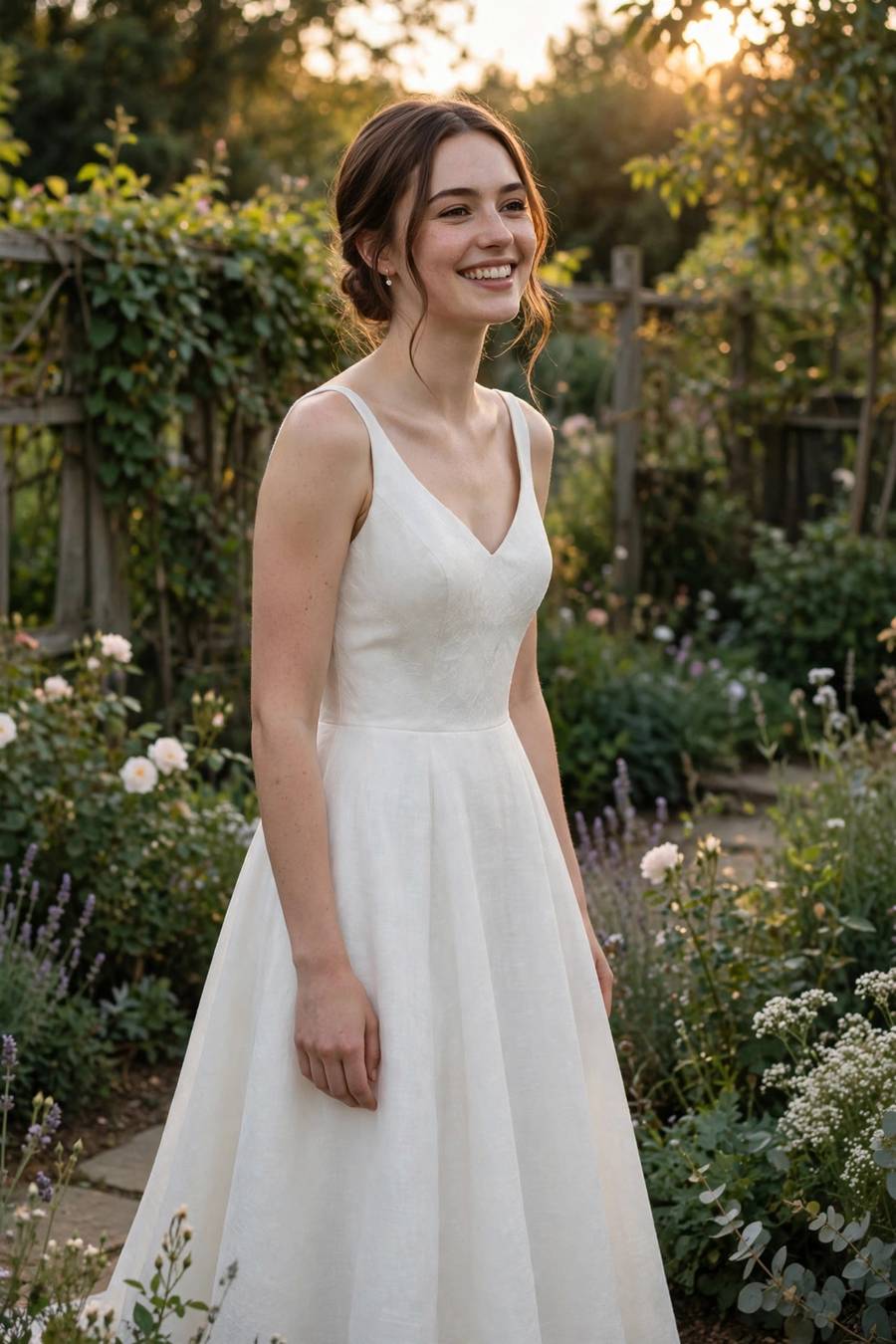
When to Start (The Timeline)
8–10 months out: Start shopping. Designer and made-to-order dresses take 6–8 months for production plus 2–3 months for alterations. This isn’t a sales tactic — it’s the supply chain.
6 months out: You should be deciding. Rush orders exist but cost extra and limit options.
3–4 months out: First fitting. 6–8 weeks out: Second fitting. 2 weeks out: Final fitting and pickup.
Short engagement? Off-the-rack boutiques, sample sales, and made-to-measure services (which run 8–12 weeks) are your friends. Plenty of stunning options exist outside the traditional order cycle.
Set the Budget First
Decide your number before the first appointment, and tell the consultant. This isn’t negotiable with yourself — trying on a $6,000 dress with a $2,000 budget is how disappointment happens.
Remember the total cost, not just the sticker: – Dress price – Alterations ($300–800 typical, more for complex work) – Veil, shoes, undergarments, jewelry – Preservation/cleaning after
A $1,500 dress with $600 in alterations is a $2,100 dress. Budget for the whole picture.
Know Your Silhouettes
Walk in knowing the vocabulary — it makes every appointment ten times more productive.
- A-line: Fitted bodice, skirt flares gently from the waist. The most universally flattering silhouette; works on nearly every body and every venue.
- Ball gown: Fitted bodice, full dramatic skirt. The princess dress. Magnificent, but consider: sitting, dancing, bathrooms, and getting through doorways.
- Mermaid/trumpet: Fitted through hips and thighs, flares at or below the knee. Dramatic and glamorous; restricts movement most.
- Sheath/column: Straight, narrow, follows the body’s line. Minimalist and elegant; best on tall or petite frames.
- Empire waist: High waistline just under the bust, flowing skirt. Comfortable, romantic, forgiving.
- Tea-length: Hem hits mid-calf. Vintage, fun, shows off shoes — great for casual or retro weddings.
My advice: Try on at least one of each, including the one you think you’ll hate. Brides are wrong about their silhouette roughly half the time — the dress you dismissed online is often the one that works in person. Keep an open mind for the first hour.
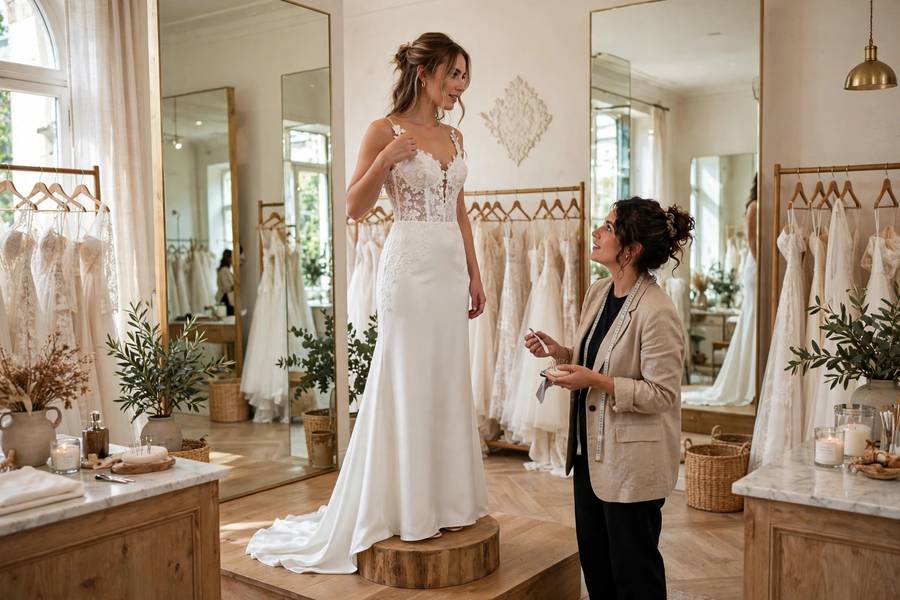
Fabric Matters More Than You Think
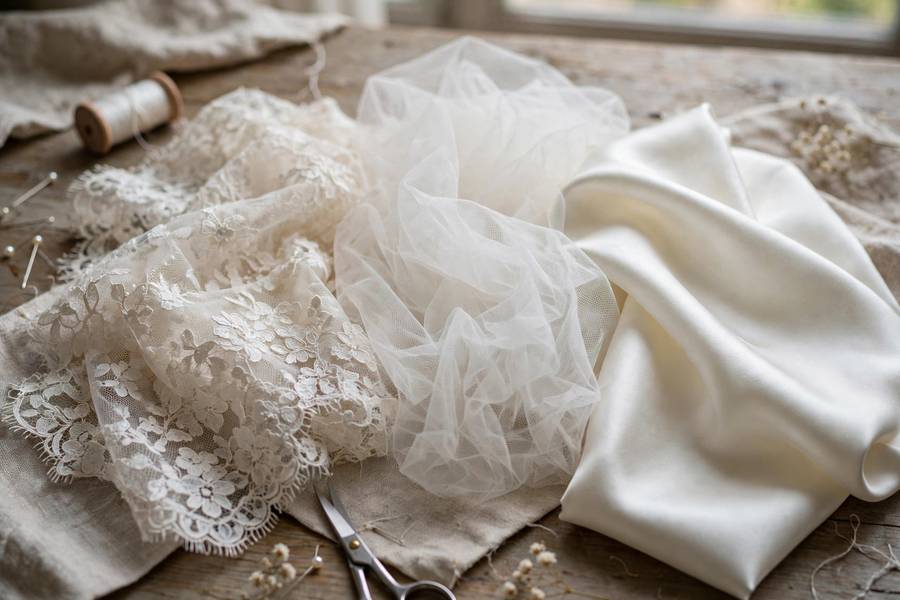
Fabric determines how a dress moves, photographs, and feels after eight hours:
- Satin: Smooth, structured, formal. Shows every wrinkle and curve — tailoring must be perfect.
- Lace: Romantic and timeless. Quality varies enormously — examine it up close.
- Tulle: Light, airy, ethereal. Great for overlays and skirts; can look cheap in low quality.
- Chiffon: Flowy and beach-friendly. Wrinkle-resistant and comfortable.
- Crepe: Modern, clean-lined, slightly stretchy. The minimalist’s fabric — but unforgiving of poor fit.
- Organza: Crisp and structured with more body than tulle. Good for architectural shapes.
Consider your venue and season. Heavy satin ball gown on a beach in July is a mistake you’ll feel by the ceremony’s midpoint. Chiffon sheath for a winter cathedral can work with the right wrap — but plan for it.
The Appointment Strategy
Book smart: Weekday mornings are quietest. Limit yourself to 2–3 appointments per day — dress fatigue is real, and everything blurs after hour four.
Bring the right people: One to three trusted opinions. More than that and you’re managing a committee. Bring someone honest, not someone who loves everything.
Bring the right things: The undergarments and shoes (or similar heel height) you plan to wear. Hair roughly how you’ll wear it. Photos of styles you like and dislike.
Communicate with the consultant: Budget first, then venue, then what you think you want — plus permission to surprise you. A good consultant reads bodies and pulls things you’d never choose. Let them.
The questions to ask: – Is this sample, made-to-order, or off-the-rack? – What’s the production timeline? Rush options and costs? – What’s included in alterations, and who does them? – What’s the cancellation/return policy? – Can I photograph it? (Some boutiques prohibit photos.) – What undergarments work with this dress? (Strapless, backless, and low-back styles each need their own solution — decide before the fitting, not during.)
Between appointments: Don’t buy on the first trip unless you’re certain — but don’t wait weeks either. The sweet spot is sleeping on it one night, then deciding. And keep notes on your phone after each appointment: dress name/designer, price, what you liked. After five boutiques, they all blur together without notes. Photos help too (where the boutique allows them) — but remember that phone photos in harsh boutique lighting never do a dress justice, so note how it felt as well as how it looked. Comfort over hours matters as much as the mirror moment.
How You’ll Know
Forget the movie moment. Here’s how brides actually know:
- You don’t want to take it off.
- You keep coming back to it after trying others.
- You can picture the whole day in it — not just the mirror moment.
- You feel like yourself, elevated — not like a costume.
And if you don’t get a lightning bolt? That’s normal. Most brides choose by elimination and logic, not revelation. “This is the best one I’ve tried and I feel great in it” is a perfectly good reason to say yes.
Sleep on it if you’re unsure — but not for weeks. Give yourself 48 hours, then decide. Endless second-guessing after saying yes is the real enemy; once you’ve decided, stop shopping. Unfollow the dress accounts. You’re done.
Alterations: The Real Magic
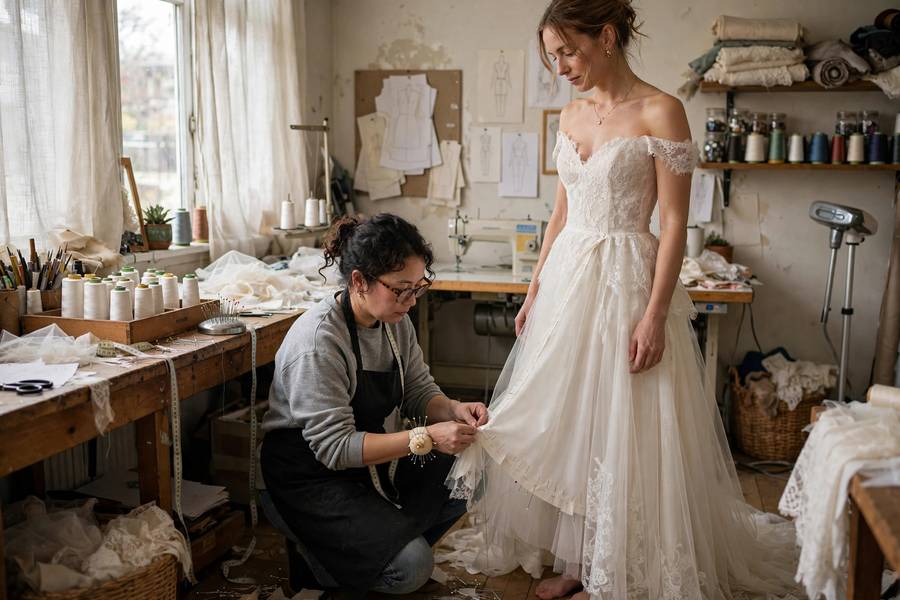
Here’s the industry secret: the alterations matter as much as the dress. A $800 dress with $500 of expert alterations will look better than a $3,000 dress with a bad fit. Budget for alterations from the start and choose your seamstress carefully.
What good alterations do: take in/let out the bodice, hem to your exact shoe height, add a bustle (essential — decide the bustle style at the first fitting), adjust straps and neckline.
The bustle question: If your dress has a train, you need a bustle plan for the reception. Discuss styles (American, French, ballroom) at the first fitting — it affects the dress’s back design.
Final fitting checklist: Sit down, walk, raise your arms, dance a little. If anything pinches, pulls, or requires constant adjustment, speak up now. On the wedding day, pack a small sewing kit in your emergency kit — loose buttons happen.
The dress is one decision in a long planning journey, but it’s the one you’ll see in every photo for the rest of your life. Give it the process it deserves — budget, timeline, open mind, good alterations — and you’ll walk down the aisle feeling exactly right. Which is the whole point.
Once the dress is sorted, the logistics keep rolling: our wedding seating chart ideas will save you from the table-plan headache later.
Frequently Asked Questions
Start 8-10 months before the wedding. Made-to-order dresses need 6-8 months for production plus 2-3 months for alterations. For short engagements, off-the-rack boutiques, sample sales, and made-to-measure services (8-12 weeks) offer excellent options.
Budget for the total cost, not just the sticker price: dress + alterations ($300-800) + veil, shoes, and undergarments + preservation. Set your number before the first appointment and tell the consultant — trying on dresses far above budget leads to disappointment.
A-line is the most universally flattering — the fitted bodice and gently flaring skirt suit nearly every body type and venue. That said, try every silhouette at least once; brides are often surprised by what works best on them in person versus in photos.
Limit yourself to 2-3 appointments per day — dress fatigue is real and everything blurs after a few hours. Start with a large boutique for variety, then visit smaller shops once you know your silhouette. Bring 1-3 trusted people, not a committee.
Yes — alterations matter as much as the dress itself. A modestly priced dress with expert alterations looks better than an expensive dress with poor fit. Budget $300-800 for alterations and choose your seamstress as carefully as your dress.
That’s completely normal. Most brides choose by elimination and logic rather than revelation — “this is the best one and I feel great in it” is a perfectly valid reason to say yes. Once you’ve decided, stop shopping to avoid second-guessing.