
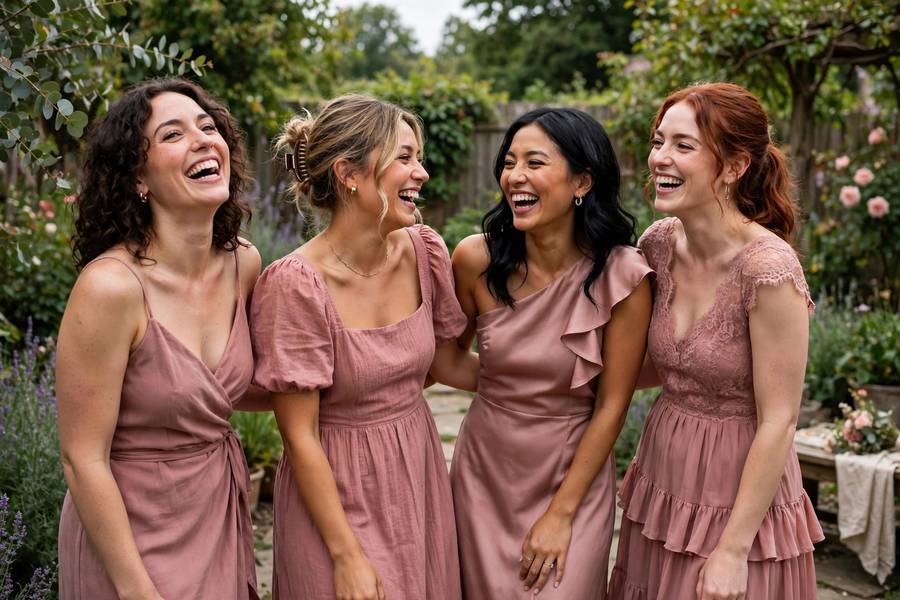
Bridesmaid dresses have ended friendships. I’m only slightly exaggerating. Few wedding tasks combine money, bodies, opinions, and group dynamics as explosively as dressing five (or eight, or twelve) different women in a way that makes everyone feel good.
It doesn’t have to be dramatic. After guiding dozens of bridal parties through this, I’ve learned it’s a diplomacy exercise disguised as a shopping trip. Here’s how to run it.
Table of Contents
- The Golden Rule
- Step 1: Set the Parameters (You Decide These)
- Step 2: Choose the Color and Fabric
- Step 3: Pick the Approach
- Step 4: The Shopping Trip
- Step 5: Ordering and Alterations
- Handling the Hard Conversations
The Golden Rule
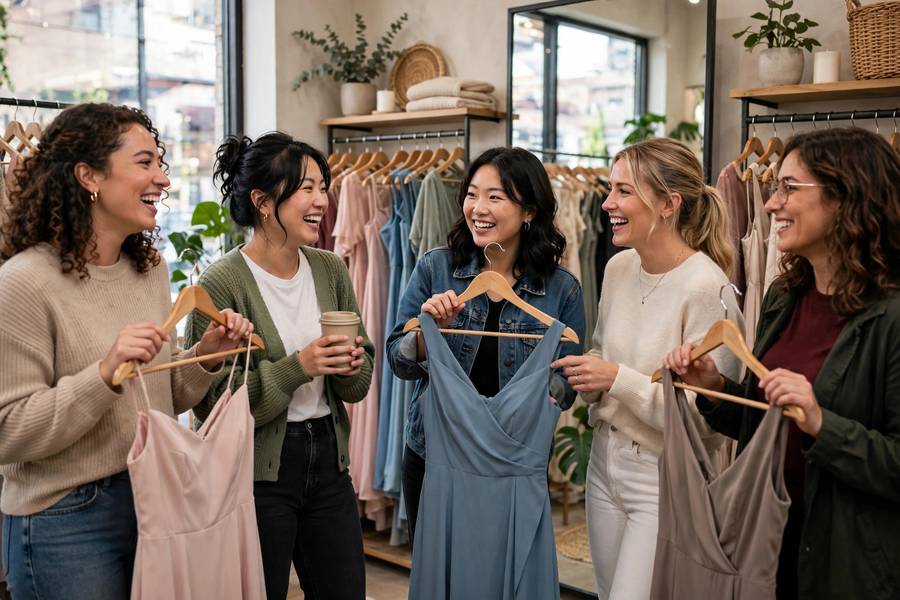
Nobody should hate how they look in your wedding photos. That’s it. That’s the whole philosophy. Your bridesmaids are your favorite people doing you a significant favor — the dresses should make them feel beautiful, not resentful.
Everything below serves that rule. The bride who internalizes it has no drama. The bride who treats bridesmaids as décor has all of it.
Step 1: Set the Parameters (You Decide These)
You decide the non-negotiables; they get freedom within them. Decide and communicate upfront:
- Budget. This is the big one. Set a realistic number ($100–250 is typical; under $150 is considerate) and — critically — stick to it. Nothing poisons the process like a $300 dress sprung on a grad student. If you want expensive dresses, offer to subsidize.
- Color palette. Specific shade(s), not “blue-ish.” Get a swatch.
- Formality level. Floor-length formal? Cocktail? Casual?
- Timeline. When dresses must be ordered and when alterations happen.
Communicate all of this before anyone shops. Surprises are where drama lives.
Step 2: Choose the Color and Fabric
Color: Choose with diverse skin tones in mind. Universally flattering shades: navy, burgundy, forest green, dusty rose, champagne, slate blue. Tricky shades: neon anything, pale yellow (washes out many skin tones), stark white (don’t).
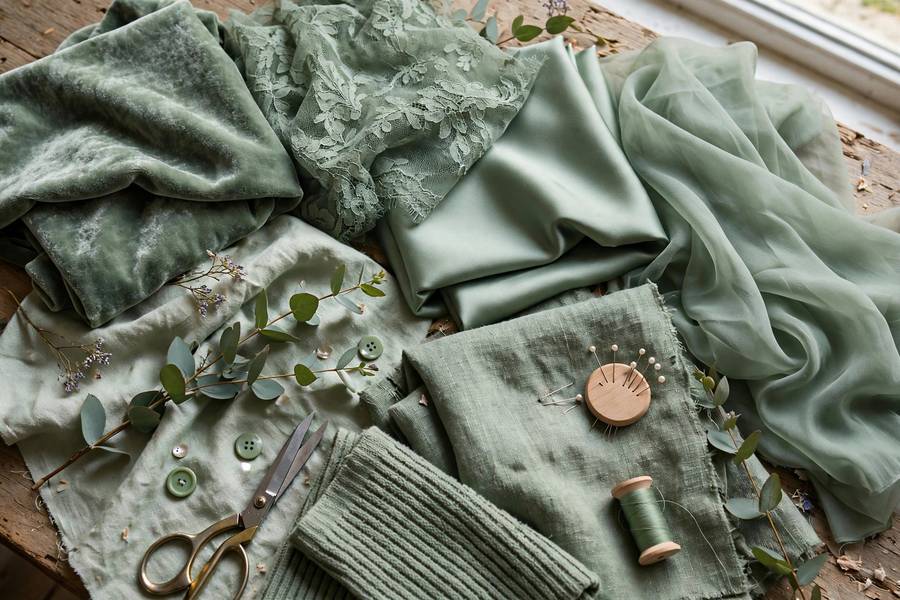
The swatch rule: Don’t choose from a screen. Order fabric swatches and see them in daylight. Screens lie about color — famously, expensively.
Fabric: Everyone in the same fabric photographs more cohesively than mixed fabrics in the same color (chiffon and satin in “dusty rose” can look like different colors). If doing mismatched dresses, keep the fabric consistent.
Season sense: Velvet or heavy satin for winter; chiffon and crepe for summer. Your bridesmaids will thank you when they’re comfortable.
Step 3: Pick the Approach
Three approaches, from most to least controlling:
A. Same dress for all. The traditional route. Works when your party has similar body types and tastes. Simplest to coordinate, riskiest for resentment — one dress flattering five different bodies is a tall order.
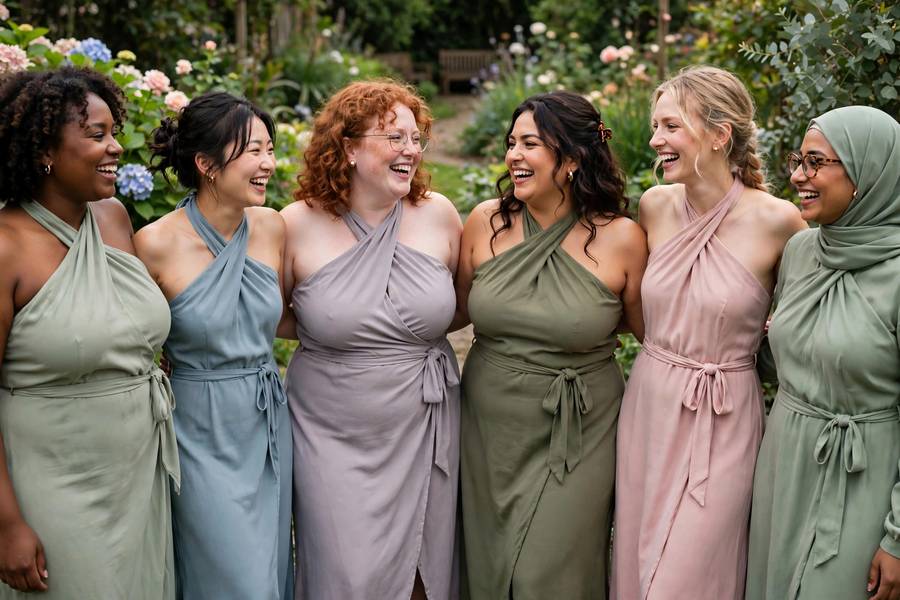
B. Same color/fabric, different styles. The modern sweet spot. You choose the color and fabric; each bridesmaid picks the neckline and silhouette that suits her. Cohesive in photos, comfortable in reality. This is what I recommend to most brides.
C. Mismatched palette. You define a color family (e.g., “jewel tones” or “neutrals”) and each person chooses freely within it. Gorgeous when done well, chaotic when done without guidance — give clear boundaries and approve choices.
My recommendation: Option B for most weddings. It respects everyone’s body and budget while keeping you firmly in creative control.
Step 4: The Shopping Trip
Make it an event, not an errand:
- Go together if geography allows. One group trip beats twelve separate ordeals. Make a day of it — brunch, boutique, celebration.
- Book boutiques with real plus-size ranges. Call ahead and confirm sample sizes. Nothing kills the mood like a shop with nothing to try on.
- Bring the swatch, the budget, and the parameters. The consultant needs all three.
- Let each person try what flatters them within your parameters. Your job is approving, not dictating necklines.
- Take photos in natural light. Boutique lighting is designed to sell. Step outside or near windows before deciding.
For remote bridesmaids: They can order the same dress online (with your exact style number, color code, and fabric) and handle alterations locally. Azazie, Birdy Grey, and similar made-to-order services exist precisely for this — consistent color across separate orders.
Step 5: Ordering and Alterations
- Order together, early. 4–6 months out for made-to-order. Dye lots vary — ordering together ensures matching color.
- Order for the largest measurement. It’s easier to take in than let out. Every seamstress says this; believe them.
- Alterations are individual. Each bridesmaid handles her own alterations locally ($50–150 typical). Budget for it in the dress budget conversation.
- Shoes: Decide the policy — matching shoes you provide, a color/heel-height guideline, or free choice. Nude-for-you (matching skin tone, not one “nude”) is the elegant default.
- Undergarments: Mention it once, kindly. The right foundation changes how a dress looks.
Handling the Hard Conversations
“I can’t afford it.” If a bridesmaid says this, believe her. Options: choose a cheaper dress for everyone, subsidize quietly, or let her wear something she owns in your palette. Never pressure — the friendship outranks the aesthetic.
“I hate this color/style.” Hear her out. If it’s one voice against five happy ones, hold your ground kindly. If several people struggle, reconsider — your parameters might be the problem.
Body image sensitivity. This is the emotional core of bridesmaid drama. Never comment on anyone’s body or size. Offer style choice (Approach B), ensure size-inclusive shopping, and remember: she said yes to standing beside you, not to a beauty pageant.
The maid of honor who wants control. Give her a defined role (coordinating the group chat, planning the shower) and keep dress authority with yourself. Unclear authority breeds conflict.
Pregnancy. It happens — sometimes mid-planning. Empire waists and flowy styles accommodate beautifully. Handle it with grace and zero fuss; she’ll remember your reaction forever.
Here’s what I want every bride to hear: the dresses are not the point. In ten years, you won’t remember the exact shade of dusty rose. You’ll remember who stood with you and how it felt. Choose dresses that let your favorite people feel beautiful, keep the process kind, and save your perfectionism for things that actually matter — like the emergency kit that saves the day nobody sees.
One more practical note: photograph the final choices. A quick photo of each bridesmaid in her dress (or even just the dress on the hanger with the style number visible) becomes your reference for alterations appointments, accessory shopping, and the inevitable “wait, which one did we pick?” moment three months later.
Bridesmaid Dress Shopping on a Budget
If the budget is tight for everyone, you have more options than you think:
- Made-to-order online services (Azazie, Birdy Grey, Kennedy Blue) offer consistent colors at $100–150 with at-home try-on programs. The try-on step matters — order the try-on dresses before committing the group.
- Department store bridesmaid lines work for simple palettes — a specific color family from a major retailer, bought during sale season, can come in under $100.
- Rentals (Rent the Runway and similar) suit black-tie weddings where the dress is worn once. Confirm the rental timeline covers alterations windows — most don’t allow alterations, so fit must be close off the rack.
- The rewearable dress is the kindest budget move: choose a style in a color she’d actually wear again (navy, black, burgundy cocktail length). A $150 dress worn three times beats a $150 dress worn once.
Once the dresses are decided, keep the planning momentum: pack a wedding day emergency kit (loose buttons and broken zippers happen), and sort your wedding seating chart ideas early — it’s the task everyone underestimates.
Frequently Asked Questions
$100-250 is the typical range; under $150 is considerate. The bride sets the budget upfront and sticks to it. If you want dresses above what the party can afford, subsidize the difference quietly — never pressure anyone about money.
Not necessarily. The modern best practice is same color and fabric with each bridesmaid choosing her own neckline and silhouette — cohesive in photos, flattering on different bodies. Matching dresses work best when the party has similar body types and tastes.
Order 4-6 months before the wedding for made-to-order dresses, and order together so dye lots match. Each bridesmaid should order for her largest measurement (alterations take in more easily than they let out), then handle alterations locally.
Believe her and adapt: choose a less expensive dress for everyone, subsidize her share quietly, or let her wear something she owns in your palette. The friendship matters more than the aesthetic — financial pressure poisons the whole experience.
Let each person choose her own silhouette within your color and fabric parameters. Ensure boutiques carry real plus-size samples (call ahead). Never comment on anyone’s body — offer choice, keep it kind, and remember she’s doing you a favor by standing with you.
Yes — mismatched palettes (e.g., jewel tones or ombré shades) are a major trend and photograph beautifully when done with clear boundaries. Define the color family precisely, keep fabrics consistent, and approve each choice to avoid chaos.