Wedding Dress Shopping Timeline: When to Do Everything

The single most common dress mistake I see? Starting too late. Designer gowns aren’t pulled from a back room — most are made to order, and that takes months most brides don’t expect. Here’s the timeline that actually works, plus what to do when you’re short on time.
Table of Contents
- The Ideal Timeline
- 12+ Months Out
- 8–10 Months Out
- 6–8 Months Out
- 3–5 Months Out
- The Final Month
- Short on Time? Your Options
- Rush Options When Time Is Short
- The Second Dress Question
- Sample Sale Strategy
- The Accessories Timeline
- Rush Alterations: When Time Is Short
- What If You Hate Everything?
The Ideal Timeline
For a made-to-order designer gown, you want 10–12 months. That sounds excessive until you break it down: 6–8 months for production, 2–3 months for alterations, and a buffer for the unexpected. Rush fees exist but they’re brutal — often 20–30% extra.
That said, plenty of brides shop successfully in 6 months or less. The timeline below covers the ideal; the last section covers the sprint.
12+ Months Out: Research Mode
Start browsing — Pinterest, Instagram, designer websites. This isn’t shopping yet; it’s learning what you like. Save everything. Notice patterns: are you pinning ball gowns or sheaths? Lace or clean crepe?
Set your budget now, before you fall in love with a $5,000 dress on a $1,500 budget. The dress typically takes 8–10% of your total wedding budget, plus $300–800 for alterations.
8–10 Months Out: Appointments and Decisions
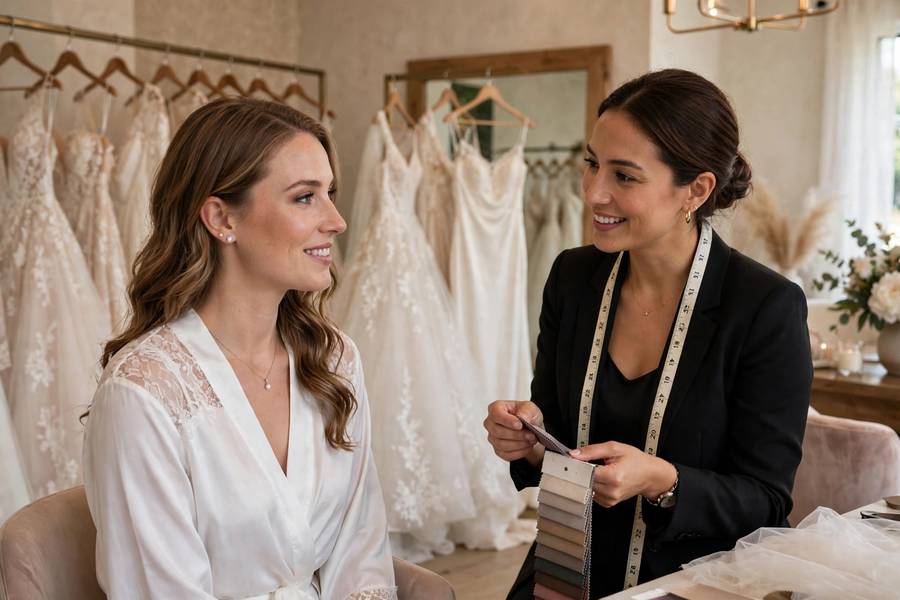
Book salon appointments — start with 2–3 salons, not ten. Bring one or two trusted people, your wedding shoe height, and proper undergarments. Try one of every silhouette even if you’re sure.
When you find the one, you’ll know — and you’ll also doubt yourself for a week. That’s normal. Don’t keep shopping after you say yes; it only breeds regret.
6–8 Months Out: Order Placed
Your order goes in with your exact measurements. Get measured professionally — don’t guess. Confirm the delivery date in writing and ask what happens if it’s late. Order your veil and accessories around now too; they have lead times of their own.
3–5 Months Out: First Fitting
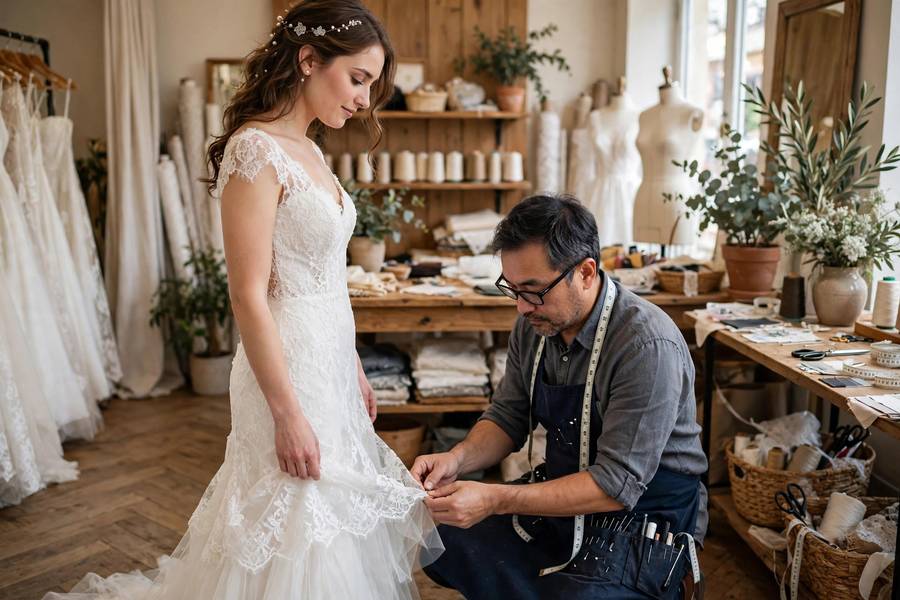
Your dress arrives. The first fitting is about major structure — taking in the bodice, hemming, bustle. Bring your wedding shoes and the exact undergarments you’ll wear. This is non-negotiable; the tailor needs the real foundation.
The Final Month
Second fitting at 6–8 weeks: fine-tuning. Final fitting at 2–3 weeks: it should fit like it was painted on. Pick it up, store it properly (breathable garment bag, never plastic long-term), and designate someone to steam it the morning of.
For the full dress journey, my pillar guide on how to choose a wedding dress covers everything from budget to alterations. Keep it all on track with my wedding planning checklist.
Short on Time? Your Options
Under 6 months: Sample sales (buy the dress off the rack, often 30–50% off), off-the-rack boutiques, and made-to-measure online companies with rush options. You’ll have fewer choices but plenty of beautiful options.
Under 3 months: Buy off the rack, period. Department stores, BHLDN, online retailers with fast shipping. Find a tailor who does rush alterations — book them the same day you buy the dress.
Under 1 month: Don’t panic. Plenty of brides have done this. Focus on simple silhouettes that need minimal alteration, and remember: nobody at your wedding knows your timeline. They just see a beautiful bride.
Rush Options When Time Is Short
Less than 6 months? Don’t panic — you have options. Off-the-rack: many salons have a ready-to-wear section; David’s Bridal and BHLDN carry dresses you can take home same-day. Sample sales: buy the store sample at 30–70% off, then alter to fit. Preowned: Stillwhite and Nearly Newlywed deliver in days. Rush production: many designers offer 8–12 week rush for a fee ($200–500). Separates: bridal tops + skirts from different sources can come together in weeks.
The trade-off: less selection, more alteration budget. But some of the most stunning brides I’ve seen bought off the rack — the dress matters less than the fit and the confidence.
The Second Dress Question
Reception dress changes are trending — should you? Consider: a second dress means a second round of shopping, fittings, and budget ($200–800 for most second dresses). It makes sense if your ceremony dress is very formal/heavy and you want to dance freely, or if you love fashion and want two moments. It doesn’t make sense if budget is tight or you’re already overwhelmed.
Middle ground: a convertible dress (detachable skirt, removable sleeves), or just change accessories — let your hair down, swap heels for flats, add a fun jacket. The “transformation” photos work just as well.
Sample Sale Strategy
Bridal sample sales (typically January and July) offer 30–70% off. Strategy: know your size in bridal sizing (it runs 1–2 sizes smaller than street), wear easy on/off clothes, bring a decisive friend, and be ready to buy on the spot — the good ones go fast. Inspect carefully: check for stains, loose beading, broken zippers. Factor in cleaning ($100–200) and alterations. And remember: the sample has been tried on dozens of times — it won’t be pristine, but the discount reflects that.
The Accessories Timeline
The dress gets all the attention, but accessories have their own timeline — and getting it wrong causes real problems:
Veil (order with the dress or 4–6 months out): Veils are often made to match specific dresses; ordering together ensures the lace, color, and style coordinate. Custom veils take 8–12 weeks. Shoes (4–6 months out): You need them for fittings — heel height determines hem length. Buy early, break them in for weeks. Undergarments (2–3 months out): Get fitted professionally; bring them to every fitting from the first alteration onward. Jewelry (1–2 months out): Choose after the dress neckline is finalized — the neckline determines the necklace (or lack thereof).
The coordination principle: accessories should be chosen IN ORDER of their impact on fit (shoes and undergarments first — they affect alterations) and IN ORDER of lead time (custom pieces first). Common mistake: buying statement earrings before choosing the dress, then discovering they clash with the neckline. Dress first, then build outward.
Budget reality: accessories typically add $300–800 to the dress cost. Brides who budget “dress: $1,500” and forget accessories end up stressed. Budget “bridal look: $2,000” instead — it’s more honest and less surprising.
Rush Alterations: When Time Is Short
When the dress arrives late or time is tight, alterations get compressed. Here’s how to handle it:
Prioritize: fit first (bodice, waist), hem second, details last. A well-fitting dress with an unfinished bustle beats a poorly-fitting dress with perfect beading. Book the seamstress BEFORE the dress arrives — good ones book 2–3 months out. Tell them your timeline upfront; rush fees ($100–300) are normal and worth it.
The minimum viable alterations: with 2 weeks, a skilled seamstress can do a hem, take in the sides, and add a bustle. With 1 week, it’s hem + emergency fit fixes. With days… buy off-the-rack and find a same-week tailor (they exist — ask bridal salons for referrals).
What NOT to rush: major restructuring (it needs multiple fittings), complex beading work, or changing the silhouette. If time is truly short, choose a simpler dress that needs less work. And whatever the timeline, pack our wedding day emergency kit — a mini sewing kit has saved more weddings than any seamstress.
What If You Hate Everything?
It happens: 3 salons, 25 dresses, nothing feels right. Don’t panic — here’s the protocol:
First, take a break. Dress fatigue is real. Shopping while exhausted and overwhelmed makes everything look wrong. Take 2–3 weeks off. Don’t look at Pinterest. Let your brain reset.
Then, diagnose. What specifically felt wrong? Was it the salons (pushy, limited selection)? The silhouettes (you kept trying the same shape)? The expectations (waiting for a “moment” that doesn’t come for everyone)? The budget (everything you loved was too expensive)? Each problem has a different solution.
Try a different TYPE of shopping. If boutiques failed, try a big-box store (David’s Bridal has enormous selection). If big-box failed, try a boutique (curated, personal). If new dresses failed, try preowned (different inventory, lower prices, less pressure). If everything failed, try separates (a top + skirt combo opens entirely new possibilities).
Consider that the issue isn’t the dresses. Sometimes “I hate everything” means “I’m stressed about the wedding,” “I’m anxious about the marriage,” or “I’m overwhelmed by opinions.” Be honest with yourself. The dress is rarely the real problem — but it’s the easiest thing to fixate on. Talk to someone you trust (not about dresses — about everything else).
And remember: almost every bride finds her dress. The ones who struggled the most often love their dress the most — because they chose it deliberately, not impulsively. Your dress is out there. You’ll find it.
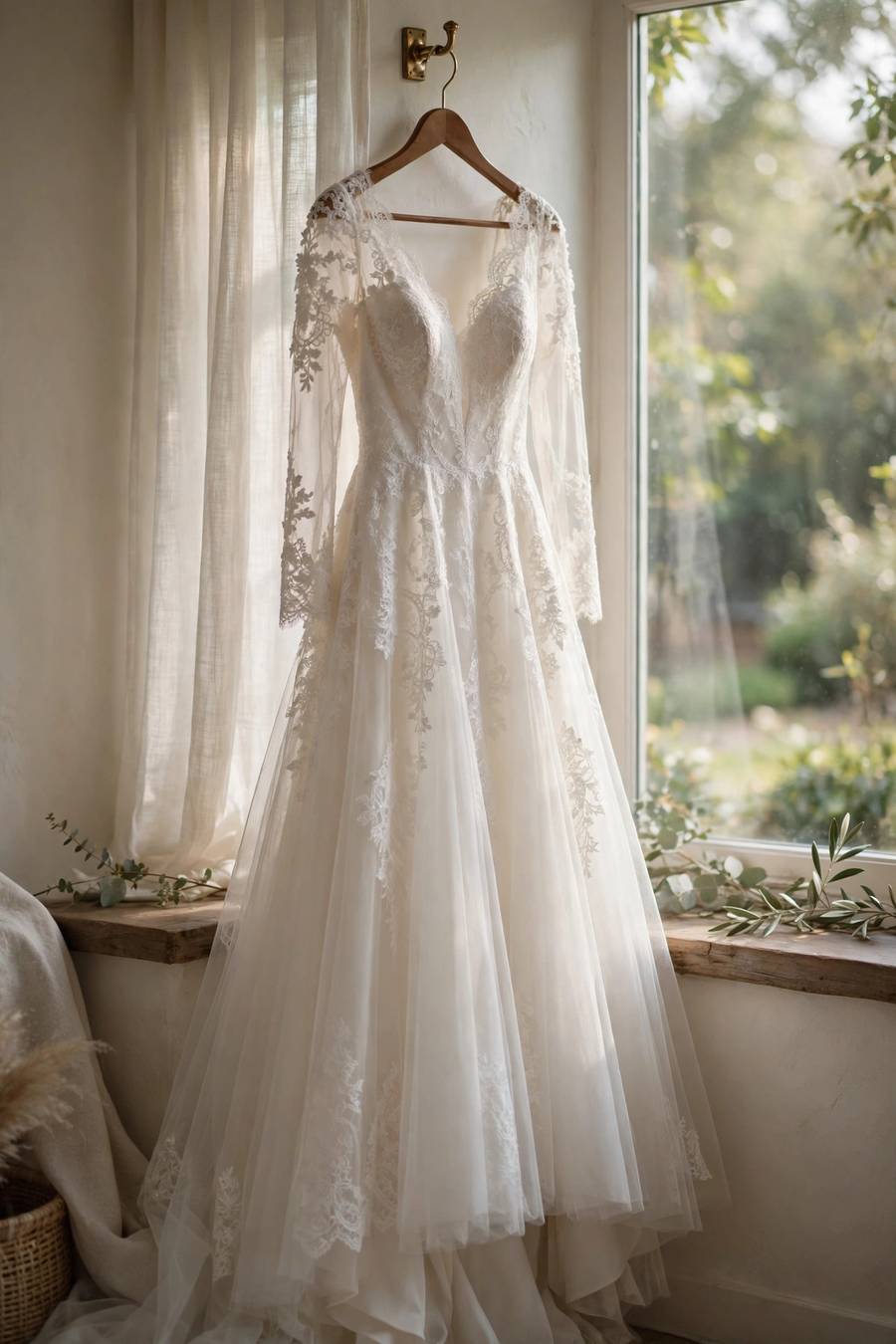
Ideally 10–12 months before the wedding for made-to-order designer gowns. This allows 6–8 months for production plus 2–3 months for alterations.
Made-to-order gowns typically take 6–8 months from order to arrival. Rush orders are possible (often with 20–30% fees) but limit your options.
Around 8–10 months before the wedding for designer gowns. This gives you a comfortable cushion for production, shipping delays, and alterations.
Yes — buy off the rack from sample sales, boutiques with in-stock inventory, or online retailers. Book a tailor for rush alterations immediately.
Usually 2–3: a first fitting for major alterations (3–5 months out), a second for fine-tuning (6–8 weeks out), and a final check (2–3 weeks out).