


Welcome bags are the first hug your out-of-town guests get. After a long flight or drive, walking into a hotel room to find a bag of thoughtful goodies sets the tone for the whole weekend: you’re glad they’re here, and you’ve thought about their comfort.
I’ve assembled (and received) more welcome bags than I can count. The great ones share a formula: something to drink, something to eat, something local, something useful, and a note. Here are thirteen fillers across those categories — plus what to skip.
Table of Contents
- Do You Need Welcome Bags?
- The Formula
- Drinks
- Snacks
- Local Touches
- Useful Extras
- The Note (Don’t Skip This)
- Assembly and Delivery Tips
- What to Skip
Do You Need Welcome Bags?
Honest answer: they’re a lovely gesture, not an obligation. They make the most sense when:
- Many guests are traveling (destination wedding or far-flung families)
- Guests are staying multiple nights — the bag orients them to the weekend
- You want to set a tone of hospitality and thoughtfulness
If 90% of guests are local and driving in for the evening, welcome bags are overkill. Spend the money elsewhere. For everyone else, read on.
The Formula
Every great welcome bag I’ve seen follows this structure:
- Something to drink (arrival hydration)
- Something to eat (arrival hunger is real)
- Something local (a taste of the place)
- Something useful (for the weekend ahead)
- A note (the personal touch that makes it all land)
Hit all five and the bag feels complete. Miss the note and it’s just a gift bag.
Drinks
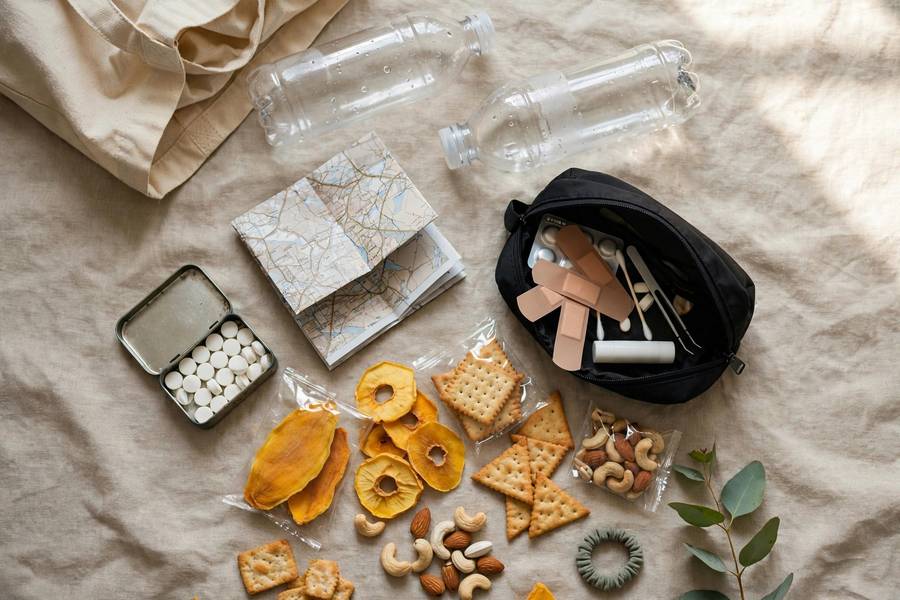
1. Bottled water (2 per bag). The single most appreciated item. Travel is dehydrating, hotel water is whatever it is, and a cold bottle on arrival is genuine relief. Still and sparkling if you’re feeling fancy.
2. Mini champagne or wine. A split of bubbly says “celebration starts now.” For beer towns, a local craft brew works the same magic.
3. Coffee or tea sachets. For the morning after — especially paired with the pain relievers below. Thoughtful people think about Sunday morning on Friday night.
Snacks
4. Sweet + salty pair. One of each: local chocolates or cookies plus popcorn, pretzels, or nuts. Travel hunger is indiscriminate — cover both cravings.
5. A substantial snack. A granola bar, a bag of trail mix, something with protein. Guests arriving late, missing dinner, or with kids will be genuinely grateful.
6. Mints or gum. Small, cheap, universally used. Tuck them in without overthinking.
Local Touches
This is where welcome bags go from nice to memorable.
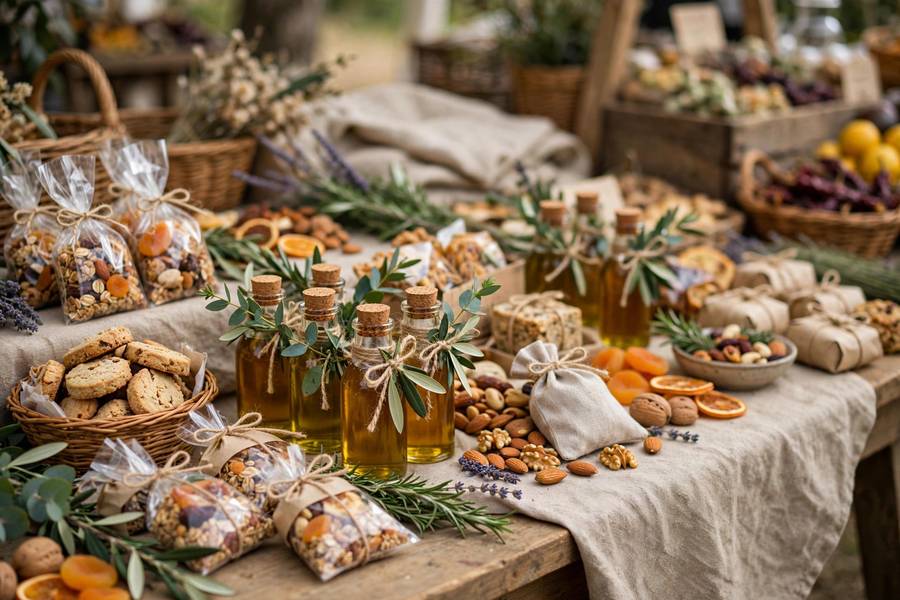
7. A local specialty. The city’s famous candy, a bag of local coffee beans, regional hot sauce, maple candy in Vermont — whatever your location is known for. It says “we chose this place and we want you to taste it.”
8. A mini itinerary card. Not just the wedding schedule — your favorite coffee shop, the best breakfast spot, the viewpoint worth the walk. Guests love insider tips; it makes them feel like locals for the weekend.
9. Something handmade by the place. A small artisan soap, a local candle, a craft item from a market you love. Supports local makers and gives guests something with a story.

Useful Extras
10. A weekend survival kit. Mini pain relievers, band-aids, mints, and a stain wipe in a small pouch. Label it “for tomorrow morning” with a wink. This gets more comments than almost anything else in the bag.
11. Sunscreen or aloe packets. For warm-weather and destination weddings. Single-use packets are perfect.
12. A reusable tote or bag. If your welcome “bag” is itself a nice tote with your wedding design, it doubles as the bag and the gift. Guests use good totes for years.
13. Phone charger or power bank (budget permitting). For the VIP bags (wedding party, parents) — a universal charger is a genuinely premium touch.
The Note (Don’t Skip This)
The note is the highest-ROI item in the bag. It costs almost nothing and it’s what guests remember.
What to include:
– Thank them for traveling — name the effort (“we know the flight from Seattle wasn’t short”)
– The weekend’s key info: ceremony time and location, shuttle details, your phone number for emergencies
– One personal line if you can manage it for close guests
Keep it short. A beautiful card with five sincere lines beats a two-page letter. Print them — handwriting 80 notes will break you, and printed on nice cardstock looks intentional.
Assembly and Delivery Tips
- The bag itself: Kraft paper bags with a custom stamp are the sweet spot — cheap, attractive, personal. Tote bags upgrade the gift but multiply the cost.
- Assemble 1–2 weeks out. It’s a perfect wedding-party activity: pizza, wine, and an assembly line. 80 bags take about two hours with four people.
- Delivery: Coordinate with the hotel — most will place bags in rooms before arrival or hold them at check-in for a small fee (or free for room blocks). Confirm the process, the fee, and the timing in writing.
- Count carefully: Bags for booked rooms, plus 5–10 extras for last-minute additions and the inevitable miscount.
- Budget: $15–30 per bag is typical for a well-stocked bag; $8–12 for a simpler version. For 50 out-of-town guests, that’s $750–1,500 — plan it in the budget early.
- Personalize by group: One small upgrade goes a long way — a nicer bottle for the wedding party, a kid-friendly version (juice boxes, activity books, no wine) for families with children, a local guidebook for the farthest travelers. Tiered thoughtfulness beats one-size-fits-all.
Welcome Bags for Destination Weddings
Destination weddings raise the stakes — guests invested serious money and vacation days, so the welcome bag should work harder:
- Add a destination guide. Beyond the wedding schedule: the best beach, the one restaurant worth the taxi ride, what the local currency situation is, and any safety or etiquette notes (drinking water? tipping customs?). This is the most valuable thing you can put in a destination bag.
- Include something for the journey home too. A snack for the travel day back, or a small local souvenir. The bag bookends the trip.
- Consider the climate gap. Guests flying from winter into the tropics need sunscreen they didn’t pack; guests going the other way need warmth. Anticipate the gap and fill it.
- Coordinate arrival experiences. If guests arrive across several days, make sure early arrivals get their bags on day one — a bag waiting three days in a hotel back room loses its magic.
What to Skip
- Anything monogrammed with your names and date. Guests don’t want your wedding branded on their belongings. Keep personalization to the note and maybe a stamp on the bag.
- Full-size anything. Mini and sample sizes — full bottles are heavy, expensive, and wasteful.
- Scented products. Lotion, candles, soaps — scent is personal, and allergies are real.
- Anything fragile. It’ll break in transit.
- Information without the essentials. A beautiful bag without the shuttle schedule and your phone number is a missed opportunity.
Welcome bags are hospitality in physical form — and that hospitality extends to the day itself. Pack a wedding day emergency kit alongside the welcome bags, and sort wedding seating chart ideas early so guests land smoothly. They tell your traveling guests — the ones who spent money and vacation days to be there — that you noticed the effort and you’re glad they came. Keep it thoughtful, keep it useful, and don’t forget the note. The couples who nail the welcome bag set a tone of care that carries through the entire weekend.
Frequently Asked Questions
Follow the formula: something to drink (water, mini champagne), something to eat (sweet + salty snacks), something local (a regional specialty), something useful (mini survival kit, sunscreen), and a personal note with weekend details. Five categories, one thoughtful bag.
Typically $15-30 per bag for a well-stocked version, $8-12 for simpler bags. For 50 out-of-town guests, budget $750-1,500. The bag itself (kraft bags with a custom stamp) is the cheapest part; contents drive the cost.
Out-of-town guests staying in hotels — typically one bag per room or couple, not per person. Wedding party and parents often get upgraded versions. Local guests driving in for the evening don’t need them.
Coordinate with the hotel to place bags in rooms before guests arrive, or have them held at check-in. Arrange this 2-4 weeks ahead, confirm fees and timing in writing, and prepare 5-10 extras beyond your room count.
No — they’re a gesture, not an obligation. They make the most sense with many traveling guests or multi-day celebrations. If most guests are local, skip them and invest in the wedding day experience instead.
Thank guests for traveling, include key logistics (ceremony time/location, shuttle details, your emergency phone number), and add one personal line when possible. Keep it to five sincere lines on nice cardstock — short and warm beats long and generic.