Let me save you some money: most wedding favors get left on the table. I’ve cleared enough reception halls to know — the personalized shot glasses, the monogrammed candles, the little frames nobody asked for. They stay behind.
But some favors vanish. Guests pocket them, use them that night, talk about them later. The difference isn’t budget — it’s whether the favor is edible, useful, or an experience. Here are 25 ideas in those three categories, all field-tested at real weddings.
Table of Contents
- The Favor Philosophy
- Edible Favors (The Safest Bet)
- Useful Favors (The Keepers)
- Experiential Favors (The Memorable Ones)
- Budget Breakdown
- Favor Mistakes to Avoid
The Favor Philosophy
Before the list, the principle: a favor should be consumed, used, or experienced — never displayed. Anything designed to sit on a shelf with your names and wedding date on it will sit on the venue’s lost-and-found shelf instead.
The three winning categories:
- Edible — eaten that night or the next morning. Near-zero waste.
- Useful — something guests genuinely need or will use within a week.
- Experiential — a moment during the wedding they’ll remember.
Also: favors are optional. Truly. No guest has ever left a wedding thinking “lovely ceremony, but where was my favor?” If the budget is tight, skip them entirely and put the money toward the bar, the band, or the food — things guests actually notice.
Edible Favors (The Safest Bet)
Edible favors have the highest take-home rate of anything. People eat.
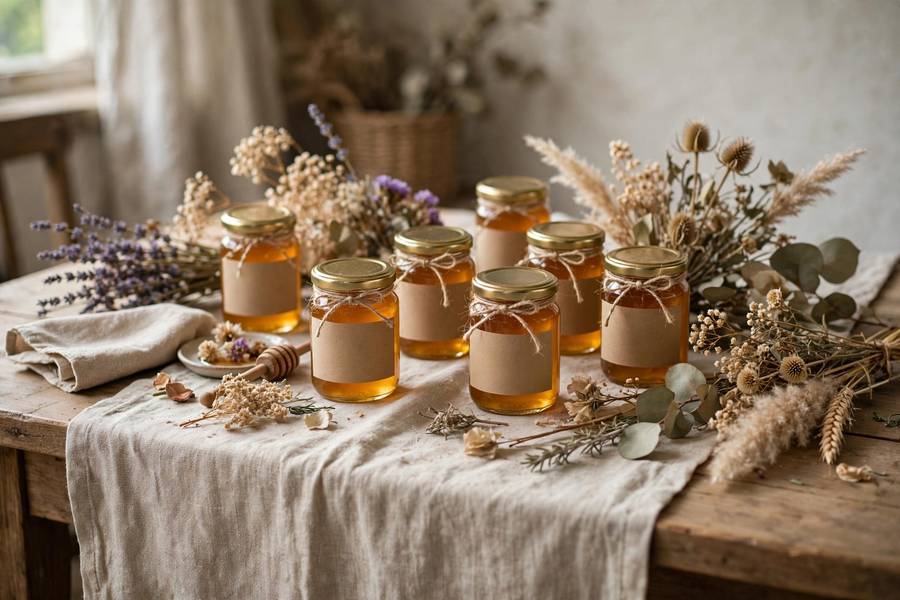
- Local honey jars — mini jars from a local apiary with a custom label. Beautiful, personal, universally liked. (~$3–5 each)
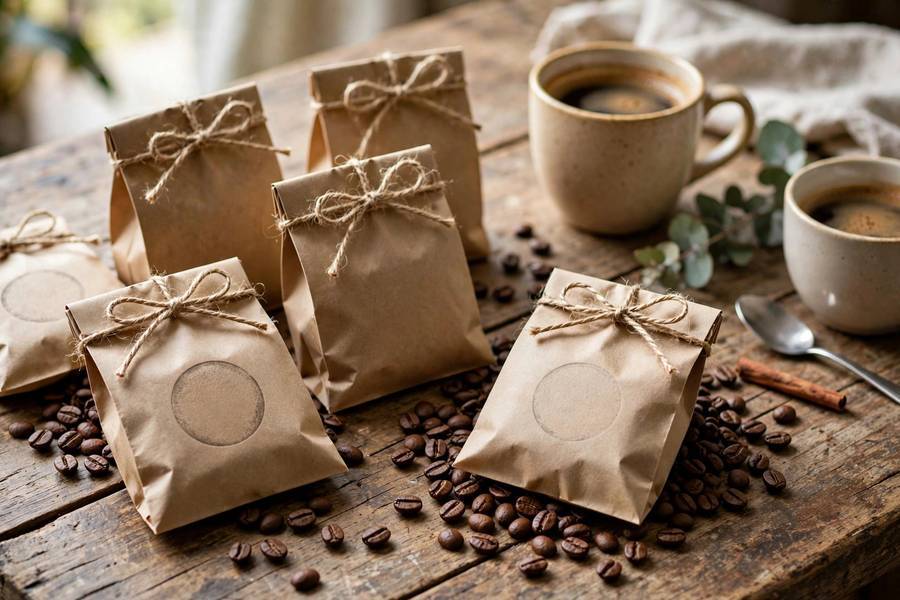
- Custom coffee bags — small bags of beans from your favorite roaster, stamped with your names. Coffee drinkers swoon. (~$4–6)
- Olive oil bottles — mini bottles of good olive oil, especially for Tuscan/Mediterranean-themed weddings. (~$4–7)
- Macarons or artisan chocolates — boxed in twos or threes. Elegant, delicious, gone by morning. (~$3–5)
- Hot sauce or spice blends — for the foodie couple. A custom-labeled hot sauce is a conversation piece. (~$3–5)
- Mini champagne or wine bottles — with custom labels. Classic for a reason. (~$5–8)
- Donut or cookie bags — a local bakery’s best, bagged with twine. The late-night crowd will thank you. (~$2–4)
- Maple syrup minis — for fall or New England weddings. Adorable and delicious. (~$4–6)
- Tea tins — small tins of a meaningful blend (the tea you drank while planning, a local specialty). (~$3–5)
Pro tip: Edible favors double as place cards — tie a name tag to each one and skip separate escort cards. That’s the kind of efficiency I love, and it saves the stationery budget too.
Useful Favors (The Keepers)
The test: would a guest use this within seven days?
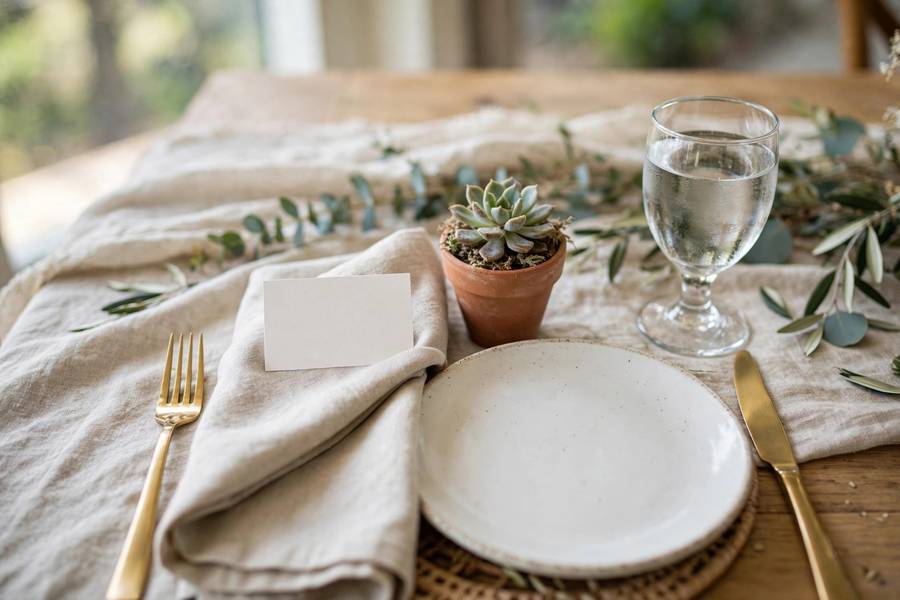
- Potted succulents or herbs — with the guest’s name as the plant marker. Doubles as escort card and decor. Guests keep them for months. (~$2–4)
- Custom matches or candles — matchboxes with your design are cheap, pretty, and genuinely useful. Full-size candles are riskier (scent is personal) — keep to matches or tea lights. (~$1–3)
- Hand fans or parasols — for summer outdoor weddings. Guests will use them during the ceremony, which is the whole point. (~$2–5)
- Cozy blankets or pashminas — for fall/winter or evening outdoor weddings. Draped on ceremony chairs, they’re decor that becomes a gift. (~$5–10 in bulk)
- Reusable tote bags — with a great design (not just your names — an illustration of the venue, a funny phrase). People actually reuse good totes. (~$3–6)
- Seed packets — wildflower seeds with “let love grow” messaging. Cheap, eco-friendly, and sweet. (~$1–2)
- Luggage tags — for the destination wedding crowd. Practical, travel-themed, used for years. (~$2–4)
- Socks or flip-flops — “dancing shoes” baskets at the reception are legendary for a reason. Bulk flip-flops in a cute display get used that night. (~$1–3)
Experiential Favors (The Memorable Ones)
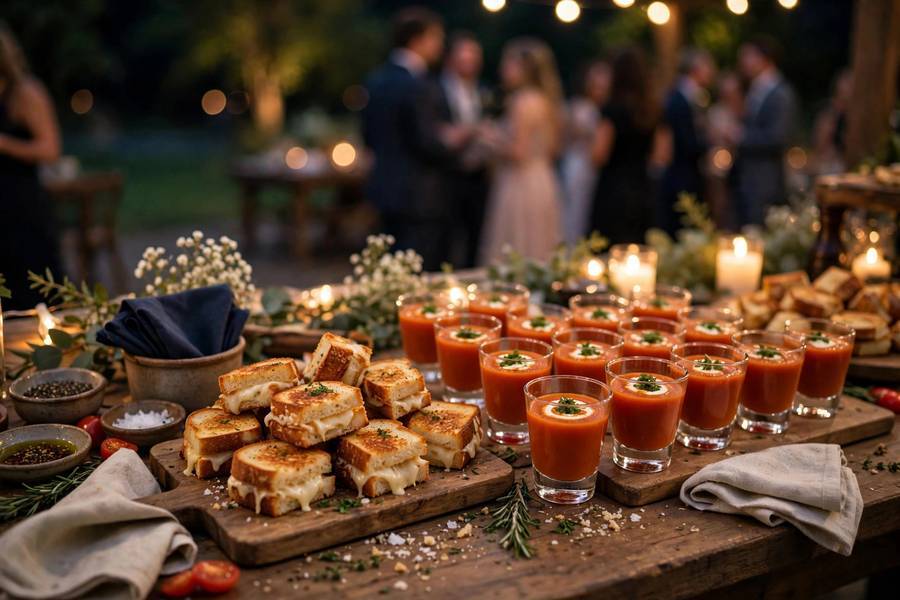
- Late-night snack station — sliders, grilled cheese, breakfast burritos at 11 p.m. Announce it as the favor. Guests remember this more than any object.
- Photo booth with instant prints — the prints ARE the favor. A well-stocked prop box and a good backdrop beat a hired booth.
- Cocktail hour upgrade — a signature cocktail named after your story, or a champagne wall. An experience everyone shares.
- Live wedding painter favors — some painters offer small prints or ornaments as guest gifts. Pricey but unforgettable.
- Donation in guests’ honor — to a cause that matters to you, noted on a beautiful card at each place setting. Divisive (some guests prefer a tangible gift), but meaningful for the right couple.
- Sparkler send-off kits — long sparklers with tags, handed out before the exit. The photos are the favor.
- Hangover kits — for the morning after: mini water bottles, pain relievers, mints, and a funny note, delivered to hotel rooms or the brunch. Guests worship these.
- Polaroid guest book station — guests take a photo, keep one copy, leave one with a note. Interactive, personal, and the book becomes your keepsake.
Budget Breakdown
Realistic per-guest costs (100 guests):
- Under $250 total: seed packets, matchboxes, donut bags, DIY cookies. Totally doable and charming.
- $250–500: honey jars, succulents, coffee bags, fans. The sweet spot for most weddings.
- $500–1,000: wine minis, blankets, tote bags, late-night snacks. Premium without being extravagant.
- Over $1,000: You’re in experiential territory — spend it on the late-night station or the photo booth, not on fancier objects.
The math that matters: favors are typically 1–2% of a wedding budget. If yours is creeping past that, scale back — the money works harder in food, music, or photography.
DIY vs. bought: DIY favors (baked goods, hand-poured candles, assembled seed packets) save money but cost time — and time is the scarcest resource in wedding planning. Price your hours honestly: if DIY “saves” $200 but eats two weekends, it wasn’t savings. Buy the things that are cheap to buy; DIY only what you genuinely enjoy making. And whatever you choose, order or start 2–3 months out — favor lead times are real.
Favor Mistakes to Avoid
- Personalizing everything. Your names and wedding date on a favor decrease its keep-rate — nobody wants another couple’s monogrammed candle. Keep branding minimal: a tag, a stamp, a sticker.
- Fragile favors. Anything breakable will break in transit — in guests’ bags, in the car, on the dance floor.
- Scented things for everyone. Candles and soaps are the most left-behind favors after trinkets. Scent is deeply personal.
- Favors that need explanation. If it requires a paragraph to understand, it’s not a favor, it’s homework.
- Forgetting the kids’ table. If children are invited, a small activity bag keeps them happy and parents grateful.
- Leaving them for last. Order favors 2–3 months out. Custom items have lead times, and DIY projects always take triple the estimated time.
The best favor advice I can give: pick something you’d be delighted to receive. If the answer is “meh,” keep looking — or skip favors entirely and put the money toward your wedding day emergency kit and the things that actually shape the day — including wedding seating chart ideas, which guests notice far more than a trinket. Your guests came for you, not for a trinket. The favor is just a thank-you note they can eat.
Frequently Asked Questions
No — no guest has ever complained about missing favors. They’re a nice touch, not an obligation. If budget is tight, skip them and invest in food, music, or photography, which guests notice far more.
Most couples spend $2-7 per guest, or 1-2% of the total wedding budget. Edible and DIY favors land at the low end; premium items and experiential favors cost more. If favors exceed 2% of your budget, scale back.
Edible favors (honey, coffee, chocolates) have the highest take-home rates since they’re consumed. Useful items (succulents, fans, blankets, tote bags) get kept when they’re genuinely practical. Personalized trinkets with names and dates are left behind most often.
Order 2-3 months before the wedding. Custom items have production lead times, and DIY projects consistently take three times longer than estimated. Last-minute favor rushes are a top source of pre-wedding stress.
They should feel coherent with the wedding’s style, but they don’t need to be literal. A beach wedding doesn’t require seashell-shaped everything — local honey or a good tote in your color palette feels more thoughtful than theme-park literalism.
Popular alternatives: a late-night snack station, a donation to charity in guests’ honor, an upgraded cocktail hour, or skipping favors entirely and investing in the guest experience. Many modern couples find experiences more memorable than objects.