Why Does My Car Shake When Braking? 7 Causes and Fixes

You press the brake pedal, and instead of a smooth stop, the whole car starts shuddering — the steering wheel trembles, the pedal pulses under your foot, maybe the seat vibrates. It’s unsettling, and it’s your car telling you something specific. When people ask me why does my car shake when braking, I tell them the same thing: this symptom has a short list of usual suspects, and most of them live in your braking system. The good news is that once you know what to look for, the fix is usually straightforward.
Let me walk you through the causes from most common to least, how to narrow it down by what the shaking feels like, and what to do about each one. Brakes are safety equipment — so read this as a diagnostic guide, not a reason to put off the repair.
Why Does My Car Shake When Braking? The #1 Cause: Warped Rotors
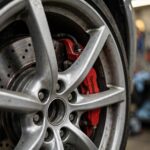
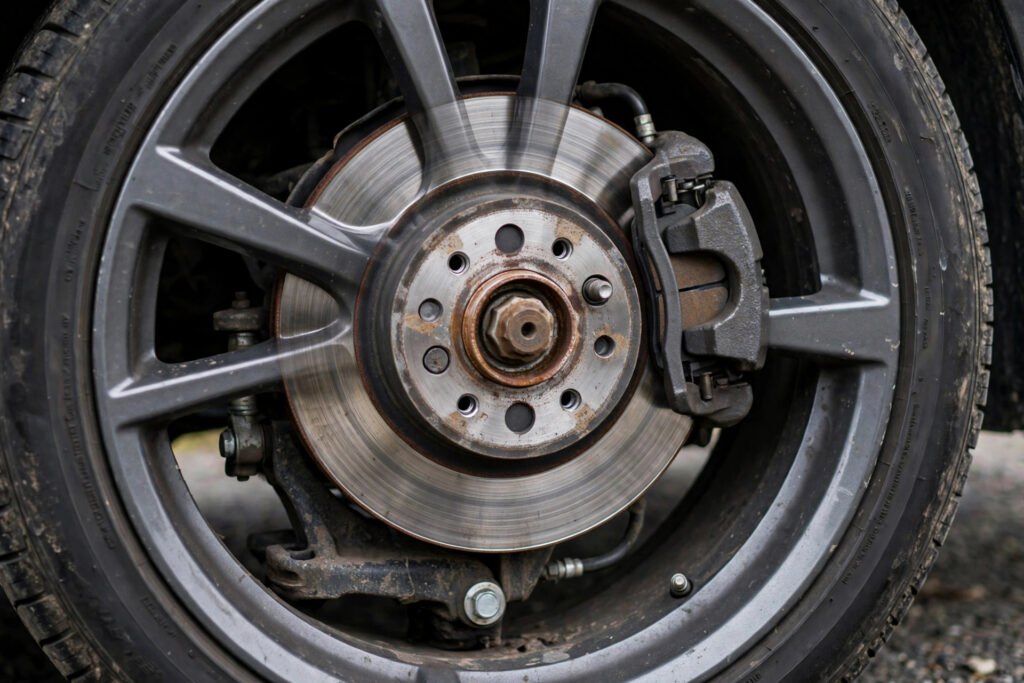
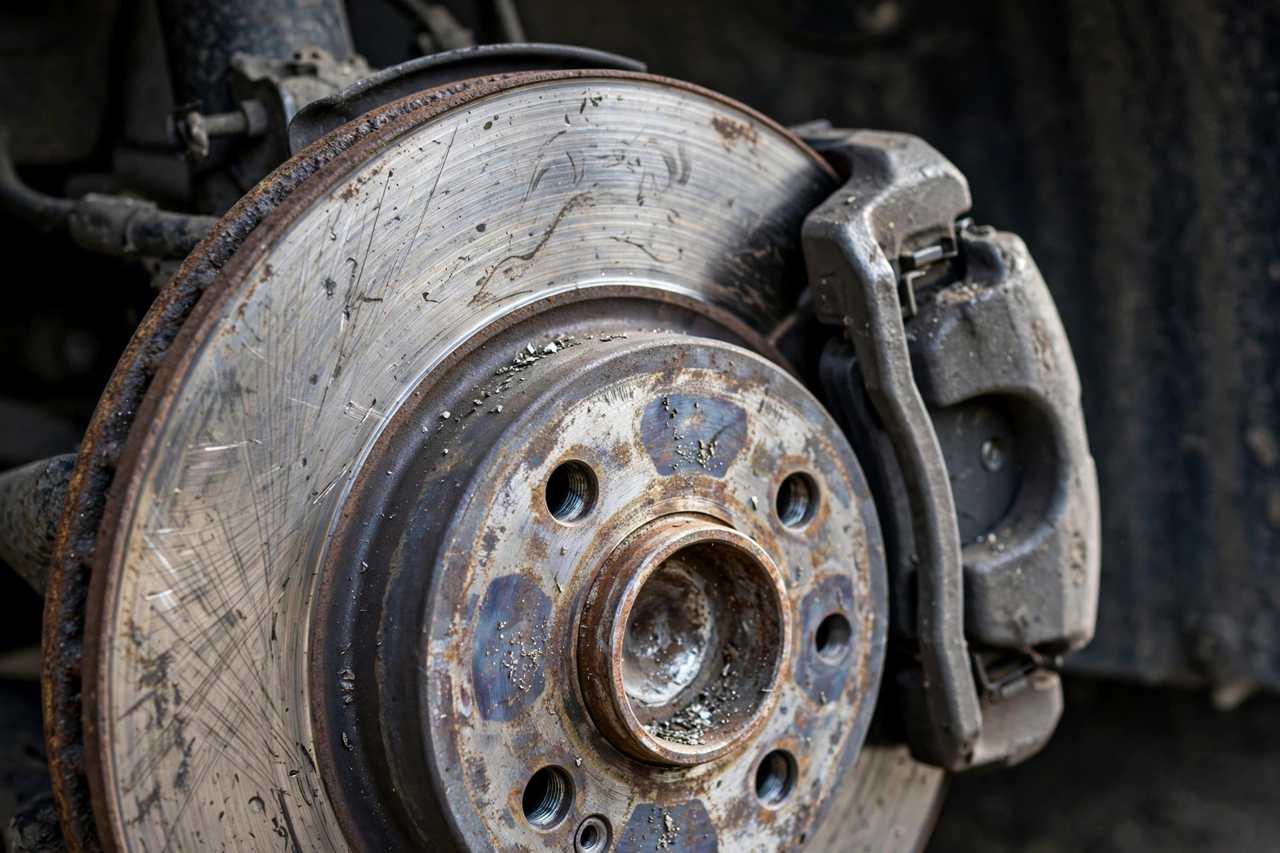
Nine times out of ten, shaking that happens only when you brake points to warped or unevenly worn brake rotors. Here’s what happens: your brake pads squeeze the rotors to slow the wheels. Over time — especially with hard braking, heavy loads, or lots of stop-and-go driving — rotors can develop uneven thickness or hot spots. When the pads grab an uneven surface, you feel it as a pulsing, shaking sensation.
The classic symptom: the shake gets worse the harder you brake, and it goes away completely when you take your foot off the pedal. You might feel it mostly in the steering wheel (front rotors) or mostly in the seat and body of the car (rear rotors).
The fix is resurfacing the rotors (machining them flat again) or replacing them. Resurfacing only works if the rotors are still thick enough — there’s a minimum thickness stamped on the rotor itself, and a good shop will measure before machining. If they’re too thin or badly scored, replacement is the right call. Always replace rotors in axle pairs (both fronts or both rears), and always with new pads.
Worn Brake Pads and Stuck Calipers
Worn-down brake pads can cause uneven contact and vibration, and they bring friends: squealing, grinding, and longer stopping distances. If your pads are worn to the metal, you’re hearing metal-on-metal grinding — stop driving and get it fixed immediately, because you’re destroying the rotors with every stop.
A stuck or sticking brake caliper is sneakier. The caliper is supposed to release after you brake; when it sticks, one wheel drags constantly. Signs include the car pulling to one side, a burning smell after driving, one wheel noticeably hotter than the others, and vibration that sometimes shows up even when you’re not braking. A stuck caliper usually needs rebuilding or replacement, and the pads and rotor on that wheel often need replacing too since they’ve been overheated.
Tires, Wheels, and Alignment Issues
Here’s how to tell brake problems from tire problems: if the shaking happens all the time while driving — not just when braking — the brakes probably aren’t the culprit. Unbalanced tires, a bent wheel, uneven tire wear, or alignment problems all cause vibration at speed.
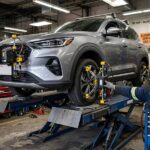
That said, tires and brakes interact. A tire with a flat spot or internal damage can make braking feel rough, and worn suspension parts (ball joints, tie rods, control arm bushings) let the wheels wobble under braking forces. If your car has been vibrating at highway speeds for a while and now it shakes when braking too, get the tires and alignment checked alongside the brakes — checking your wheel alignment at home and verifying tire pressure are the two quick checks I always start with.
Less Common Causes Worth Knowing
Worn suspension components. Ball joints, tie rod ends, and control arm bushings wear out gradually. When they’re loose, braking forces push the wheel around slightly, and you feel vibration. A shop can check these on a lift in minutes.
ABS activation. If you brake hard on a slippery surface and feel a rapid pulsing in the pedal, that’s your anti-lock braking system doing its job — it’s supposed to feel like that. It’s only a problem if it happens during gentle braking on dry pavement.
Contaminated brake surfaces. Oil or grease on the pads or rotors (from a leaking seal, for example) causes grabbing and shuddering. This needs professional diagnosis since the leak has to be fixed too.
Dry or worn wheel bearings. A failing wheel bearing usually announces itself with a humming or growling noise that changes with speed, plus looseness you can feel. It can contribute to vibration under braking.
How to Narrow It Down: A Quick Diagnostic Checklist
- Shake only when braking, worse with harder braking? → Likely warped rotors.
- Steering wheel shakes? → Likely front brakes. Seat/body shakes? → Likely rear brakes.
- Shakes at speed even without braking? → Tires, wheels, or alignment.
- Car pulls to one side when braking? → Stuck caliper or uneven pad wear.
- Grinding or squealing? → Worn pads; inspect immediately.
- Burning smell or one hot wheel? → Sticking caliper; don’t keep driving.
Use this list to describe the symptom accurately to your mechanic — “it shakes only when I brake, mostly in the steering wheel” gets you a faster, cheaper diagnosis than “it vibrates sometimes.”
What Does It Cost to Fix?
Costs vary by vehicle and region, but as a rough guide: resurfacing rotors is the cheapest option when it’s possible; replacing rotors and pads on one axle typically runs a few hundred dollars at an independent shop; a stuck caliper adds to that. Wheel bearings and suspension parts vary more. The expensive version of this repair is the one you delay — driving on bad brakes eats rotors, overheats calipers, and can turn a routine brake job into a much bigger bill. Get a quote from a trusted independent shop, and don’t be afraid to get a second opinion on big-ticket items.
Can You Prevent Brake Shaking?
Mostly, yes. Avoid riding the brakes on long downhills — downshift instead and let the engine help. Don’t brake hard and then sit at a light with the pedal mashed; that heat-soaks one spot on the rotor. Keep up with pad replacements before they wear to metal. And if you tow or carry heavy loads, give your brakes cool-down time and consider that your rotors are working harder than average. Brakes are wear items, but how you drive decides how fast they wear.
One more thing: shaking under braking sometimes shows up alongside other symptoms. If your transmission is also acting up with heat-related issues, spotting overheating symptoms early covers the warning signs for that system. Different problem, same rule: heat damage gets worse the longer you ignore it.
When Shaking Means Stop Driving Immediately
Most brake vibration is a “get it fixed this week” problem. But some symptoms mean “pull over now”:
- The brake pedal goes soft or sinks to the floor. That’s a hydraulic problem — possibly a fluid leak — and your stopping power is compromised.
- Loud grinding you’ve never heard before. Pads worn to bare metal can fail suddenly, and metal-on-metal destroys rotors fast.
- A strong burning smell plus smoke from a wheel. A seized caliper can overheat to the point of damaging the tire or starting a fire.
- The car pulls hard to one side under braking. You can’t predict your stopping path, which is dangerous in traffic.
If any of these show up, slow down gradually, get off the road safely, and call for a tow. Brakes are the one system where “I’ll deal with it tomorrow” can end very badly. A tow bill is always cheaper than the alternative.
What a Mechanic Actually Checks During a Brake Inspection
If you take your car in for brake shaking, here’s what a thorough inspection looks like — knowing this helps you tell a good shop from one that’s guessing:
Test drive first. A good technician drives the car before touching anything, feeling for when the vibration starts, whether it’s in the wheel or the seat, and whether it changes with braking force. Your description from the checklist above makes this step faster and more accurate.
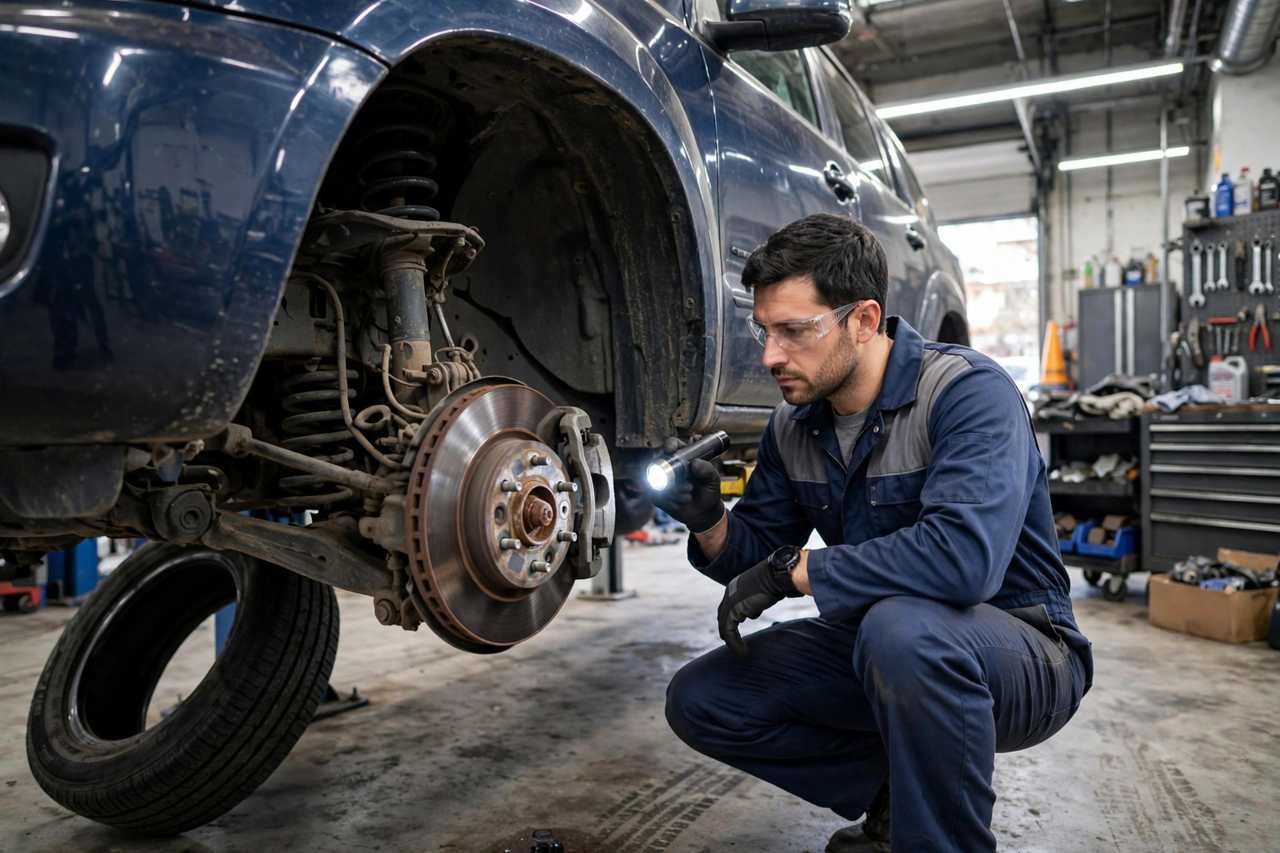
Rotor runout measurement. With the wheel off, the tech mounts a dial indicator against the rotor face and spins it. This measures lateral runout — how much the rotor surface wobbles side to side. Anything beyond spec (usually around two thousandths of an inch) means the rotor is the problem. This is a measurement, not a guess, and any shop that skips it is skipping the diagnosis.
Pad thickness and condition. Pads are measured against their minimum thickness, and the tech looks for uneven wear — tapered pads or one pad worn far more than its partner point to a caliper or hardware issue, not just “worn pads.”
Caliper slide pins and hardware. The caliper has to float freely on its slide pins. Corroded or dry pins make the caliper stick, causing uneven pad wear and vibration. Cleaning and re-lubricating the pins is cheap; ignoring them ruins new pads and rotors.
Tires and suspension quick-check. A good inspection includes a glance at tire wear patterns and a tug on the front wheels to feel for loose bearings or ball joints — because as we covered, vibration isn’t always the brakes.
Ask for the measurements, not just the conclusion. “Your rotors have 8 thousandths of runout, spec is 2” is a diagnosis. “Your rotors are warped, that’ll be $600” is a sales pitch.
FAQ
Is it safe to drive if my car shakes when braking?
Mild vibration from slightly warped rotors is common, but any shaking means your braking performance is compromised. Grinding, pulling to one side, or a burning smell mean stop driving and get it checked immediately.
Will warped rotors fix themselves?
No. Once rotors develop uneven thickness, they don’t smooth out on their own — the uneven wear pattern actually gets worse. They need resurfacing or replacement.
How long do brake rotors last?
Typically 50,000 to 70,000 miles, but driving style matters enormously. Gentle braking, highway miles, and timely pad changes extend rotor life; hard stops and heavy loads shorten it.
Can bad tires cause shaking when braking?
Tires usually cause vibration at speed regardless of braking. But severely worn or damaged tires can make braking feel rough, so tires are always worth checking when diagnosing brake vibration.
Why does my steering wheel shake but not the brake pedal?
Steering wheel shake usually points to the front brakes (or front tires/alignment), while vibration felt through the seat often points to the rear brakes. The location of the vibration is a useful diagnostic clue.