How to Jump Start a Dead Battery Safely (Step-by-Step)

We’ve all been there: you turn the key (or push the button), and instead of that healthy crank you get… click. Click. Nothing. Knowing how to jump start a dead battery is one of those skills you don’t think about until you desperately need it — usually in a dark parking lot, in the rain, when you’re already late.
Take a breath. Learning how to jump start a dead battery is one of those life skills every driver should have, and it’s simpler than it looks. I’m going to walk you through the exact cable order, the safety rules that matter, and what to do after the engine’s running.
What You’ll Need
- Jumper cables — decent quality, at least 20 feet long. Cheap, thin cables are a false economy; they can’t carry enough current. Keep a set in your trunk permanently.
- A working vehicle (or a portable jump starter pack — more on those later).
- Your owner’s manual — some cars have specific jump-start procedures or remote terminals. A quick check takes thirty seconds.
No second car around? A portable lithium jump starter pack is one of the best fifty-ish bucks a driver can spend. It lives in your glove box and jumps your car solo. More on that below.
Safety First: Read This Before Touching Cables
Car batteries contain sulfuric acid and produce hydrogen gas. Jumping a battery is safe when done right, but “done right” matters:
- Never jump a visibly damaged battery. Cracked case, leaking fluid, bulging sides — don’t touch it. Call for a tow and a replacement.
- No smoking, no sparks, no open flames near the battery. Hydrogen gas is flammable.
- Remove metal jewelry from your hands. A ring bridging terminals is a bad day.
- Both cars off, accessories off. Headlights, radio, phone chargers — everything off in both vehicles before you connect anything.
- Check the voltage. Both batteries should be 12-volt systems (virtually all modern cars). Never jump a 12V battery with a 24V system.
How to Jump Start a Dead Battery: The Exact Order
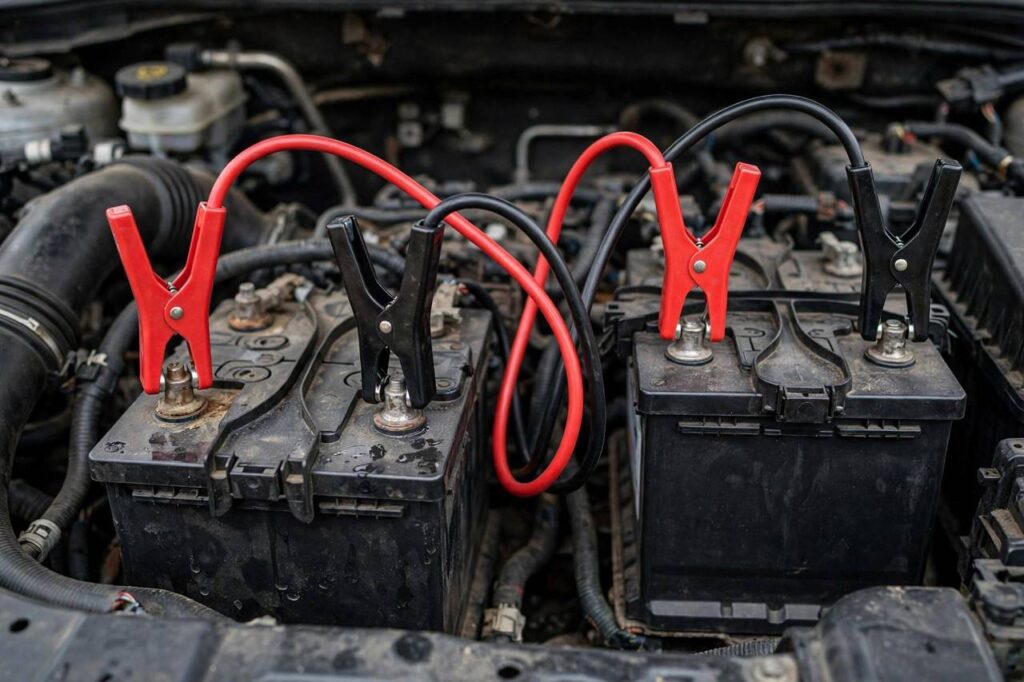
Cable order matters — this isn’t superstition, it’s about controlling where sparks happen. Follow this sequence exactly:
- Position the cars. Park the working car close enough for cables to reach, but don’t let the vehicles touch. Both cars in Park (or Neutral for manuals), parking brakes on, ignitions OFF.
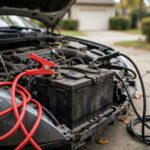
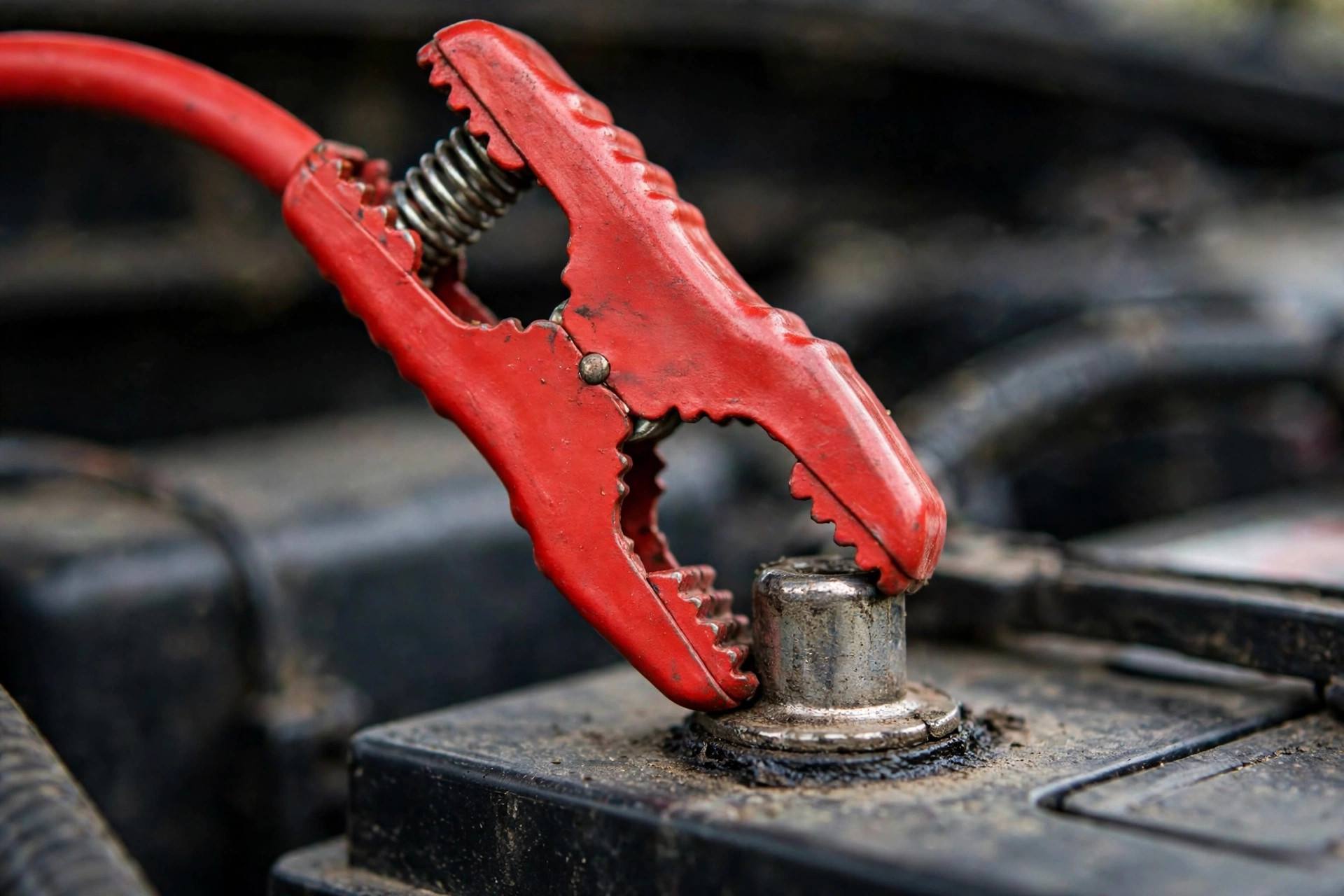
- RED to DEAD. Connect one red clamp to the POSITIVE (+) terminal of the dead battery.
- RED to DONOR. Connect the other red clamp to the POSITIVE (+) terminal of the good battery.
- BLACK to DONOR. Connect one black clamp to the NEGATIVE (-) terminal of the good battery.
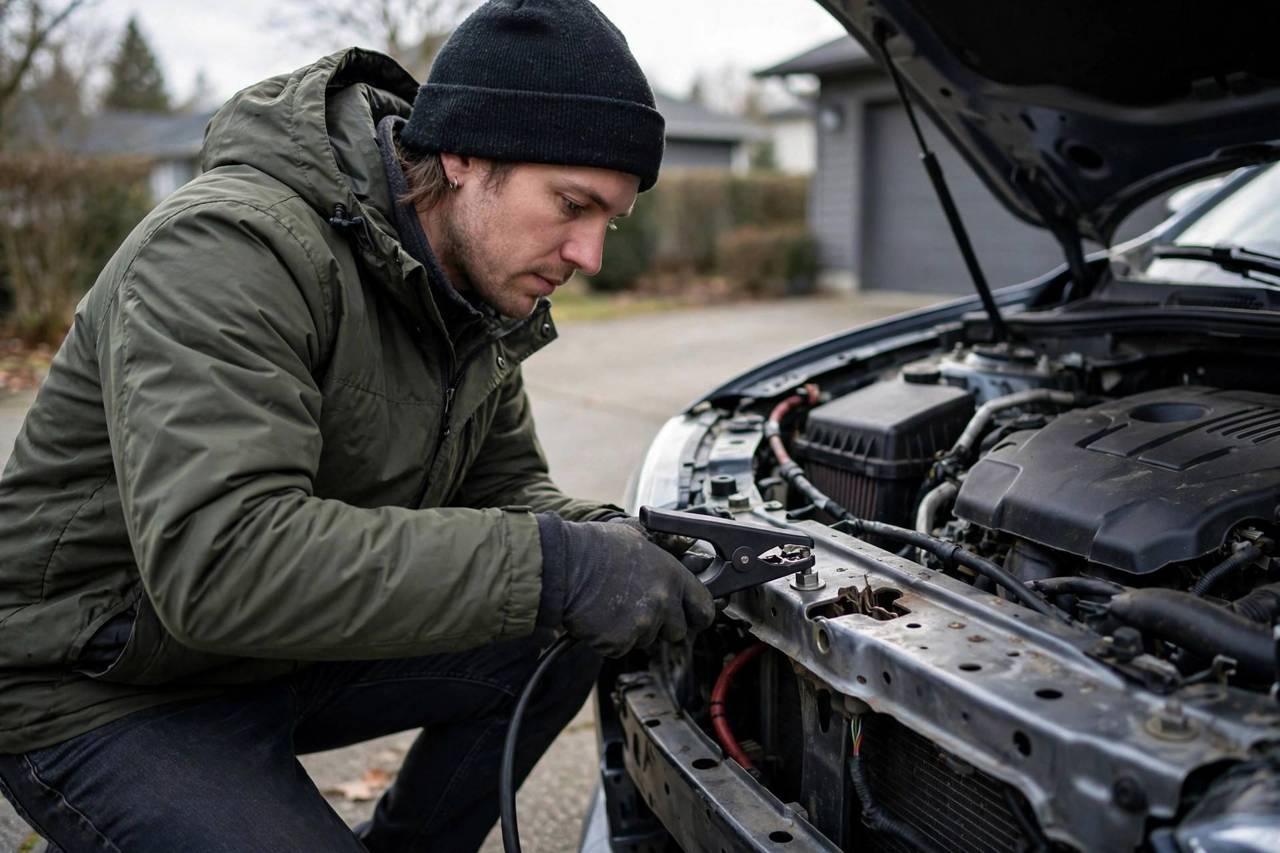
- BLACK to GROUND. Connect the final black clamp to an unpainted metal surface on the dead car’s engine block or frame — a bolt, a bracket, somewhere solid and away from the battery. This is your ground, and it’s the step people skip. Don’t clamp it to the dead battery’s negative terminal.
Why ground the last clamp away from the battery? Because the final connection can spark, and you want that spark happening away from the battery, where hydrogen gas might be present. It’s a small detail that prevents a rare but real hazard.
Starting the Cars
- Start the working car first. Let it idle for a few minutes. This lets its alternator push some charge toward your dead battery.
- Try starting the dead car. Turn the key or push the button. If it cranks slowly but doesn’t catch, wait two or three minutes and try again. Don’t crank for more than 10-15 seconds at a time — you’ll overheat the starter.
- If it won’t start after a few tries, check your connections — clamps need clean, tight contact with metal. Corroded terminals are a common culprit (see below).
Removing the Cables: Reverse Order
Once the dead car is running, remove cables in the exact reverse order:
- Black clamp off the ground point (dead car)
- Black clamp off the donor battery
- Red clamp off the donor battery
- Red clamp off the dead battery
Don’t let clamps touch each other or any metal while removing them. Coil the cables up and put them back in your trunk — future you says thanks.
What to Do After the Jump Start
Getting the engine running is only half the job. Your battery is still deeply discharged, and if you just drive two blocks and shut off, you’ll be jumping it again:
- Drive for at least 20-30 minutes — highway speeds are better than idling, since the alternator charges harder at higher RPM. This gives the battery a meaningful recharge.
- Turn off unnecessary drains during that drive: heated seats, rear defroster, blower on full blast. Let the alternator’s output go to the battery.
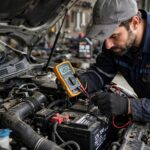
- Get the battery tested. Most auto parts stores test batteries free. A battery that needed a jump might just be deeply discharged — or it might be dying. Know which one you’re dealing with by learning the signs your car battery is dying.
- Consider a proper charge. A jump start gets you moving, but a slow, full charge from a battery charger is much healthier for the battery long-term. Here’s how to charge a car battery properly if you want to do it right.
When a Jump Start Won’t Help
Sometimes the battery isn’t the problem. If the jump doesn’t work, consider:
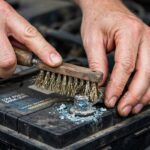
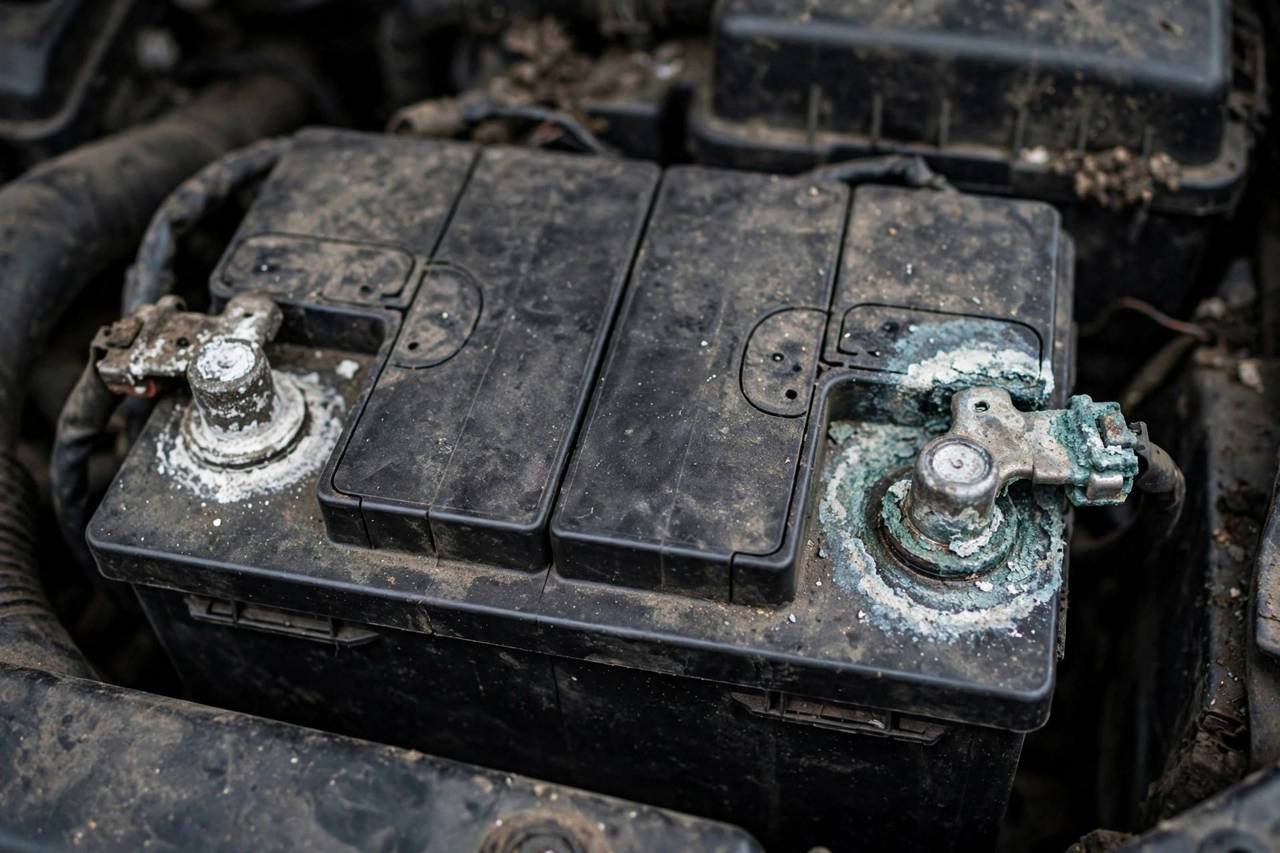
- Corroded terminals. White or greenish crust on the terminals blocks the electrical connection — the jump can’t get through. Clean them and try again. Here’s how to clean car battery terminals.
- A truly dead battery. Batteries don’t last forever — typically 3 to 5 years. If yours is old and won’t hold a charge, no amount of jumping fixes that. Learn can a dead car battery be recharged or whether it’s replacement time.
- Starter or alternator issues. Clicking with no crank after a good jump often points to the starter. A car that dies again shortly after jumping points to the alternator.
- It might not be the battery at all. No lights, no dash, nothing? Check main fuses. Single click? Could be the starter solenoid.
Portable Jump Starters: The Solo Solution
A portable lithium jump starter is the modern answer to the dead-battery problem. Charge it at home every few months, toss it in the glove box, and you can jump your own car with no second vehicle. The procedure is the same — red to positive, black to ground — but the “donor car” is a brick in your hand.
They’re genuinely reliable now, and for anyone who drives alone, parks on the street, or just likes being self-sufficient, it’s cheap insurance. Just remember to keep it charged — a dead jump starter helps nobody.
Jump Starting Modern Cars: Special Cases
Modern cars add a few wrinkles to the classic jump-start procedure. Here’s what to know:
- Remote terminals: Many modern cars — especially German brands — hide the actual battery in the trunk or under a seat, with dedicated jump-start terminals under the hood (usually marked with red and black covers). Always use these terminals, not the battery itself. Your owner’s manual shows exactly where they are.
- Start-stop systems: Cars with automatic start-stop use special AGM or EFB batteries. You can still jump them normally, but when replacement time comes, you must replace like-for-like — a conventional battery won’t survive in a start-stop car.
- Hybrids: Hybrids have both a high-voltage traction battery and a regular 12V auxiliary battery. You jump the 12V system exactly like a conventional car — never touch the orange high-voltage cables. The procedure is the same; just locate the 12V terminals (often in the trunk or under the hood).
- Fully electric vehicles: EVs also have a 12V auxiliary battery that can die just like any car’s. You can jump it the same way — you’re only waking up the 12V system so the car can boot up.
- Sealed “maintenance-free” batteries: Most modern batteries are sealed — you can’t (and shouldn’t try to) open them or add water. Jump them normally; just never attempt to pry off sealed caps.
When in doubt, the owner’s manual wins. Manufacturers sometimes specify exact procedures — a 30-second check beats a costly mistake.
How to Prevent the Next Dead Battery
Jump starts are rescues; prevention is better. Batteries usually die for predictable reasons:
- Age. At 3-5 years old, have your battery tested annually — most auto parts stores do it free.
- Parasitic drains. Interior lights left on, phone chargers plugged in, a trunk light that stays on — small drains kill batteries overnight. If your battery keeps dying with no obvious cause, a shop can test for parasitic draw.
- Short trips. Constant 5-minute drives never let the alternator fully recharge the battery. Take a longer drive weekly, or use a trickle charger if the car sits.
- Corrosion. Keep terminals clean — corrosion increases resistance and makes every start harder on the battery.
- Extreme temperatures. Both deep cold and brutal heat shorten battery life. In hot climates, batteries often die younger than their rated lifespan.
FAQ
How long do jumper cables need to be?
At least 20 feet. Shorter cables force you to park nose-to-nose in tight spaces, which isn’t always possible. Longer, thicker-gauge cables (lower gauge number = thicker) carry current better and give you positioning flexibility.
Can you jump start a car in the rain?
Yes — rain itself isn’t the hazard people imagine. Batteries are 12 volts; you’re not going to get electrocuted standing in the rain. Just keep the cable clamps and terminals as dry as practical, work deliberately, and follow the normal connection order.
How long should I let the car run after a jump start?
Drive for 20-30 minutes at normal road speeds. Idling alone charges slowly — the alternator needs RPM to produce meaningful current. If the battery dies again after that drive, it’s likely not holding a charge and needs testing or replacement.
Is it bad to jump start a car?
Done correctly, no — it’s what the system is designed for. Done wrong (reversed polarity, in particular), you can fry electronics in both cars. Follow the cable order, double-check your connections before starting, and you’ll be fine.
Can a completely dead battery be jump started?
Often yes, if the battery is just deeply discharged. But a battery that’s truly at the end of its life — sulfated plates, dead cells — may not take or hold a charge no matter what you do. If jumps are becoming a regular ritual, stop jumping and start shopping for a replacement.