“Dead” is doing a lot of work in this question. A battery that’s merely discharged — lights left on overnight — is absolutely rechargeable and will likely serve for years afterward. A battery that’s chemically worn out — plates sulfated, grids corroded, a cell shorted — is dead in the way that matters, and no charger on earth brings it back. The trick is telling which kind of dead you’re dealing with before you spend a day charging a corpse. Here’s how to diagnose it, when recharging works, and when to stop trying. The lifespan background is in my guide on how long car batteries last.
Table of Contents
- Two Kinds of Dead: Discharged vs Worn Out
- The 2-Minute Diagnosis Before You Charge
- When Recharging Works (the Good Cases)
- When Recharging Is Hopeless (the Bad Cases)
- How to Recharge a Dead Battery Properly
- Jump Start vs Charger: Which for a Dead Battery?
- The Recondition/Desulfation Question
- After Recharging: Proving It Worked
- Frequently Asked Questions
Two Kinds of Dead: Discharged vs Worn Out
Discharged dead: the battery’s chemistry is healthy, but its charge is gone. Causes: lights left on, car sat for weeks, parasitic drain, alternator hiccup. The plates are intact, the electrolyte is fine — the battery just needs electrons put back. This battery recharges fully and returns to normal service. It’s the “dead” that isn’t really dead.
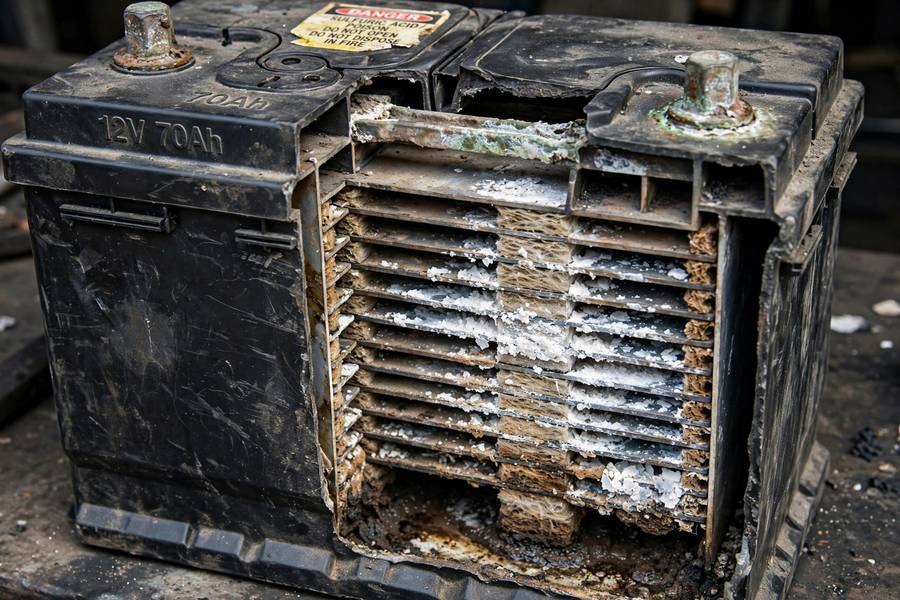
Worn-out dead: the battery’s chemistry is destroyed. Sulfated plates (lead sulfate crystallized permanently), corroded grids (the lead framework crumbling), shed active material (pile of gray sludge at the bottom of the case), shorted cell (physical contact between plates). The battery can’t hold charge because its internals are compromised. Charging it is like filling a bucket with no bottom — voltage may rise on the charger, but capacity is gone.
The distinction matters because the symptoms overlap: both kinds won’t start the car. But the prognosis is opposite — one recovers completely, the other never will. Everything below is about telling them apart quickly.
The 2-Minute Diagnosis Before You Charge
Check these before connecting any charger. Age: under 3 years old leans toward discharged (rechargeable); over 4-5 years leans toward worn out. Check the date code — it’s the fastest single data point.
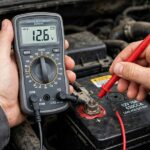
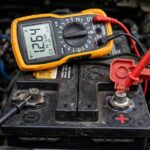
Voltage: a voltmeter reading tells a story. 12.0-12.4V on a “dead” battery: discharged but likely healthy — great recharge candidate. 10.5V: probably a shorted cell (one of six cells dead) — recharging won’t fix it. Below 10V with no obvious cause: deeply discharged; might recover with slow charging, might not — worth one attempt.
Physical inspection: swollen case, cracked case, leaking acid, rotten-egg smell — don’t charge, replace. These are structural/chemical failures, not discharge. Terminals heavily corroded: clean first, then assess — corrosion mimics death convincingly.
History: “I left the interior light on overnight” = discharged, recharge it. “It’s been cranking slower for two months and now it’s dead” = worn out, replace it. “The car sat for three months” = deeply discharged, try slow charging but expect possible sulfation damage. The story usually tells you the answer before any test does.
When Recharging Works (the Good Cases)
The textbook good case: healthy battery, accidental discharge. Dome light on overnight, trunk ajar for a weekend, headlights left on at work. The battery was fine yesterday; it’s just empty today. A full slow charge restores it completely — I’ve seen batteries survive dozens of such incidents and live full lives afterward. One deep discharge doesn’t kill a healthy battery (though each one shaves a little life).
The car-sat-too-long case: vehicle parked for 1-3 months, battery drained by parasitic draw plus self-discharge. If the battery was healthy and not deeply discharged for too long, slow charging usually recovers it fully. Beyond 3-4 months of sitting discharged, sulfation starts becoming permanent — try charging, but test capacity afterward rather than assuming success.
The alternator-glitch case: charging system hiccup (loose belt, intermittent connection) left the battery undercharged. Fix the charging issue, recharge the battery, and it’s fine — the battery was a victim, not the problem. Always verify charging voltage (13.7-14.7V running) when a “dead” battery turns out to be merely discharged; otherwise you’ll be recharging it again next week.
When Recharging Is Hopeless (the Bad Cases)
Shorted cell (~10.5V resting, won’t rise with charging): physical internal failure. The charger will push current into five good cells and the shorted one just heats up. No recovery possible — replace.
Severe sulfation: battery sat discharged for 6+ months, or is 5+ years old with declining capacity. It may accept a charge and show 12.6V, but a load test reveals 30-40 percent capacity — it can’t deliver starting current. Voltage without amperage is the hallmark: looks charged, won’t crank. Some desulfation chargers claim to reverse this; results are marginal on truly sulfated batteries (more below).
Physical damage: swollen, cracked, or leaking case; plates visibly damaged; electrolyte contaminated. Charging a damaged battery is unsafe (gas buildup, acid leaks) and pointless. Replace.
The repeat offender: a battery that’s needed charging or jumping three times this season. Even if it “takes” each charge, the pattern says capacity is gone — each recharge buys less time. You’re not maintaining a battery; you’re postponing a tow. Replace it on your schedule instead of its.
How to Recharge a Dead Battery Properly
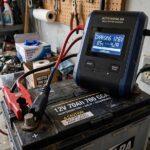
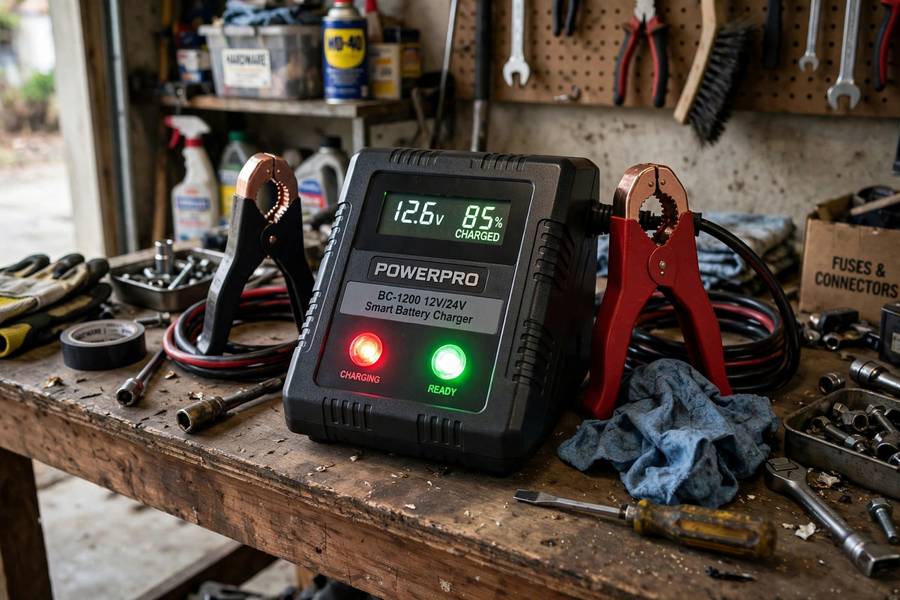
For a deeply discharged battery, slow is the way. Connect a smart charger at 2-10 amps (lower is gentler for deeply discharged batteries — I’d use 2-6 amps for a truly flat one). Expect a long charge: a fully dead 60Ah battery needs 10-30 hours depending on amperage. Patience is the method.
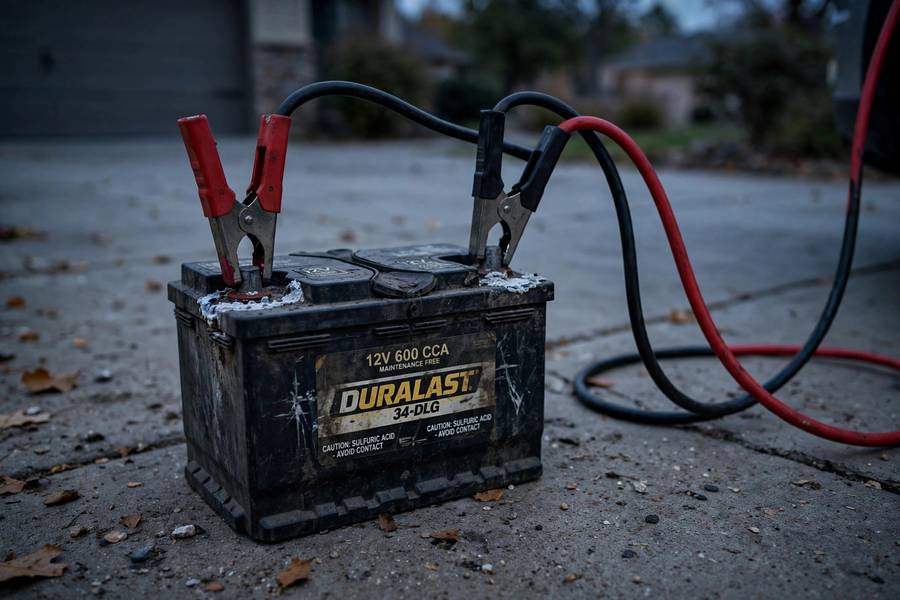
Deeply discharged batteries sometimes confuse smart chargers — the voltage is so low the charger doesn’t recognize a battery is connected. The workaround: connect a good battery in parallel temporarily (jumper cables, good battery to dead battery, positive-to-positive and negative-to-negative), let the charger see the combined voltage and start charging, then remove the good battery after 15-30 minutes once the dead one’s voltage has risen enough for the charger to continue solo. (Supervise this — don’t walk away during the parallel phase.)
Safety notes for dead batteries: inspect before charging (no swelling, cracks, leaks). Charge in ventilated area. If the battery gets hot (not warm — hot) during charging, stop — that’s a shorted cell or internal damage converting your electricity to heat. If it smells like rotten eggs, stop — excessive gassing means something’s wrong internally. A healthy recharge is boring: voltage rises slowly, battery stays cool, no drama.
Don’t use the 50-amp “boost” or engine-start mode as a charging method — it’s for emergency starting, not charging. Blasting a dead battery at high amperage generates heat and can warp plates. Slow charge for recovery; boost only to get the car running in an emergency, then charge properly.
Jump Start vs Charger: Which for a Dead Battery?
A jump start doesn’t recharge a dead battery — it borrows another car’s power to start your engine, after which your alternator does the charging. For a merely discharged healthy battery, this works fine: jump it, then drive 30+ minutes (highway, not idling in the driveway — the alternator needs rpm to produce full output). My jump start guide covers the safe procedure.
But jumping has limits. It won’t fix a worn-out battery — you’ll be jumping it again tomorrow. And relying on the alternator to recharge a deeply dead battery stresses the alternator: alternators are designed to maintain charge, not to recharge from zero, and doing it repeatedly shortens alternator life. A $150 battery problem becomes a $150 battery plus $500 alternator problem.
The rule I give customers: jump to get moving in an emergency, then put the battery on a real charger that evening for a proper slow charge. If it needed the jump because of an accident (lights left on), the charger restores it fully. If it needed the jump because it’s dying, the charger confirms it — a battery that won’t hold charge after a full slow charge has told you everything.
The Recondition/Desulfation Question
Many smart chargers offer a “recondition,” “repair,” or “desulfation” mode — high-frequency pulses claimed to break down lead sulfate crystals. Does it work? Honestly: sometimes, partially, on mildly sulfated batteries. The pulses can dissolve soft, recent sulfate deposits. They cannot reverse hardened, long-term sulfation, repair corroded grids, or fix shorted cells.
My experience: on a 3-year-old battery with mild sulfation from sitting a few months, desulfation mode sometimes recovers meaningful capacity — worth trying, costs nothing but time. On a 6-year-old battery that’s been declining for a year, it’s wishful thinking. The marketing oversells; the physics is unmoved.
The additives sold for “battery restoration” (Epsom salt solutions and similar): I don’t recommend them. They can provide a temporary improvement by changing electrolyte chemistry, but they don’t restore plate material, they contaminate the battery for proper recycling, and the improvement rarely lasts. A $10 bottle of hope versus a $150 battery that actually works — the math favors the battery.
Bottom line: try the charger’s recondition mode once on a borderline battery. If a load test afterward shows real capacity, you bought time. If not, you have a definitive answer — replace it.
After Recharging: Proving It Worked
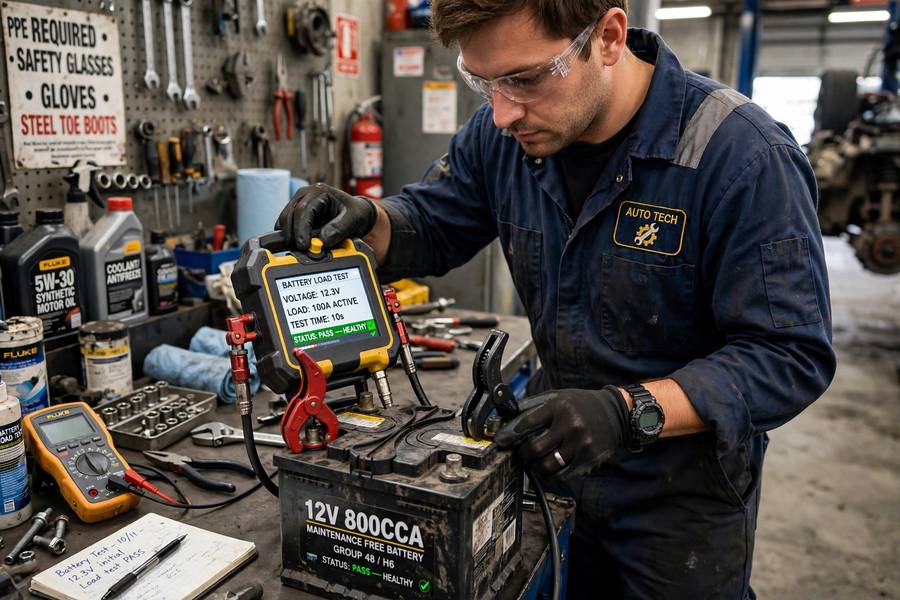
Charging isn’t done when the charger says full — it’s done when the battery proves it holds. The protocol: after the charger indicates complete, disconnect and let the battery rest 1-2 hours (surface charge dissipates). Check resting voltage: 12.6V+ is the target. Below 12.4V after resting means the charge didn’t truly take — capacity is compromised.
The overnight test: check voltage the next morning before starting. Still 12.4V+? The battery holds charge. Sagged significantly? It’s self-discharging — internal damage, replace.
The definitive test: a load test at the parts store (free). It measures actual starting capacity under calibrated load — the one number that matters. A recharged battery that passes a load test is genuinely recovered; drive with confidence. One that shows 12.6V but fails the load test is the voltage-without-amperage trap — replace it before it strands you.
And address the root cause: if the battery died from an accident (lights, sitting), you’re done. If it died from a parasitic drain, find the drain or you’ll repeat this monthly. If it died from an undercharging alternator, fix the alternator. A recharged battery with an unfixed root cause is a temporary reprieve, not a repair.
Frequently Asked Questions
If it’s merely discharged (lights left on, car sat unused), yes — a slow full charge usually restores it completely. If it’s chemically worn out (sulfated plates, shorted cell at ~10.5V, swollen case, 5+ years old), no — charging can’t restore lost plate capacity or fix internal damage. Age, voltage, and history tell you which kind you’re dealing with.
Use a smart charger at 2-10 amps (slower is gentler for deeply discharged batteries) and allow 10-30 hours for a fully dead 60Ah battery. If the charger won’t recognize the dead battery, temporarily parallel-connect a good battery to raise the voltage. Charge in a ventilated area; stop if the battery gets hot or smells like sulfur.
Jump starting doesn’t recharge — it borrows power to start the engine, then your alternator recharges during a 30+ minute drive. This works for accidentally discharged healthy batteries. But alternators aren’t designed for deep recharging; repeated deep recharges stress the alternator. Follow up with a proper slow charge on a charger.
Hopeless signs: resting voltage ~10.5V (shorted cell), swollen/cracked/leaking case, rotten egg smell, 5+ years old with declining performance, or full charge that won’t hold above 12.4V after resting. Also: if it’s needed jumping three times in a season, the pattern says replace regardless of what any single charge achieves.
Partially, on mildly sulfated batteries — the pulse modes can dissolve soft, recent sulfate deposits. They can’t fix hardened long-term sulfation, corroded grids, or shorted cells. Worth trying once on a borderline 3-4 year old battery; verify with a load test afterward. Don’t expect miracles on old, heavily sulfated batteries.