

“Your battery’s getting weak — we can replace it today for $189.” Heard that at an oil change place and wondered if it was honest or just padding the ticket? Good instinct.
I’m Marcus. Ten years around cars, and batteries are one of the most lied-about parts in the business — not because the tech is mysterious, but because nobody can see inside one. Here’s what I know from testing thousands of them: most car batteries last 3 to 5 years. That’s the real answer. The rest is detail about which end of that range you’ll land on, and whether a shop is selling you a battery you don’t need yet.
Table of Contents
- The Short Answer: 3 to 5 Years
- What Determines Battery Life
- Heat Kills Batteries, Cold Exposes Them
- Driving Habits That Shorten Battery Life
- Warning Signs Your Battery Is Dying
- How to Make Your Battery Last Longer
- Replace or Recharge: How to Decide
- Frequently Asked Questions
The Short Answer: 3 to 5 Years
In the shop we said a battery owes you nothing after three years, and everything past five is a gift. That still holds.
Years 1–3: A healthy battery should be rock solid. If it dies here, something else is wrong — a parasitic drain, a bad alternator, or lights left on all weekend. The battery isn’t the problem.
Years 3–4: The gray zone. Cranking power starts fading. Get it load-tested once a year from here on.
Years 4–5: Borrowed time. If yours is original equipment and pushing five, budget for a replacement on your schedule — your driveway, Saturday morning — instead of the battery’s schedule, which is always a dark parking lot in the rain.
Beyond 5: Possible in mild climates, but you’re gambling. I’ve seen seven-year batteries. I’ve seen them die the next week.
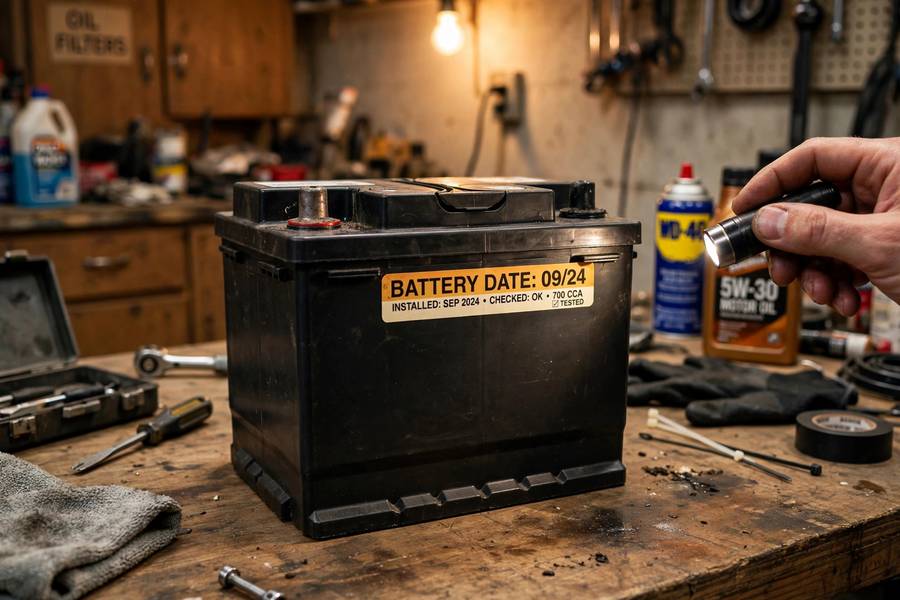
One thing the sticker won’t tell you: the punched month/year is the install date. The battery may have sat on a shelf for six months before that. The real birth date is stamped on the case — look for a code like “3/24.” A “new” battery that’s been sitting discharged for a year is already living on borrowed time. I always check the date code before buying. You should too.
What Determines Battery Life
Batteries die from the inside out. Every discharge-recharge cycle sheds a bit of plate material and builds sulfate crystals. You can’t stop it, but several things accelerate it:
Battery type. Standard flooded batteries: 3–5 years. AGM batteries (common in start-stop cars and most German cars): 4–6 years, but nearly twice the price. If your car came with AGM, replace it with AGM — the charging system is calibrated for it. I watched a guy put a $99 flooded battery in his BMW to save money. It lasted 14 months. Penny wise, pound foolish.
Climate. The big one. More below.
Parasitic drain. Modern cars are vampires — alarms, keyless entry, telematics sip power 24/7. Fine if you drive daily. Park it three weeks and the battery deeply discharges, which does permanent damage. Each deep discharge takes a measurable chunk off total lifespan.
Charging system health. An overcharging alternator cooks the battery; an undercharging one leaves it chronically weak, causing sulfation. Killing batteries every two years? Stop buying batteries and get the charging system tested. Something upstream is murdering them.
Heat Kills Batteries, Cold Exposes Them
Everyone blames winter. Here’s the truth from someone who’s replaced batteries in both Phoenix and Minneapolis: heat kills batteries; cold just reveals the murder.
Heat accelerates every bad chemical reaction inside — corrosion, water loss, plate degradation. A battery in Phoenix averages 2–3 years. The same battery in Seattle might go 6.
Cold barely damages a healthy battery. But it thickens engine oil (harder cranking), slows the battery’s chemistry (less available power), and raises electrical demand. A battery at 80% health starts fine in October and strands you in January. The cold didn’t kill it — it administered the final exam.
Practical takeaway: hot climate, budget every 3 years and don’t feel cheated. Mild climate, 5 years is reasonable. Park in shade or a garage when you can — every degree matters over years.
Driving Habits That Shorten Battery Life
Short trips are battery poison. Starting pulls hundreds of amps; the alternator needs 15–30 minutes of driving to replace it. An 8-minute commute withdraws more than it deposits, every day, until one morning — click-click-click. In the shop we saw this constantly with low-mileage drivers. “But I barely drive it!” Exactly. That’s the problem.
Long sits kill too. Weeks of parasitic drain is a slow death sentence. Storing a car? Disconnect the negative terminal — or better, put it on a smart battery maintainer (not a dumb trickle charger). A $40 maintainer adds years to a stored car’s battery. I keep one on my project car all winter. Would I spend my own money on it? I already did, three of them.
Accessories with the engine off. Forty-five minutes of headlights, blower, and phone charging in a parking lot is a deep-discharge event. Do it regularly and you’re shaving months off. Waiting? Idle the engine or kill the accessories.
Warning Signs Your Battery Is Dying
Batteries whisper before they scream:
Slow cranking. “Ruh-ruh-ruh” instead of a crisp start. The number one sign. The end is measured in starts now, not months.
Dim headlights at idle that brighten when you rev. Classic weak-battery symptom — at idle the alternator output is low, so the battery’s weakness shows in the lights.
Electrical gremlins. Sluggish windows, resetting radio presets, flickering warning lights on startup. I’ve diagnosed “bad” transmissions and “failing” power steering that were just dying batteries confusing the computers.
Swollen case or rotten-egg smell. Bulging means internal damage; sulfur smell means it’s venting gas and actively failing. Replace immediately, and don’t smoke near it. I’m serious.
It’s just old. Past four years with no test? You’re on the clock, symptoms or not.
Test, don’t guess. Any parts store load-tests batteries free. Or buy a $20 multimeter: 12.6+ volts at rest is full, 12.4 is ~75%, 12.0 is ~25% — trouble. But resting voltage only shows charge, not health; the load test is what matters. Test every fall after year three. Five minutes, saves a tow.
The upsell scam to watch: “your battery failed our test” when you came in for wiper blades. Ask for the printed test results — real testers print voltage and measured vs rated CCA. No printout, no sale. Get a second test at a parts store.
How to Make Your Battery Last Longer
You can’t make one immortal, but you can squeeze an extra year or two out:
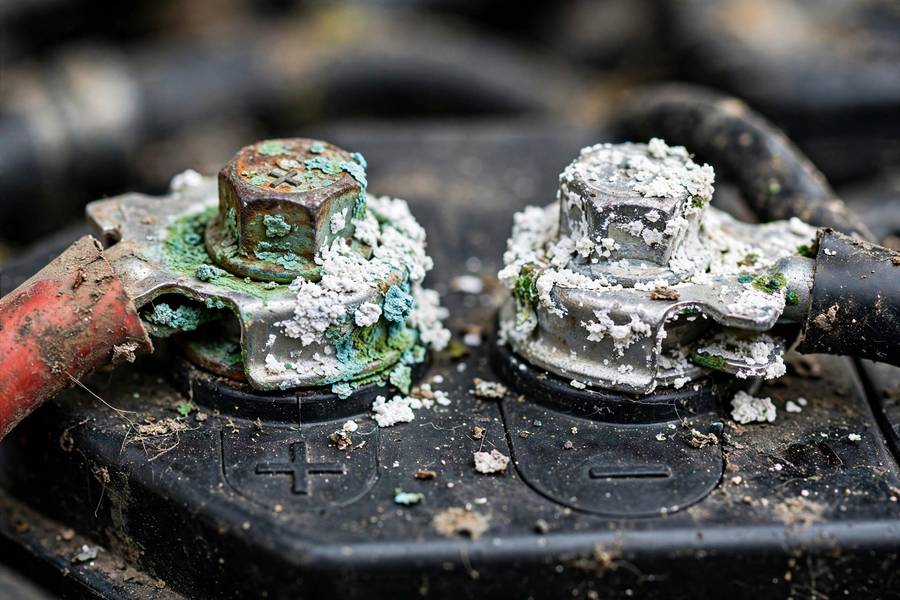
Keep terminals clean. That white-green crust creates resistance, making the alternator work harder and the starter crank weaker. Disconnect (negative first), scrub with a wire brush and baking-soda paste, rinse, dry, reconnect (positive first), coat with dielectric grease. Ten minutes, once a year. In the shop we’d see “bad batteries” that were just corroded terminals. Clean first, test second.
Clamp it down. A loose battery bounces, and bouncing kills plates. Make sure the hold-down is solid — replacements cost a few bucks.
Drive it properly. Combine short trips when you can; give it a solid 20–30 minute drive weekly if your normal use is all short hops. Highway miles are a battery’s favorite food.
Maintain stored cars. Smart maintainer, not trickle charger. Highest-ROI battery purchase for seasonal vehicles.
Buy smart. Correct group size, at least the manual’s CCA rating (more is fine, less is not). Most US batteries come from the same two or three manufacturers with different stickers — buy on warranty length and date-code freshness, not brand mythology. A 3-year free-replacement warranty on a fresh battery beats a fancy label on a stale one.
Replace or Recharge: How to Decide
Recharge it when: under 3 years old, died from an obvious cause (lights left on, sat two weeks), and it takes and holds a charge. Charge fully with a real charger — not just a jump and a drive — then load-test. Passes? You’re fine.
Replace it when: over 4 years old and died without obvious cause, won’t hold charge overnight, fails a load test, case swollen or leaking, or it’s needed multiple jumps in one season. A battery that keeps dying is telling you something. Listen.
About jumping and driving to “recharge”: a jump gets you going, but a short drive doesn’t fully recharge a deeply discharged battery — and it stresses the alternator. Jumped it? Put it on a charger overnight. (If you’re unsure of the procedure, here’s our walkthrough on how to jump start a car — done right, you won’t fry any electronics.)
Bottom line: expect 3 to 5 years, test annually after year three, keep terminals clean, never let it sit discharged, and replace on your schedule — not the battery’s.

Frequently Asked Questions
Most car batteries last 3 to 5 years. Heat shortens lifespan significantly (2-3 years in desert climates), while mild climates and highway driving can stretch it to 5-6 years. AGM batteries typically last slightly longer than standard flooded batteries.
Extreme heat is the number one killer, accelerating internal corrosion and water loss. Close behind: frequent short trips that never fully recharge the battery, long periods sitting unused, deep discharges from accessories left on, and a failing alternator.
Watch for slow engine cranking, headlights dimming at idle, sluggish power windows, flickering warning lights, and resetting radio presets. A swollen case or rotten-egg smell means replace immediately. Test any battery over 4 years old annually with a free load test.
Cold rarely damages a healthy battery, but it exposes a weak one. Cold thickens engine oil, slows the battery’s chemical reactions, and increases electrical demand. Summer heat does the real damage; winter just delivers the final exam to an already-weakened battery.
Recharge if it is under 3 years old, died from an obvious cause like lights left on, and passes a load test after a full charge. Replace if it is over 4 years old, will not hold charge overnight, fails a load test, or has needed multiple jumps in one season.
Yes. Keep terminals clean and tight, clamp the battery down securely, avoid constant short trips, use a smart maintainer for stored vehicles, and do not run accessories with the engine off. Annual load testing after year three catches decline before it strands you.