
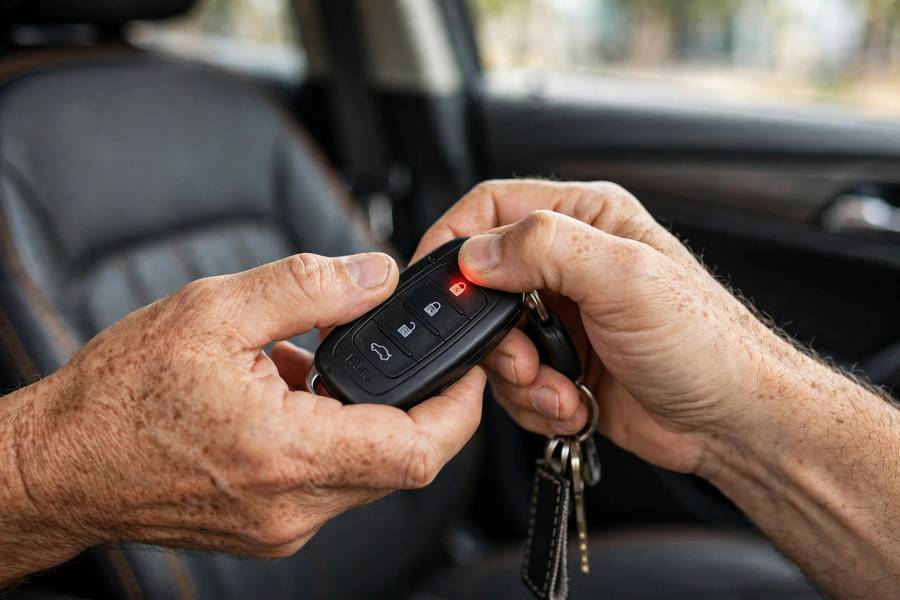
The dealer quoted $300 to program a key fob — it’s just a remote, right? Here’s what ten years around cars taught me: on many cars you can do it yourself in five minutes. I’m Marcus — here’s which camp your car is in, the procedures that work, and when to stop trying and call a professional.
Table of Contents
- First: Is It the Fob or Just the Battery
- Which Cars Allow DIY Programming
- The Standard Onboard Procedure
- The Transponder Problem DIY Can’t Solve
- When to Call a Locksmith or Dealer
- What It Should Cost
- Frequently Asked Questions
First: Is It the Fob or Just the Battery
Rule out the $5 fix first. In the shop, half the “dead fob” complaints were dead fob batteries. Symptoms: shorter range than usual, intermittent operation, some buttons working and others not.
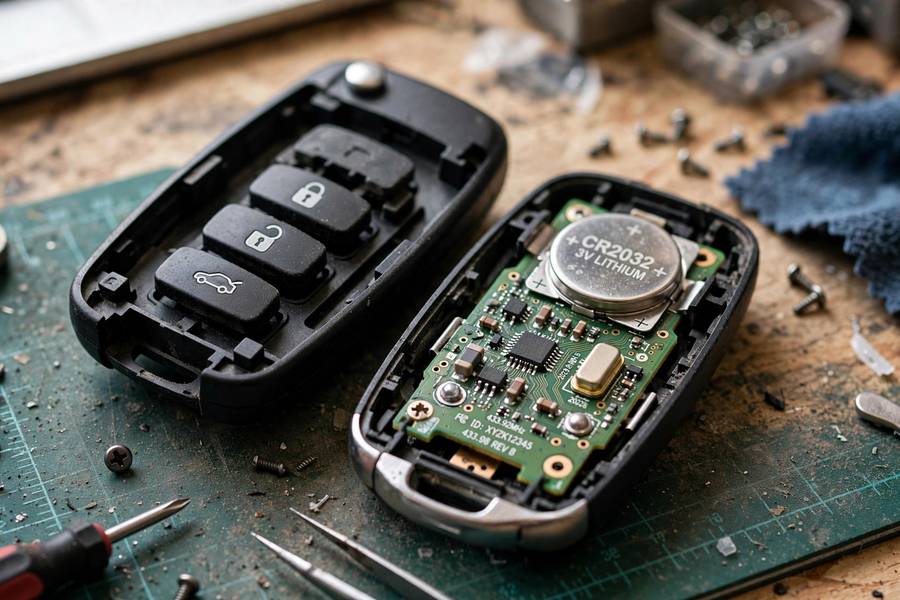
Replace the battery first. Pop the fob open (small flathead in the seam — gently), note the number (usually CR2032 or CR2025), swap in a fresh name-brand cell. If it springs back to life, you’re done — a battery swap doesn’t erase programming on virtually any modern car.
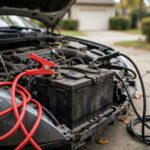
Also rule out the car battery. A weak 12V battery mimics a bad fob — the receiver needs proper voltage to hear the signal. Flaky fob plus slow cranking? Suspect the car battery first. (If it’s dead, here’s how to jump start a car properly — though a jump won’t fix genuinely lost programming.)
For a deeper dive, see our guide to fixing a car scratch.
For a deeper dive, see our guide to jump-starting a car.
You actually need programming when: it’s a brand-new replacement fob never paired to the car, or a fob that quit after the car battery was disconnected for an extended period (rare, but happens on some models). And skip used fobs from other cars — they’re usually VIN-married and can’t be reused. The $30 “cheap used fob” online is the most common way people waste money. Buy new, matched to your exact year, make, model, and FCC ID (printed inside — match it exactly).
Which Cars Allow DIY Programming
Usually DIY (onboard procedure, no tools): Most Ford, Lincoln, GM (Chevy, GMC, Buick, Cadillac), Chrysler, Dodge, Jeep, and older Honda/Toyota/Nissan — roughly 2000–2015, American or older-Japanese. These have a built-in programming mode entered via ignition cycles and button presses.
Sometimes: Newer Honda, Toyota, Nissan, Hyundai, Kia. Base models often retain onboard programming; push-button-start trims usually don’t. Around 2015–2020 most moved smart-key programming behind dealer tools.
Almost never DIY: BMW, Mercedes, Audi, VW (most), Volvo, Land Rover, Jaguar, and virtually anything with push-button start. Encrypted rolling-code systems — new keys are VIN-specific from the manufacturer, programmed with factory tools. No button dance exists. Forum claims otherwise are describing a different model year.
The Standard Onboard Procedure
For cars that support it, the pattern is consistent. Your owner’s manual has the exact sequence — check it first — but here’s the shape:
- Sit inside with all doors closed and every fob you own in hand. Critical: entering programming mode usually erases all existing fobs — you must reprogram each one in the same session, including the working one.
- Cycle the ignition OFF to ON (not start — just run) a set number of times — commonly 8 within 10 seconds for Ford. Speed matters; dawdle and it won’t enter programming mode.
- The car confirms programming mode — usually the door locks cycle by themselves. No lock cycle, no programming mode. Start over.
- Within ~20 seconds, press any button on the first fob. Locks cycle again to confirm.
- Repeat for each additional fob within the time window.
- Turn ignition OFF to exit. Test every fob — lock, unlock, panic, trunk.
Brand notes from experience: Ford’s 8-cycle procedure is the most forgiving and stayed consistent for years. GM varies by model — some trucks offer “Relearn Remote Key” in the Driver Information Center menus. Chrysler/Dodge/Jeep often require two working keys to add a third via onboard methods — down to one or zero keys, it’s a locksmith job. Older Honda/Toyota/Nissan procedures work but are finicky about timing — use a watch, not your rhythm.
Why it fails: wrong timing, a door not fully closed (many cars refuse programming mode with a door ajar), weak car battery aborting the sequence, or a car that simply doesn’t support it. Tried the manual’s exact sequence three times with no lock cycle? Stop — yours needs professional programming.
The Transponder Problem DIY Can’t Solve
What most guides gloss over: modern keys have two systems.
The remote (lock/unlock/trunk/panic) is what onboard procedures program. The easy part.
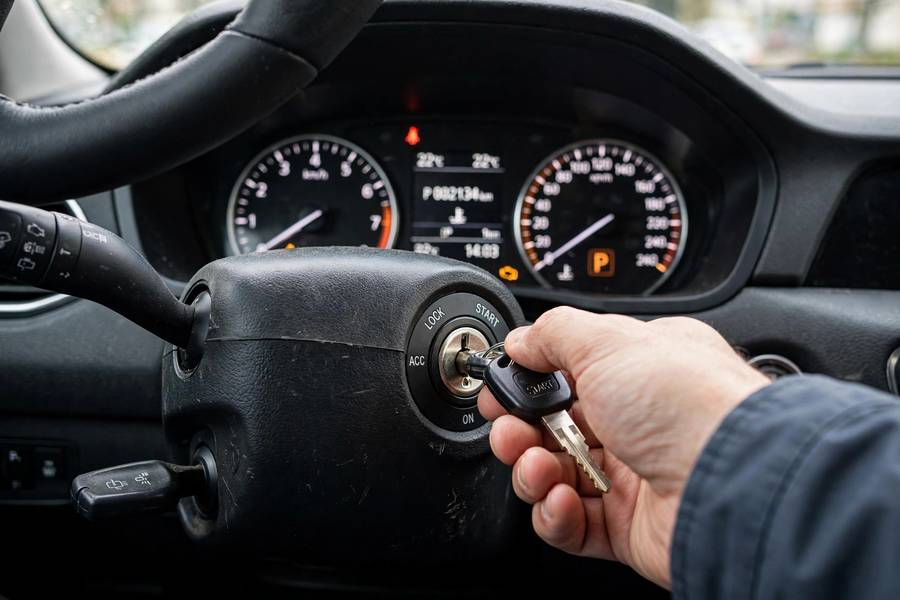
The transponder chip is an RFID chip in the key head that the immobilizer reads before allowing a start. No programmed transponder = cranks but won’t start. On most cars from the mid-2000s on, programming it needs two existing working keys or professional equipment.
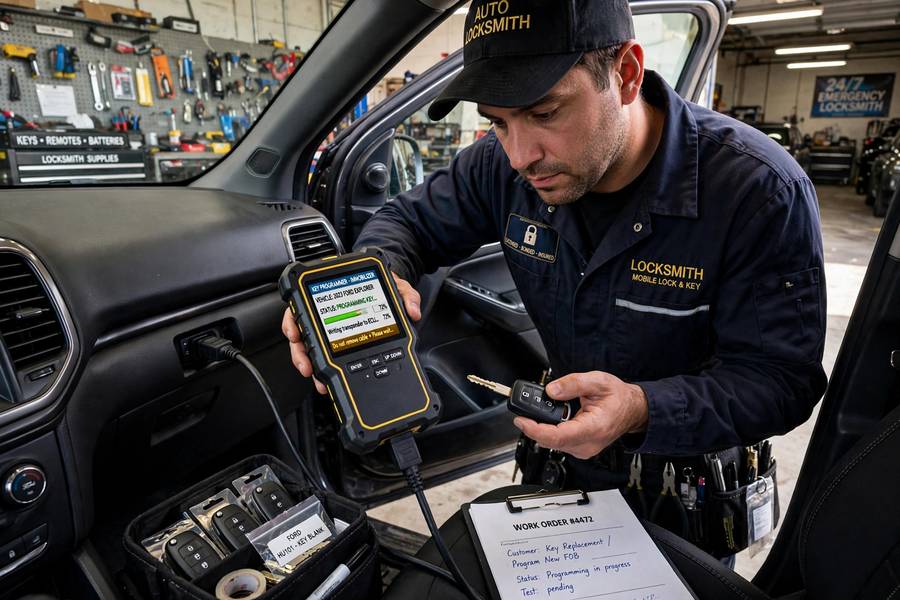
So the classic complaint — “I programmed it but it doesn’t work” — usually means: buttons work, car won’t start. The remote programmed fine; the immobilizer chip didn’t. The fix is a locksmith with a programmer, about 15 minutes.
Push-button smart keys combine both in one unit and are dealer/locksmith-only on nearly everything. No ignition cylinder to cycle means no onboard procedure. Accept it and budget accordingly.
When to Call a Locksmith or Dealer
Stop DIY-ing when:
- The manual’s exact procedure failed three times
- Push-button start (smart key system)
- German, Swedish, or British brand (encrypted systems)
- Zero working keys (onboard methods need at least one; zero often means a module-level reset)
- Buttons program but the car won’t start (transponder issue)
- 2020+ model, nearly any brand (the industry moved key programming behind professional tools — which, fairly, makes cars harder to steal)
Locksmith vs dealer: a good automotive locksmith does 90% of what a dealer can for 30–50% less, and comes to you. Dealers are needed for encrypted European systems and VIN-specific keys only the manufacturer supplies. Call a well-reviewed automotive locksmith first, give the exact year/make/model, and ask “can you program a key for this?” A good one tells you straight when it’s beyond their tools. If a locksmith quotes $89 by phone and it becomes $289 in your driveway, that’s a scam pattern — settle the price before they touch the car.
The expensive lesson: losing all keys can mean a new immobilizer module or factory reset — four figures on some European cars. Always keep two working keys. A spare made while you have one working key is cheap insurance; one made after losing the last is a financial event.
What It Should Cost
Real numbers, so you know when you’re being overcharged:
- DIY fob + onboard programming: $20–$60 for the fob, $0 labor, 10 minutes. Cheapest fix in car ownership when it works.
- Fob battery: $3–$8. Always try first.
- Locksmith programming (your fob): $75–$150. Supplying your own correctly-matched fob and paying labor only is the value move.
- Locksmith (fob + programming): $150–$300, most mainstream cars.
- Dealer (mainstream): $200–$400 all-in. Ask for the all-in number before authorizing — parts and labor get quoted separately.
- Dealer (luxury/European smart key): $400–$800+, possibly ordered VIN-specific with days of wait.
Bottom line: try the $5 battery, try the free onboard procedure if your car supports it, and the moment it stops being simple, pay a professional. I’ve watched people spend more on wrong fobs than the dealer would have charged in the first place.
Frequently Asked Questions
On many Ford, GM, and Chrysler vehicles from roughly 2000-2015: sit inside with doors closed, cycle the ignition OFF to ON 8 times in 10 seconds until the locks cycle, then press a button on each fob within 20 seconds. Check your owner’s manual for the exact sequence. Most European brands and push-button-start cars cannot be DIY programmed.
Sometimes. Many cars allow adding fobs via onboard procedures with at least one working key. With zero working keys, onboard methods almost never work and you will need a locksmith or dealer with professional equipment, which costs significantly more. Always keep two working keys.
The remote buttons and transponder chip are separate systems. The buttons program via the onboard procedure, but the transponder chip the immobilizer reads to allow starting usually needs professional equipment or two existing working keys. A locksmith can program it in about 15 minutes.
Usually not. Most fobs are married to their original car’s VIN and cannot move to another vehicle, especially European or push-button-start models. Some older Ford and GM models accept used fobs. Match the FCC ID inside the fob exactly and buy new or reputable-refurbished.
DIY is free plus $20-60 for the fob. A locksmith charges $75-150 for labor if you supply the fob, or $150-300 including it. Dealers charge $200-400 for mainstream brands and $400-800+ for luxury smart keys. Always try a $5 fob battery first.
No. Replacing the fob battery does not erase programming on virtually any modern car. If the fob worked before and does not work after a fresh battery, the issue is a bad replacement battery, dirty contacts, or a damaged fob, not lost programming.