Of all the CVT symptoms I write about, slipping is the one that should get your immediate attention. A whine is a warning. A shudder is a complaint. Slipping is the transmission telling you the fundamental grip between belt and pulley is failing — and every slip event makes the next one more likely.
Let me be blunt: if your CVT is slipping, the clock is ticking. But “ticking” doesn’t mean “dead tomorrow.” It means you have a window to act, and what you do in that window determines whether this is a service bill or a replacement bill. For the mechanical context, start with what a CVT transmission is and how it works.
Table of Contents
- What CVT Slipping Feels Like
- Why Slipping Happens: The Physics
- Cause 1: Degraded or Wrong Fluid
- Cause 2: Low Fluid Level or Pressure Loss
- Cause 3: Worn Belt or Pulley Surfaces
- Cause 4: Failing Solenoids or Valve Body
- Cause 5: Worn Torque Converter or Start Clutch
- How to Confirm It’s Actually Slipping
- What to Do (and What Not to Do)
- Frequently Asked Questions
What CVT Slipping Feels Like
The textbook description: you press the accelerator, the engine RPMs climb, but the car’s speed doesn’t match. There’s a disconnect — like the engine is working hard and the wheels didn’t get the memo. Then the transmission “catches” and the car surges forward.
In practice, owners describe it different ways: – “It revs but doesn’t go” – “There’s a delay, then it lunges” – “It feels like it’s in neutral for a second” – “The RPMs flare up when I accelerate”
Mild slipping might only happen under hard acceleration or on grades. Severe slipping happens during normal driving — pulling away from lights, merging, even cruising. The progression from mild to severe can take weeks or months, and that progression is your action window.
Don’t confuse slipping with the normal CVT “rubber band” feeling. In a healthy CVT, RPMs hold steady while speed climbs smoothly — that’s normal. Slipping is RPMs climbing without matching speed gain, often with a flare-and-catch pattern. If you’re unsure which you’re feeling, that’s worth a professional opinion — the distinction matters.
Why Slipping Happens: The Physics
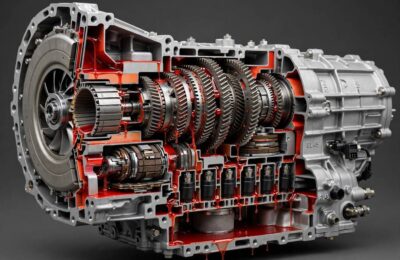
Here’s the core of it: a CVT transmits power through friction between the steel belt and the pulley faces. There’s no mechanical engagement — no teeth, no gears meshing. The hydraulic system squeezes the pulleys together with tremendous force, and that clamping force creates the friction that moves your car.
Slipping means the friction isn’t holding. Either: – The clamping force is too low (hydraulic problem — fluid, pressure, solenoids), or – The friction surfaces can’t grip anymore (mechanical problem — worn belt, glazed pulleys, wrong fluid)
Either way, when slip occurs, the belt slides microscopically (or not so microscopically) against the pulley faces. That sliding generates intense localized heat and wears both surfaces. Which means: slipping causes the very wear that causes more slipping. It’s a self-accelerating failure mode — the most dangerous kind.
This is why I treat slipping more urgently than whining or shuddering. Those are often early warnings. Slipping means the failure process is actively underway.
Cause 1: Degraded or Wrong Fluid
The most common cause and the most fixable. CVT fluid provides the precise friction characteristics the belt needs to grip. As fluid degrades — viscosity drops, friction modifiers break down, contamination builds — the grip weakens. The belt starts slipping under load.
The wrong fluid is even worse. Regular ATF in a CVT, or a “universal” fluid that doesn’t match the manufacturer’s friction spec, can cause slipping almost immediately. The fluid’s friction coefficient is engineered for the specific belt-pulley metallurgy — get it wrong and the physics don’t work.
Diagnostic clue: slipping that developed gradually over thousands of miles, worse under heavy throttle, with dark or burnt-smelling fluid. If the fluid is the problem, a proper drain-and-fill with the correct OEM fluid often improves things dramatically. Learn how to check transmission fluid to assess yours.
Cause 2: Low Fluid Level or Pressure Loss
Low fluid means low hydraulic pressure. Low pressure means the pulleys can’t clamp the belt hard enough. The belt slips.
Since CVTs don’t consume fluid, low level means a leak — pan gasket, axle seals, cooler lines. But there’s a sneakier variant: the level can be correct while pressure is low, due to a failing hydraulic pump, a stuck pressure regulator, or internal seal leakage. The fluid’s there; it’s just not being delivered with enough force.
Diagnostic clues for pressure issues: slipping accompanied by delayed engagement (the transmission is slow to build pressure generally), whining from the pump area, or slipping that’s worse when cold (cold, thick fluid is harder for a weak pump to move). Pressure testing requires a shop with the right gauges — this isn’t a driveway diagnosis.
Cause 3: Worn Belt or Pulley Surfaces
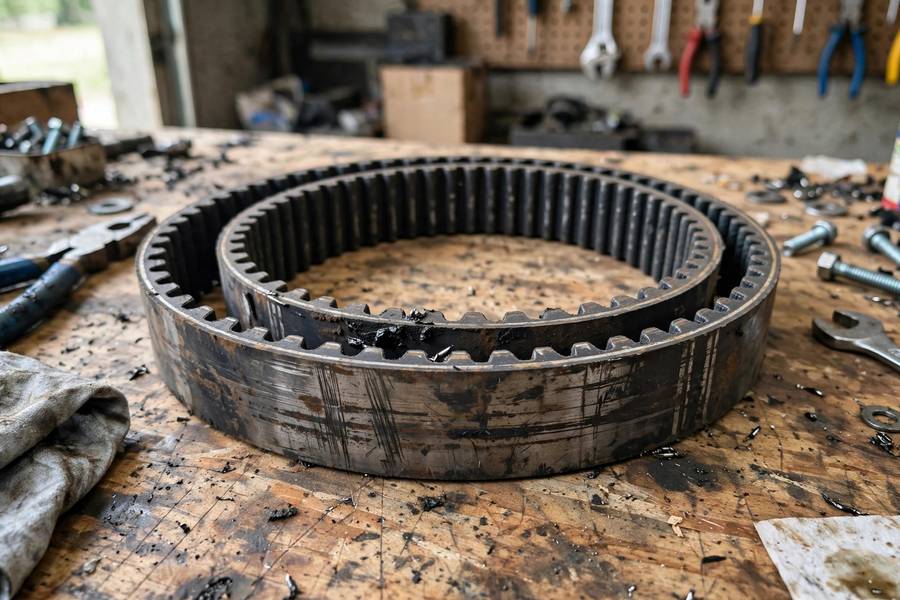
When the belt’s contact surfaces or the pulley faces wear past a certain point — scoring, pitting, glazing from prolonged slip or overheating — no amount of clamping force or fresh fluid restores the grip. The friction interface is physically damaged.
This is the cause everyone fears, because it’s the one that means internal repair or replacement. Diagnostic clues: slipping that persists after fresh fluid at the correct level, a metallic character to any accompanying whine, and a history of the problem — prior overheating events, long-deferred fluid changes, or months of ignored slipping that has now become severe.
I’ll be straight: if you’ve done the fluid service correctly and the transmission still slips, you’re likely looking at mechanical wear. Get a specialist’s assessment, get a second opinion, and start thinking about rebuild-vs-replace economics rather than hoping for a fluid miracle.
Cause 4: Failing Solenoids or Valve Body
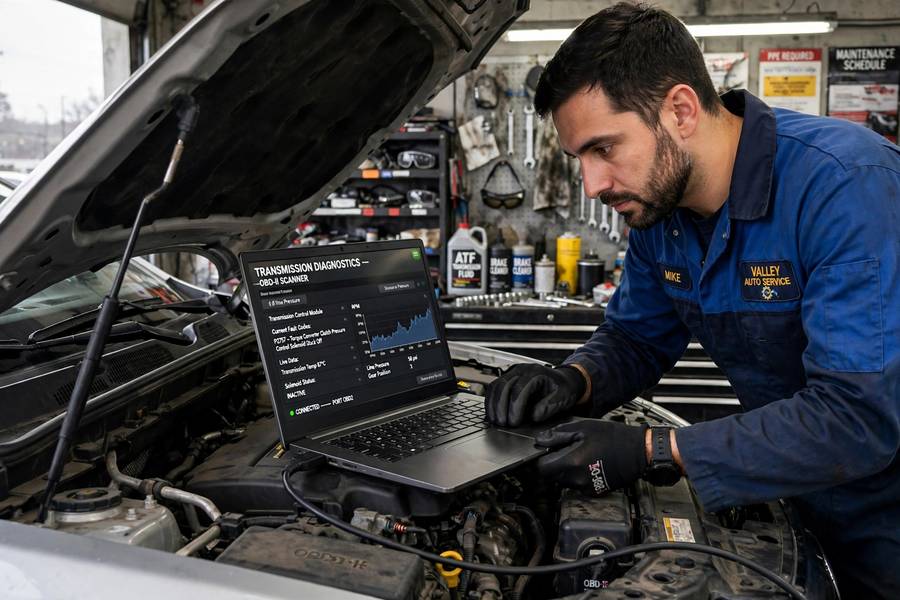
The transmission computer controls pulley clamping pressure through solenoids — small electro-hydraulic valves in the valve body. When a pressure control solenoid gets sticky, weak, or fails, the clamping force doesn’t match what the computer commanded. The computer thinks it’s applying full pressure; the pulley is getting half.
Solenoid problems have a distinctive signature: intermittent slipping that comes and goes, sometimes with harsh or erratic behavior mixed in. It might slip on Tuesday and behave perfectly on Wednesday. Electrical and hydraulic gremlins are like that — inconsistent.
The good news: solenoids and valve bodies are replaceable without a full transmission rebuild, and the repair costs hundreds rather than thousands. The bad news: diagnosis requires a scanner that can read transmission data and command solenoids — a proper transmission shop, not a guess-and-replace general mechanic. And what the check engine light means matters here, because solenoid faults usually set specific transmission codes.
Cause 5: Worn Torque Converter or Start Clutch
Sometimes what feels like belt slip is actually slip in the launch device — the torque converter or start clutch that connects the engine to the pulleys. A worn converter clutch or glazed start clutch slips under load just like a worn belt does, and from the driver’s seat they feel similar.
Distinguishing them: converter/clutch slip is usually most noticeable at launch and during the lockup transition, and may improve once you’re cruising steadily. Belt slip happens across the driving range, especially under sustained load. A good diagnostician can tell the difference with a scanner watching input vs. output speeds — if the slip is between the engine and the transmission input, it’s the converter; if it’s between input and output, it’s the belt.
Converter replacement is a significant job (the transmission has to come out) but cheaper than a full CVT replacement. It’s worth diagnosing correctly rather than assuming the worst.
How to Confirm It’s Actually Slipping
Before spending money, make sure you’re diagnosing the right thing:
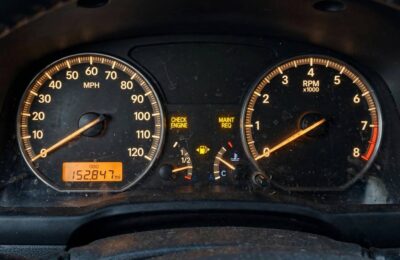
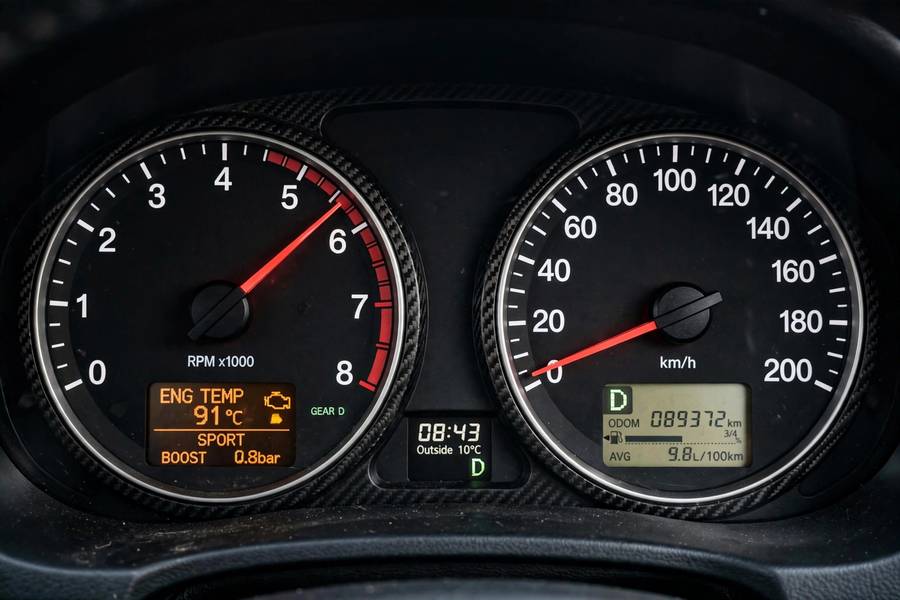
- The RPM test. On a safe, open road, accelerate moderately from 30 mph and watch the tachometer. In a healthy CVT, RPMs rise smoothly to a point and hold while speed climbs. In a slipping CVT, RPMs flare disproportionately — jumping up without matching speed gain.
- The grade test. Find a moderate hill. A healthy CVT holds ratio and pulls steadily. A slipping one flares RPMs and struggles.
- Note the conditions. When does it happen — cold, hot, always? Under light throttle or only heavy? Intermittent or constant? Write it down.
- Check for codes. A transmission scan may show ratio errors (commanded vs. actual ratio mismatch) that confirm slip objectively.
- Rule out the engine. Misfires and fuel delivery problems can feel like transmission slip — the engine stumbles under load. If the check engine light is on, address engine codes first.
What to Do (and What Not to Do)
Do: – Check fluid level and condition immediately – Service the fluid with correct OEM fluid if it’s degraded or overdue – Get a professional transmission scan (TCM codes, not just engine codes) – Drive gently until diagnosed — light throttle, no hard acceleration – Get a second opinion before authorizing major work
Don’t: – Floor it to “test” the slipping — every slip event causes more wear – Keep driving normally hoping it goes away — it won’t, and it gets worse – Let a general shop guess — CVT diagnosis needs a specialist – Ignore it because it’s intermittent — intermittent becomes constant
The window between “slipping occasionally” and “needs replacement” is real but finite. I’ve seen drivers get another 30,000 miles out of a slipping CVT with prompt fluid service and gentle driving. I’ve also seen drivers turn a $300 service into a $5,000 replacement in a month of hard driving. The difference is always how quickly they acted and how gently they drove in the meantime.

Frequently Asked Questions
The engine RPMs climb without matching speed gain — it feels like the car is in neutral for a moment, then surges as the belt catches. It’s most noticeable under acceleration and on grades.
Sometimes. If the cause is degraded or wrong fluid, low fluid level, or a failing solenoid, yes — those are serviceable. If the belt or pulley surfaces are worn, it requires internal repair or replacement.
Short distances with gentle throttle to reach a shop, yes. But every slip event wears the belt and pulleys further, so continued hard driving on a slipping CVT accelerates the damage significantly.
If degraded or incorrect fluid is the cause — which is common — yes, a drain-and-fill with the correct OEM fluid often helps significantly. If the belt or pulleys are mechanically worn, fluid alone won’t fix it.
A fluid service runs $150–$400. Solenoid or valve body work runs $500–$1,500. A full CVT replacement typically costs $3,500–$7,500. Early diagnosis keeps you at the cheap end of that range.