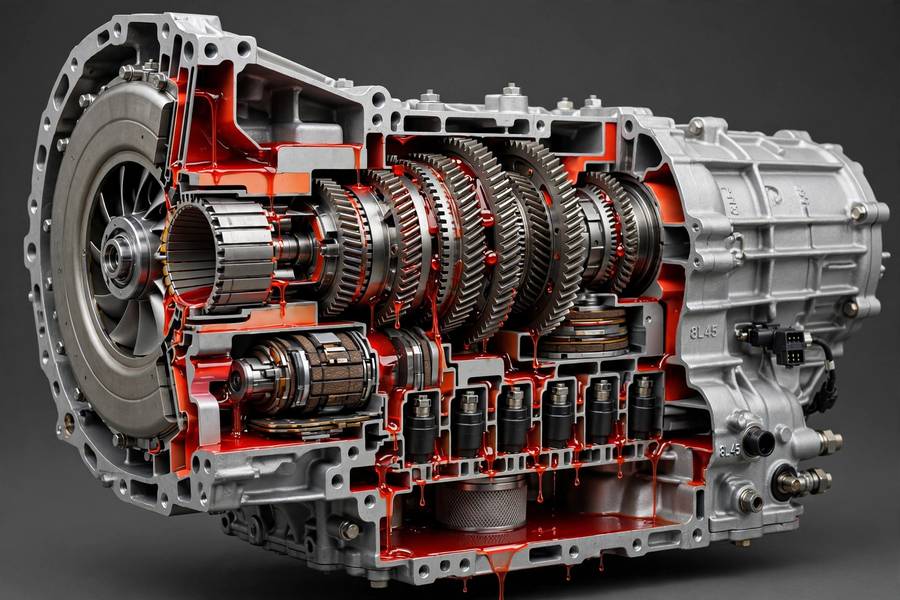
Most people I talk to think transmission fluid is just “the transmission version of oil” — a lubricant, full stop. That’s like saying your heart is just a muscle. Technically true, and it misses about eighty percent of the story.
Transmission fluid is genuinely one of the hardest-working fluids in your car. Inside an automatic transmission, it performs at least five distinct jobs simultaneously, and it does them while being whipped around at engine speed in a space the size of a basketball. Once you understand what it actually does, the reason shops charge so much for transmission work — and the reason neglecting fluid service is so destructive — makes a lot more sense.
Contents
- Job #1: It’s the Hydraulic System
- Job #2: It Cools Everything Down
- Job #3: It Lubricates Moving Parts
- Job #4: It Protects Against Wear and Corrosion
- Job #5: In CVTs, It’s Part of the Drive Mechanism
- What Happens When the Fluid Fails
- Why Different Transmissions Need Different Fluids
- Why “Lifetime Fluid” Is a Marketing Term, Not an Engineering One
Job #1: It’s the Hydraulic System
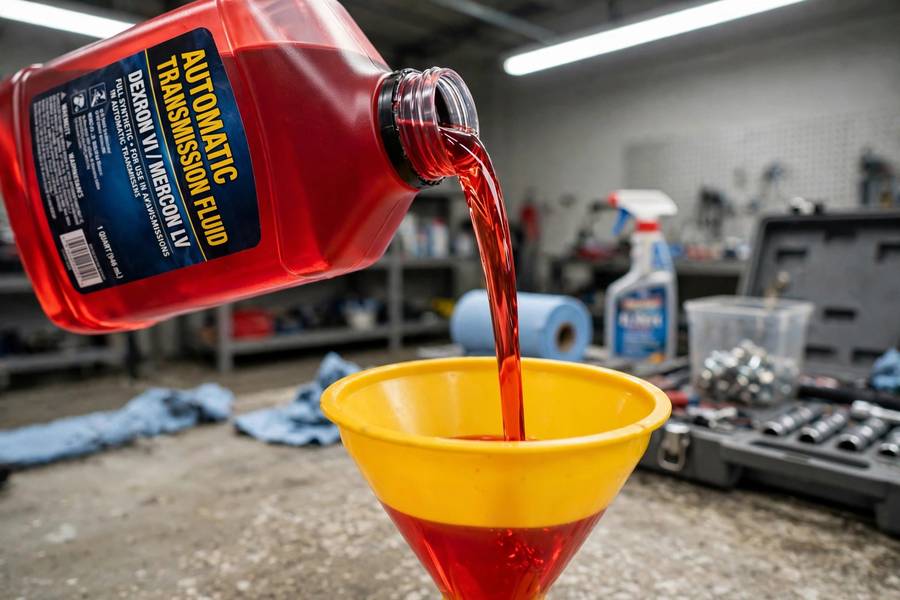
This is the big one — the job that separates transmission fluid from every other fluid in the car. An automatic transmission shifts gears using hydraulic pressure. Clutch packs and bands inside the transmission clamp down to hold different gear sets, and the force that clamps them comes from pressurized transmission fluid acting on pistons.
Think of it like this: when you press the gas and the car shifts from second to third, a small valve opened, fluid rushed into a piston chamber, and that pressure squeezed a clutch pack together — all in a fraction of a second, and it happens thousands of times a day without you ever feeling the individual events. Smooth shifts are smooth because the fluid pressure is precisely controlled.
This is also why low fluid causes slipping. The pump can’t build enough pressure, the clutch packs don’t clamp firmly, and they slide against each other instead of gripping. That sliding generates enormous heat — which brings us to job number two.
Job #2: It Cools Everything Down
A transmission generates serious heat. Those clutch packs slipping against each other during shifts, the gears meshing, the torque converter churning — it all produces thermal energy, and there’s nowhere for it to go except into the fluid.
Transmission fluid circulates through the system carrying heat away to the cooler (usually built into the radiator, or a separate external cooler). Normal operating temperature is roughly 175–200°F (80–93°C). Above 240°F (115°C), the fluid starts breaking down rapidly. For every 20 degrees above 200°F, the fluid’s life roughly halves — that rule of thumb is one reason towing and hot climates are so hard on transmissions.
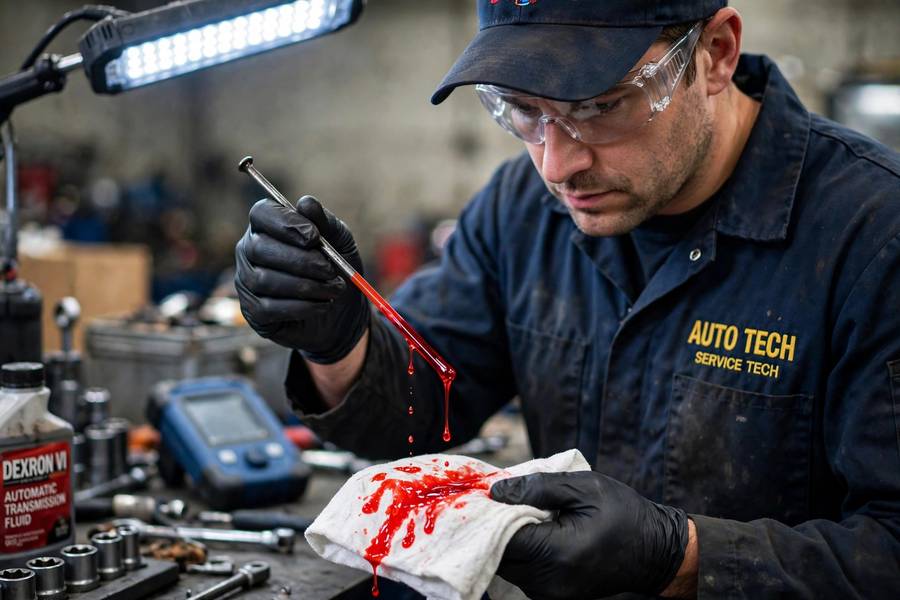
Overheated fluid loses its protective properties, oxidizes, and turns dark — which is why burnt-smelling brown fluid is such a bad sign. If you’re ever curious about the state of yours, I walk through the whole inspection in my guide on how to check transmission fluid.
Job #3: It Lubricates Moving Parts
The conventional job — and still important. Planetary gear sets, bearings, bushings, thrust washers: dozens of metal parts spinning against each other at high speed inside the case. The fluid forms a thin film between surfaces so they slide rather than grind.
What makes this different from engine oil lubrication: the fluid also has to maintain very specific friction characteristics at the clutch packs. This sounds contradictory — lubricate here, but grip there — and it is. Transmission fluid is engineered with friction modifiers that let it be slippery on gears but grippy on clutch friction material. That precise dual personality is why you can’t just substitute any red fluid. Using the wrong spec genuinely changes how the clutches engage.
Job #4: It Protects Against Wear and Corrosion
Transmission fluid carries an additive package — detergents, dispersants, anti-oxidants, corrosion inhibitors, and anti-foam agents. Each one matters:
- Detergents and dispersants keep microscopic wear particles and sludge suspended in the fluid so they get caught by the filter instead of settling into passages.
- Anti-oxidants slow the chemical breakdown that heat causes, extending the fluid’s working life.
- Corrosion inhibitors protect the metal internals — especially important because transmissions contain aluminum, steel, and copper alloys that corrode differently.
- Anti-foam agents prevent air bubbles in the fluid. Foaming matters because air compresses — hydraulic pressure built on foamy fluid is inconsistent, which means harsh or erratic shifting.
These additives deplete over time. That’s the real reason fluid needs changing even when the level is fine and the color looks okay-ish: the chemistry wears out before the fluid looks spent.
Job #5: In CVTs, It’s Part of the Drive Mechanism
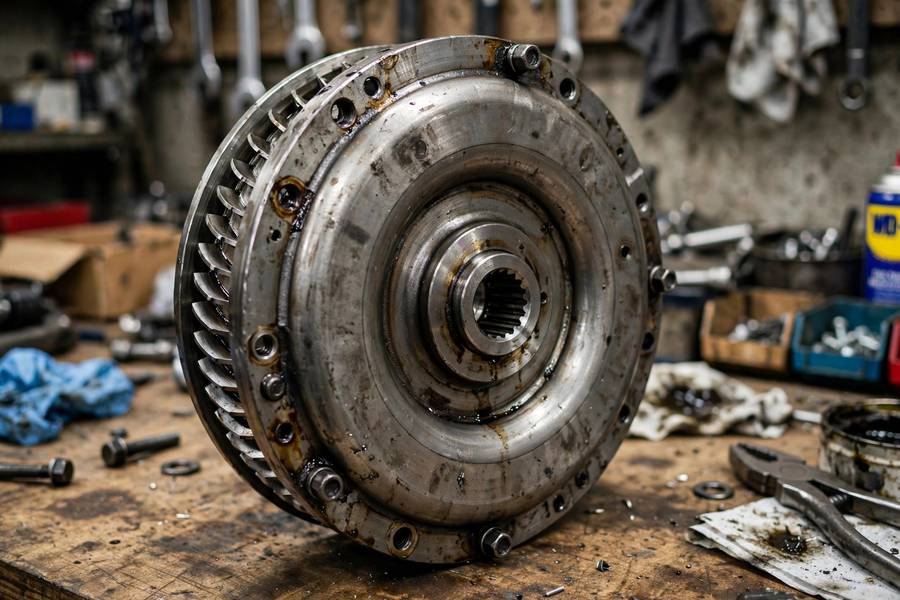
In a continuously variable transmission, the fluid’s role gets even stranger. A CVT transfers power through a steel belt or chain squeezed between two pulleys — and the grip between the belt and the pulleys depends partly on the fluid’s friction properties under extreme pressure.
CVT fluid is formulated completely differently from conventional ATF for this reason. Put standard ATF in a CVT and the belt slips, the pulleys score, and you’ve killed a transmission that costs more than some cars. I go deeper into why in my piece on CVT transmissions — but the takeaway is simple: in a CVT, the fluid isn’t just serving the mechanism, it’s part of the mechanism.
What Happens When the Fluid Fails
Fluid failure is a cascade, and I’ve watched the same sequence play out on hundreds of cars:
- Additives deplete. The fluid’s chemistry fades. Shifts get slightly less smooth — most drivers don’t notice yet.
- Oxidation accelerates. Heat breaks the fluid down faster. It darkens, thickens slightly, and smells different.
- Heat transfer drops. Degraded fluid carries heat less effectively, so the transmission runs hotter, which degrades the fluid faster. This is a feedback loop.
- Clutch packs wear. Without proper friction characteristics and cooling, clutches slip more and wear faster, shedding particles into the fluid.
- Particles and sludge clog passages. Valve body passages are tiny. Debris restricts flow, causing harsh or delayed shifts.
- Hard parts fail. Bearings, bushings, and gears running on spent fluid wear out. By this point you’re looking at a rebuild.
The frustrating part: steps 1–3 are invisible to the driver. By the time symptoms appear (slipping, harsh shifts, whining), you’re usually at step 4 or 5. This is why fluid service is preventive — waiting for symptoms means the damage has already started.
Why Different Transmissions Need Different Fluids
Because each transmission design demands different friction behavior, different viscosity, and different additive packages. A brief tour:
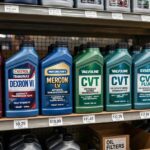
- Conventional automatics use ATF spec’d by the manufacturer (Dexron, Mercon, ATF+4, Toyota WS, Honda DW-1, and so on). These are not interchangeable — the friction modifiers differ by manufacturer.
- CVTs need CVT-specific fluid with extreme-pressure additives for belt grip. Never ATF.
- Dual-clutch transmissions use specialized fluid — some designs have separate fluid for the clutches and the gear oil side. Getting this wrong is expensive.
- Manuals typically use gear oil (GL-4 or GL-5), which is a completely different product — thicker, different additives, different job.
The safe rule I’ve repeated to customers for years: buy the fluid your owner’s manual specifies, matched by specification number. “Multi-vehicle” fluids from reputable brands are fine for top-offs in a pinch, but for a full service on a transmission you want to keep, the exact spec is cheap insurance.
Engine oil gets the glory — everyone knows you change it, and there’s a whole section of my brain devoted to how to check your oil level as well. But transmission fluid does more jobs per quart than anything else under your hood. Treat it accordingly.
Why “Lifetime Fluid” Is a Marketing Term, Not an Engineering One
Somewhere around the mid-2000s, several manufacturers started calling their transmission fluid “lifetime fill.” No service interval. Sealed units. Don’t touch it. I have a professional opinion about this, and it is not printable in a family publication — so here’s the printable version.
“Lifetime” never meant your lifetime, or the car’s. It meant the warranty lifetime — roughly 100,000 miles, after which the manufacturer is no longer financially responsible for the transmission. The fluid doesn’t know about the warranty. It shears down, oxidizes, and accumulates clutch material at exactly the same rate whether the marketing department blessed it or not.
The evidence walked into my shop for years: sealed units with “lifetime” fluid coming in at 120,000 miles with black, burnt-smelling fluid and shifting problems that a fluid service at 60,000 would have prevented. Some manufacturers quietly walked the claim back — adding service intervals in later manuals, or having dealers recommend fluid services the marketing never mentioned.
Here’s my rule, and it has never been wrong: if the transmission has moving parts and heat, the fluid has a service life. For conventional automatics, 30,000–50,000 miles. For CVTs, the same — some of the fussier ones want it closer to 30,000. Use the exact OEM-spec fluid, not whatever’s cheapest, because modern transmissions are calibrated to specific fluid friction properties and the wrong fluid causes shift problems that look like mechanical failure.
The “lifetime fluid” car isn’t maintenance-free. It’s just a car whose maintenance schedule was written by the marketing department instead of the engineers. I trust the engineers.
Frequently Asked Questions
Transmission fluid does five jobs: it acts as the hydraulic medium that engages clutch packs for shifting, cools the transmission, lubricates gears and bearings, protects against wear and corrosion with its additive package, and in CVTs helps the belt grip the pulleys.
No — engine oil’s main job is lubrication, but transmission fluid is also a hydraulic fluid with precisely engineered friction characteristics. It’s slippery for gears but grippy for clutch packs, which is why the wrong fluid spec causes real damage.
Clutch packs slipping during shifts, gears meshing, and the torque converter churning all generate heat — normal operating temperature is 175–200°F. The fluid carries that heat to the cooler; overheated fluid breaks down fast and shortens transmission life.
No. Each manufacturer specifies a fluid with particular friction modifiers for their clutch materials — Dexron, Mercon, ATF+4, Toyota WS, and CVT fluids are not interchangeable. Always match the specification number in your owner’s manual.
Worn fluid causes a cascade: additives deplete, the fluid oxidizes and overheats, clutch packs slip and wear, debris clogs valve body passages, and eventually hard parts fail — leading to a rebuild. Most of this damage happens before any symptoms appear.