Walk into any auto parts store and the spark plug aisle looks like a jewelry counter now. Copper, platinum, double platinum, iridium, ruthenium — prices from two bucks to fifteen. The boxes all promise something: more power, better mileage, longer life. A customer asked me last month, straight-faced, whether the $14 plugs would “unlock” his Camry.
Here’s the truth from ten years of installing all of them: for most drivers, the right answer is boring, and the expensive answer is only right sometimes. Let me explain what each material actually does, because once you understand the physics, the marketing falls apart fast.
Contents
- The Short Answer
- What Each Material Actually Is
- The Real Tradeoff: Conductivity vs. Longevity
- What I’ve Seen in the Shop After Ten Years
- The Performance Plug Myth
- Which Plug for Which Driver
- My Buying Rule
The Short Answer
Buy whatever your manufacturer specifies. If your car came with iridium plugs, replace them with iridium plugs. If it came with copper, copper is fine. The engineers who designed your ignition system — coil output, dwell time, heat range, gap — designed it around a specific plug. “Upgrading” the material without a reason is like putting racing fuel in a lawnmower: technically possible, practically pointless.
That said, there are real differences between the materials, and there are situations where switching makes sense. Here’s the full picture.
What Each Material Actually Is
All spark plugs do the same job: conduct high voltage to the electrode tip and survive tens of millions of explosions. The difference is what the electrodes are made of, and it comes down to two properties: how well the metal conducts electricity, and how well it resists being vaporized by the spark.
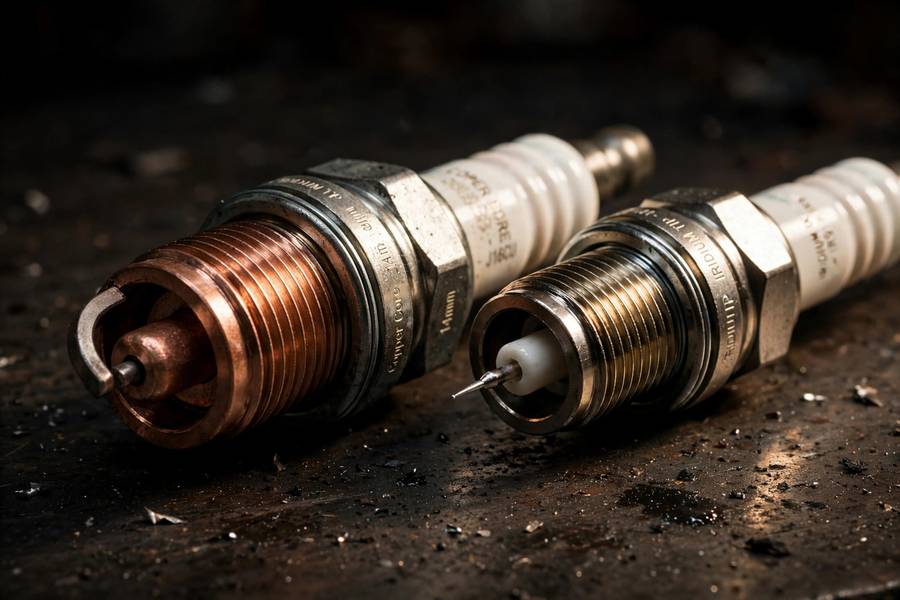
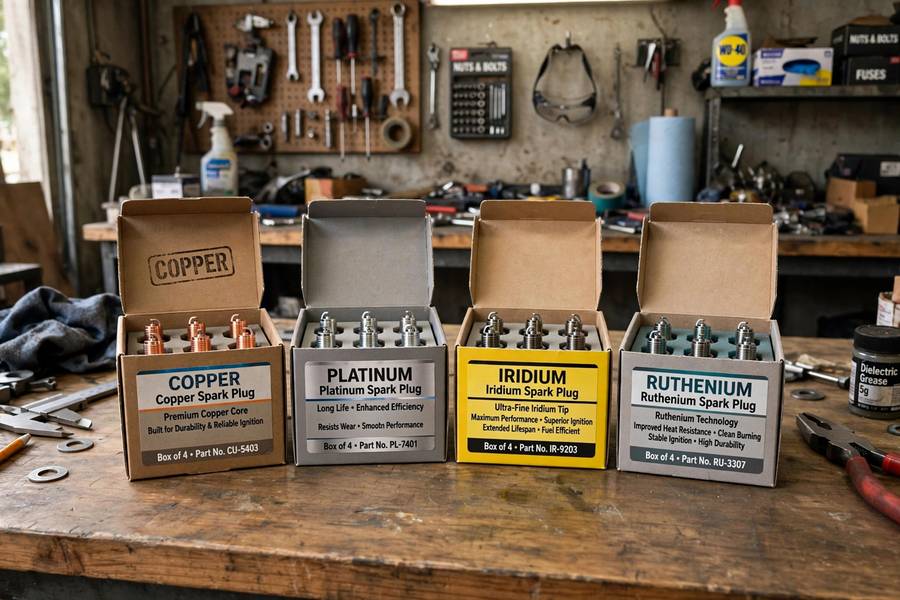
Copper. The original and still the best conductor of the bunch. A copper plug has a solid copper core with a nickel-alloy electrode. It delivers the spark efficiently and costs almost nothing — usually $2–4 per plug. The catch: nickel alloy is soft. Every spark erodes it, so copper plugs wear out fast: 20,000–30,000 miles. They’re also physically larger at the tip, which needs a slightly stronger spark to jump the gap reliably.
Platinum. A small platinum disc welded to the electrodes. Platinum is much harder than nickel alloy, so it erodes far more slowly — 60,000–100,000 miles of life. Conductivity is worse than copper, but the longevity trade is worth it for most drivers. Usually $4–8 per plug. “Double platinum” just means both electrodes get the platinum treatment, which matters for waste-spark ignition systems that fire in both directions.
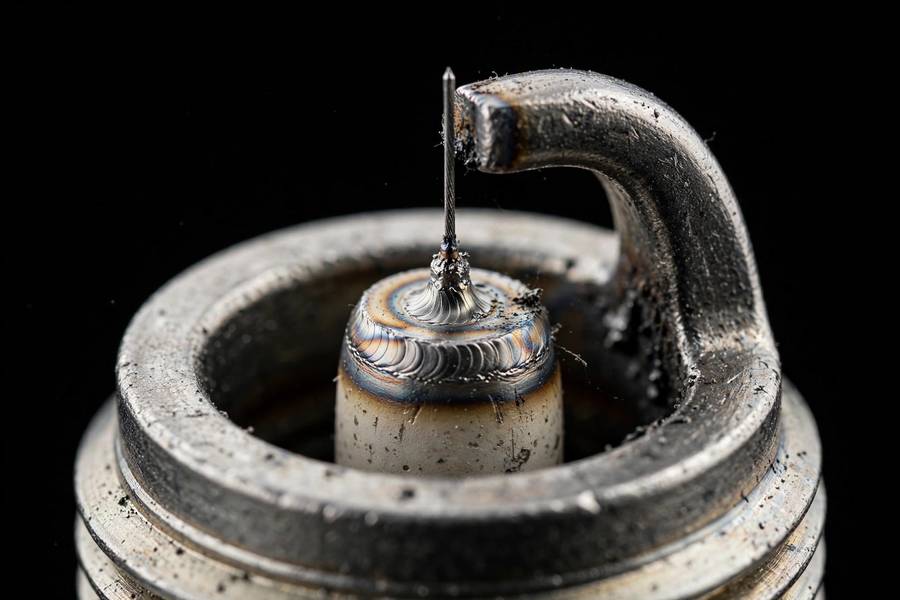
Iridium. Harder than platinum, with a higher melting point. That hardness lets manufacturers use a much finer center electrode — a tiny, precise tip that focuses the electric field and fires reliably with less voltage. Life: 80,000–120,000 miles. Cost: $8–15 per plug. This is what most modern cars ship with, because fine-wire tips work beautifully with today’s high-energy coil-on-plug systems.
Ruthenium. The newest player. Even harder than iridium, with excellent high-temperature durability. Marketed as the longest-lasting plug available. In my experience, it’s a fine plug — but for a street car, the practical difference over iridium is marginal. You’re paying for the last 5% of durability you’ll probably never use.
The Real Tradeoff: Conductivity vs. Longevity
Here’s the physics in one paragraph: copper conducts electricity best but wears fastest. Iridium and ruthenium conduct worse but wear slowest. Platinum sits in the middle. Nobody gets both — it’s a genuine trade-off, not a ladder where expensive is strictly better.
In practice, the conductivity difference barely matters on a street car. Your coils produce 20,000–40,000 volts; whether the electrode is copper or iridium, the spark jumps. The difference shows up at the margins — high-RPM race engines, extreme boost — where copper’s conductivity edge actually counts. That’s why plenty of race teams still run copper plugs and change them constantly. They don’t care about 100,000-mile life; they care about the strongest possible spark this weekend.
For your daily driver, longevity wins. Pulling plugs every 20,000 miles is a chore nobody does, which means copper plugs in a daily driver usually end up overdue and worn — and overdue plugs of any material are worse than fresh plugs of any material. A fresh $3 copper plug outperforms a worn $12 iridium plug every time. Remember that.
What I’ve Seen in the Shop After Ten Years
A few patterns from thousands of plug jobs:
Iridium plugs that went 120,000 miles and still looked okay. The electrodes were rounded and the gaps were wide, but the cars were still running. Iridium’s longevity claims are real. I pull them at 100,000–120,000 and they’re honestly fine — tired, but fine.
Copper plugs at 40,000 miles that were completely shot. Rounded electrodes, gaps you could drive through, misfires under load. The owners always say “but they were only in there a couple years.” Miles are miles. Copper doesn’t care about your calendar.
“Upgraded” plugs causing problems. This is the big one. I’ve diagnosed rough running, misfires, and poor fuel economy caused by nothing more than someone installing fancy multi-electrode or “high performance” plugs that the engine wasn’t designed for. The computer expects a specific spark characteristic; give it something weird and it can’t adapt. Every time, the fix was the same: put the factory-spec plug back in. If you’re chasing a drivability problem after a plug change, start by checking what your check engine light means — but check your plug choice first.
Platinum plugs in waste-spark systems wearing unevenly. Single-platinum plugs in a waste-spark ignition (where the spark fires in reverse on half the cylinders) wear the non-platinum electrode fast. If your car has waste-spark ignition, you need double platinum or better. This is one of those details the parts counter guy sometimes gets wrong.
The Performance Plug Myth
Let me kill this one cleanly: no spark plug adds horsepower to a healthy engine. Not iridium, not ruthenium, not the ones with four ground electrodes and a lightning bolt on the box.
A spark plug has exactly one job: ignite the mixture reliably. If your old plugs are worn, new plugs of any type will restore lost power and economy — and people mistake that restoration for a “performance gain.” The gain came from replacing worn parts, not from the exotic metal. I’ve seen dyno sheets from back-to-back tests: fresh copper vs. fresh iridium on a stock engine, and the difference is within the noise. Zero.
Where premium plugs genuinely help: engines that are hard on plugs. Turbocharged and supercharged engines, high-compression engines, engines with long plug-change intervals buried under intake manifolds. In those applications, the fine-wire tip and erosion resistance of iridium earn their price. But that’s durability and reliability, not power.
And the gimmicks — split electrodes, surface-gap designs, “pulse” plugs — I’ve tested the ones customers brought in, and the honest result is: they work about as well as a standard plug and cost three times as much. Your engine doesn’t know what the box looked like.
Which Plug for Which Driver
Daily driver, stock engine: Whatever the manual says. If that’s iridium, buy iridium. If that’s copper, copper is perfectly good — just actually change them on schedule. Pair the job with your other routine maintenance and you’ll never think about plugs between changes. Speaking of which, staying on top of how often to change your engine oil matters just as much for plug life — dirty oil means more deposits and faster fouling.
High-mileage commuter who hates maintenance: Iridium or ruthenium. The whole point is stretching the interval safely. Pay once, forget for 100,000 miles.
Older car, simple ignition: Copper is honest and cheap. These engines were designed for copper, the plugs are easy to reach, and changing them every couple of years is a pleasant Saturday job, not a ordeal.
Modified or forced-induction engine: Talk to your tuner, not the parts store. Heat range and gap matter far more than electrode material here, and the wrong choice can melt things. Iridium is the usual answer, often a step colder — but get the specific recommendation for your setup.
“I just want the best”: The best plug is the correct plug, installed correctly, changed on time. Everything else is jewelry.
My Buying Rule
After a decade, my rule is simple: match the factory spec, buy a reputable brand, and spend the savings on changing them on time. NGK, Denso, Bosch, Champion, Autolite — the major brands all make good plugs. The no-name bargain plugs at the flea market are the only ones I’d genuinely avoid; I’ve seen the electrodes come loose, and a loose electrode bouncing around a cylinder is nightmare fuel.
Don’t overthink the metal. Do think about the gap (check every plug, even “pre-gapped”), the torque (use a wrench), and the interval (write it down). The fanciest iridium plug in the world, installed with the wrong gap and torqued by feel, will run worse than a $3 copper plug installed right. The procedure matters more than the part — which is why I wrote the full walkthrough on how to change spark plugs with every lesson from my years in the shop.
Buy the right plug. Install it right. Change it on time. That’s the whole secret, and the plug companies would really prefer you didn’t know how simple it is.
Frequently Asked Questions
Iridium plugs last much longer (80,000–120,000 miles vs 20,000–30,000 for copper) and use a finer electrode tip, but copper conducts electricity slightly better. For a stock daily driver, the best choice is whatever your manufacturer specifies — neither is universally “better.”
No. No spark plug adds horsepower to a healthy engine. New plugs of any type restore power lost to worn plugs, which people mistake for a performance gain. Premium materials buy longevity and reliability — especially in turbocharged or hard-to-service engines — not power.
Typically 80,000–120,000 miles, though you should follow your owner’s manual interval. Platinum lasts 60,000–100,000 miles, and copper 20,000–30,000 miles. Fouling from oil or rich running can kill any plug long before its rated life.
You can if the iridium plug matches your engine’s required heat range, gap, and dimensions — but there’s rarely a reason to on a stock engine designed for copper. The factory spec exists because the ignition system was calibrated around it. When in doubt, match what came out.
Ruthenium plugs use an even harder electrode alloy than iridium for maximum durability and high-temperature resistance. They’re a legitimate premium option, but for most street cars the practical advantage over iridium is small — you’re paying for durability margin you’ll likely never need.