
The first thing I do with every tune-up that rolls into the shop isn’t scan the computer — it’s pull the plugs and lay them on the bench. Every mark, color, and deposit on a spark plug is a message from inside the combustion chamber, and learning to read it is one of the most useful skills a car owner can pick up.
I learned this the old-fashioned way: an old-timer named Ray who ran the shop before me would hold up a plug and quiz me like a medical student. After a few hundred of those quizzes, I could read plugs the way a chef reads a steak. This guide is that same training, minus Ray’s cigarette smoke.
Contents
- The Anatomy: What You’re Actually Looking At
- What a Healthy Spark Plug Looks Like
- Carbon Fouling: Black, Dry, and Sooty
- Oil Fouling: Wet, Shiny, and Worrying
- Overheating: White, Blistered, or Melted
- Normal Wear: Rounded Electrodes and Wide Gaps
- One Plug Looks Different From the Rest
- My Shop Routine: How to Lay Them Out and Read Them
The Anatomy: What You’re Actually Looking At
Before you can read a plug, you need to know its parts. Hold one up and find these:
- Center electrode — the small post in the middle where the spark jumps from.
- Ground electrode — the L-shaped strap arcing over the center electrode. The spark jumps the gap between these two.
- Insulator nose — the white ceramic around the center electrode. This is where deposits and discoloration show up, and it’s the part that tells you the most.
- Threads and shell — the metal body. Oil or carbon here tells a different story than deposits on the nose.
When I say “read the plug,” I mostly mean the insulator nose and the electrodes. That’s where the engine writes its diary.
What a Healthy Spark Plug Looks Like
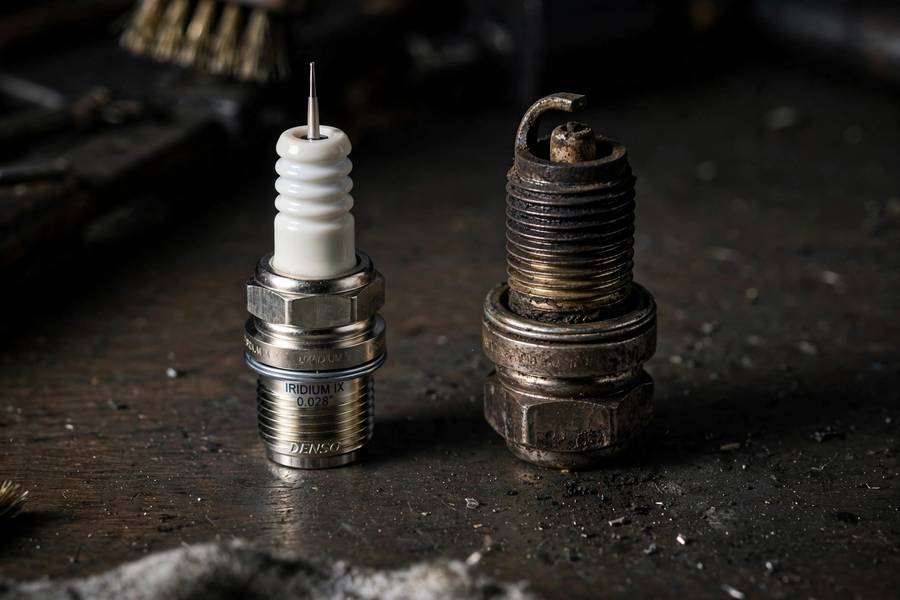
A plug from a healthy engine is honestly a little boring — and boring is what you want. The insulator nose will be a light tan, gray, or light brown color, with minimal deposits. The electrodes will still have fairly crisp, square edges. The gap will be close to spec.
Ray used to call this “biscuit color.” Pull a plug at 30,000 miles from an engine that’s running right and it looks like a lightly toasted biscuit. No drama, no story. That’s the goal.
Here’s the thing most people miss: a healthy-looking plug can still be worn out. Electrode material erodes microscopically with every spark — tens of millions of sparks over the plug’s life. The color can look perfect while the gap has grown beyond spec and the edges have rounded off. Color tells you about engine condition; electrode shape tells you about plug age. You need to check both.
Carbon Fouling: Black, Dry, and Sooty
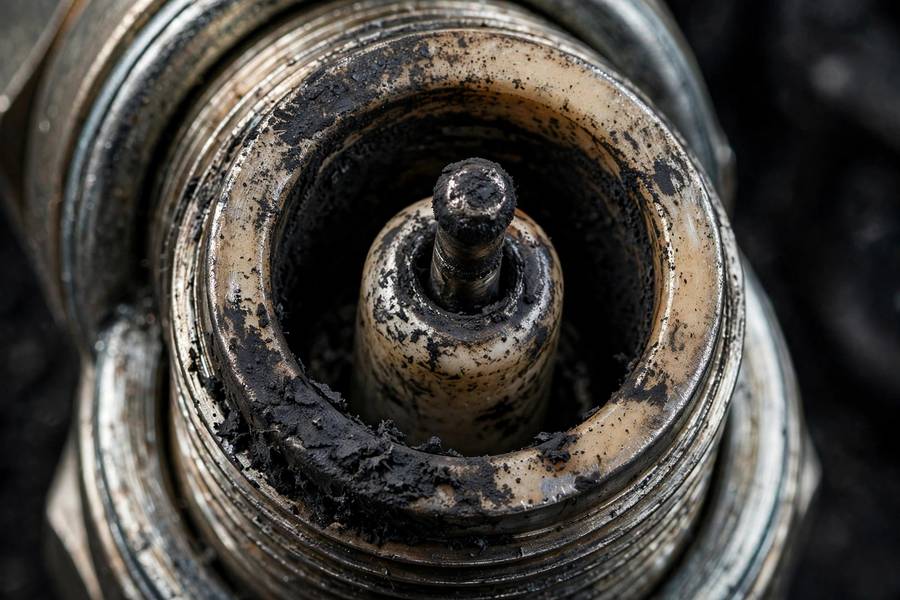
If the insulator nose and electrodes are coated in dry, black, powdery soot — like the plug was dipped in charcoal dust — that’s carbon fouling. It means the engine is running rich: too much fuel for the air, or incomplete combustion.
The usual suspects, in the order I check them:
- Short-trip driving. The number one cause I see. The engine never fully warms up, so fuel doesn’t burn completely and carbon builds up.
- Clogged air filter. Less air, same fuel — instant rich condition.
- Stuck-open thermostat. The engine stays in cold-start enrichment mode, dumping extra fuel.
- Failing sensors. A bad coolant temp or oxygen sensor can trick the computer into running rich.
Carbon-fouled plugs often come with symptoms: rough idle, hesitation, worse fuel economy, sometimes a check engine light for misfires or fuel trim codes. If you want to know what your check engine light means when it shows up alongside these symptoms, that’s the next thing to read.
The fix isn’t just new plugs — it’s finding the cause. I’ve seen people put fresh plugs in a rich-running engine and foul the new set in a month. Read the plug, fix the engine, then replace the plugs.
Oil Fouling: Wet, Shiny, and Worrying
Oil fouling looks completely different from carbon: the plug is wet, shiny, and oily to the touch, often with dark oily deposits caked on the nose and threads. Sometimes you’ll smell it before you see it.
This means oil is getting into the combustion chamber, and that’s never a minor thing. The common paths:
- Worn valve stem seals — oil drips down the valve guides, especially on startup. Blue smoke on cold starts points here.
- Worn piston rings — oil gets past the rings. Usually comes with oil consumption and blue smoke under load.
- Failed PCV system — excessive crankcase pressure pushes oil where it shouldn’t go. The cheap fix I always hope for.
- Leaking valve cover gasket into the plug well — oil pooling around the outside of the plug. Different problem, usually an easier fix, but it can still cause misfires by shorting the spark to ground.
Here’s my honest take: if one plug is slightly oily on the threads from a weeping valve cover gasket, that’s a $20 gasket and an afternoon. If all the plugs are wet with oil on the firing end, the engine is telling you something expensive. New plugs alone won’t fix it — they’ll just foul again. This is one of those times I tell customers to get a proper inspection before spending money on parts.
Overheating: White, Blistered, or Melted
A plug that ran too hot shows it clearly: the insulator nose turns chalky white or light gray, sometimes with a blistered, bubbled texture on the ceramic. In bad cases, the electrodes look melted or the center electrode has a glazed, glassy appearance. The ground electrode may have a bluish discoloration from extreme heat.
This is the scariest reading on the list, because the causes can damage the engine: a lean fuel mixture (vacuum leaks, weak fuel pump, clogged injectors), the wrong heat range plug, over-advanced timing or detonation, or cooling system problems letting the whole engine run hot.
I once saw a set of plugs with partially melted ground electrodes on a turbocharged car running an aggressive tune with a boost leak. The owner was lucky the pistons didn’t melt first. White, blistered plugs are a “stop driving and diagnose” situation, not a “replace the plugs and hope” situation.
Normal Wear: Rounded Electrodes and Wide Gaps
This is what plain old age looks like, and it’s the most common thing I see on high-mileage cars that “run fine.”
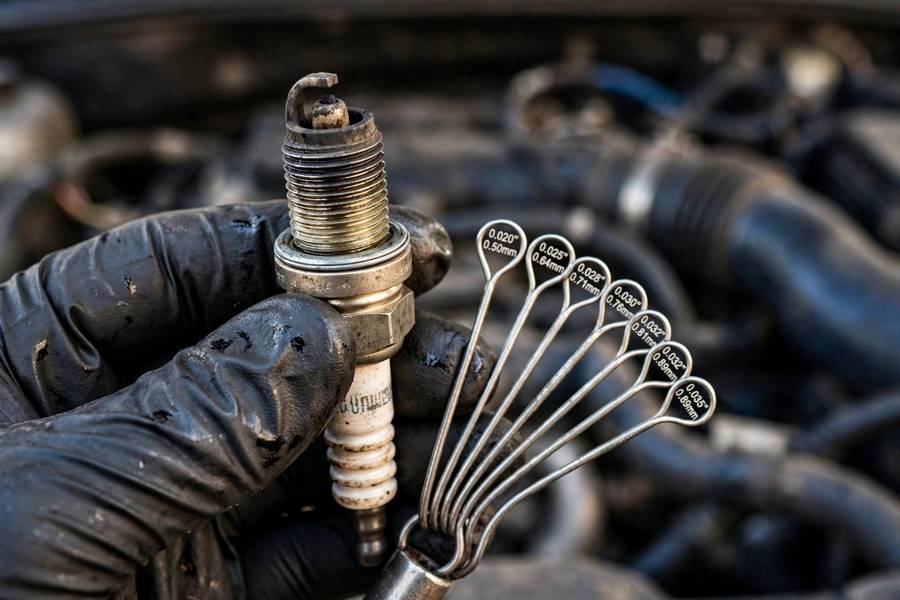
Every spark vaporizes a tiny amount of electrode metal. Over 100,000 miles, that adds up: the sharp square edges of the electrodes round off like river stones, and the gap grows wider than spec. A plug that left the factory at 0.044″ might measure 0.060″ or more at the end of its life.
The tricky part: worn electrodes don’t change the plug’s color. The insulator nose can look perfectly healthy — biscuit tan, no deposits — while the electrodes are rounded and the gap is huge. This is why “they look fine” isn’t conclusive. You need a gap gauge.
Symptoms of simple electrode wear: slight roughness at idle, a small drop in fuel economy, hesitation under load, and eventually misfires. Worn plugs also force the ignition coils to work harder to jump the wider gap, and coils cost far more than plugs. Changing plugs on time is coil insurance.
One Plug Looks Different From the Rest
This is the most valuable reading of all, and the reason I always lay plugs out in cylinder order.
If seven plugs look perfect and one is black, oily, or white — that cylinder has its own problem. The engine as a whole is fine; something is wrong with one hole. That narrows your troubleshooting enormously:
- One black plug: that cylinder’s injector may be leaking, or that coil is weak and not firing consistently.
- One oily plug: valve seal or ring issue isolated to that cylinder.
- One white plug: lean condition or a vacuum leak affecting one runner, or that cylinder running hot.
I diagnosed a misfire in ten minutes once because cylinder 3’s plug was steam-cleaned white while the others were tan — a head gasket leaking coolant into that cylinder. The plug told me before any test could. Always compare across cylinders. The odd one out is the witness.
My Shop Routine: How to Lay Them Out and Read Them
Here’s exactly what I do, and what I’d tell you to do in your driveway:
- Remove the plugs one cylinder at a time and lay them on a clean rag in order. Label them if your memory is like mine — a pile of mixed plugs tells you nothing.
- Photograph them before you clean anything.
- Read the insulator nose color first — tan (healthy), black soot (rich), wet oil (oil intrusion), white/blistered (too hot).
- Check the electrodes — sharp edges mean life left; rounded edges and a wide gap mean they’re done regardless of color.
- Compare across cylinders — the odd one out is your lead.
- Then replace them. Reading the plugs is troubleshooting; fresh plugs are the cure.
And keep up with the basics that keep plugs healthy in the first place: clean oil on schedule matters more than people think, so know how often to change your engine oil and stick to it. An engine with clean oil, a clean air filter, and no vacuum leaks will keep its plugs biscuit-colored for a very long time.
Your spark plugs are talking. Now you know the language — and when you’re ready to act on what they told you, my guide to how to change spark plugs walks through the full replacement procedure.
Frequently Asked Questions
Bad spark plugs show black sooty deposits (carbon fouling from running rich), wet oily residue (oil leaking into the combustion chamber), white or blistered ceramic (overheating), or simply rounded electrodes with an over-wide gap from normal wear. A healthy plug has a light tan or gray insulator nose with crisp electrode edges.
A carbon-fouled plug is coated in dry black soot on the insulator nose and electrodes. An oil-fouled plug looks wet and shiny with dark oily deposits. Both cause misfires and rough running, but they point to different problems — rich fuel mixture versus oil entering the combustion chamber.
Yes. A plug can have a healthy tan color while its electrodes are rounded and the gap has grown beyond spec from normal erosion. Color shows engine condition, but electrode shape and gap show plug age. Always measure the gap with a gauge rather than judging by appearance alone.
One odd plug means that specific cylinder has its own problem — a leaking injector, weak coil, worn valve seal, or coolant leak, depending on what the plug shows. Always remove and lay out plugs in cylinder order so you can compare; the odd one out is your best clue.
Overheated plugs have a chalky white or light gray insulator nose, sometimes with a blistered or glazed texture, and the electrodes may look melted or have a bluish tint. Causes include a lean fuel mixture, wrong heat range, detonation, or cooling system problems — this reading warrants a prompt professional inspection.