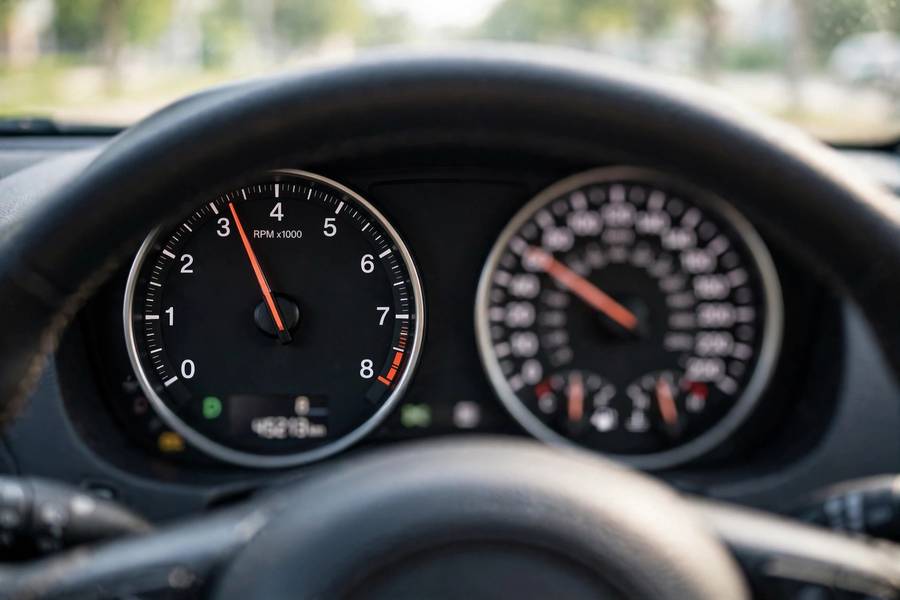
“Three hundred pound-feet of torque!” sounds impressive in a commercial. But I’ve driven 300 lb-ft cars that felt gutless and 200 lb-ft cars that felt like rockets off the line. The difference wasn’t the peak number — it was where and how broadly that torque showed up. That’s what the RPM range is about, and it’s the single most misunderstood number on a spec sheet.
Here’s the short version: peak torque is the maximum twisting force your engine produces, and the RPM range tells you at what engine speed that force is available. An engine that makes its peak torque from 1,800 to 4,500 RPM will feel completely different from one that peaks only at 5,500 RPM — even if the peak numbers are identical. Let me explain why, and how to read the numbers like someone who actually drives.
Contents
- Torque in Plain English First
- What the RPM Range Actually Describes
- Reading a Torque Curve: The Real Story
- Why a Wide Range Feels Faster Than a High Peak
- Turbos, Displacement, and EV Curves: What Shapes the Range
- What to Look For When You’re Shopping
Torque in Plain English First
Torque is twisting force — the rotational push the engine delivers to the wheels. Horsepower is how fast the engine can sustain work; torque is the shove you feel in your back when you hit the gas. If you want the full foundation, I covered what torque is and how it works in cars in the pillar piece for this series.
Now, an engine doesn’t produce the same torque at every speed. At idle it’s barely twisting at all. Rev it up and torque climbs, peaks, then falls off as the engine approaches redline. That rise-peak-fall pattern is the torque curve, and the spec sheet summarizes it as something like “300 lb-ft @ 1,800–4,500 RPM.”
That “@ 1,800–4,500 RPM” part is the peak torque RPM range — the band of engine speeds where the engine delivers its maximum (or near-maximum) twisting force. Understanding it changes how you read every car review you’ll ever see.
What the RPM Range Actually Describes
When a manufacturer lists peak torque as “280 lb-ft @ 2,000–4,000 RPM,” they’re saying: at 2,000 RPM the engine is producing (roughly) 280 lb-ft, and it keeps producing about that much all the way to 4,000 RPM. That’s a 2,000-RPM-wide plateau of maximum pulling power.
Compare that to a spec that reads “280 lb-ft @ 5,500 RPM.” Same peak number — but it only exists at 5,500 RPM, a speed the engine touches briefly before the next shift. Below that, torque is lower, sometimes much lower.
In daily driving, your engine spends most of its time between 1,500 and 3,500 RPM. A car whose peak torque lives in that neighborhood pulls strongly in exactly the situations you actually encounter: merging onto the highway, passing, climbing a hill with the family aboard. A car whose torque peaks at 5,500 RPM needs to be revved hard to deliver its best — fun on a back road, annoying in traffic.
Reading a Torque Curve: The Real Story
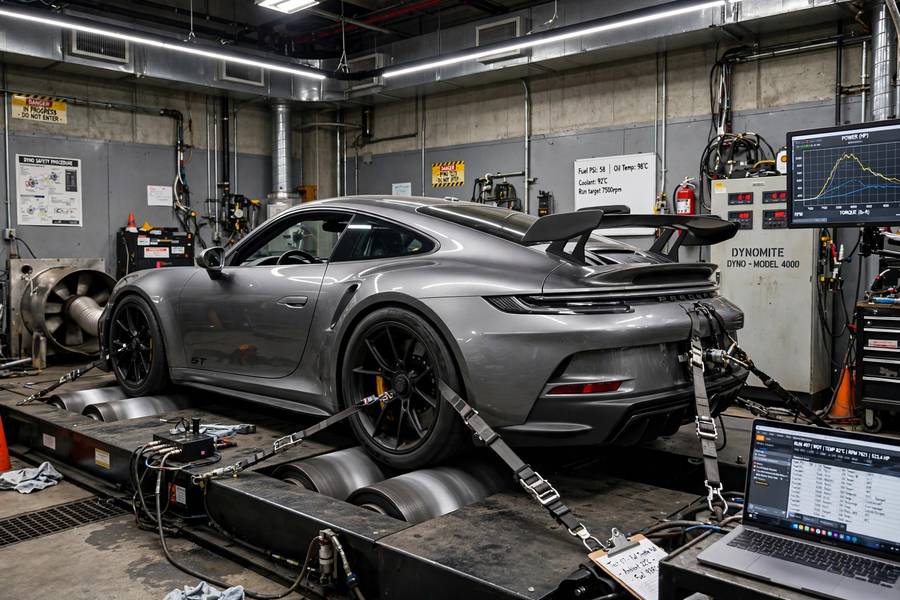
Spec sheets give you the headline; torque curves give you the truth. A torque curve is a graph — engine speed on the horizontal axis, torque on the vertical — and it shows you exactly how the engine behaves at every RPM. When I was helping friends shop for cars, I’d pull up dyno graphs before I’d read a single review. Here’s what to look for:
Flat and wide beats tall and narrow. A curve that rises quickly and stays flat across a broad RPM band means the car pulls the same way whether you’re at 2,000 or 4,000 RPM. That’s the turbocharged diesel or modern turbo gas engine pattern, and it’s why a 2.0-liter turbo can feel stronger than a bigger engine in normal driving.
Early arrival matters. The RPM where the curve starts climbing steeply is where the car “wakes up.” Turbos changed the game here — a modern turbo engine can hit peak torque by 1,500–1,800 RPM, which is barely above idle. Old-school naturally aspirated engines often needed 4,000+ RPM to get there.
The drop-off tells you about breathing. After the peak, torque falls as RPM rises — the engine can’t fill its cylinders efficiently at high speed. A gentle decline means flexible power delivery. A cliff means the engine runs out of breath and you’ll be shifting early to stay in the meat of the powerband.
Dips and spikes mean something. A sudden dip in the curve can indicate an intake resonance issue or a tuning compromise for emissions. A spike can be overboost from a turbo (fun, but hard on the engine long-term). Smooth curves come from good engineering; weird shapes come with stories.
Why a Wide Range Feels Faster Than a High Peak
This is the part that surprises people. Consider two engines:
- Engine A: 350 lb-ft @ 4,500 RPM only (narrow peak, high in the rev range)
- Engine B: 300 lb-ft @ 1,800–4,500 RPM (lower peak, but available everywhere)
Engine A wins the spec-sheet war. Engine B wins every stoplight, every on-ramp, and every passing maneuver in the real world. Why? Because usable acceleration isn’t about the maximum force at one instant — it’s about the average force the engine delivers across the RPM range you actually use.
Think of it like a weightlifter versus a sprinter carrying boxes. The weightlifter can lift the heaviest box (peak torque), but the sprinter who can carry heavy boxes continuously (broad torque range) moves more boxes per hour. In driving terms, the broad-torque car spends more time at high output and less time waiting for the revs to build.
This is also why transmission gearing matters so much — the gearbox’s job is to keep the engine inside its torque band. A well-geared car with a broad torque curve barely needs to downshift; a peaky engine needs closely spaced gears (or a CVT) to stay in its happy place. Gearing can hide a narrow curve, but it can’t fully fix one.
Turbos, Displacement, and EV Curves: What Shapes the Range
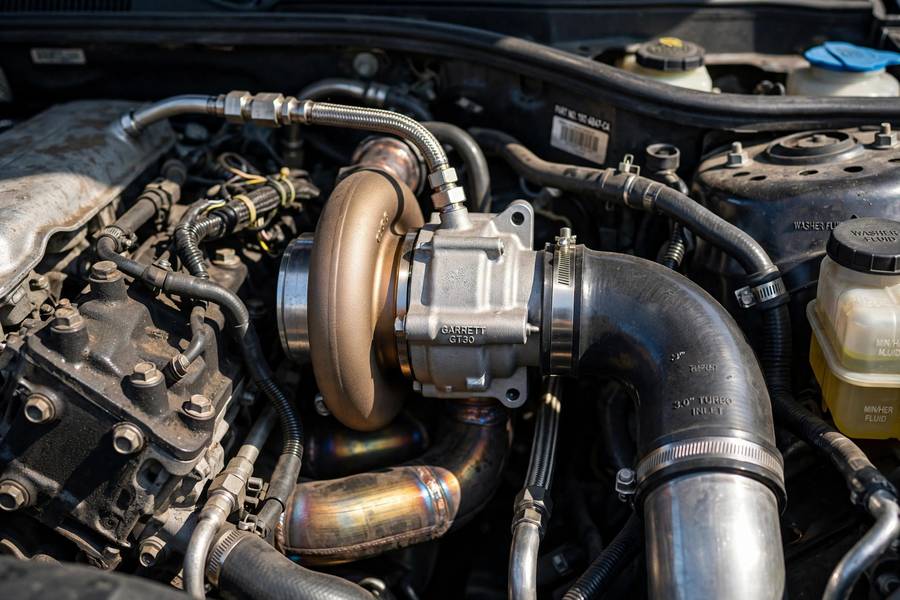
Turbocharging is the biggest reason modern torque curves look so different from twenty years ago. A turbo forces extra air into the engine, and once it spools up, the engine behaves like a much bigger one. Modern small turbos spool so early that you get near-peak torque just off idle, and the curve stays flat until the turbo runs out of breath. This is why a 2.0T today out-pulls a V6 from 2005 in daily driving.
Big displacement (V8s, big diesels) makes torque the old-fashioned way: large cylinders filled with lots of air and fuel. These engines naturally produce strong low-end torque — the curve starts high and stays high. There’s no replacement for displacement for effortless low-RPM pull, though turbos have gotten remarkably close.
Diesels are the torque-range champions of the combustion world. High compression ratios and turbocharging give them enormous low-end torque, often peaking below 2,000 RPM. That’s why a diesel truck can tow a house — the torque arrives early and stays for the whole working RPM range. The trade-off is a low redline; diesels don’t like to rev.
Electric motors break the whole paradigm. An EV produces maximum torque at 0 RPM — literally from a standstill — and the curve stays flat until the motor’s speed limit forces it to taper. This is why EVs feel so absurdly quick off the line. There’s no “range” to speak of in the traditional sense; the entire low-speed experience is the peak.
What to Look For When You’re Shopping
Practical advice from someone who’s cross-shopped more cars than I care to admit:
- Look at the “@ RPM” part, not just the number. “300 lb-ft @ 1,800 RPM” beats “320 lb-ft @ 5,000 RPM” for daily driving, every time.
- Wider ranges mean more relaxed driving. A broad torque plateau means fewer downshifts, less engine noise, and better real-world fuel economy (the engine isn’t working hard to stay in a narrow powerband).
- Match the engine to the car. A heavy SUV needs low-end torque more than a light coupe does. This is why turbo-diesels and big V8s suit trucks, and why revvy small engines suit lightweight affordable sports cars.
- Test drive with this in mind. When you test drive, notice when the car pulls — right off idle, or only after it downshifts and screams? That tells you everything about the torque curve without looking at a single graph.
- Towing and hauling = low-RPM torque. If you’re buying a used car for towing, the torque peak’s location matters more than the peak itself. Peak torque below 2,500 RPM is what you want for pulling.
The peak number sells cars. The range is what you actually drive. Now you know which one to read.
Frequently Asked Questions
It’s the band of engine speeds where the engine produces its maximum twisting force. A spec like “280 lb-ft @ 2,000–4,000 RPM” means peak torque is available across that whole RPM band, not just at one point.
For daily driving, usually yes. A broad, flat torque curve means strong pulling power at the RPMs you actually use (1,500–3,500), while a high peak at 5,500+ RPM only helps when you’re revving the engine hard.
Modern small turbos spool up at very low RPM, making the engine behave like a much larger one from just off idle. The torque curve rises early and stays flat until the turbo runs out of breath, giving a wide, usable powerband.
Low-RPM torque — ideally peaking below 2,500 RPM. Towing happens at moderate engine speeds, so an engine whose torque peaks early pulls loads effortlessly, while a high-revving peak forces constant downshifting under load.
EVs produce maximum torque from 0 RPM and hold it flat until high motor speeds force a taper. There’s no traditional “range” — the whole low-speed experience is the peak, which is why EVs feel so quick off the line.