The smartest financial move in car ownership is buying used — and the easiest place to get burned is the same transaction. Ten years watching trade-ins roll through the shop taught me that the gap between a great used buy and a money pit isn’t luck. It’s process.
A new car loses 20–30% in three years. Buying at three means someone else paid for the cliff: modern safety, plenty of life, sane price — if you buy right. Here’s the process, in order.
Table of Contents
- Step 1: Set a Real Budget
- Step 2: Research Reliability First
- Step 3: Where to Look
- Step 4: History Check and First Contact
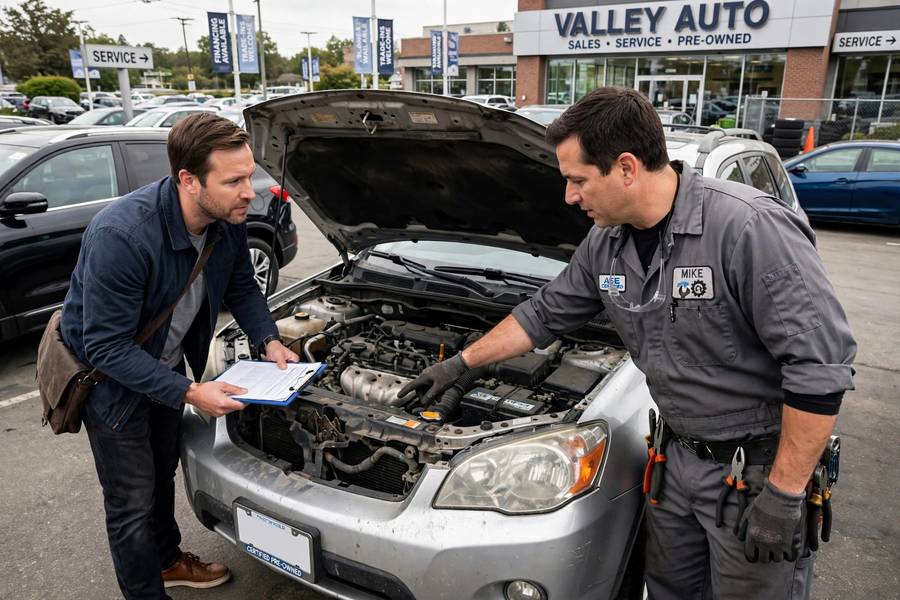
- Step 5: Inspect It Yourself, Then Pay a Pro
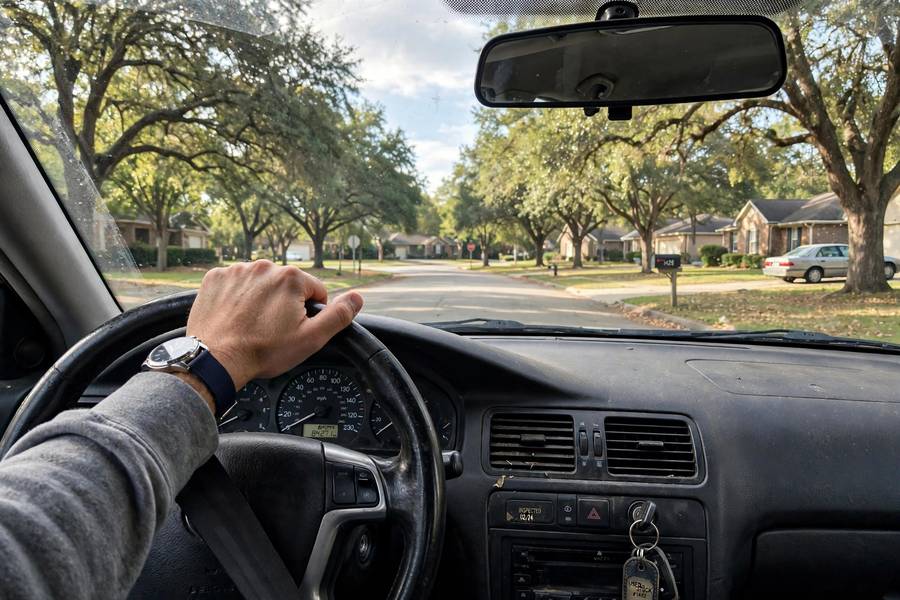
- Step 6: The Test Drive That Tells the Truth
- Step 7: Negotiate and Close Safely
- Frequently Asked Questions
Step 1: Set a Real Budget
The sticker price is maybe 70% of what the car costs. Budget the whole picture:
Out the door: add 7–10% for tax, title, registration — a $15,000 car is really $16,200. Get insurance quotes before buying; a “cheap” sports sedan can carry a brutal premium.
The reserve fund is non-negotiable. Set aside $1,000–$1,500 for what every used car needs first: tires, brakes, battery, fluids. Spend it all on the purchase and the first repair becomes a crisis.
Get pre-approved before shopping. Dealers sell payments, not prices — “only $289 a month!” over 84 months turns a $15,000 car into $20,000. Walk in with bank financing and negotiate the out-the-door price, never the monthly number.
Buy the cheaper ownership, not the cheaper price. A $12,000 Toyota with cheap insurance and $400/year maintenance beats a $10,000 German sedan with $2,000/year maintenance.
Step 2: Research Reliability First
Do this before you test drive anything. Falling in love first is how people rationalize bad decisions.
Research by year, engine, and transmission — not brand. “Toyotas are reliable” is broadly true, but the 2007–2009 Camry 2.4L had oil consumption issues. Reliability lives at the year-engine level. Search “[year] [model] common problems” and read owner forums — not marketing, the complaints. If fifty owners report the same transmission failure at 90k, believe them.
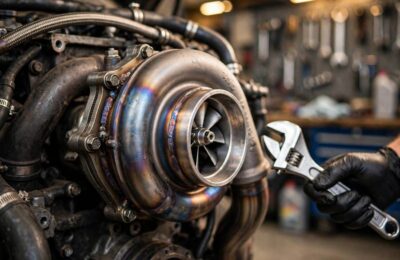
Know the expensive failures. Every model has a weak spot: timing chains, CVTs, turbos, air suspension. You want weak spots that are cheap or avoidable — a $300 common repair is fine, a $4,000 one at your mileage is a trap.
The sweet spot: 3–5 years old, 30,000–60,000 miles. Past the depreciation cliff, young enough for remaining life and possible warranty.
Factory certified pre-owned is worth real money — $1,500–$3,000 over non-CPO for a real inspection and extended warranty. Cheap insurance on anything complex; skip it for a simple Corolla.
Step 3: Where to Look
Private sellers: best prices, and you meet the person who drove it — ask how it was maintained, why they’re selling, and read their reactions. No warranty, no recourse; you do the diligence. Best for mainstream cars under $20k you can verify yourself.
Franchise dealers: higher prices, but reconditioned cars, accountability, and CPO options. Best for CPO buyers and anyone wanting a safety net.
Independent lots: the wild west. Good ones survive on reputation; bad ones are curbstoners with a fence. Check reviews obsessively, never skip the independent inspection.
Online retailers (CarMax, Carvana): fixed pricing, ~7-day return windows, delivery. You pay 5–10% over private party — but the return policy is a genuine exit ramp.
Where not to look: curbside cars with no records, sellers who refuse inspections (instant walk-away), post-flood regions, and below-market “deals.” A $9,000 car at $5,500 is a salvage title, flood car, or scam.
Step 4: History Check and First Contact
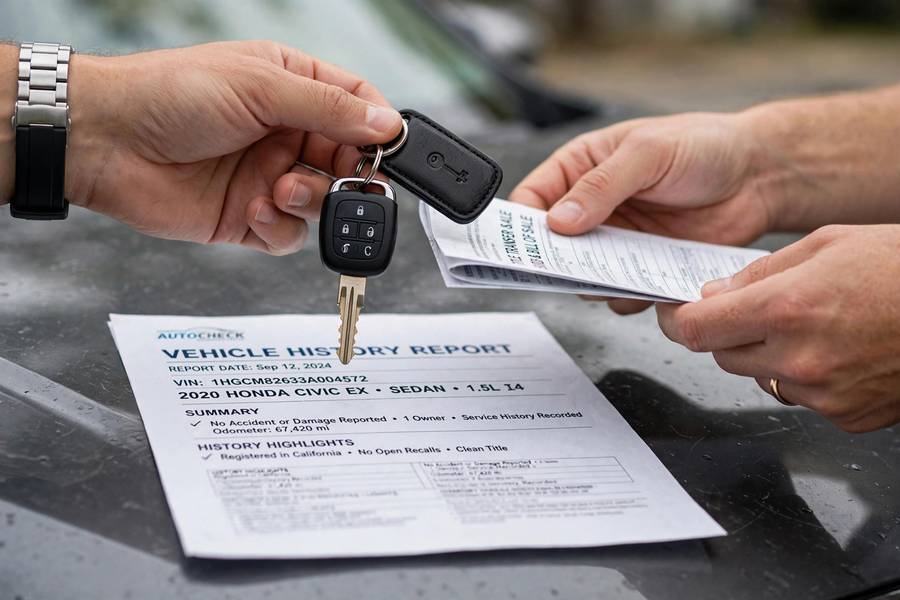
Run the VIN before you drive anywhere. Carfax or AutoCheck — $40 against a $15,000 purchase is nothing. Check accidents (airbag deployment = structural flag), title brands (salvage, flood, lemon — walk away, period), odometer discrepancies, owner count, and service entries. Reports only show reported incidents — a clean report isn’t a clean car, but a dirty one means walk away.
Ask direct questions: Why selling? How long owned? Records? Any accidents? Anything wrong now? Watch for hesitation as much as answers — honest sellers answer directly.
Red-flag answers: “Selling for a friend” (curbstoner). “Just needs a sensor” (then why not fix a $50 sensor?). “AC just needs a recharge” (it needs far more). “No records but always maintained” (unverifiable). Any pressure to decide today.
Step 5: Inspect It Yourself, Then Pay a Pro
Your 20-minute walkaround filters the obvious duds:
- Body: sight down each side for ripples (filler), check panel gaps, look for overspray on trim and jambs, rust at arches and rockers. Mismatched paint between panels = accident repair.
- Tires: uneven wear tells stories — inner-edge wear, cupping, one new among three old. Check date codes; over 6 years old means replacement.
- Under the hood: oil level and condition — pull the dipstick yourself; milky oil is an instant walk-away. Also check for fresh steam-cleaning (hiding leaks), coolant color, battery terminals and date.
- Everything electrical: every light, switch, window. Foggy headlights are a negotiation point — and an easy fix via our guide on how to clean car headlights.
- Smell: mold (flood flag) or heavy air freshener (covering something). Check under mats for dampness.
- Cold start: insist on it — warmth hides smoke, noises, rough idle. Blue smoke cold = valve seals. Knocking = walk away.
- Slow cranking or a jump to show you? Dying battery — budget $200, and know how to jump start a car safely rather than letting the seller improvise.
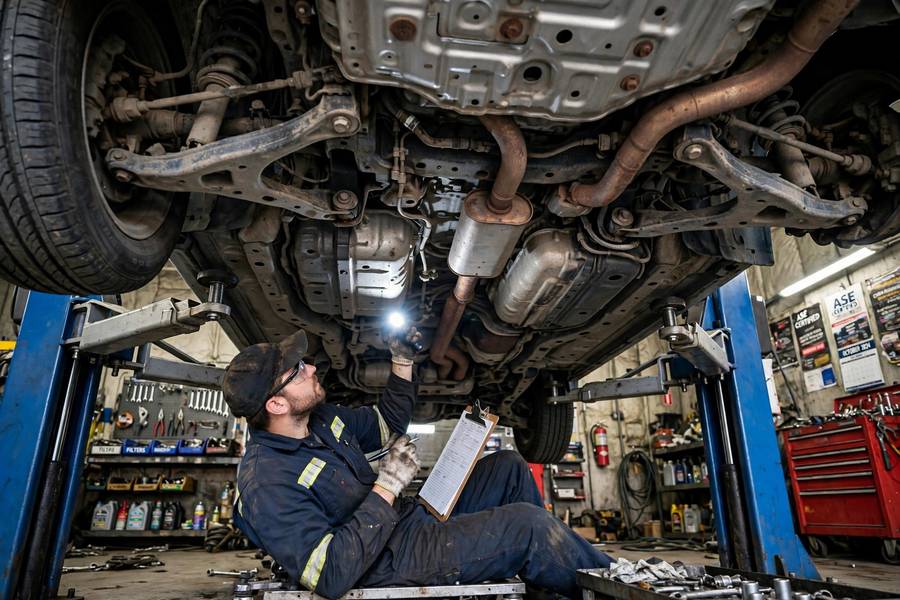
The pre-purchase inspection: non-negotiable. $150–$250 at an independent shop, ideally a marque specialist. On a lift they check frame damage, suspension, brakes, fluids, stored codes, hidden repairs. I’ve seen PPIs find $3,000 in pending work on driveway-perfect cars. Best $200 in the transaction. Seller refuses? Walk away.
Step 6: The Test Drive That Tells the Truth
A lap around the block tells you nothing. The 30-minute drive:
Route: cold start, 10 minutes city (stop-and-go, turns, bumps), 10 highway (including a full-throttle merge), 5 minutes parking. Radio OFF for half — you’re listening to the car.
Transmission: smooth, timely shifts. Hard shifts, flaring, slipping, clunks = expensive. On a CVT, shuddering under load is a walk-away.
Brakes: firm pedal, no pulsing (warped rotors), no pull, no grinding. One firm stop from 50 in a safe spot.
Steering: tracks straight, no 60–70 mph vibration (balance or worse), no clunks over bumps (suspension), no whine turning (power steering).
Engine: smooth idle, no mirror smoke on hard acceleration, full power on the merge.
Electronics: every window, sunroof, AC max cold, heat max hot, seat adjustments, cruise. Electrical gremlins are the most annoying problems to chase.
After: pop the hood — fresh leaks, burning smells, drips underneath? Then walk away ten minutes and return with fresh eyes.
Step 7: Negotiate and Close Safely
Leverage real information. PPI found $800 in brakes and tires? “The inspection found brakes and tires due — about $900. I’ll offer $X.” Specific, documented, reasonable — beats “what’s your lowest price?” ten times over.
Know the market. At market price, clean with records: offer 5–8% under, settle ~3–5% under. Overpriced: say so with evidence — “three comparables within 50 miles are $X–$Y; I can do $Z today.”
Private sellers: show up cash-ready. Be polite, specific, ready to walk. “I like the car, but at that price I’ll keep looking” — said calmly while standing — moves the price half the time.
Dealers: out-the-door price only. Decline finance-office add-ons — warranties marked up 100–300%. Watch doc fees ($300–$900 pure profit in some states), VIN etching, paint protection.
Walk away when: price exceeds your researched number, PPI found structural/flood issues, title brands you didn’t agree to, or you feel rushed. Millions of used cars exist. There’s no “one that got away” — only the one you overpaid for because you fell in love.
Payment and paperwork: meet at a bank, cashier’s check or wire verified in person. Never cash in a parking lot for five figures. Verify the VIN in all three spots, confirm the seller is the titled owner, check for liens. Get a signed bill of sale with price, mileage, date, “as-is.” Activate insurance before driving home, and confirm you have both keys.
First month: change all fluids for a known baseline, fix PPI flags, keep every receipt. You’re building the service history that makes your eventual sale easy. Be the seller with the folder you wished you’d found.
Buy the ownership, not the price. Inspect like a skeptic, negotiate like you can walk, paper everything.
Frequently Asked Questions
Research reliability by year and engine before shopping, run a history report on every candidate, do your own 20-minute inspection, then pay $150-250 for an independent pre-purchase inspection. Never skip the PPI or buy from a seller who refuses one, and negotiate with real market data.
The sweet spot is 3-5 years old with 30,000-60,000 miles: past the steepest depreciation with long remaining life and possible warranty. Condition and history matter more than the odometer, a kept 90,000-mile car beats a neglected 50,000-mile one.
Yes, always. A $150-250 inspection at an independent shop checks frame damage, suspension, brakes, fluids, computer codes, and hidden repairs on a lift. It routinely finds thousands in pending work. A seller who refuses an inspection is telling you to walk away.
Private sellers offer the best prices with no warranty or recourse. Franchise dealers cost more but offer reconditioning and factory certified pre-owned warranties. Online retailers charge a premium but include return windows. Match the source to your risk tolerance.
Walk away from salvage, flood, or rebuilt titles, sellers refusing independent inspections, VINs not matching the title, title jumping, mold smells or heavy air freshener, milky oil, cold-start smoke or knocking, and far-below-market prices. Any single one is enough.
Add 7-10% for tax, title, and registration, get insurance quotes before buying, and reserve $1,000-1,500 for immediate maintenance (tires, brakes, battery, fluids). Get pre-approved financing first and negotiate the out-the-door price, never the monthly payment.