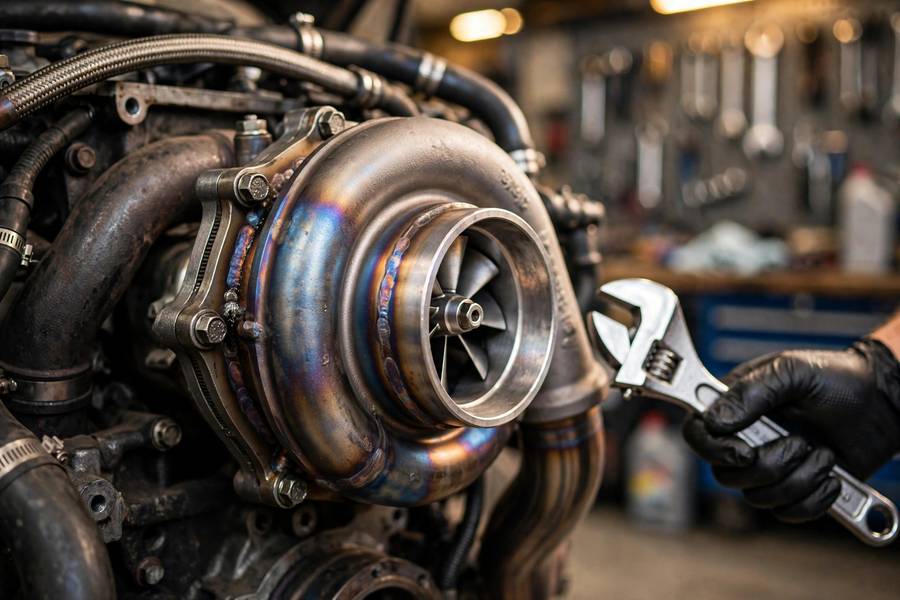
Your turbocharger is the hardest-working part of your engine that you never think about: it spins at up to 200,000 RPM in exhaust heat that would melt lesser metals — and most drivers treat it like it needs nothing.
Here’s what ten years of turning wrenches taught me: a turbo almost never dies of old age. It dies of neglect — dirty oil, hard shutdowns, starved air. The good news? Every one of those killers is preventable, and most of the prevention costs nothing.
Table of Contents
- Why a Turbocharger Needs a Different Maintenance Mindset
- Oil Is Everything: The Number-One Turbo Killer
- The Warm-Up and Cool-Down Rule Nobody Follows
- Air Supply: Filters, Intake Leaks, and the Compressor Wheel
- Coolant and Heat Management
- Boost Leaks: How to Spot Them Before They Starve Your Turbo
- Warning Signs Your Turbo Is in Trouble
- What to Do (and Not Do) at High Mileage
- A Simple Turbo Maintenance Schedule You Can Actually Follow
Why a Turbocharger Needs a Different Maintenance Mindset
A naturally aspirated engine is forgiving — you can stretch the oil interval a little, run it hard cold, and it’ll grumble along. A turbocharged engine is not, because the turbo adds a precision component with clearances measured in thousandths of an inch into the middle of everything.
The turbine side sees exhaust gas over 1,000°F, and the shaft spins faster than almost anything else mechanical in your car — all lubricated by the same oil running through your engine. Dirty, thin, or low oil destroys those bearings in short order.
For the full picture, I broke down how a turbocharger works in a separate guide — but remember: the turbo amplifies everything, including the consequences of bad maintenance.
Oil Is Everything: The Number-One Turbo Killer
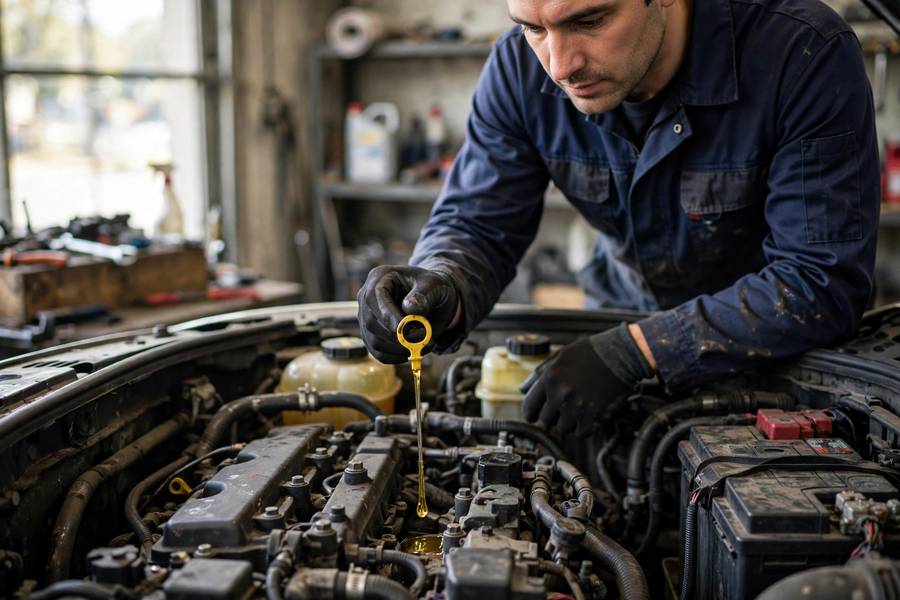
Ask any mechanic what’s behind most turbo failures and you’ll get the same answer: oil. Not enough of it, dirty oil, or the wrong oil. The turbo’s bearings float on a film of engine oil thinner than a human hair. Contaminated or starved oil doesn’t just wear the bearings — it scores the shaft, and once the shaft is scored, the turbo is done.
Use the Right Oil (and Why “Close Enough” Isn’t)
Your owner’s manual specifies an oil weight and standard for a reason, and on a turbocharged car that reason is bigger than emissions or fuel economy. Turbos need oil that resists heat breakdown — what’s called “coking,” where overheated oil turns into carbon deposits that clog the turbo’s tiny oil passages.
For most modern turbocharged engines, that means a full-synthetic oil meeting the manufacturer’s spec — conventional or cheap blends break down faster under turbo heat. I’ve pulled turbos with feed lines half-blocked with coked sludge, and the owner always said the same thing: “I just used whatever was on sale.”
Would I spend my own money on premium full-synthetic? On a turbo car, yes, every time — the gap between a $60 oil change and a $2,500 turbo replacement is not small.
Change Intervals for Turbocharged Engines
Follow your manufacturer’s interval as the absolute maximum — not the target. If you drive hard, tow, or sit in traffic, shorten it: 5,000 miles for hard-driven cars, no negotiating.
Turbo engines run hotter by design: oil shears down and contamination builds faster. Check your oil change intervals as a baseline, then adjust down for how you actually drive — and check your oil level regularly between changes, because a turbo engine down even a quart is starving its turbo.
The Warm-Up and Cool-Down Rule Nobody Follows
This is the cheapest maintenance tip in this entire article, and it’s the one almost nobody does.
On a cold start, your oil is thick and hasn’t fully circulated — asking the turbo’s bearings to spin at tens of thousands of RPM before the oil film is established is how bearings die young. Give it 30 to 60 seconds of gentle idling, then drive gently for the first few minutes. No 10-minute ritual needed; just don’t ask for full boost until the engine’s warm.
The cool-down matters even more. After a hard drive — highway run, mountain climb, towing, or just spirited driving — your turbo is glowing hot. If you shut the engine off immediately, the oil stops flowing while the turbo is still cooking. The oil sitting in the turbo’s bearings literally bakes into carbon. Mechanics call it heat soak, and it’s a slow-motion turbo killer.
The fix: after hard driving, idle for 30 to 60 seconds before shutting off. That’s it. Some modern cars have auxiliary coolant pumps that keep circulating after shutdown — if yours does, you’re partially covered, but the idle habit still helps.
Air Supply: Filters, Intake Leaks, and the Compressor Wheel
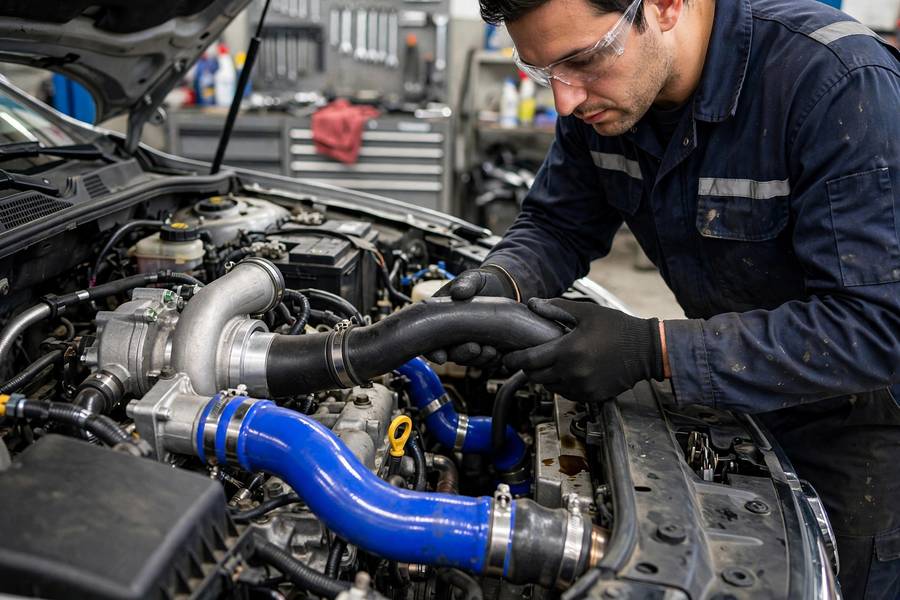
The compressor wheel spins in incoming air at incredible speed, and anything in that air hits the wheel like a tiny hammer. A clogged or damaged air filter is bad enough — it starves the turbo of air and makes it work harder. But a torn intake boot, a loose clamp, or a hole in the intake piping is worse: it lets unfiltered air straight into the compressor.
I once pulled a turbo with a compressor wheel that looked sandblasted. The cause: a cracked intake hose the owner never noticed. Dust and grit had been sanding the compressor blades for months while boost and fuel economy quietly dropped.
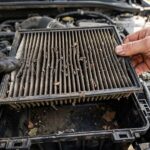
Inspect your intake system at every oil change: check the air filter, squeeze the intake hoses for cracks, and make sure every clamp is tight. A filter costs a few dollars; a turbo killed by grit costs a few thousand. The math is not complicated.
Coolant and Heat Management
Many modern turbos are water-cooled as well as oil-cooled — engine coolant circulates through the turbo housing to carry away heat. That makes your cooling system part of your turbo maintenance, whether you think of it that way or not.
Low coolant, a weak thermostat, or a clogged radiator means the turbo runs hotter than designed — breaking oil down faster and stressing seals and bearings. Keep coolant at the proper level, flush it on schedule, and take cooling warnings seriously: a check engine light pointing at the cooling system is a turbo problem waiting to happen.
Boost Leaks: How to Spot Them Before They Starve Your Turbo
A boost leak is a leak in the pressurized air path between the turbo and the engine — cracked intercooler pipes, loose hose clamps, a split intercooler. When boost leaks out, the turbo has to spin harder to deliver the same power, which means more heat and more wear. Meanwhile, the engine runs rich, fuel economy tanks, and you get a noticeable loss of power.
The symptoms are distinctive: a hissing or whistling sound under acceleration, sluggish power, black smoke on diesels, and often a check engine light. If your car suddenly feels gutless and whistles when you step on it, check the boost piping before assuming the turbo is dead — half the “failed turbos” I’ve diagnosed were a $20 hose clamp or a cracked coupler.
Warning Signs Your Turbo Is in Trouble
Catching turbo trouble early is the difference between a cheap fix and a full replacement. Here’s what to watch for:
Blue or gray smoke from the exhaust — oil getting past the turbo’s seals. This is the classic failing-turbo signature.
A loud whine or siren sound rising with RPM — some whistle is normal, but a siren-like whine means bearings are wearing or the compressor wheel is damaged.
Loss of power — if the car feels like it’s lost its punch, especially under load, the turbo may not be producing full boost.
Excessive oil consumption — a turbo with failing seals drinks oil. Adding oil between changes on a car that never needed it? The turbo is a prime suspect.
The check engine light — codes for boost pressure or underboost. Don’t just clear them; find the cause.
Any one of these deserves a mechanic’s eyes soon — a failing turbo can sometimes be saved, or at least replaced before it sends metal shrapnel into your engine and turns a $2,500 repair into an $8,000 one.
What to Do (and Not Do) at High Mileage
Turbos don’t have a fixed expiration date, but 100,000 to 150,000 miles is where the odds shift. Be stricter about everything above: shorter oil intervals, religious warm-ups and cool-downs, regular intake inspections.
Don’t use “high mileage” oil additives as a substitute for real maintenance — some can clog the turbo’s oil feed. And if you’re buying a used turbocharged car over 100,000 miles, have a mechanic check for shaft play first: a little wiggle is normal, a lot means the bearings are gone.
A Simple Turbo Maintenance Schedule You Can Actually Follow
Forget complicated regimes. Here’s the routine I’d give a friend:
- Monthly: check the oil level. Turbo engines can consume oil; low oil is a turbo emergency.
- Every oil change (5,000 miles max for hard use): full-synthetic of the correct spec, new filter, and a quick visual inspection of intake hoses, clamps, and boost piping.
- Every air filter interval: replace the air filter on schedule, no stretching it.
- Every drive: gentle for the first few minutes, 30–60 second idle after hard driving before shutdown.
- Immediately: investigate any new whistle, smoke, power loss, or boost-related check engine light.
A well-maintained turbocharger typically lasts 100,000 to 150,000 miles, and many go well beyond 200,000 with proper care. The biggest factors are clean oil, correct oil change intervals, and proper warm-up and cool-down habits. Neglected turbos can fail as early as 60,000 miles.
Yes, especially after hard driving. Let the engine idle for 30 to 60 seconds before shutdown so oil keeps flowing while the turbo cools. This prevents oil from baking into carbon deposits (coking) inside the turbo’s bearings, one of the most common causes of premature turbo failure.
Use a full-synthetic oil that meets your manufacturer’s exact specification — weight and standard both matter. Turbochargers run extremely hot, and full-synthetic oil resists heat breakdown far better than conventional oil. Never use a cheaper oil that doesn’t meet the spec just to save a few dollars.
You can for a short time, but it’s risky. A failing turbo can send metal debris into your engine or dump oil into the exhaust, turning a turbo replacement into a much bigger engine repair. If you notice blue smoke, a loud siren whine, or major power loss, get it checked before driving far.
Turbocharger replacement typically costs $1,500 to $3,500 including parts and labor, depending on the vehicle. Performance and diesel turbos can run higher. This is exactly why the free maintenance habits in this guide — clean oil, warm-ups, cool-downs — are worth following.
Not really special products — just stricter basics. Turbocharged engines need the correct full-synthetic oil changed on time, clean air filters, intact intake and boost piping, a healthy cooling system, and sensible warm-up and cool-down habits. Do those consistently and the turbo largely takes care of itself.