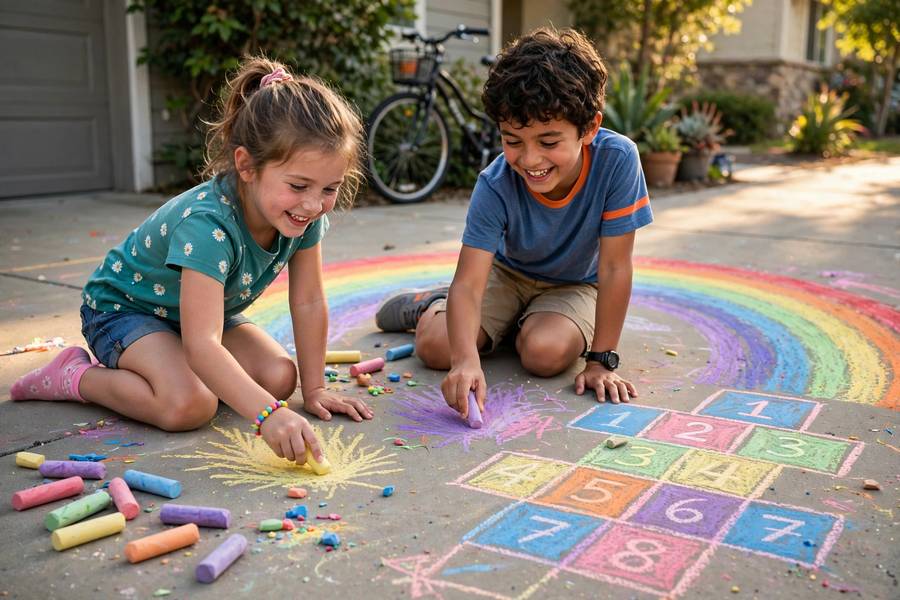
Every June, summer arrives with all that golden promise — and within a week, someone is saying they’re bored. Usually by nine in the morning.
Then I learned the trick isn’t planning more — it’s planning a little, on purpose, together. A summer bucket list for kids isn’t a productivity plan; it’s a handful of small promises you make to each other.
Ours lives on the fridge, written in marker, slightly crooked. Some years we check off half. Some years we add things in pencil mid-August. It has never once been perfect, and it has always been worth it.
Table of Contents
- Why a bucket list — and why a small one
- How to make your list together (one evening, pen, paper, no pressure)
- Free summer activities for kids (the good stuff costs nothing)
- Summer bucket list ideas by age
- Outdoor adventures and backyard fun
- Water play ideas for hot days
- Creative and indoor ideas
- Rainy-day backups (because it rains)
- Learning disguised as fun
- End-of-summer rituals (closing the season well)
- Frequently asked questions
Why a bucket list — and why a small one
Most of the lists you’ll find online have a hundred items. A hundred. Nobody is doing a hundred things, and trying to will make June feel like a chore chart.
Kids don’t remember volume. They remember the one evening you watched the sunset from the driveway with popsicles, or the afternoon they caught their first frog. A list of twenty thoughtful ideas will give you a better summer than a list of a hundred you feel guilty ignoring.
So here’s my rule: pick a dozen. Let the kids pick a few wild ones. Keep the rest in your back pocket for the bored days. The goal is a season that felt lived in, not checked off.
How to make your list together (one evening, pen, paper, no pressure)
Don’t download anything. Sit down one evening — maybe with ice cream — and ask a simple question: “What do you want to do this summer?” Write down everything they say, even the absurd ones. (Drive a real car? Sure, sweetheart. Add it. Dreams cost nothing.)
Then narrow it together: circle the ones that make everyone lean forward, and stick the list on the fridge where you’ll see it every morning.
That evening itself becomes a memory. This is the quiet heart of the whole thing — the part that has more to do with the hygge way of slowing down together than with planning.
If the grown-ups want their own version, there’s a gentler list of summer bucket list ideas for the grown-ups too.
Free summer activities for kids (the good stuff costs nothing)
Let’s start here, because the best summer moments rarely involve tickets. Free is not a compromise — it’s often the whole point.
- Watch the sunrise or sunset together, pajamas allowed.
- Fly a kite in the windiest park you can find.
- Go on a nature scavenger hunt (feathers, smooth stones, something yellow).
- Lie on a blanket and name cloud shapes.
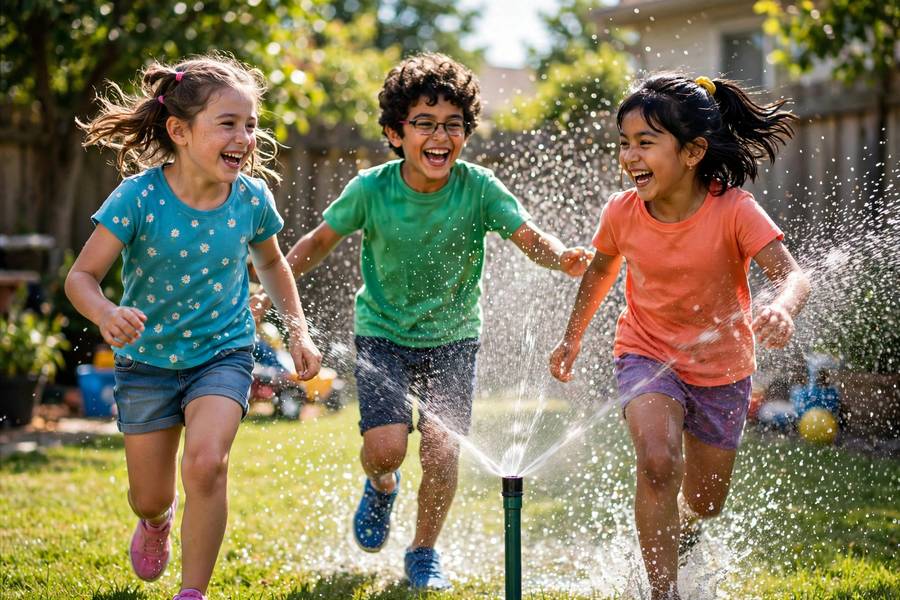
- Run through the sprinklers — a classic for a reason.
- Build a fort from every blanket in the house.
- Have a family talent show. The worse the talent, the better.
Summer bucket list ideas by age
What thrills a three-year-old will bore a ten-year-old into dramatic sighs. Here’s the list sorted by age, so everyone gets something that feels made for them.
Toddlers and preschoolers (1–4)
Little ones don’t need entertainment. They need sensory play, water, and you sitting on the floor nearby.
- Deck out a kiddie pool with cups, boats, and ice cubes.
- Make a mud pit. One shovel, one corner of the yard, endless joy.
- Set up a water pouring station with plastic bottles and funnels.
- Go on a treasure walk: one bag, collect “treasures” (leaves, pebbles, sticks).
- Freeze toys in a block of ice and let them excavate.
- Have an indoor picnic on a rainy afternoon.
- Blow bubbles and chase them. That’s the whole activity, and it’s perfect.
Little kids (5–8)
This is the golden age of the bucket list — old enough to remember, young enough to believe anything is possible.
- Camp in the backyard, tent and all. S’mores mandatory.
- Build a dam in a creek or a stream of hose water.
- Learn to skip rocks at the nearest lake or pond.
- Make homemade popsicles (fruit, juice, patience).
- Put on a puppet show with paper bags.
- Have a backyard obstacle course with timers and dramatic commentary.
- Bake cookies and deliver them to neighbors.
- Make a time capsule to open next summer.
Big kids and tweens (9–12)
They’ll pretend to be too cool. They are not too cool. Give them independence and a little responsibility, and watch them bloom.
- Set up a lemonade stand and let them run the business.
- Learn a new sport or skill together — skateboarding, fishing, kayaking.
- Do a science experiment that goes gloriously wrong.
- Make ice cream in a bag (it’s science and dessert).
- Plan and cook one full family dinner, menu to cleanup.
- Take a day trip to somewhere new — let them navigate.
- Make a short film on a phone. Premier it with popcorn.
- Volunteer together at a community garden or food bank.
- Build something real: a birdhouse, a raised bed, a bookshelf.
- Go stargazing and try to find three constellations.
Outdoor adventures and backyard fun
You don’t need a vacation to give kids adventure. You need a yard, a park, or a street that’s safe enough to wander.
Backyard camping is the king of this category: tent, sleeping bags, stories with a flashlight under your chin — and home ten feet away, so even nervous sleepers feel brave.
Nature walks work better with a mission: find five different leaves, count the birds, spot something red. And never underestimate the simple glory of a new playground in a new neighborhood — kids rate slides like food critics.

Water play ideas for hot days
When the heat settles in, water is everything. This is the section your kids will remember in January.
- Water balloon fight (fill them together — half the fun).
- Slip and slide down the hill with the hose running.
- Wash the bikes, the dog, the sidewalk — it’s all water play if you’re five.
- Visit a splash pad or a local pool for a long, lazy afternoon.
- Play in the rain instead of running inside. Jump in every puddle.
Safety note, parent to parent: water play is joyful, but it needs eyes. Keep a grown-up watching whenever water is deeper than ankles or the chaos gets ambitious.
Creative and indoor ideas
Summer isn’t all sunshine. Some afternoons are too hot, too stormy, or too tired for the backyard. Keep a few indoor cards up your sleeve.
Set up an art area outside or in — big paper, washable paints, no rules. Make friendship bracelets, tie-dye old shirts, or do bubble painting (blow colored bubbles onto paper). Have a full family movie night with tickets they make themselves. Build the world’s most elaborate blanket fort and eat dinner in it.
My favorite indoor-summer trick: a “no screen day.” It sounds terrible for the first hour. Then someone builds something extraordinary from a cardboard box and you remember why boredom is a gift.
Rainy-day backups (because it rains)
Every summer has its grey days. Having a rainy-day plan turns them from a disappointment into a plot twist.
- Library trip + summer reading program signup.
- Board game tournament with a silly trophy.
- Bake bread or cookies together — the house will smell like a memory.
- Put on a play. Costumes from the dress-up bin, audience of stuffed animals.
- Have breakfast for dinner. Call it “brinner.” They’ll think it’s hilarious forever.
Learning disguised as fun
Summer learning doesn’t have to look like school. In fact, it works better when it doesn’t.
Reading is the big one — bring the book basket outside and join the library’s summer program. Math hides in lemonade stands and baking; science hides in ice cream in a bag and planting a garden.
If your family is curious about gentler learning rhythms year-round, this is a nice bridge into exploring summer learning rhythms for kids at your own pace. No curriculum required — just curiosity and a long afternoon.
End-of-summer rituals (closing the season well)
The last week of summer deserves its own moment. Rituals give kids a way to hold a season that’s ending, and to start the next one with intention.
- Open the time capsule if you made one (or make one now to open next year).
- Do a “best of summer” dinner where everyone names their favorite memory.
- Let each kid pick one thing to do “one more time” before school starts.
These small closings matter more than they look. They teach kids that good things can end and still be good — a gentle lesson, learned with ice cream in hand.
Frequently asked questions
The best free summer activities are simple ones: sidewalk chalk art, sprinkler runs, nature scavenger hunts, cloud-watching, backyard camping, fort-building with blankets, library visits, and stargazing. Kids consistently remember low-cost experiences more than expensive outings, so start with what’s free before spending anything.
Toddlers thrive on sensory play: water pouring stations, mud pits, ice-cube excavation, bubble chasing, treasure walks for leaves and stones, indoor picnics on rainy days, and reading outside under a tree. Keep activities short, messy, and close to home — that’s all a toddler needs.
Rainy days are perfect for library trips, board game tournaments, baking together, homemade playdough, blanket forts, jigsaw puzzles, and putting on a family play. A short list of go-to rainy-day ideas on the fridge keeps grey afternoons from turning into screen marathons.
A dozen is plenty. Kids remember a handful of well-chosen adventures far better than a hundred-item checklist. Let each child pick a few favorites, add your own, and keep extra ideas in reserve for bored days rather than overloading the list.
At home, try backyard camping, sprinkler play, sidewalk chalk murals, obstacle courses, water balloon fights, nature scavenger hunts, and fairy gardens. A yard or driveway is enough — adventure is about novelty and togetherness, not destination.
Hide learning inside play: read outdoors and join library reading programs, bake together for fractions, run a lemonade stand for real-world math, do ice-cream-in-a-bag science experiments, and garden for biology. When learning is hands-on and unhurried, kids don’t notice it’s educational.
Here’s the thing I keep coming back to: summer with kids doesn’t need to be impressive. It needs to be present. So pick your dozen, stick it on the fridge, and let the season be a little crooked and a little messy. That’s where the good stuff lives.