
There is a particular kind of tired that arrives around six o’clock in the evening. Not the collapse-on-the-couch kind, just the low-grade weariness of knowing you still have to answer the same question the day asks you every single day: what’s for dinner? I used to stand in front of an open refrigerator like it owed me money, waiting for an answer to present itself. Then a friend of mine — two kids, a full-time job, and the calmest kitchen I have ever seen — told me her secret wasn’t a better recipe. It was a better rhythm. Once a week, she cooks in bulk. The rest of the week, she just assembles.
That rhythm is batch cooking. And if you’ve never tried it, it might quietly change the texture of your weeks.
In This Guide
- What Exactly Is Batch Cooking?
- How Batch Cooking Works in Real Life
- The Benefits Nobody Talks About
- Batch Cooking vs. Meal Prep: What’s the Difference?
- What to Cook: The Best Batch Cooking Foods
- How to Start Your First Batch Cooking Session
- Storing and Reheating Without the Sadness
- Common Mistakes (and How to Dodge Them)
What Exactly Is Batch Cooking?
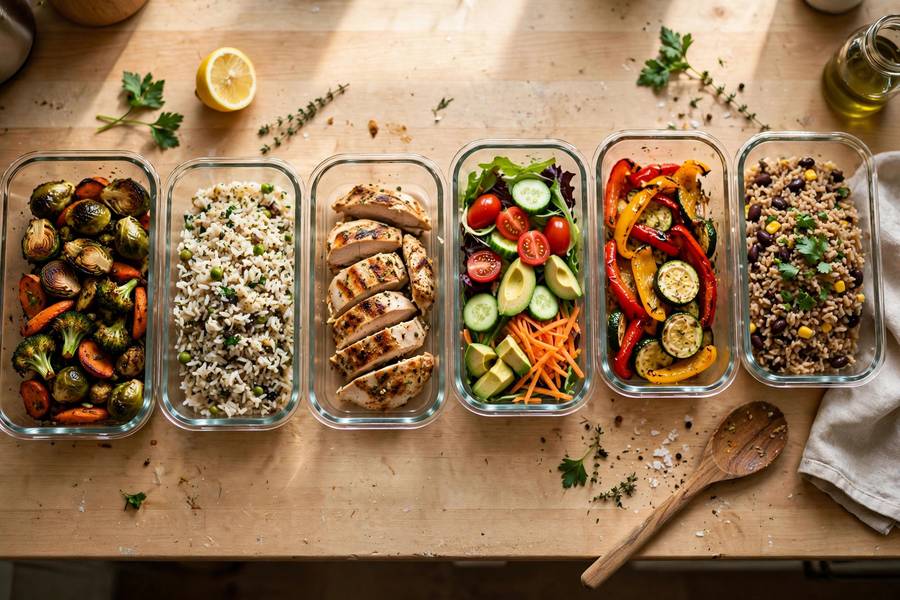
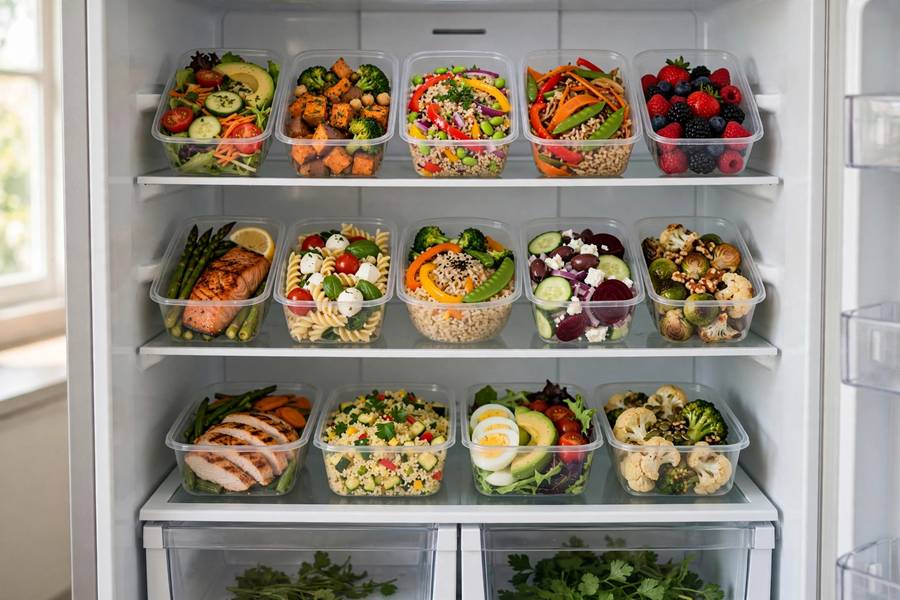
Batch cooking means cooking a large quantity of food in one session, then storing it to eat over the coming days. Instead of cooking seven separate dinners, you cook two or three big dishes — a tray of roasted vegetables, a pot of grains, a pan of chicken — and mix and match them through the week.
There’s no single official definition, and that’s part of the charm. Some people cook full meals in portions. Others cook “components” — proteins, grains, and vegetables separately — and assemble them into different bowls and plates as the week goes on. Both count. The point is the same: you concentrate the effort into one session and spread the payoff across the week.
Our grandparents did a version of this out of necessity — the Sunday pot roast that became Monday’s hash and Tuesday’s soup. Batch cooking is that old wisdom with better storage containers.
How Batch Cooking Works in Real Life
Here’s what a typical week looks like once the habit settles in:
- Pick a day. Most people choose a weekend afternoon — Saturday or Sunday — when the kitchen is already in use. It takes about two hours, sometimes less.
- Choose a few big recipes. Two or three is plenty. Think one grain (rice, quinoa, farro), one or two proteins (chicken thighs, lentils, ground turkey), and one tray of roasted vegetables. Add a sauce if you’re feeling generous — a good sauce makes the whole week taste different.
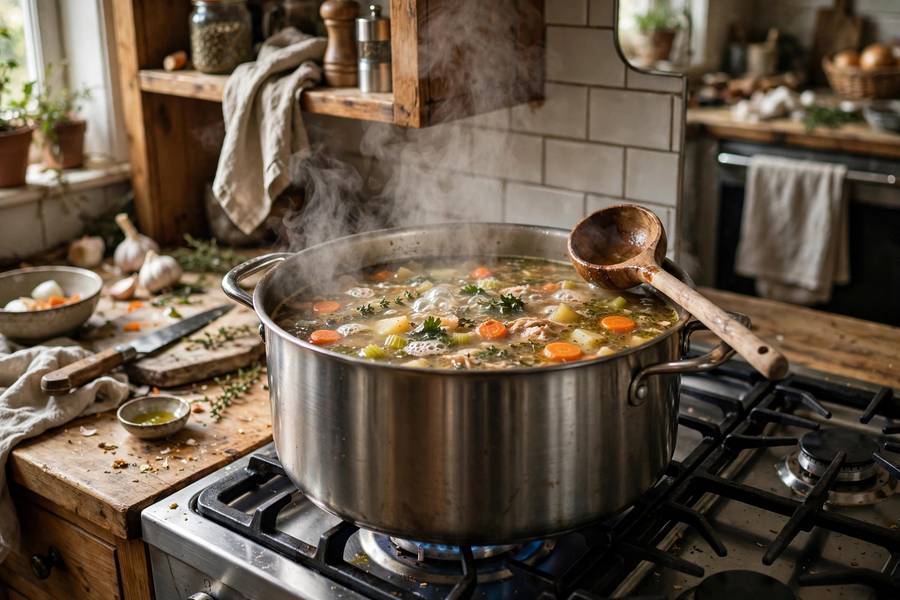
- Cook them in parallel. While the grain simmers, the vegetables roast. While those cool, you portion things out. The oven and stovetop do most of the work at the same time.
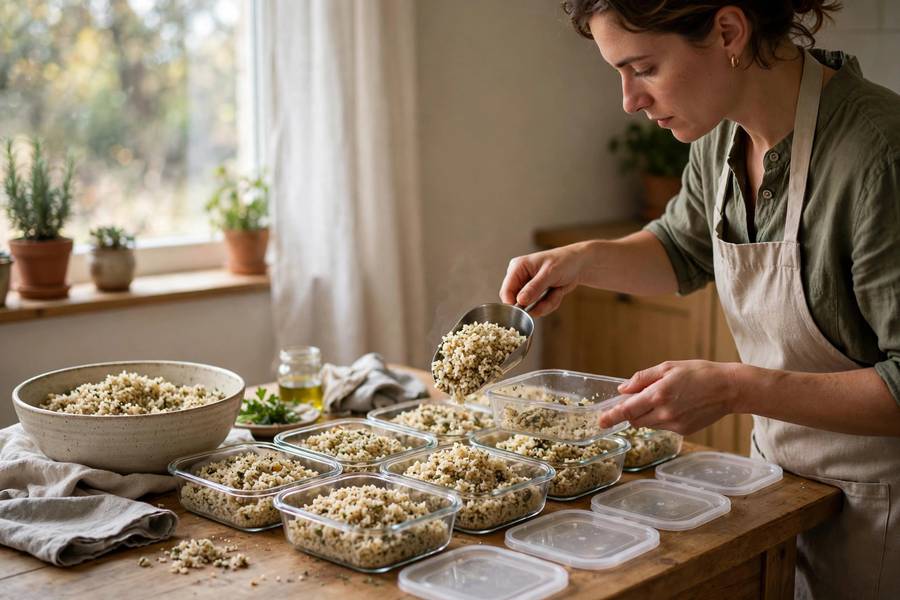
- Store everything. Glass containers with lids, labeled if you’re fancy. Everything goes in the fridge.
- Eat from the stash. Each evening becomes a five-minute decision: grain plus protein plus vegetables plus sauce. Some nights it’s a bowl, some nights a wrap, some nights it goes into a quick soup.
That’s the whole system — no app, no subscription box, no special equipment.
The Benefits Nobody Talks About
Everyone mentions saving money and time, and both are true — cooking in bulk is cheaper per portion, and two hours on a Sunday beats forty-five minutes every weeknight. But the benefits that actually change your life are quieter.
Decision fatigue disappears. The hardest part of dinner isn’t cooking; it’s deciding. When the fridge already holds three things that go together, the evening becomes easy.
You waste less food. That bag of spinach that used to turn to soup in the crisper drawer? Now it’s in Sunday’s frittata and Monday’s grain bowls. Cooking in bulk means you buy with a plan and use what you buy.
Your kitchen gets calmer. This is the one I didn’t expect. A refrigerator full of ready containers feels like a small act of care for your future self. There’s something deeply settling about it, the same kind of calm the hygge lifestyle people chase with candles — except this one also feeds you on Wednesday.
Takeout spending drops on its own. Not because you’ve sworn off anything, but because the fridge is already full of food that’s ready faster than delivery. Convenience wins, and now convenience is homemade.
Batch Cooking vs. Meal Prep: What’s the Difference?
People use the terms interchangeably, and honestly, the distinction is soft. But here’s how most people draw the line:
- Batch cooking emphasizes cooking large quantities of a few dishes. The focus is on the cooking method: big pots, full trays, scale.
- Meal prep often means portioning complete individual meals for the week. The focus is on the result: five labeled containers, one per weekday.
In practice, most home cooks land somewhere in between — big-batch components portioned into ready meals. The label doesn’t matter. What matters is finding the version that fits your actual life, especially if you’re juggling work and personal life and need the rhythm to be forgiving, not rigid.
What to Cook: The Best Batch Cooking Foods
Not every food survives a few days in the fridge gracefully. The winners share three traits: they hold their texture, they reheat well, and they’re flexible enough to appear in different meals without feeling repetitive.
Grains and starches: Rice, quinoa, farro, barley, pasta (slightly undercooked, tossed in a little oil), mashed potatoes, sweet potatoes.
Proteins: Roasted chicken thighs (better than breast for reheating), pulled pork, ground turkey or beef, hard-boiled eggs, lentils, chickpeas, black beans, baked tofu.
Vegetables: Anything roasted — carrots, broccoli, cauliflower, bell peppers, zucchini, Brussels sprouts. Also big-batch salads with sturdy greens like kale that don’t wilt overnight.
Sauces and add-ons: This is the secret weapon. A jar of chimichurri, peanut sauce, tahini dressing, or salsa verde turns the same chicken and rice into three different dinners. Make one or two each week.
Foods to avoid in big batches: Anything fried and crisp (it goes soggy), delicate greens, and most dairy-based sauces, which can split when reheated. And seafood is best cooked fresh — a day old is fine, but it doesn’t improve with age.
How to Start Your First Batch Cooking Session
Don’t try to overhaul everything on day one. The first session should feel easy, even a little boring — that’s how habits stick.
Step 1: Start with three things. One grain, one protein, one vegetable. Roast the chicken thighs and vegetables on two trays in the oven while the rice cooks on the stove. That’s a full batch session. Done.
Step 2: Make a simple list before you shop. Write down the three things and what they need. Shopping with a list is half the battle — it’s the difference between a purposeful trip and wandering the aisles buying interesting condiments.
Step 3: Prep everything before you cook. Wash and chop all the vegetables first. Get the chicken seasoned. Measure the rice. Cooking in parallel is smooth only when the starting line is organized.
Step 4: Set a timer and a playlist. Two hours sounds like a lot until you’re listening to something you like and the oven is doing the work. Give yourself a pleasant two hours, not a rushed one.
Step 5: Cool before you seal. Let food cool about 30 minutes (never more than two hours for safety), then seal and refrigerate. Sealing hot food creates condensation — soggy food, warmer fridge.
After three or four Sundays, you’ll stop thinking of it as a project. It becomes what you do, like doing laundry — except the reward is dinner making itself.
Storing and Reheating Without the Sadness
- Use glass containers with tight lids. They don’t stain, they reheat evenly, and you can see what’s inside — which means you’ll actually eat it.
- Most cooked food keeps 3–4 days in the fridge. Plan to eat the delicate things (fish, soft greens) first and the sturdy things (beans, roasted root vegetables) later in the week.
- Freeze half if the week is long. Anything you won’t eat within four days should go in the freezer in portion-sized containers. Label with the date. Most batch-cooked food freezes beautifully for up to three months.
- Reheat with a little moisture. A sprinkle of water on rice, a lid on the pan, a damp paper towel in the microwave — these small things keep food from drying out.
- Refresh, don’t just reheat. A squeeze of lemon, fresh herbs, a drizzle of hot sauce, or a handful of something crunchy (nuts, seeds, fried shallots) wakes up day-three food better than anything else.
Common Mistakes (and How to Dodge Them)
Cooking too much of one thing. A giant pot of chili is exciting on Sunday and punishing by Thursday. Aim for variety in smaller quantities — three medium batches beat one enormous one.
Skipping the cooling step. Hot food warms everything else in the fridge. The 30-minute counter cool is non-negotiable.
Forgetting food safety basics. Food should spend no more than two hours between 40°F and 140°F (the range where bacteria multiply fastest). Cool quickly, refrigerate promptly, reheat to steaming hot.
Choosing recipes you don’t actually like. If you get bored of chicken by Tuesday, cook two proteins in smaller amounts. The system only works if the food makes you happy.
Making it too complicated. The people who quit batch cooking are the ones who tried twelve new recipes in week one. Three familiar things, cooked well, will always beat an ambitious experiment when the goal is just to eat dinner.
Batch cooking won’t transform your life. What it does is quieter: it removes a small daily friction — the fridge full of ready food, the evening that’s suddenly yours.
If your kitchen feels chaotic in other ways, a little decluttering applies the same principle — fewer decisions, calmer space, better days. Small systems, quietly working.
Frequently Asked Questions
Cooking large quantities in one session, then storing them to eat over several days. Instead of cooking from scratch nightly, you might roast chicken thighs, cook rice, and roast vegetables on Sunday, then mix and match components into quick meals all week.
Most keeps 3–4 days in airtight containers. Eat delicate items like fish first, and freeze anything you won’t eat within four days — frozen portions keep well for up to three months.
The terms overlap heavily. Batch cooking emphasizes cooking large quantities of a few dishes in one session, while meal prep usually means portioning out complete individual meals for the week. Most home cooks do a blend of both, and the distinction doesn’t matter much in practice.
A typical batch cooking session takes about 1.5 to 2.5 hours once a week, depending on how many dishes you make. That replaces 30–45 minutes of cooking every weeknight, so the total time saved over the week is significant.
Grains (rice, quinoa, farro), sturdy proteins (chicken thighs, lentils, beans, ground turkey), roasted vegetables, and sauces or dressings work best. Avoid fried foods, delicate greens, and most dairy sauces, which don’t reheat well.
No. A large pot, a baking tray or two, and some airtight glass containers are enough to start. The most useful upgrades are more containers and a second sheet pan.